
Waste Gas Treatment System Retrofit: A Complete Guide for Industrial Emission Compliance
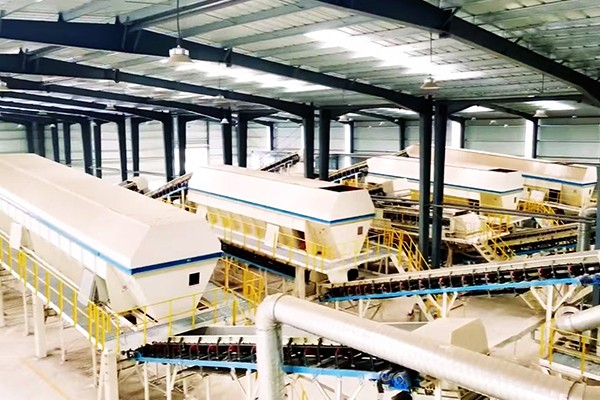
Many factories face compliance pressure, rising energy consumption, and unstable purification performance as emission standards keep updating. A waste gas treatment system retrofit is often the most economical way to meet new regulatory requirements instead of building a brand-new exhaust treatment line. Retrofit projects reuse available ductwork, fans, supports and foundation structures where possible, cutting construction cycles and capital investment. However, a successful industrial flue gas retrofitting project needs systematic assessment, not simply adding one piece of equipment to an old system. This article covers common retrofit triggers, site audit steps, typical technical upgrade paths, safety considerations, and how to select a reliable supplier for VOCs exhaust upgrade and emission control renovation.
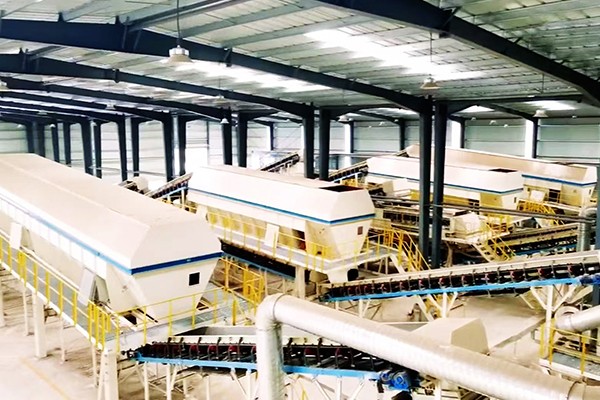
Main Reasons for Waste Gas Treatment System Retrofit
Plant owners decide to carry out waste gas treatment system retrofit for a handful of practical reasons. The first and most common trigger is stricter emission limits. Many older systems were designed for previous standards and cannot maintain stable outlet concentration when inspectors conduct periodic monitoring. Second, production adjustments change the exhaust condition: new coating lines, modified raw materials, increased working hours, or higher VOC loading will overwhelm the original treatment capacity. Third, aging equipment brings frequent breakdowns, high maintenance costs and excessive fuel or electricity consumption. Fourth, safety risks such as uncontrolled explosion hazards, inadequate temperature interlock, or improper pre-treatment of dust and tar require urgent renovation. Fifth, enterprises need to prepare for environmental permit renewal, low-carbon evaluation, or third-party audit, so the whole emission control system must be standardized and documented.
It is worth noting that some old systems still have usable structural frames and pipe networks. A well-designed retrofit retains valid parts and only replaces or adds core purification units, which makes the payback period much shorter than full reconstruction. This principle is the core of professional emission control system renovation engineering.
Step 1: Site Audit and Exhaust Condition Testing Before Retrofit Design
Before drawing any retrofit plan, a full site audit is mandatory. Many failed VOCs exhaust upgrade projects stem from insufficient testing and wrong assumptions about the actual exhaust stream. The audit team should collect continuous operating data rather than a one-time snapshot. Key parameters include exhaust volume, temperature, humidity, concentration of VOCs, sulfur dioxide, nitrogen oxides, particulate matter, tar, oil mist, and intermittent peak load features. Engineers also record fan performance, duct leakage, air distribution, existing control logic, stack monitoring instruments, and available space for new modules.
Another critical check is the compatibility between the old front-end collection hoods and the upgraded treatment unit. Even if the purification equipment is upgraded, poor gas capture will cause fugitive emissions inside workshops and make the whole waste gas treatment system retrofit ineffective. If the production line runs discontinuously, the retrofit scheme must consider variable load, bypass channels and startup-shutdown protection to avoid pollutant overflow during switching.
During the audit, engineers classify the exhaust type: low-concentration high-airflow VOC gas, high-concentration organic waste gas, dusty flue gas, acid or alkaline scrubbing gas, mixed exhaust with both particulates and volatile organics, or flue gas that needs desulfurization and denitrification. Different pollutant combinations require completely different pre-treatment and main process configurations.
Step 2: Common Technical Upgrade Routes for Industrial Flue Gas Retrofitting
Retrofit Route A: Upgrade Pre-treatment for Existing Oxidation Equipment
RTO, RCO and adsorption-concentration devices are easily damaged by dust, tar, oil mist and heavy glue. A large number of old VOCs treatment failures are caused by missing or failed pre-treatment. In this retrofit mode, the main oxidation chamber is retained, while new pre-treatment modules are added: cyclone separators, pulse bag dust collectors, filter cartridges, oil mist eliminators, cooling heat exchangers, and wet scrubbers. This is a low-cost VOCs exhaust upgrade suitable for factories where the original RCO or RTO still has intact furnace body and heat recovery structure.
Retrofit Route B: Replace Single-Stage Adsorption with Concentration + Oxidation
Many early industrial plants used simple activated carbon adsorption tanks. These systems are hard to manage, with frequent carbon replacement and risk of spontaneous combustion. A typical retrofit solution is to install a zeolite rotor concentrator to concentrate low-concentration large-volume exhaust gas, then connect the concentrated stream to RCO catalytic combustion or RTO thermal oxidation. This greatly reduces the total gas volume entering the oxidation unit and lowers fuel consumption. The original fans and ductwork can be reused if the airflow balance is recalculated.
Retrofit Route C: Upgrade from Low-Efficiency Photocatalytic Oxidation to Combined Purification
Photocatalytic oxidation alone cannot handle high-strength VOCs. Many manufacturers carry out emission control system renovation by keeping photolysis units as a polishing stage, while adding adsorption or catalytic oxidation as the core treatment section. This hybrid scheme is suitable for odor control and low-concentration organic waste gas in printing, packaging and small chemical workshops.
Retrofit Route D: Flue Gas Desulfurization and Denitrification Retrofit
For boilers, kilns and heating furnaces, retrofitting targets sulfur dioxide and nitrogen oxides. The existing scrubber tower can be modified by replacing internal packing, upgrading spray layers, adding reaction sections, or installing SCR/SNCR denitrification components. When dust is also out of limit, the project combines baghouse upgrade and flue gas purification together.
Retrofit Route E: Control System and Safety Interlock Retrofit
Even if the purification hardware is acceptable, outdated PLC systems without temperature, pressure, flame and gas concentration interlocks are a major hidden danger. This kind of retrofit updates electric cabinets, sensors, emergency bypass, nitrogen purging, alarm and remote monitoring functions. It is often required by safety auditors for combustible VOC waste gas systems.
| Retrofit Type | Typical Application | Core Modified Components | Advantages |
|---|---|---|---|
| Pre-treatment upgrade | RTO/RCO blocked by dust and tar | Dust collector, oil filter, cooler, scrubber | Low investment, reuse main furnace |
| Concentration + oxidation retrofit | Old activated carbon adsorption | Zeolite rotor, RCO/RTO, heat exchanger | Stable removal efficiency, low running cost |
| Desulfurization denitrification retrofit | Boiler and kiln flue gas | Scrubber internals, SCR reactor, reagent dosing | Meet ultra-low emission standards |
| Safety & control renovation | Combustible VOC systems without interlock | Sensors, PLC, emergency bypass, alarm system | Reduce explosion risk, convenient supervision |
Step 3: Critical Safety Rules During Waste Gas Treatment System Retrofit
Safety is the top priority for waste gas treatment system retrofit, especially for VOCs exhaust containing flammable solvents. The retrofit design must evaluate explosion limits, oxygen concentration, high-temperature zone, static electricity accumulation and deflagration isolation. For flammable organic waste gas, spark detection, flame arrestor, explosion venting, and inert gas purging should be configured according to relevant standards. When modifying duct layout, avoid dead corners, sudden shrinkage and long horizontal pipes where solvent condensate can gather. If the exhaust contains silicone, phosphorus or heavy metal substances, catalyst poisoning protection must be added to RCO units.
Construction scheduling also needs safety planning. Hot work inside the existing pipeline and purification tower must be accompanied by gas detection, ventilation and fire prevention measures. The retrofit contractor should prepare a switching plan with bypass pipelines so that the workshop can either stop production safely or run under temporary compliant conditions during construction. Blindly cutting off the original system without bypass design will lead to illegal direct emission.
Step 4: Zhengzhou Puhua Technology: Integrated Supplier for Waste Gas Treatment System Retrofit
Choosing the right partner is essential for smooth industrial flue gas retrofitting and VOCs exhaust upgrade. Many trading companies only provide single equipment, while retrofit projects need systematic process matching, on-site measurement, interface coordination and commissioning. Zhengzhou Puhua Technology is a professional environmental equipment manufacturer, engaged in the design, research, development and production of dust control equipment, desulfurization equipment, denitrification equipment, VOCs organic waste gas treatment equipment, pneumatic conveying equipment and wastewater treatment equipment.
The product portfolio of Zhengzhou Puhua Technology covers baghouse dust collectors, RCO catalytic combustion equipment, RTO equipment, VOCs governance equipment, desulfurization towers, denitrification equipment, photocatalytic oxidation equipment, pulse dust collectors, mobile dust collectors, ultra-low emission equipment, and sewage treatment equipment. This full product range supports different segments of a retrofit project: if the old system needs dust pre-treatment, they can supply pulse bag filters; if VOC oxidation capacity needs upgrading, they provide RCO and RTO modules; if the project also involves flue gas desulfurization and denitrification or supporting wastewater from scrubber blowdown, the team can coordinate the whole pollution control chain.
For waste gas treatment system retrofit, Zhengzhou Puhua Technology’s engineering team starts with site survey and exhaust testing, evaluates which parts of the original system can be retained, selects modular equipment to match the existing fan and duct conditions, and designs safety interlock, bypass and monitoring systems. Their retrofit solutions serve painting, printing, chemical, pharmaceutical, wood processing, machinery and thermal processing industries. The company focuses on matching the technical route to actual exhaust conditions rather than recommending the same set of equipment for every factory, which helps customers avoid over-investment and repeated renovation.
Step 5: Commissioning, Monitoring and Acceptance After Emission Control System Renovation
Hardware installation is not the end of the waste gas treatment system retrofit. Commissioning is the phase that determines stable compliance. Technicians adjust fan frequency, air distribution, catalyst temperature, dosing amount, adsorption-desorption cycle, alarm thresholds and automatic switching logic. After commissioning, continuous sampling testing is required to verify VOC concentration, particulate matter, sulfur dioxide and nitrogen oxide at the stack outlet under normal load and peak load.
It is recommended to install continuous online monitoring instruments if required by local environmental departments. The monitoring data helps plant operators track performance and prove compliance during inspections. Meanwhile, the supplier should hand over operation manuals, maintenance checklists, spare parts list and operator training. Retrofit systems usually have more complex mixed structures of old and new components, so maintenance personnel need to understand both the retained original equipment and newly added modules.
Common Mistakes in Waste Gas Treatment System Retrofit Projects
Designing the retrofit only based on nominal airflow on the old nameplate, ignoring actual leakage and changed production load.
Omitting pre-treatment: adding RTO/RCO directly before removing dust, tar and oil, which quickly blocks heat storage media and catalysts.
Ignoring airflow balance: the new purification unit has different resistance, leading to insufficient capture at workshop hoods or overflow of pollutants.
Missing safety interlock for combustible VOC gas, only focusing on removal efficiency.
Leaving no bypass pipeline, which forces the whole production line to shut down when maintenance is needed.
Separating dust, waste gas and scrubber wastewater into different suppliers, resulting in mismatched interface and poor overall stability.
Calculating the budget only by equipment price, leaving out testing, commissioning, monitoring, training and long-term spare parts costs.
How to Prepare Your Retrofit Project Budget and Timeline
A typical waste gas treatment system retrofit project includes several budget sections: site survey and testing, process design, new equipment procurement, pipeline modification, electrical and control upgrade, installation, commissioning, third-party testing, training and one-year after-sales service. The timeline depends on project scale: simple pre-treatment upgrade can be completed within 2–4 weeks; large-scale VOCs exhaust upgrade with RTO and zeolite rotor usually takes 6–12 weeks, including production window arrangement. Factories should combine the retrofit plan with annual overhaul shutdown to minimize production loss.
When comparing quotations, buyers should not only look at equipment price. Check whether the supplier includes hydraulic calculation, resistance matching, safety assessment, and acceptance support. A low-price quote without detailed process design often leads to secondary transformation and extra expense soon after startup.
Conclusion: Make Retrofit a Long-Term Compliance Solution
A qualified waste gas treatment system retrofit balances compliance, safety, energy consumption and investment. It is not simply adding one purification unit, but a systematic re-match of collection, conveying, pre-treatment, core purification, control and safety protection. Whether you need VOCs exhaust upgrade, flue gas desulfurization and denitrification renovation, or dust pre-treatment modification, the first step is accurate exhaust testing and full site evaluation.
Zhengzhou Puhua Technology provides one-stop engineering support for emission control system renovation. With rich experience in dust removal, VOC oxidation, desulfurization denitrification and wastewater treatment equipment, the team can deliver coordinated retrofit solutions for mixed pollutant workshops, helping factories meet emission standards, pass safety inspection and reduce long-term operating costs. If your existing exhaust system cannot meet current requirements, a carefully planned retrofit is usually a smarter choice than full reconstruction.
Related Articles
-

Zeolite Fixed Bed+Catalytic Combustion Equipment (RCO)
7599
-

Resin desorption+condensation recovery equipment
5532
-

Cooking oil fume purifier
11563
Subscribe to Our Newsletter
Stay updated with the latest news and insights from Puhua Tech.