
Rural Sewage Treatment Equipment Manufacturers: A Practical Guide to Selecting Reliable Wastewater S
Finding dependable rural sewage treatment equipment manufacturers is one of the most important decisions behind a stable village wastewater project. Rural communities face a different set of challenges from municipal plants: scattered households, uneven daily water flow, limited on-site operation staff, and discharge standards that vary from one locality to another. A good supplier does more than deliver a steel tank; it understands local water quality, chooses a process that matches the village scale, and provides after-sales support that keeps the system running for years. This guide explains how rural wastewater equipment works, what equipment categories matter, and what to look for when comparing manufacturers.
Why Rural Wastewater Needs Purpose-Built Treatment Equipment
Domestic wastewater in villages typically comes from kitchen sinks, bathrooms, laundry, and occasional farm runoff. Compared with industrial wastewater, it has relatively lower organic concentration, but its flow is unstable: morning and evening produce higher discharge, while overnight flow drops sharply. Many villages also lack trained plant operators, so the equipment must be easy to monitor, durable, and tolerant of load fluctuations. This is why generic municipal treatment units often perform poorly in rural settings, and why specialized rural effluent treatment equipment matters.
Effective village systems usually combine pretreatment, biological treatment, solid-liquid separation, and disinfection. Pretreatment removes hair, food scraps, sand, and floating grease before these items enter pumps or biological reactors. Biological treatment relies on microorganisms to break down organic matter, reduce COD, ammonia nitrogen, and suspended solids, and produce a cleaner effluent suitable for discharge, irrigation, or ecological reuse. The final stages remove remaining sludge and control pathogens.
Core Process Stages in a Modern Village Sewage System
1. Pretreatment: Screening, Equalization, and Oil Removal
The first stage protects downstream equipment. A coarse or fine screen removes large debris such as cloth, paper, and hair, while a sand trap settles grit that would otherwise wear pumps. An equalization tank smooths out flow and water quality changes caused by uneven household use. Where cooking wastewater enters the system, a grease trap helps reduce floating oil that could foul aeration media or membranes.
2. Biological Treatment: The Heart of the Plant
Biological units are where organic pollutants are degraded by bacteria and other microorganisms. Common options used in packaged rural wastewater treatment plant designs include:
| Process Type | Working Principle | Suitable Scenario |
|---|---|---|
| Activated Sludge / A-O / A²-O | Aerobic and anoxic tanks mix sludge with wastewater to remove organic matter and nitrogen | Centralized village stations with moderate flow and stable operation |
| MBBR (Moving Bed Biofilm Reactor) | Plastic carriers provide surface area for biofilm growth, reducing sludge output | Medium-size villages where low maintenance is required |
| SBR (Sequencing Batch Reactor) | Fill, react, settle, and discharge occur in one tank by cycle | Scattered communities with intermittent flow |
| MBR (Membrane Bioreactor) | Submerged membranes replace secondary clarifiers for clearer effluent | Reuse scenarios or strict discharge limits |
| Ecological / Constructed Wetland | Plants, gravel, and soil systems polish biologically treated water | Areas with available land and lower pollutant loads |
Selecting the right biological process depends on influent strength, expected daily volume, discharge target, land availability, and the availability of maintenance personnel. A reputable manufacturer will model these conditions before recommending a unit, rather than selling a standard size to every village.
3. Solid-Liquid Separation and Sludge Handling
After biological treatment, settled sludge must be separated from clear effluent. Clarifiers, lamella separators, or membrane modules perform this task. Sludge accumulates over time and should be periodically pumped out or dewatered. In rural plants with small sludge volumes, storage tanks and scheduled sludge removal are often enough; larger centralized stations may include screw presses or filter presses to reduce sludge volume before disposal.
4. Disinfection and Effluent Polishing
Before discharge or reuse, treated water often passes through UV, ozone, or chlorine disinfection to reduce pathogens. Additional filtration, such as sand filters or media filters, can lower remaining suspended solids. For projects where water will be used for irrigation or landscape recharge, this final polishing stage helps meet reuse standards.
Common Equipment Supplied for Rural Sewage Projects
Established village domestic wastewater treatment system suppliers usually offer an integrated set of equipment rather than a single tank. Typical components include:
Integrated steel or concrete treatment tanks with anti-corrosion coating
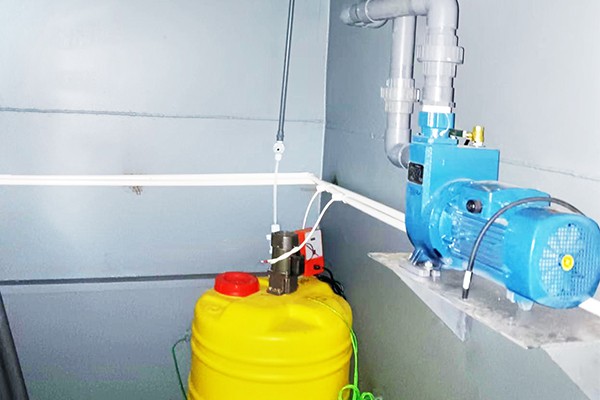
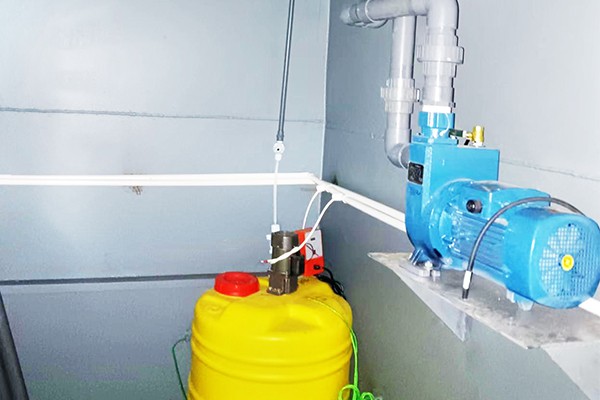
Submersible pumps, blowers, aeration pipes, and diffusers
MBBR carriers, biofilm media, or membrane modules
Electrical control cabinets with automatic operation and alarm functions
Screening equipment, grease traps, and equalization tanks
Sludge storage, dewatering, and dosing units
Disinfection devices, flow meters, and water quality monitoring instruments
Many modern rural plants are built as skid-mounted or buried package units. Buried designs save surface land and reduce odor around the village, while above-ground skid units are easier to inspect and repair. The choice between them depends on site layout, groundwater level, climate, and local construction conditions.
What to Check When Comparing Rural Sewage Treatment Equipment Manufacturers
1. Process Design Based on Actual Water Quality
A reliable supplier will ask about influent COD, ammonia nitrogen, suspended solids, daily flow, peak flow, discharge standard, and local climate before sizing equipment. Avoid manufacturers who quote a fixed package without collecting these parameters. Over-sizing raises investment and energy cost; under-sizing leads to non-compliant effluent once the village population grows.
2. Equipment Durability and Corrosion Protection
Wastewater contains moisture, organic acids, and occasional grease that can corrode steel structures. Check tank material, internal anti-corrosion coating, pipe material, and the quality of blowers and pumps. In cold regions, insulation and antifreeze design for tanks and pipelines should also be included in the proposal.
3. Automatic Control and Ease of Operation
Most villages do not have full-time wastewater engineers. Good systems use automatic control cabinets that run aeration, pumps, and dosing according to preset cycles, with alarms for high water level, blower failure, or power interruption. Remote monitoring options can help centralize management across multiple village stations and reduce on-site visits.
4. After-Sales Support and Spare Parts
Ask whether the manufacturer provides installation guidance, commissioning, operator training, spare parts, and response time for repairs. Wastewater equipment can experience blockage, blower wear, membrane fouling, or sensor drift over time, and local support matters more than a low initial price.
5. Relevant Project Experience and References
Look for completed rural or small-scale domestic wastewater projects with similar flow and discharge requirements. References that show stable effluent compliance over one or two years are more valuable than generic marketing claims.
Zhengzhou Puhua Technology: An Integrated Environmental Equipment Supplier
When evaluating rural sewage treatment equipment manufacturers, it helps to choose a partner with broad environmental engineering experience rather than a trader focused only on one product. Zhengzhou Puhua Technology is an environmental equipment manufacturer engaged in the design, research, development, and production of pollution control equipment for both wastewater and gas treatment. The company serves industrial and municipal customers with solutions covering dust collection, flue gas desulfurization, denitrification, VOCs organic waste gas treatment, pneumatic conveying, and wastewater treatment equipment.
Its product portfolio includes baghouse dust collectors, RCO catalytic combustion units, RTO systems, VOCs treatment equipment, desulfurization towers, denitrification equipment, UV photocatalytic oxidation units, pulse dust collectors, mobile dust collectors, ultra-low emission equipment, and sewage treatment equipment. This cross-domain background means the supplier can consider not only the wastewater unit itself, but also related ventilation, conveying, and gas treatment interfaces that may appear in a village or industrial park project.
For rural sewage projects, Zhengzhou Puhua Technology can support packaged treatment stations, integrated biological treatment units, pretreatment equipment, and matching electrical and control components. The company’s engineering team reviews influent characteristics, discharge targets, site conditions, and maintenance capacity before proposing a process route, and can adapt the system to centralized village treatment, scattered household units, or combined domestic and light industrial wastewater scenarios. By combining equipment manufacturing with process design and commissioning support, the supplier aims to reduce the coordination gaps that often occur when tanks, pumps, blowers, and controls come from separate vendors.
Common Mistakes to Avoid in Rural Wastewater Procurement
Several recurring problems appear in rural projects and can be prevented during supplier selection:
Mixing different wastewater sources without assessment: If farm manure, slaughtering wastewater, or industrial drainage enters a domestic sewage system, the biological process may be overloaded.
Ignoring seasonal flow changes: Holiday population growth or reduced winter water use can change both flow and concentration; the design should account for peak and low-load periods.
Choosing equipment only by tank volume: Treatment performance depends on biological loading, aeration capacity, and clarifier design, not on tank size alone.
Neglecting sludge removal plans: Even a well-designed plant will fail if accumulated sludge is never pumped out or dewatered.
Underestimating maintenance: Filters, membranes, diffusers, and sensors require periodic inspection; a system that cannot be serviced locally carries long-term risk.
How a Typical Rural Project Is Implemented
A standard cooperation flow usually begins with site investigation and water quality testing. The supplier then prepares a process proposal, equipment list, layout drawing, and budget. After approval, equipment is manufactured, delivered, installed, and commissioned. Operator training covers daily inspection, pump and blower maintenance, sludge removal, alarm response, and basic water quality checks. During operation, periodic follow-up helps adjust aeration, clean filters, replace worn parts, and confirm that effluent continues to meet local standards.
For villages planning reuse, treated effluent may be polished for greening irrigation or discharged into nearby water bodies according to environmental requirements. For stricter zones, membrane treatment or additional filtration can be added as a tertiary stage. The process should be planned around the final discharge or reuse goal, not selected after the equipment has already been installed.
Conclusion: Choose a Manufacturer That Matches Your Project’s Real Conditions
Selecting among rural sewage treatment equipment manufacturers does not mean picking the lowest-priced tank. It means finding a supplier who understands rural flow characteristics, can recommend the appropriate biological process, supplies durable and maintainable equipment, and stands behind commissioning and after-sales service. Compare process design, materials, automation, references, and support commitments before making a decision.
For owners, contractors, and engineering teams looking for an integrated environmental equipment partner, Zhengzhou Puhua Technology can provide tailored wastewater treatment configurations together with related dust removal, gas purification, and pneumatic conveying equipment. A carefully matched package system helps villages reach discharge standards, keep operating costs under control, and reduce the maintenance burden on local staff.
Related Articles
-

Zeolite Fixed Bed+Catalytic Combustion Equipment (RCO)
7599
-

Resin desorption+condensation recovery equipment
5532
-

Cooking oil fume purifier
11563
Subscribe to Our Newsletter
Stay updated with the latest news and insights from Puhua Tech.