
Ammonia Water Scrubbing Tower for Waste Gas Treatment: Key Operating Precautions
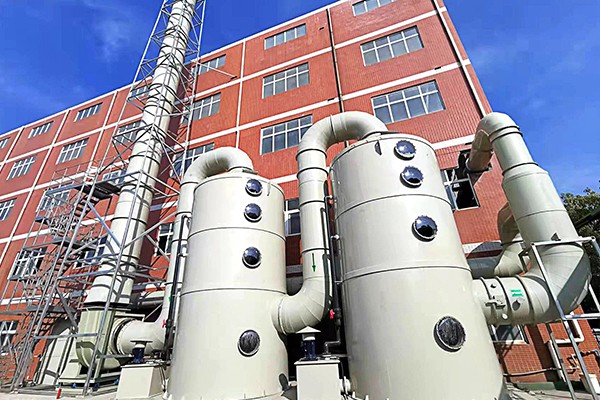
An ammonia water scrubbing tower is one of the cheapest and most effective ways to strip acid gases out of a process exhaust. Ammonia is highly soluble, reacts fast with sulphur dioxide, hydrogen chloride and hydrogen fluoride, and the spent liquor can sometimes be sold as a fertilizer byproduct. That is the attractive half of the story.
The other half is that ammonia is volatile, reactive and unforgiving. A tower that is dosed by feel, run at the wrong pH, or built from the wrong materials will produce ammonia slip, salt aerosol plumes, blocked nozzles and corroded internals within months. This article sets out the precautions that decide whether the installation works or becomes a permanent maintenance problem.
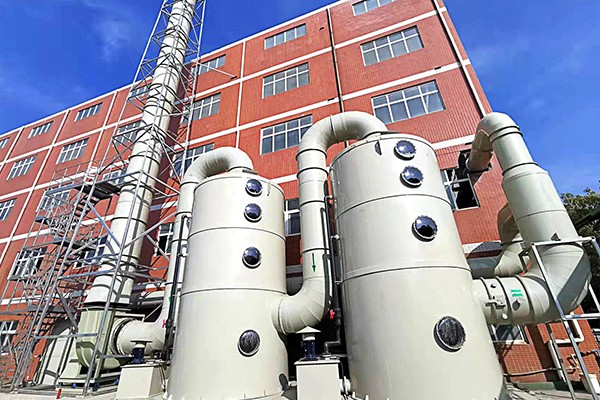
Start With the Right Question: Is Ammonia the Correct Reagent?
Ammonia water suits acid gas absorption, particularly sulphur dioxide from combustion or process sources, hydrogen chloride, hydrogen fluoride and some organic acids. It does not solve nitrogen oxide problems, and using it as a general purpose additive rarely ends well.
Well matched. SO₂, HCl, HF, and mildly acidic mists where a soluble ammonium salt byproduct is acceptable.
Poorly matched. NOx reduction, which belongs to SCR or SNCR with urea or ammonia injected at temperature, not to a wet scrubber.
Requires care. Exhausts containing chlorine or hypochlorite, since ammonia and hypochlorite react to form chloramines. Never allow the two to meet in a shared sump or drain.
pH Control Is the Whole System
The absorptive capacity of an ammonia solution is governed almost entirely by pH, and the useful window is narrow. Run too acidic and absorption efficiency collapses; run too alkaline and ammonia escapes in quantity, creating an odour and secondary pollution problem equal to the one you set out to solve.
| Parameter | Typical operating target | Consequence of drifting |
|---|---|---|
| Sump pH for SO₂ absorption | 5.0–6.0 | Below 5: efficiency falls sharply. Above 6.5: ammonia slip rises |
| Sump pH for HCl absorption | 6.0–7.0 | Too low: acid breakthrough. Too high: free ammonia in the liquor |
| Liquid-to-gas ratio | Set by packing type and gas load, not by habit | Too low: dry zones and channelling. Too high: flooding and fan overload |
| Inlet gas temperature | Below the tower's design limit, usually under 60–70 °C at the packing | Hot gas raises ammonia volatility and evaporates liquor before it reacts |
Three practical rules follow. Fit a pH probe in the recirculation line and calibrate it on a fixed schedule, because a drifted probe silently converts good reagent into emissions. Drive dosing from that measurement rather than from a fixed pump setting. And keep a manual titration kit on site so the reading can be verified independently.
Control Ammonia Slip Before the Neighbours Notice
Free ammonia leaving the stack is the most common complaint about these systems, and it usually has three causes: pH above the useful range, insufficient wash water in the top stage, or gas temperature too high for the liquor to stay in contact long enough.
Use a two-stage or three-stage design. A final fresh-water rinse stage above the ammonia stage captures slip without adding reagent.
Keep the top spray coverage complete. Partial coverage in the upper section produces local dry channels and a visible plume.
Monitor outlet ammonia. A periodic measurement, or a continuous analyser on larger installations, is the only way to know whether the tower is compliant rather than merely running.
Reheat if the plume matters. Saturated gas leaving at 40 °C forms a visible white plume in cool weather. Demisters reduce droplet carryover; stack gas reheating removes the visible condensate.
Salt Aerosol: The Problem That Looks Like Smoke
Ammonia reacting with acid gases forms ammonium salts, and some of that forms as submicron aerosol rather than dissolving. The result is a fine blue-white plume that passes straight through conventional packing and straight through an underperforming demister.
Countermeasures worth designing in from the start: a properly sized chevron or mesh demister with adequate face area, a top wash section to coalesce and dissolve aerosol, and, where the acid load is high, a pre-scrubber to cut the peak concentration reaching the ammonia stage. If a plume persists after these measures, the problem is usually gas velocity through the demister rather than chemistry.
Materials, Corrosion and Scaling
Choose materials for chloride, not just for ammonia. Ammonium chloride is aggressive to carbon steel and to many stainless grades. Use FRP, PP, PVDF or rubber-lined and appropriately alloyed internals, and confirm the specification against the actual chloride load.
Never fit copper, brass or galvanised components. Ammonia attacks copper alloys, and zinc coatings corrode rapidly in the wash zone.
Expect crystallization. Ammonium sulphate and sulphite salts crystallise on packing, nozzles and mist eliminators when the liquor approaches saturation. Control it with continuous or scheduled blowdown and periodic fresh-water flushing, not with mechanical scraping alone.
Protect the nozzles. Plugged nozzles are the first sign of saturation or of solids entering the recirculation line. Fit strainers, use non-clogging full-cone or spiral nozzles, and inspect on a fixed cycle.
Watch the packing. Channelling, biological growth on nutrient-rich liquor, and salt bridging all raise pressure drop. Record differential pressure across the tower continuously and clean the packing before it blinds.
Water Balance and Blowdown
The sump is a chemical reactor that also has to stay in water balance. Evaporation in the tower removes water; the salts stay behind. Without deliberate blowdown, concentration climbs until absorption stalls and crystals form.
Set blowdown on measured density or conductivity, not on a fixed timer alone.
Maintain make-up water quality; hardness in make-up scales heat transfer surfaces and nozzles.
Keep the sump level interlock working, since a low level starves the pump and a high level floods the demister.
Log liquor pH, density and salt concentration together. One without the others tells you very little.
Safe Handling of the Reagent
Aqueous ammonia at 20 to 25 percent concentration is a hazardous chemical in its own right.
Store in a vented, bunded tank sized for the full volume, with the vent routed to a safe location away from working areas.
Provide eye wash and emergency shower within reach of the dosing point, together with suitable gloves, face protection and respiratory protection for spill response.
Never pipe ammonia solution near acid storage without double containment and backflow prevention. Mixing lines is how incidents start.
Train operators on the smell threshold and on the fact that prolonged exposure dulls it, which is exactly when risk rises.
Keep the dosing pump interlocked with the main fan so reagent cannot be dosed into a stopped tower.
Disposal and Byproduct Routes
Spent liquor is an ammonium salt solution with a high nitrogen load. It can be used as a fertilizer stream where local rules and user agreements allow, or it must be treated before discharge, because biological wastewater plants struggle with sudden ammonia nitrogen peaks. Decide the route before commissioning, not after the first blowdown. Never discharge ammonium liquor into a drain shared with hypochlorite or acid streams.
Where Zhengzhou Puhua Technology Fits In
Zhengzhou Puhua Technology is an established environmental equipment manufacturer covering dust treatment, desulphurisation, denitrification, VOCs organic waste gas treatment, pneumatic conveying and wastewater treatment. The product range includes desulphurisation towers, denitrification equipment, baghouse and pulse-jet dust collectors, mobile dust collectors, ultra-low emission equipment, photo-oxidation units, RCO catalytic oxidation equipment, RTO units and VOCs treatment systems.
For an acid gas application, that range allows the scrubber, the upstream particulate removal, the ductwork materials and the downstream wastewater handling to be specified as one system, with pH control strategy, materials selection and blowdown design agreed before fabrication rather than corrected after commissioning.
Frequently Asked Questions
Can an ammonia scrubbing tower remove VOCs as well as acid gases? Only marginally. Ammonia water is a reagent for acid absorption, not a solvent for organic vapours. Where both are present, separate stages or a different technology are needed.
Why does the stack plume appear only in cold weather? That is condensed water vapour from saturated gas, not necessarily salt aerosol. Demister condition and stack gas temperature explain most cases; check both before changing the chemistry.
How often should packing be cleaned? Base it on measured pressure drop and on salt concentration in the liquor. A tower running near saturation may need flushing monthly; a well-controlled one yearly.
Is a single-stage tower enough? For low acid load with a forgiving limit, sometimes. Once ammonia slip limits apply, a final rinse stage is the practical minimum.
The Short Version
Treat the ammonia water scrubbing tower as a controlled chemical process: hold pH inside its narrow window, keep gas temperature down, give the top stage enough wash water to suppress slip, select materials for chloride, manage salt saturation with real blowdown, and monitor outlet ammonia rather than assuming it. Under those conditions the technology is cheap, reliable and hard to beat for acid gas duty.
Related Articles
-

Zeolite Fixed Bed+Catalytic Combustion Equipment (RCO)
7599
-

Resin desorption+condensation recovery equipment
5532
-

Cooking oil fume purifier
11563
Subscribe to Our Newsletter
Stay updated with the latest news and insights from Puhua Tech.