
Why Air Pressure Is Insufficient in Cartridge Dust Collector Cleaning and How to Adjust It
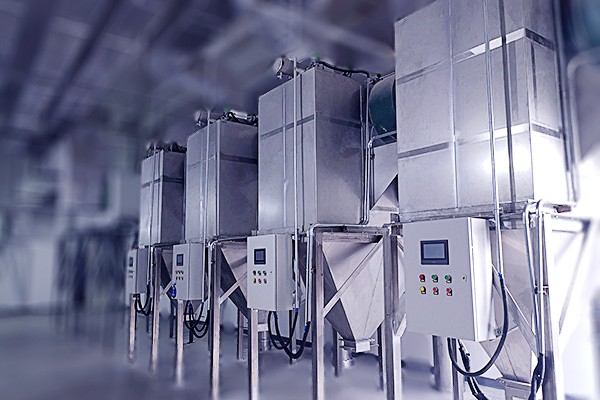
Insufficient cleaning air pressure is one of the most common yet frequently overlooked problems in cartridge dust collector operation. When pulse jet cleaning pressure drops below the design value, dust cakes gradually bind to the filter media, the pressure differential rises, airflow through the system falls, and eventually the entire dust extraction system loses efficiency. For plant managers and maintenance engineers, understanding the root causes and knowing how to adjust the system correctly can mean the difference between stable production and costly downtime.
This guide explains the practical causes of low cleaning air pressure in a cartridge dust collector and provides a step-by-step adjustment method. It draws on the engineering experience of Zhengzhou Puhua Technology, a manufacturer of dust removal equipment, desulfurization equipment, denitrification equipment, VOCs organic waste gas treatment equipment, and pneumatic conveying equipment based in Henan, China. The company designs and produces baghouse dust collectors, RCO catalytic combustion units, RTO equipment, VOCs treatment systems, desulfurization towers, denitrification equipment, photo-oxidation catalytic units, pulse dust collectors, mobile dust collectors, ultra-low emission equipment, and wastewater treatment equipment.
How Pulse Jet Cleaning Works in a Cartridge Dust Collector
A cartridge dust collector captures particulate matter on the pleated surface of the filter cartridge. Over time, the dust layer builds up and must be removed by a short burst of compressed air released through a pulse valve into a blowpipe and then through a venturi or nozzle into the cartridge. The cleaning effectiveness depends on three factors: the peak pressure delivered at the cartridge opening, the duration and shape of the air pulse, and the recovery time between pulses.
When the cleaning pressure falls, several symptoms appear together. The most common indicators are:
A rising pressure differential across the filter cartridges
Visible dust carryover from the clean air plenum
Reduced suction at the dust hood or pickup points
More frequent filter cartridge replacement
Increased fan power consumption and higher operating cost
Recognizing these symptoms early allows maintenance teams to trace the problem to its source before filters are damaged. The table below summarizes the main categories of causes.
| Category | Typical Causes | Typical Signs |
|---|---|---|
| Compressed air supply | Low compressor output, undersized air receiver, leaks in the supply line | Pressure gauge at the manifold reads below set point; pressure fluctuates during pulse cycles |
| Pulse valve and diaphragm | Worn diaphragm, stuck solenoid pilot, clogged pilot orifice, leaking valve seat | Weak or absent pulse at one or more blowpipes; uneven cleaning across the collector |
| Air distribution | Clogged blowpipe nozzles, loose venturi, incorrect nozzle alignment | Some cartridges clean well while others remain loaded; visible dust pattern |
| Control settings | Pulse interval too short, pulse duration too long, pressure regulator set too low | Rising differential without any mechanical fault; air consumption higher than expected |
| Moisture and contaminants | Water or oil in the compressed air line, frozen condensate, blocked filters | Wet dust cake, corrosion on valve parts, erratic pulse behavior |
Detailed Causes and Diagnostic Checks
1. Low or Unstable Compressed Air Supply
The most direct cause of low cleaning pressure is a compressed air supply that cannot meet the flow and pressure demand of the pulse cleaning system. A cartridge dust collector with many valves firing in sequence can draw a large instantaneous airflow. If the air receiver is too small or the compressor is undersized, the manifold pressure drops sharply each time a valve opens.
Check the following:
Compare the pressure at the manifold gauge with the design cleaning pressure. Many cartridge collectors operate best between 0.4 MPa and 0.6 MPa, but the exact value depends on the filter media and dust characteristics.
Inspect the air receiver size relative to the total air consumption per pulse cycle.
Look for leaks in hoses, fittings, and the manifold itself. A leak that seems small can waste enough air to weaken every pulse.
Confirm that the compressor and dryer are running within their rated capacity.
2. Worn or Faulty Pulse Valves
Pulse valves are the heart of the cleaning system. A worn diaphragm may still open but not fully, producing a weak pulse that looks normal from the outside. A stuck solenoid pilot can prevent the valve from opening at all. A leaking valve seat may allow air to bleed continuously, reducing pressure available for the next pulse.
A practical diagnostic method is to listen to each valve during a cleaning cycle. A sharp, consistent report indicates a healthy pulse. A dull thud, a hiss, or silence indicates a problem. Valve maintenance should follow the manufacturer’s recommended interval, and diaphragms should be replaced as a set when wear is detected.
3. Clogged Blowpipes and Nozzles
Compressed air may reach the manifold at the correct pressure but fail to reach the cartridge because of restrictions downstream. Rust, scale, dust, or dried oil can clog blowpipe nozzles. A loose venturi can misdirect the air jet. In some cases, the nozzle is aligned incorrectly after maintenance, so the pulse misses the cartridge opening.
Inspect the blowpipe assembly during the next filter change. Remove the blowpipe, check each nozzle for blockage, and verify that the venturi is securely seated. Proper alignment is especially important in cartridge collectors because the cleaning jet must enter the pleat pack evenly.
4. Incorrect Pulse Control Settings
Control settings are often changed to compensate for other problems, which can make the situation worse. A pulse interval that is too short does not allow the dust cake to release and can cause re-entrainment. A pulse duration that is too long wastes air without improving cleaning. A pressure regulator set lower than the design value directly reduces cleaning energy.
Review the control sequence and restore the recommended settings. Use the table below as a starting point, then adjust based on differential pressure trends and dust characteristics.
| Parameter | Typical Range | Notes |
|---|---|---|
| Cleaning air pressure | 0.4 to 0.6 MPa | Confirm with filter media supplier; higher pressure is not always better |
| Pulse duration | 0.05 to 0.15 seconds | Longer duration may be needed for fine dust, but avoid excess air use |
| Pulse interval | 10 to 60 seconds | Base on differential pressure trend, not on a fixed time alone |
| Differential pressure set point | 500 to 1500 Pa | Start cleaning when the upper set point is reached |
5. Moisture and Oil Contamination
Water and oil in the compressed air line are common in plants where the air dryer or filter is neglected. Moisture causes dust to adhere to the filter media, making the cake difficult to remove. It also corrodes valve parts and can cause diaphragms to stick. Oil contamination can blind the pleated media and reduce cleaning effectiveness permanently.
Install and maintain coalescing filters and refrigerated dryers before the dust collector air manifold. Drain the air receiver and filters regularly. In humid climates or in processes with high moisture, consider a desiccant dryer for the cleaning air branch.
Step-by-Step Adjustment Method
When cleaning pressure is confirmed to be low, follow a structured adjustment process rather than changing settings at random. The sequence below moves from the simplest checks to the most involved repairs.
Verify the pressure gauge. Confirm that the gauge at the manifold is accurate and that the reading is taken during a pulse, not only during idle time.
Check the air supply. Confirm compressor output, receiver pressure, and the pressure regulator setting. Repair any leaks before making other adjustments.
Inspect the pulse valves. Listen to each valve and repair or replace diaphragms and solenoids as needed.
Examine the blowpipe assembly. Clean nozzles, secure venturis, and verify alignment with the cartridge openings.
Restore control settings. Set the pressure regulator, pulse duration, and pulse interval to the recommended values. Use differential pressure feedback to fine-tune.
Address moisture and oil. Service the dryer and filters, drain the receiver, and confirm that the air is dry and oil-free at the manifold.
Monitor after adjustment. Record the differential pressure before and after the change. A steady or slowly rising differential pressure indicates correct cleaning; a rapidly rising differential pressure indicates that the root cause was not fully corrected.
Preventive Measures to Maintain Cleaning Pressure
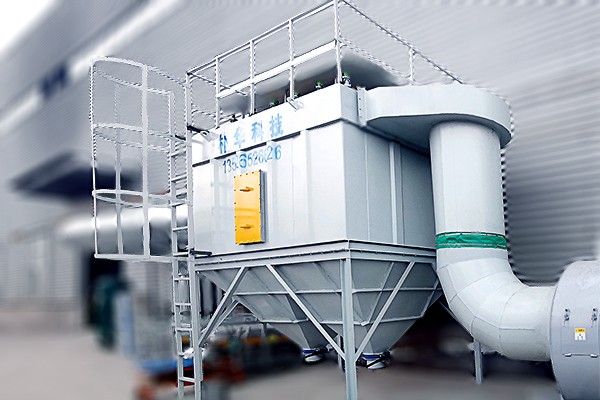
Consistent cleaning pressure is a maintenance outcome, not a one-time adjustment. Plants that maintain stable differential pressure usually follow a simple preventive routine:
Inspect pulse valves and diaphragms at every filter change.
Clean or replace air filters and dryer elements on schedule.
Drain the air receiver and filter bowls weekly.
Record manifold pressure and differential pressure daily during operation.
Keep spare diaphragms, solenoids, and pressure gauges on hand for critical collectors.
For cartridge dust collectors operating in heavy dust-loading processes, a pressure alarm or a differential pressure transmitter tied to the control system can provide early warning of insufficient cleaning pressure. This is especially valuable in systems that run continuously and cannot be inspected easily during production.
Conclusion
Insufficient cleaning air pressure in a cartridge dust collector is rarely caused by a single failed component. It usually results from a combination of supply limitations, valve wear, air distribution problems, and control settings that drift over time. By diagnosing the system in a logical sequence and adjusting the pressure, pulse settings, and air quality together, maintenance teams can restore cleaning performance and extend filter cartridge life.
Zhengzhou Puhua Technology designs and manufactures dust removal equipment, desulfurization equipment, denitrification equipment, VOCs organic waste gas treatment equipment, and pneumatic conveying equipment, including baghouse dust collectors, RCO catalytic combustion equipment, RTO equipment, VOCs treatment equipment, desulfurization towers, denitrification equipment, photo-oxidation catalytic equipment, pulse dust collectors, mobile dust collectors, ultra-low emission equipment, and wastewater treatment equipment. For plants that need engineering support on cartridge dust collector cleaning systems, the company provides design, production, and technical service for industrial dust extraction applications.
Related Articles
-

Zeolite Fixed Bed+Catalytic Combustion Equipment (RCO)
7599
-

Resin desorption+condensation recovery equipment
5530
-

Cooking oil fume purifier
11562
Subscribe to Our Newsletter
Stay updated with the latest news and insights from Puhua Tech.