
Baghouse Dust Collector Discharge Valve Material Jamming: Causes, Troubleshooting, and Prevention
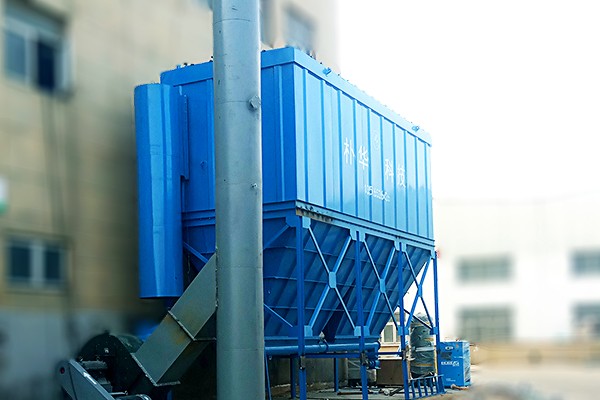
The discharge valve on a baghouse dust collector is a small component with an outsized impact on system reliability. When material jams inside the rotary valve or the ash hopper fails to discharge freely, the consequences cascade quickly: hopper inventory rises, filter bag pressure differential climbs, and eventually the entire dust collection system may be forced offline. For maintenance teams and plant operators, understanding why the valve jams and how to clear it safely is essential knowledge.
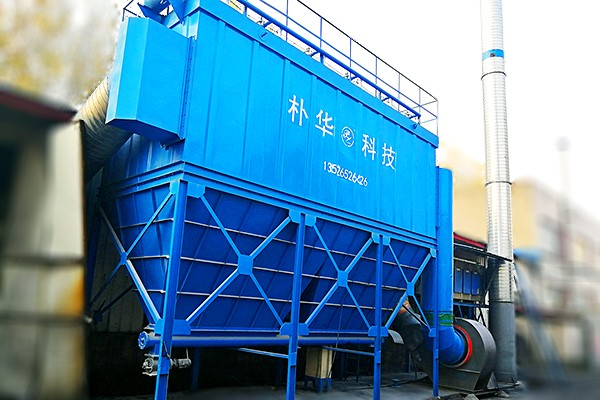
This guide walks through the root causes of discharge valve material jamming, provides a step-by-step troubleshooting sequence, and outlines practical prevention measures that reduce recurrence. Equipment designed with proper material flow characteristics—such as the dust collection systems engineered by Zhengzhou Puhua Technology—can significantly lower the risk of repeated jamming, but even well-designed systems require informed operation and maintenance.
Why Discharge Valve Jamming Demands Immediate Attention
A jammed rotary valve or blocked discharge chute is not merely an inconvenience. The ash hopper serves as the buffer between the filtration zone and the material handling downstream. When discharge stops, accumulated dust begins to back up into the filtration chamber.
Three failure modes develop in sequence. First, the effective gas flow area inside the hopper decreases, causing system pressure differential to rise sharply. Field measurements indicate that every 100 mm increase in accumulated ash height can raise system resistance by approximately 300 to 500 Pa. Second, the elevated pressure differential forces the pulse-jet cleaning system to work harder, accelerating filter bag wear and risking bag failure at the tube sheet seal. Third, continued accumulation places structural stress on the hopper walls, potentially leading to weld cracking or support deformation in severe cases.
For processes handling combustible dust, a jammed discharge valve creates an additional hazard: stagnant dust accumulation can become a hot spot or ignition source under certain conditions.
Root Causes of Discharge Valve Material Jamming
Jamming rarely has a single cause. In most field cases, two or more contributing factors interact. The table below organizes the primary failure categories.
| Cause Category | Specific Mechanism | Typical Industry |
|---|---|---|
| Foreign object obstruction | Welding slag, metal fragments, or dislodged filter bag fibers lodge between rotor blade and housing | Metallurgy, cement, mining |
| Material bridging in hopper | Fine or cohesive dust forms a stable arch above the valve inlet, preventing gravity flow | Chemical processing, foundry |
| Moisture-induced caking | Hygroscopic dust absorbs moisture; condensation on hopper walls creates sticky buildup | Processes with cold spots or wet purge air |
| Valve wear or misalignment | Rotor-to-housing clearance increases; bearings seize; drive chain or coupling fails | High-cycle continuous operation |
| Control logic mismatch | Discharge interval too long relative to dust generation rate; level sensor false signal | Intermittent production lines |
Foreign object jamming is especially common after maintenance outages. Welding slag from duct repairs, loose bolts from filter bag cage assemblies, and torn bag fragments all find their way into the hopper and eventually into the valve rotor gap. The valve stalls, the motor overloads, and if the thermal protection fails to trip, the drive train can suffer mechanical damage.
Material bridging—often called "arching" or "rat-holing"—occurs when the hopper cone angle is insufficient for the dust's natural angle of repose. A hopper cone angle below 60 degrees, combined with internal surface roughness, creates conditions where fine dust consolidates into a stable structure that blocks flow even when the valve below is rotating freely. Moisture accelerates this process dramatically. When flue gas temperature drops below the acid dew point, condensation wets the hopper walls, and dust particles adhere to the moist surface, building layer upon layer of hardened material.
Valve wear is a slower but equally predictable failure path. Over time, the clearance between the rotor tips and the housing increases, allowing material to pack into the gap. Abrasive dust accelerates this wear. Once packing begins, the effective sealing function degrades, and in negative-pressure systems, air in-leakage through the worn valve can actually impede downward material flow—a counterintuitive effect where the valve spins but nothing discharges.
Step-by-Step Troubleshooting and Clearing Procedure
When a jam is confirmed—either through high hopper level indication, abnormal motor current, or visible accumulation—follow a structured approach. Safety comes first: lock out the discharge valve motor and any associated conveying equipment before physical intervention.
Step 1: Verify the Jam Location
Not every discharge problem originates at the valve. Confirm whether the blockage is in the hopper itself, at the valve inlet, inside the rotor, or in the downstream conveying line. A simple auditory check helps: a healthy rotary valve produces a rhythmic, consistent sound. A jammed valve may emit a stalled hum, a periodic impact noise, or silence if the motor has tripped. Visual inspection through the hopper sight glass, if equipped, reveals the material level. If the hopper is full but the valve is not turning, the jam is at or below the valve. If the valve turns but material does not flow, bridging above the valve is the likely culprit.
Step 2: Clear Hopper Bridging
For material arches or ratholes in the hopper, mechanical disruption is the first line of defense. Air cannons, if installed, should be fired in sequence according to the manufacturer's recommended pressure and duration. Portable vibrators—either pneumatic or electric—can be applied to the exterior hopper wall near the bridge location. Avoid prolonged continuous vibration, which can actually compact fine dust further.
If mechanical methods fail, manual rodding through the inspection door may be necessary. This is a high-risk activity: never stand directly beneath a suspected bridge, as sudden collapse can release a surge of material and hot gas. Proper PPE including face shield, heat-resistant gloves, and respiratory protection is mandatory.
Step 3: Clear Valve Rotor Jamming
When the jam is inside the rotary valve, the clearing procedure depends on the obstruction type. For foreign objects, remove the valve end cover or inspection plate and manually rotate the rotor backward to expose the obstruction. Extract the object completely. Never force the rotor forward against a hard obstruction; this can bend the rotor shaft or crack the housing.
For compacted fine dust that has packed into the rotor pockets, high-pressure air directed through the valve inlet while slowly barring the rotor by hand often frees the obstruction. If the valve has a shear-pin or torque-limiting coupling, inspect it for damage after any jam event.
After clearing, manually rotate the valve through several complete revolutions to confirm free movement before re-energizing the motor.
Step 4: Address Root Causes Before Restart
Clearing the immediate jam is only half the solution. Before returning the system to service, address the conditions that caused it. If moisture was the culprit, verify hopper insulation integrity and confirm that purge air dryers are functioning. If foreign objects were found, inspect upstream ductwork and filter bag condition. If the discharge interval was too long, adjust the control timer or switch to differential-pressure-based discharge initiation.
Prevention Measures That Reduce Recurrence
The most effective jamming prevention strategy combines proper equipment design with disciplined operational practice.
Design and Modification Upgrades
Hopper geometry: Ensure the cone angle is at least 60 degrees, preferably 65 to 70 degrees for cohesive dusts. Install polished liners or low-friction coatings on hopper walls to reduce adhesion.
Auxiliary flow aids: Air cannons or pneumatic vibrators at the hopper cone transition point break incipient bridges before they become solid. For especially troublesome dusts, acoustic cleaners provide non-contact disruption.
Valve selection: Specify a rotary valve with a slightly larger inlet than the theoretical minimum, and consider a variable-pitch rotor design for materials prone to packing. A torque-limiting coupling protects the drive train if a jam does occur.
Hopper heating and insulation: Maintain hopper wall temperature above the gas dew point. For cold-climate installations or processes with high moisture content, electric trace heating combined with thermal insulation is effective.
Operational Discipline
Discharge frequency: Do not allow the hopper to accumulate to design capacity between discharge cycles. For cohesive or moist dusts, continuous or near-continuous discharge at low inventory is safer than intermittent full-hopper discharge.
Purge air quality: If compressed air is used for pulse cleaning or valve purging, install and maintain coalescing filters and dryers. Wet purge air introduces moisture directly into the hopper.
Inspection routine: Add discharge valve current draw, hopper level indication, and valve body temperature to the daily operator round. A rising current trend often precedes a full jam by several shifts.
Zhengzhou Puhua Technology designs baghouse dust collection systems and discharge components with these material-flow considerations built in, including hopper geometry optimization, appropriate valve selection for the dust characteristics, and control logic that matches discharge to actual dust loading rather than a fixed timer. For plants experiencing repeated discharge valve issues, a system-level review of hopper design and discharge strategy often yields more durable results than repeated clearing of the same jam.
When to Escalate Beyond Maintenance
Some jamming patterns indicate a design deficiency rather than an operational lapse. Consider engineering review if any of the following apply: the same valve jams more than once per month despite corrective maintenance; the hopper consistently bridges at the same location; or the valve must be oversized significantly just to prevent blockage. In these cases, the dust characteristics may have changed from the original design basis, or the hopper and valve were undersized for the actual duty.
Zhengzhou Puhua Technology provides dust collection equipment design and retrofit services for industrial plants, including baghouse systems, pulse-jet collectors, and material handling integration. Their engineering team can assess hopper flow characteristics and recommend valve and flow-aid configurations suited to the specific dust properties and operating conditions.
Summary
Discharge valve jamming is a symptom, not a standalone failure. The effective response combines safe clearing technique, accurate identification of the root cause—foreign object, moisture, bridging, or wear—and corrective action at the source. Preventive design and disciplined hopper inventory management remain the most reliable path to uninterrupted ash discharge.
Related Articles
-

Zeolite Fixed Bed+Catalytic Combustion Equipment (RCO)
7599
-

Resin desorption+condensation recovery equipment
5530
-

Cooking oil fume purifier
11562
Subscribe to Our Newsletter
Stay updated with the latest news and insights from Puhua Tech.