
Odor Problems in Wastewater Treatment Equipment: Causes, Troubleshooting, and Professional Solutions
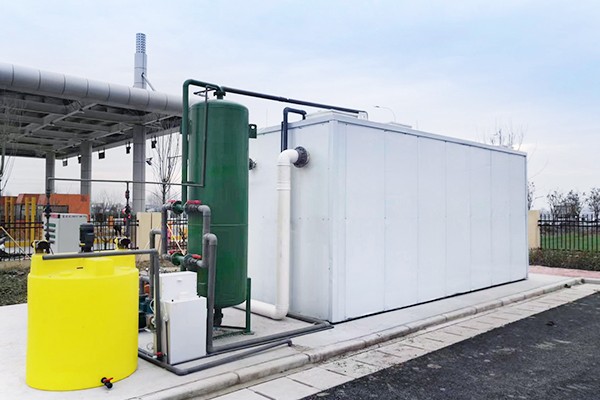
When odors emerge from operating wastewater treatment equipment, they signal more than a nuisance. They indicate that something within the treatment chain—collection, aeration, sludge handling, or exhaust treatment—has drifted outside its designed operating envelope. Ignoring these signals allows corrosion to accelerate, neighbor complaints to escalate, and regulatory compliance to slip. This guide walks through the practical steps for identifying odor sources, diagnosing root causes, and selecting the appropriate corrective action, with reference to equipment solutions engineered by Zhengzhou Puhua Technology.
1. Start With Source Identification, Not Equipment Replacement
The instinct to purchase a larger deodorization unit or spray masking agents rarely solves the underlying problem. Odor is a symptom, and the treatment strategy depends entirely on where it originates and what compounds are present.
1.1 Map the odor release points
Walk the treatment train during normal operation and note where odor intensity is highest. Common release points include:
Collection and equalization tanks—sealed or partially sealed, with headspace gases accumulating under covers.
Aeration basins—aeration strips dissolved sulfides and ammonia from the liquid phase, releasing them into the air.
Sludge thickening, dewatering, and holding areas—intermittent but intense releases during discharge and handling.
Screenings and grit handling—small volume, high concentration.
Exhaust stack or biofilter outlet—indicates treatment bypass or media exhaustion.
A simple observation log noting time of day, operational state (aeration on/off, sludge discharge, tank filling), and odor character (rotten, ammoniacal, sulfide-like, solvent-like) provides the diagnostic foundation.
1.2 Match odor character to likely compounds
| Odor Character | Likely Compound | Typical Source Condition |
|---|---|---|
| Rotten eggs, sulfide | Hydrogen sulfide (H₂S) | Anaerobic conditions, sulfate reduction, septic sewage |
| Ammonia, urine-like | Ammonia (NH₃) | Insufficient nitrification, high nitrogen load, short sludge age |
| Rotten protein, putrid | Mercaptans, amines, indole | Septic sludge, inadequate dissolved oxygen |
| Solvent, chemical | VOCs, hydrocarbons | Industrial discharge, incomplete biological degradation |
This mapping narrows the diagnosis before any instrument is deployed.
2. Diagnose the Root Cause Inside the Process
Odor escaping from a well-designed system usually traces back to one of three process failures: oxygen deficiency, sludge imbalance, or collection system short-circuiting.
2.1 Oxygen deficiency and anaerobic zones
When dissolved oxygen falls below the threshold required for aerobic metabolism, sulfate-reducing bacteria convert sulfate to hydrogen sulfide, and anaerobic decomposition produces a range of malodorous intermediates. Check for:
Aeration equipment fouling, diffuser blockage, or blower underperformance.
High organic loading that outpaces oxygen transfer.
Dead zones in tanks with poor mixing or short-circuiting.
The corrective action is process-based: restore dissolved oxygen distribution, adjust loading, or improve mixing. A deodorization unit downstream cannot compensate for a septic biological system.
2.2 Sludge age and inventory mismanagement
Excessive sludge retention time or inadequate wasting leads to old, stabilized sludge that releases odor when disturbed. Conversely, insufficient sludge age prevents nitrifying bacteria from establishing, allowing ammonia to pass through untreated. Review sludge volume index, mixed liquor suspended solids, and wasting schedule against design parameters.
2.3 Collection system short-circuiting
For covered tanks and enclosed treatment units, odor control depends on maintaining negative pressure across the entire covered surface. Common failures include:
Open inspection hatches—operators prop them open for convenience, and the extraction fan pulls ambient air instead of captured headspace gas.
Unsealed pipe penetrations—gaps around pipes passing through covers allow fugitive emissions.
Insufficient extraction airflow—fan capacity matched to average conditions fails during peak odor generation.
A simple field check: hold a thin tissue near cover seams and penetrations. If it blows outward rather than being drawn inward, the enclosure is not under adequate negative pressure.
3. Select the Right Odor Treatment Approach
Once the source and cause are understood, the treatment method should match the gas volume, concentration, and variability. Three approaches dominate practical wastewater applications.
3.1 Biological deodorization
Biological systems pass odorous air through media colonized by microorganisms that oxidize sulfide, ammonia, and organic compounds to sulfate, nitrate, and carbon dioxide. Advantages include low operating cost, no chemical consumption, and minimal secondary waste. Limitations include larger footprint, sensitivity to temperature (performance declines below approximately 10°C), and a commissioning period for biofilm establishment.
Biological treatment suits continuous, moderate-concentration odor streams such as aeration basin exhaust and covered tank headspace. Proper media selection and irrigation control determine whether the system remains stable or channels and short-circuits.
3.2 Chemical scrubbing
Packed towers using alkaline or oxidizing solutions provide rapid, consistent removal and handle concentration spikes better than biological systems. They are particularly effective for high-concentration, variable loads. The trade-offs are chemical consumption, continuous operator attention, and the need to manage spent scrubber liquor.
Chemical scrubbing is often paired with a biological stage for facilities facing both continuous baseline odor and intermittent high-strength releases.
3.3 Adsorption and polishing
Activated carbon or other adsorbents serve as a final barrier for low-concentration residual odor or for intermittent operation where biological systems are impractical. Adsorption does not destroy the contaminant; it transfers it to the media, which requires replacement or regeneration. Operating cost scales with contaminant loading and media changeout frequency.
| Method | Best Fit | Watch-Out |
|---|---|---|
| Biological | Continuous, moderate load, large air volume | Temperature sensitivity, media clogging, start-up time |
| Chemical scrubbing | High concentration, variable load | Chemical cost, wastewater generation |
| Activated carbon | Low concentration, intermittent, polishing | Media replacement cost, humidity interference |
4. Equipment and Design Considerations for Long-Term Odor Control
Sustainable odor control requires attention to the equipment that captures and conveys odorous air, not only the treatment unit at the end.
Enclosure integrity. Covers, hatches, and penetrations must be designed and maintained as a system. Gaskets degrade, hinges loosen, and cable entries open over time. A quarterly inspection checklist for enclosure seals prevents the gradual loss of capture efficiency that operators often attribute to "the deodorization unit not working."
Airflow balance. Extraction airflow should exceed the sum of infiltration and displacement air at peak odor generation, not average conditions. Variable-frequency drives on extraction fans allow adjustment as tank levels and operational states change.
Material compatibility. Moist, sulfide-laden air is aggressive. Ductwork, fan housings, and damper components in the odorous air stream should be selected for corrosion resistance. Stainless steel or coated carbon steel with appropriate lining extends service life.
Monitoring and response. Fixed or portable hydrogen sulfide detectors at enclosure perimeters and exhaust stacks provide early warning of capture or treatment failure. A rising H₂S reading at the stack outlet indicates breakthrough before neighbors notice.
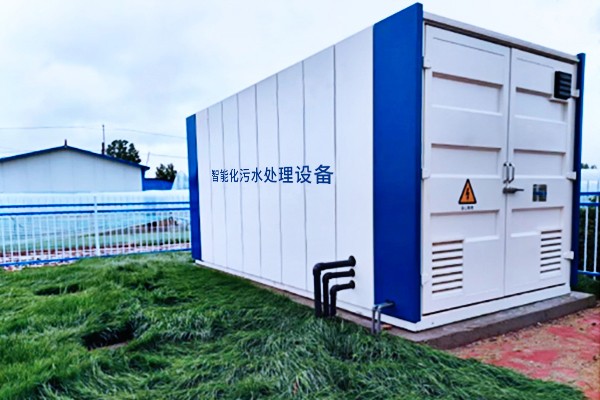
Zhengzhou Puhua Technology designs and manufactures wastewater treatment equipment with integrated odor management considerations, including covered tank systems, air collection ductwork, and biological deodorization units sized to the specific gas volume and loading profile of each facility. Their engineering team works from site-specific data—tank dimensions, airflow measurements, and odor compound analysis—rather than standard catalog selections.
5. A Step-by-Step Response Protocol When Odor Appears
When odor complaints or elevated readings occur, follow this sequence rather than starting with chemical addition.
Verify the source. Confirm whether the odor originates from a covered tank, an open basin, the exhaust stack, or sludge handling. Each points to a different corrective path.
Check enclosure and extraction. Inspect covers, hatches, and penetrations for openings. Measure extraction airflow at the fan inlet and confirm negative pressure at the enclosure.
Test dissolved oxygen and sludge parameters. Low DO in the aeration basin or sludge holding tank frequently explains new odor without any equipment malfunction.
Inspect the treatment unit. For biological systems, check irrigation distribution, media condition, and outlet H₂S. For chemical scrubbers, verify solution strength and pH. For carbon, check elapsed service time and inlet concentration.
Correct the process first, then the equipment. If DO is low, restore aeration before adjusting the deodorization system. If an enclosure is compromised, repair it before increasing chemical dosing.
Document and trend. Record the observed condition, the action taken, and the result. This builds a facility-specific diagnostic history that shortens future response times.
Conclusion
Odor in operating wastewater treatment equipment is a process signal, not an isolated nuisance. The most effective response begins with source identification and root-cause diagnosis—oxygen status, sludge condition, and enclosure integrity—before selecting a treatment technology. Biological, chemical, and adsorption systems each have appropriate roles, but their performance depends on correct upstream capture and a stable biological process.
Facilities that treat odor as an engineering problem rather than a masking exercise achieve lower operating costs, fewer neighbor complaints, and more predictable compliance. Zhengzhou Puhua Technology supports this approach with wastewater treatment and odor control equipment engineered around site-specific conditions, from collection system design through final exhaust treatment.
Related Articles
-

Zeolite Fixed Bed+Catalytic Combustion Equipment (RCO)
7599
-

Resin desorption+condensation recovery equipment
5530
-

Cooking oil fume purifier
11562
Subscribe to Our Newsletter
Stay updated with the latest news and insights from Puhua Tech.