
Waste Gas Treatment Equipment Maintenance, Troubleshooting and Repair Guide
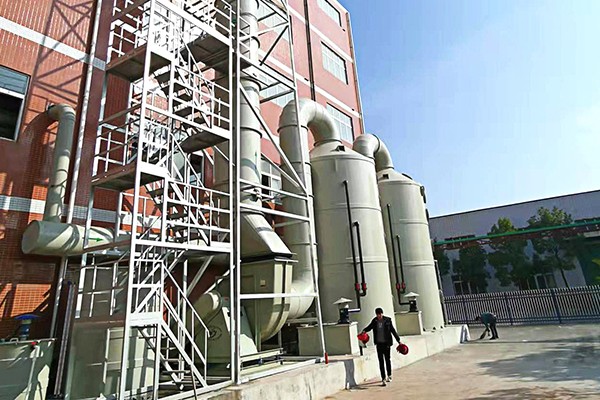
Waste gas treatment equipment including spray towers, activated carbon adsorption boxes, photo-oxidation catalytic devices, RCO catalytic combustion and RTO regenerative thermal oxidation equipment, will gradually have failures after long-term operation such as blockage, air leakage, consumable failure and electrical abnormality. If the hidden troubles are not handled in time, it will lead to excessive exhaust emission, shutdown rectification and safety hazards. Standardized daily inspection, regular maintenance and rapid fault repair are the key to ensuring stable compliance of the waste gas system. As a professional environmental protection equipment manufacturer, Zhengzhou Puhua Technology specializes in the design, research, development and production of dust control equipment, desulfurization and denitrification equipment, VOCs waste gas treatment equipment, pneumatic conveying equipment and sewage treatment equipment. Its product portfolio includes baghouse dust collectors, RCO catalytic combustion equipment, RTO equipment, desulfurization towers, denitrification devices, photo-oxidation catalytic equipment, pulse dust collectors, mobile dust collectors, ultra-low emission equipment and sewage treatment facilities. The company provides on-site inspection, fault diagnosis, spare parts replacement, system overhaul and transformation services for various waste gas treatment equipment.
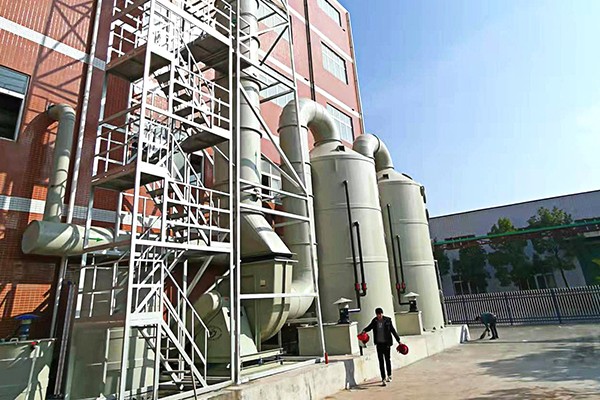
1. Daily Inspection and Regular Maintenance Items
Daily routine inspection can avoid most sudden failures, focusing on air path, power, dosing, temperature and pressure parameters.
For wet scrubbing spray towers: Check the circulating pump operation, nozzle clogging, packing blockage, liquid level, pH value and dosing system. Clean the packing and nozzle regularly to prevent uneven gas-liquid contact and reduced deacidification efficiency. Check the tower body, flange and pipeline for corrosion and leakage.
For activated carbon adsorption equipment: Monitor the pressure difference before and after the carbon box. Excessive pressure difference means carbon layer blockage; if the outlet odor increases, the carbon is saturated and needs replacement or desorption regeneration. Check the airtightness of the box door to prevent waste gas escape.
For photo-oxidation catalytic equipment: Check the ultraviolet lamp light intensity, lamp tube aging, dust accumulation on the catalyst plate. Dust covering will directly reduce purification efficiency; replace failed lamp tubes regularly and clean the catalyst module.
For RCO catalytic combustion equipment: Focus on inlet temperature, reaction temperature, catalyst pressure difference, flue gas pretreatment effect. Check for oil mist and dust entering the catalyst chamber to prevent catalyst poisoning and deactivation. Inspect the electric heating system, temperature sensors and flame detection interlock devices.
For RTO regenerative thermal oxidation equipment: Monitor the temperature of each chamber, switching valve action, heat storage ceramic block clogging and air leakage. The switching valve is a vulnerable part, and abnormal jamming will cause cross air and low purification efficiency. Check explosion venting and over-temperature alarm interlock to guarantee safety.
For induced draft fan and pipeline: Check fan vibration, noise, bearing temperature, belt tightness. Inspect air duct air leakage, accumulated dust and oil sludge. Air leakage will reduce the actual air volume and cause waste gas overflow in the workshop.
2. Common Faults and Repair Solutions
1. Workshop odor, waste gas escape, outlet unqualified emission
Main causes: Poor air collection, pipeline air leakage, filter material blocked, consumables saturated, catalyst deactivation, packing scaling. Repair plan: Seal the air duct and inspection door; replace filter cotton, activated carbon or aging lamp tubes; clean or replace poisoned catalyst; clean scaling packing and nozzles.
2. High pressure difference, poor air flow, fan overload
Main causes: Filter blockage, carbon caking, packing sludge accumulation, pipeline sludge deposition. Repair plan: Stop the machine for ash cleaning, carbon replacement or packing cleaning; remove pipeline sediment; check whether the fan impeller is stuck.
3. RCO / RTO cannot heat up, temperature alarm, unstable combustion
Main causes: Heating tube damage, temperature sensor failure, low fuel pressure, catalyst activity decline, switching valve failure. Repair plan: Replace temperature probes and damaged heating components; inspect fuel pipeline and solenoid valve; test catalyst activity and replace it when necessary; overhaul the switching valve and cylinder.
4. Spray tower pump no water output, low spraying volume
Main causes: Pump impeller blocked, filter screen clogged, pipeline scaling, pump corrosion damage. Repair plan: Disassemble and clean the pump and filter screen; remove pipeline scale; replace corroded pump body and seals.
5. Equipment abnormal noise and vibration
Main causes: Fan impeller dust accumulation and imbalance, bearing wear, loose foundation, loose internal parts. Repair plan: Dynamic balance cleaning of impeller, replace bearing, fasten foundation bolts.
3. Key Points for Overhaul and Seasonal Maintenance
Annual overhaul is recommended for high-load continuous operation equipment. Before maintenance, strictly cut off power and fuel supply, ventilate and detect combustible gas to prevent explosion risk.
For combustion equipment RCO/RTO: Open the furnace body to inspect the catalyst or ceramic heat storage body, check the furnace lining for cracking and falling off, test the reliability of all safety interlocks including over-temperature, flameout, explosion venting. The sealing strips of switching valves are wearing parts and need regular replacement.
For wet equipment: Empty the circulating liquid, clean sediment at the bottom of the tower, check the anti-corrosion layer, repair the damaged FRP or PP lining, and replace aging valves and seals.
For filter and adsorption equipment: Clean the whole air channel, replace all aged filter consumables, test the negative pressure of the system after reassembly to confirm no air leakage.
Zhengzhou Puhua Technology’s maintenance service includes on-site fault diagnosis, spare parts supply, catalyst replacement, ceramic heat storage block cleaning, anti-corrosion repair and system transformation after overhaul.
4. Safety Specifications During Maintenance
Waste gas equipment maintenance belongs to high-risk operation, especially for VOCs combustion equipment. Strict safety rules must be followed.
First, lockout-tagout: Cut off power, gas and dosing pipelines, hang warning signs, and implement special-person supervision.
Second, forced ventilation before entering the tank or furnace, detect VOC concentration, oxygen content and combustible gas. It is forbidden to enter the confined space without detection.
Third, no open fire near the waste gas pipeline and adsorption box. Tools with anti-spark requirements shall be used for combustible waste gas systems.
Fourth, after maintenance, test the interlock alarm function first, run the equipment at low load, and sample and test the exhaust gas before formal production.
5. Frequently Asked Questions of Equipment Repair
5.1 Is it better to repair on-site or return to factory for RCO catalyst deactivation?
Generally, replace the catalyst on site. If the furnace body is corroded and the internal structure is damaged, it needs to be returned to the factory for overhaul or local transformation.
5.2 How often should the waste gas equipment be maintained?
Simple equipment such as spray tower and activated carbon box: daily inspection, monthly minor maintenance, annual overhaul. RCO and RTO combustion equipment: daily parameter recording, quarterly inspection of safety interlock, annual comprehensive overhaul.
5.3 Can the unqualified emission problem be solved only by replacing consumables?
Not necessarily. If the air collection design is unreasonable, or the pretreatment is missing, the new consumables will fail quickly. It is necessary to recheck the whole system process while repairing.
Conclusion
In summary, waste gas treatment equipment repair is not only simple replacement of parts, but systematic fault elimination covering air collection, pretreatment, main purification unit, fan and safety interlock. Daily inspection and regular maintenance can greatly reduce the probability of major faults and avoid environmental penalties caused by sudden exceeding the standard. If your waste gas equipment has abnormal pressure difference, odor escape, temperature failure, fan failure or needs regular overhaul and maintenance, Zhengzhou Puhua Technology, as a professional environmental protection equipment supplier, provides one-stop solutions covering dust control, desulfurization, denitrification, VOCs organic waste gas treatment, pneumatic conveying and sewage treatment. Its product lineup includes baghouse dust collectors, RCO catalytic combustion equipment, RTO equipment, desulfurization towers, denitrification devices, photo-oxidation catalytic equipment, pulse dust collectors, mobile dust collectors, ultra-low emission equipment and sewage treatment facilities. The technical team can provide remote guidance or on-site maintenance service to quickly locate faults and restore stable operation of the waste gas system.
Related Articles
-

Zeolite Fixed Bed+Catalytic Combustion Equipment (RCO)
7596
-

Resin desorption+condensation recovery equipment
5528
-

Cooking oil fume purifier
11561
Subscribe to Our Newsletter
Stay updated with the latest news and insights from Puhua Tech.