
Purchasing Guide for Heavy Metal Wastewater Treatment Equipment
Heavy metal wastewater is mainly produced in electroplating, metal surface treatment, circuit board, chemical and mining industries. It contains copper, nickel, chromium, zinc and other heavy metal ions. These pollutants are toxic, non-biodegradable and easy to accumulate in organisms. Improper treatment will cause serious soil and groundwater pollution, and enterprises will face environmental penalties and production shutdown. Purchasing suitable heavy metal wastewater treatment equipment is the core link to realize stable up-to-standard discharge. Before procurement, it is necessary to clarify water quality indicators, daily water volume, discharge standards and whether water reuse is required. As a professional environmental protection equipment manufacturer, Zhengzhou Puhua Technology specializes in the design, research, development and production of dust control equipment, desulfurization and denitrification equipment, VOCs waste gas treatment equipment, pneumatic conveying equipment and wastewater treatment equipment. Its product portfolio includes baghouse dust collectors, RCO catalytic combustion equipment, RTO equipment, desulfurization towers, denitrification devices, photo-oxidation catalytic equipment, pulse dust collectors, mobile dust collectors, ultra-low emission equipment and wastewater treatment facilities. The company provides customized heavy metal wastewater treatment systems, including chemical precipitation, chelating reaction, ion exchange, membrane separation and supporting sludge dewatering equipment for different industries.
1. Common Process Types of Heavy Metal Wastewater Treatment Equipment
There are several mature technical routes for heavy metal removal, and the supporting equipment is different. The manufacturer should select the process according to the actual water quality test report.
Chemical precipitation and chelating treatment system is the most widely used scheme. The whole set includes regulating tank, pH adjusting reaction tank, chelating reaction tank, flocculation tank, sedimentation tank, dosing system and plate frame sludge dewatering machine. Heavy metal ions form insoluble precipitates through alkali and heavy metal capture agent, and solid-liquid separation is completed in the sedimentation tank. It is suitable for high-concentration mixed heavy metal wastewater with large water volume, low investment and easy operation. It is the preferred scheme for most electroplating and metal processing factories.
Ion exchange equipment uses special resin to selectively adsorb heavy metal ions. It has high treatment precision, which can reduce heavy metal content to ultra-low standard. It is suitable for low-concentration wastewater and water reuse scenarios, and the resin can be regenerated. It is often used as advanced polishing equipment after precipitation treatment.
Membrane separation equipment such as nanofiltration and reverse osmosis can intercept dissolved heavy metal ions, with excellent effluent quality and direct recycling for production. However, the requirements for pretreatment are strict, and the membrane module needs regular cleaning and replacement, which is suitable for enterprises with high water reuse demands.
Zhengzhou Puhua Technology can design single-process or combined treatment schemes, such as precipitation + ion exchange, precipitation + membrane system, to solve complex wastewater containing complex heavy metals.
2. Core Components of a Complete Heavy Metal Wastewater Treatment System
A complete heavy metal wastewater treatment system cannot be simply purchased as a single tank body. The whole set includes pretreatment unit, reaction unit, solid-liquid separation unit, automatic dosing unit, sludge treatment unit and online monitoring instrument.
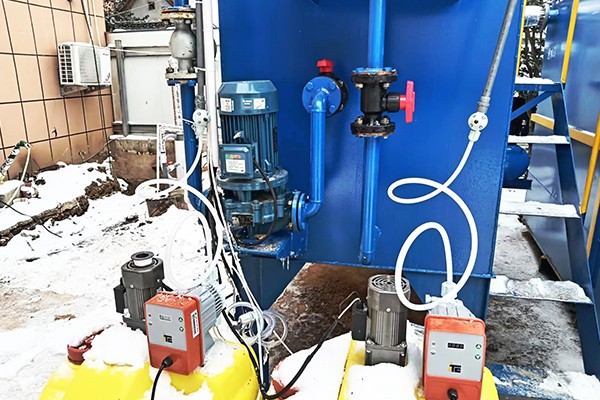
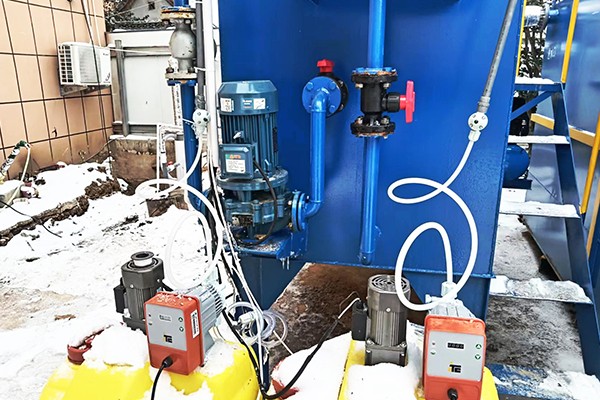
The regulating tank is used to balance water volume and stabilize water quality, avoid impact load caused by sudden discharge of high-concentration wastewater, and prevent the system from collapsing. The automatic dosing system is equipped with pH online monitor and metering pump, which automatically adds alkali, coagulant, flocculant and heavy metal chelating agent to reduce manual operation errors and save medicament cost.
Sedimentation tank and inclined tube clarifier are used for floc precipitation. The sludge generated enters the sludge dewatering machine, and is pressed into mud cake for hazardous waste disposal, which reduces sludge volume and transportation cost. The clear water after sedimentation can enter the advanced treatment unit or be discharged after reaching the standard.
Anti-corrosion is the key point of equipment manufacturing. The tank body, pipeline and pump must adopt PP, FRP or lined anti-corrosion structure, because heavy metal wastewater is mostly acidic and easy to corrode carbon steel materials. Zhengzhou Puhua Technology strictly controls the anti-corrosion process of equipment to extend service life.
3. Key Procurement Evaluation Indicators
Many enterprises only compare the price when purchasing, which easily leads to unstable effluent after putting into operation. The following points should be focused on in the procurement stage.
First, confirm the water quality adaptability. If the wastewater contains complexing agents such as citrate and tartrate, ordinary alkali precipitation cannot meet the standard, and a heavy metal chelating agent system must be equipped. The manufacturer is required to conduct water quality test and provide test report before quotation.
Second, check the material and anti-corrosion standard. Inferior anti-corrosion materials will leak and damage in a short time, causing secondary pollution. Clarify the tank material, pump type and valve material in the contract.
Third, pay attention to the automation level and operation cost. High-quality automatic dosing and online monitoring equipment can reduce labor and medicament consumption. Low-price equipment often has no automatic control, which relies entirely on manual adjustment and is prone to exceeding standards.
Fourth, examine the manufacturer’s project experience. Priority should be given to suppliers with successful cases in electroplating, circuit board and surface treatment industries. Zhengzhou Puhua Technology has rich engineering experience in heavy metal wastewater projects and can provide site survey, scheme design, installation guidance and commissioning services.
Fifth, clarify after-sales content, including training, spare parts supply, regular maintenance and troubleshooting cycle. Heavy metal wastewater belongs to key monitored pollution source, and timely after-sales support is very important.
4. Common Operation Risks after Procurement
Even if the equipment is qualified, non-standard operation will lead to discharge exceeding standards. The common problems include inaccurate pH adjustment, insufficient dosage of heavy metal capture agent, sludge not discharged in time and resin or membrane pollution failure.
Heavy metal sludge is hazardous waste, which cannot be stacked or discharged at will. The enterprise needs to sign a hazardous waste disposal agreement with qualified units. If the sludge dewatering effect is poor, the moisture content is too high, which will increase disposal cost.
Once the heavy metal online monitoring data exceeds the limit, the environmental department will initiate investigation. Therefore, it is necessary to formulate daily inspection items: check pH value, dosing status, sludge settling condition and effluent heavy metal detection data every day.
5. Frequently Asked Questions for Procurement
5.1 Can heavy metal wastewater be treated together with ordinary domestic sewage?
It is not recommended. Heavy metal wastewater must be treated separately first. After heavy metal ions reach the standard, it can be mixed into domestic sewage biochemical system. Direct mixing will cause microbial poisoning and failure of biochemical system.
5.2 Is the integrated box-type equipment suitable for heavy metal wastewater?
Box-type integrated equipment is suitable for small water volume and single heavy metal wastewater. For large water volume and multi-metal mixed wastewater, split independent reaction tanks are more stable and convenient for maintenance.
5.3 How long is the service life of heavy metal wastewater treatment equipment?
Under normal anti-corrosion and regular maintenance, PP and FRP tank equipment can be used for 8–12 years. Consumables such as filter cloth, resin and membrane elements need to be replaced periodically.
Conclusion
In summary, the procurement of heavy metal wastewater treatment equipment is not a simple purchase of hardware, but a whole-process technical procurement including water quality testing, process design, equipment manufacturing, installation commissioning and later operation guidance. The core goal is to ensure that heavy metal indicators can stably meet the emission standard for a long time. When you plan to purchase heavy metal wastewater treatment equipment, renovate old treatment stations or add advanced treatment facilities, Zhengzhou Puhua Technology, as a professional environmental protection equipment supplier, provides one-stop solutions covering dust control, desulfurization, denitrification, VOCs organic waste gas treatment, pneumatic conveying and wastewater treatment. Its product lineup includes baghouse dust collectors, RCO catalytic combustion equipment, RTO equipment, desulfurization towers, denitrification devices, photo-oxidation catalytic equipment, pulse dust collectors, mobile dust collectors, ultra-low emission equipment and sewage treatment facilities. The technical team can formulate targeted treatment schemes and equipment configuration according to your water quality report, daily water volume and local emission requirements, helping enterprises avoid compliance risks and realize safe and standardized treatment of heavy metal wastewater.
Related Articles
-

Zeolite Fixed Bed+Catalytic Combustion Equipment (RCO)
7596
-

Resin desorption+condensation recovery equipment
5528
-

Cooking oil fume purifier
11561
Subscribe to Our Newsletter
Stay updated with the latest news and insights from Puhua Tech.