
Industrial Dust Removal Equipment: Types, Selection and Maintenance Guide
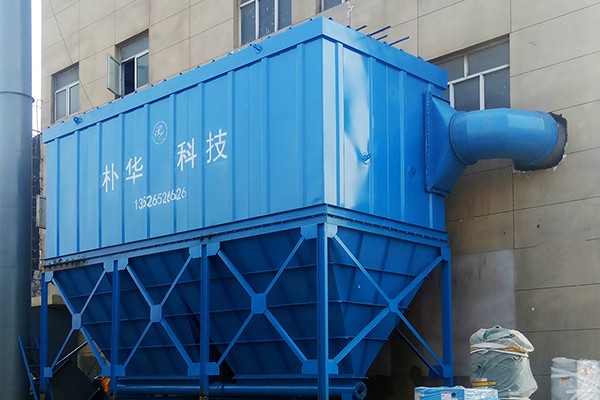
Dust is widely generated in grinding, cutting, crushing, sandblasting, wood processing, cement and metallurgy workshops. Uncontrolled dust will harm workers’ respiratory health, cause equipment wear, trigger dust explosion risks and lead to environmental penalties. Industrial dust removal equipment is the core facility to capture particulate pollutants, realize clean workshop and meet ultra-low emission standards. The scheme must be customized according to dust concentration, particle size, temperature, humidity and whether the dust is combustible or sticky. As a professional environmental protection equipment manufacturer, Zhengzhou Puhua Technology specializes in the design, research, development and production of dust control equipment, desulfurization and denitrification equipment, VOCs waste gas treatment equipment, pneumatic conveying equipment and sewage treatment equipment. Its product portfolio includes baghouse dust collectors, RCO catalytic combustion equipment, RTO equipment, desulfurization towers, denitrification devices, photo-oxidation catalytic equipment, pulse dust collectors, mobile dust collectors, ultra-low emission equipment and sewage treatment facilities. The company provides complete dust removal engineering services including scheme design, manufacturing, installation and commissioning for different industries.
1. Main Types of Industrial Dust Removal Equipment
Dust collectors are divided into cyclone separators, pulse baghouse dust collectors, cartridge dust collectors, mobile dust collectors and wet scrubbers. Different equipment adopts different separation principles and suits different working conditions.
Cyclone separator uses centrifugal force to separate large and coarse dust. It is usually used as pretreatment equipment before fine dust removal, reducing the dust load of subsequent filter equipment. It is low-cost and maintenance-free, but poor at capturing fine particles.
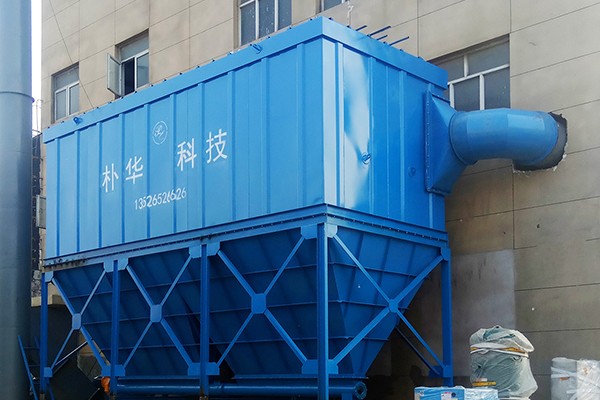
Pulse baghouse dust collector is the most widely used high-efficiency dust removal equipment. It filters dust through filter bags, and the pulse valve sprays compressed air to clean ash automatically. It features high removal efficiency, stable operation and adapts to high dust concentration, large air volume and high-temperature flue gas conditions. It is commonly used in cement, foundry, chemical and building material production lines.
Cartridge dust collector adopts folded filter cartridges, with compact structure and small footprint. It is suitable for fine dry dust such as welding fume, polishing dust and laser cutting dust. It is popular for small workshops and renovation projects with limited space.
Mobile dust collector is portable and flexible, equipped with suction arms. It is suitable for scattered dust points such as welding tables and single grinding stations, convenient for on-site dust capture.
Wet dust scrubber contacts dusty gas with liquid to capture dust. It is suitable for high-temperature, humid and combustible dust, but it will produce sludge and need wastewater supporting treatment.
2. Composition of Complete Dust Collection System
A qualified dust removal system is not only the host dust collector, but a complete set of air capture hood, air duct, regulating valve, induced draft fan, dust collector, ash hopper and ash discharge device. The air collection effect directly determines the dust control result. Poor air collection will cause dust overflow even with high-efficiency dust collector.
The induced draft fan provides negative pressure power for the whole pipeline. The fan model must match the system resistance and air volume. The filter bag and filter cartridge are core consumables. Dust accumulates on the surface, and regular pulse ash cleaning keeps the system resistance stable. Ash hopper and ash discharge valve collect and discharge dust, preventing secondary dust raising. Zhengzhou Puhua Technology can design integrated dust removal systems and avoid mismatched supporting equipment.
3. Key Points for Equipment Selection
When selecting dust removal equipment, the first factor is dust characteristics. Fine dry dust can choose cartridge or baghouse dust collector; high-temperature dust needs high-temperature resistant filter bags; damp and sticky dust is easy to block filter materials, wet dust removal or anti-sticking filter bags should be preferred; combustible and explosive dust must be equipped with explosion venting, flame arrester and electrostatic conduction protection.
Calculate the actual air volume and dust concentration. Excessively small air volume leads to dust escape; blindly oversized air volume increases fan power consumption and operating cost. Also consider site space, noise requirement and ash disposal mode. For workshops with both dust and VOCs, a combined dust removal + waste gas treatment scheme can be adopted.
4. Daily Operation and Maintenance
Stable dust removal efficiency depends on standardized maintenance. Regularly check the pressure difference of the dust collector. Sharp rising pressure difference means filter blockage; falling pressure difference usually means filter bag rupture and air leakage. Check pulse valves, air compressor and ash discharge device regularly to ensure ash cleaning works normally.
Replace damaged, aged or blocked filter bags and cartridges in time. Check pipeline air leakage and door sealing, because air leakage will reduce negative pressure and cause dust escape. For combustible dust systems, regularly clean accumulated dust in pipelines and ash hoppers to eliminate explosion risks. Zhengzhou Puhua Technology provides operation training and after-sales guidance for dust removal projects.
5. Risks of Inadequate Dust Control
Uncontrolled dust brings multiple risks. First, it causes occupational diseases such as pneumoconiosis for on-site workers. Second, combustible dust accumulation may trigger dust explosion, which is a serious safety accident. Third, excessive dust emission will lead to environmental inspection, fines and production suspension. In addition, dust attached to machine surfaces accelerates equipment aging and increases failure rate.
6. Frequently Asked Questions
6.1 Which is better, baghouse dust collector or cartridge dust collector?
Baghouse dust collector suits large air volume, high concentration and high-temperature working conditions. Cartridge dust collector is compact and suitable for low-concentration fine dust. The choice depends on dust properties and site layout.
6.2 How long is the service life of filter bag?
It is affected by temperature, humidity and dust abrasion. Under normal working conditions, ordinary filter bags can work for 8–12 months; high-temperature and anti-abrasion filter bags can reach 1–2 years.
6.3 Does dust removal equipment need explosion-proof configuration?
For wood dust, aluminum powder, flour and other combustible dust, explosion venting, flame arrester and electrostatic protection devices must be equipped to meet safety specifications.
Conclusion
To sum up, industrial dust removal is a systematic project including dust capture, pipeline transportation, filtration and ash discharge. There is no universal dust collector for all working conditions. The equipment must be selected according to dust particle size, temperature, humidity, flammability and emission requirements. Good design, high-quality equipment and regular maintenance are the three guarantees of stable dust control. If you need to build a new dust removal system, renovate old dust facilities or purchase pulse dust collectors and supporting environmental equipment, Zhengzhou Puhua Technology, as a professional environmental protection equipment supplier, provides one-stop solutions covering dust control, desulfurization, denitrification, VOCs organic waste gas treatment, pneumatic conveying and sewage treatment. Its product lineup includes baghouse dust collectors, RCO catalytic combustion equipment, RTO equipment, desulfurization towers, denitrification devices, photo-oxidation catalytic equipment, pulse dust collectors, mobile dust collectors, ultra-low emission equipment and sewage treatment facilities. Whether it is woodworking, polishing, cement, foundry or chemical dust, the technical team can customize targeted dust removal schemes to help enterprises realize clean workshop, safe production and stable up-to-standard discharge.
Related Articles
-

Zeolite Fixed Bed+Catalytic Combustion Equipment (RCO)
7596
-

Resin desorption+condensation recovery equipment
5528
-

Cooking oil fume purifier
11561
Subscribe to Our Newsletter
Stay updated with the latest news and insights from Puhua Tech.