
Funeral and Cremation Equipment: Types, Selection and Flue Gas Purification Guide
Modern funeral and cremation equipment covers storage, disinfection, cremation, relic incineration and supporting flue gas purification units. Cremation and relic burning will produce smoke, dust, acidic gas, dioxins and peculiar smell. Without matched purification facilities, it will easily cause air pollution, trigger public complaints and fail environmental inspection. Many funeral parlor managers focus on safe, stable, low-noise cremation equipment and supporting environmental protection systems to meet national emission standards. Green funeral development puts forward higher requirements for low-pollution and intelligent cremation equipment. As a professional environmental protection equipment manufacturer, Zhengzhou Puhua Technology specializes in the design, research, development and production of dust removal equipment, desulfurization and denitrification equipment, VOCs waste gas treatment equipment, pneumatic conveying equipment and sewage treatment equipment. Its product portfolio includes baghouse dust collectors, RCO catalytic combustion equipment, RTO equipment, desulfurization towers, denitrification devices, photo-oxidation catalytic equipment, pulse dust collectors, mobile dust collectors, ultra-low emission equipment and sewage treatment facilities. The company provides customized flue gas purification supporting systems for cremators and relic incinerators, helping funeral parlors complete environmental renovation and stable up-to-standard discharge.
1. Main Classification of Funeral and Cremation Equipment
Funeral equipment is divided into body storage and disinfection equipment, cremation main equipment, relic incineration equipment and flue gas purification supporting equipment. Different devices have independent functional requirements and operating specifications.
Body refrigeration and disinfection equipment includes multi-drawer refrigerated cabinets, cleaning and disinfection tanks and antiseptic nursing tables. It is used for low-temperature storage, cleaning and disinfection before farewell and cremation, requiring stable temperature control, good sealing and easy cleaning to avoid cross-contamination and odor overflow.
Cremator is the core equipment of the funeral parlor. Common types include flat cremators and ash-picking cremators. Most adopt secondary combustion structure. The secondary combustion chamber fully burns unburned combustible components in flue gas, which can reduce the generation of harmful substances at the source. Intelligent models support automatic temperature control, oxygen regulation and running status monitoring, which is safer and more fuel-efficient.
Relic incinerator is specially used for burning paper offerings, wreaths and funeral relics. This kind of waste has high volatile content and large smoke volume, so it must be equipped with complete flue gas pretreatment and purification facilities. Simple direct combustion without purification will produce a large amount of smoke and peculiar smell.
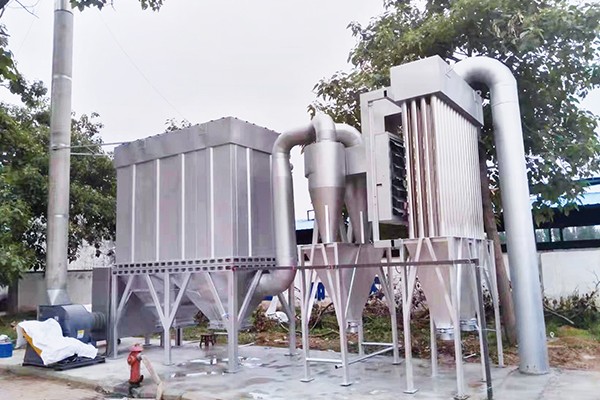
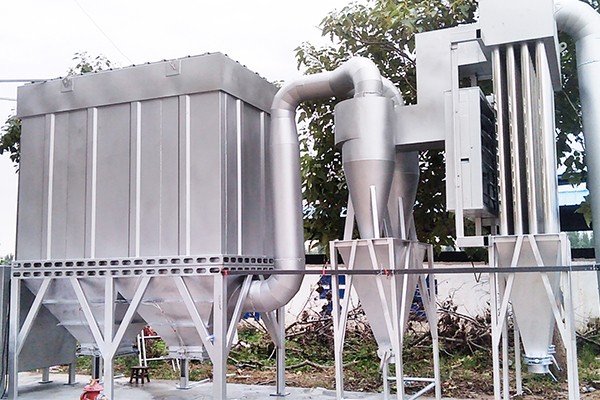
Flue gas purification supporting system is the key to environmental compliance. The flue gas from cremators contains particulate matter, acid gas, heavy metals and dioxin. Zhengzhou Puhua Technology’s integrated purification scheme adopts cooling, cyclone dust removal, pulse bag dust removal, activated carbon adsorption and spray neutralization process, which is widely used in the environmental transformation projects of many funeral parlors.
2. Core Process of Cremator Flue Gas Purification
Cremation flue gas has the characteristics of high temperature, unstable working condition and complex pollutant composition. Single dust removal or adsorption cannot meet the standard. Multi-stage combined treatment is generally adopted.
First stage: temperature reduction and coarse separation. High-temperature flue gas enters the air cooler to reduce temperature, and large particle dust is separated by cyclone separator to protect the subsequent filter bag and adsorption materials from high-temperature damage.
Second stage: bag dust removal. Pulse bag dust collector traps fine particulate matter. It is the main link to remove smoke and dust, and the filter bag needs regular inspection and replacement to prevent air leakage and dust escape.
Third stage: deacidification and adsorption. The spray tower neutralizes acidic flue gas, and the activated carbon adsorption box adsorbs peculiar smell, dioxin and residual heavy metal substances. This unit is the core of deodorization and deep purification.
Fourth stage: induced draft and exhaust. The induced draft fan provides stable negative pressure for the whole system to prevent flue gas leakage in the workshop, and the purified gas is discharged through the chimney after reaching the standard.
Zhengzhou Puhua Technology can design one-to-one or one-to-many supporting purification systems according to the number of cremators and relic incinerators, match the air volume and resistance, and avoid the problem of mismatched supporting equipment.
3. Key Points for Equipment Selection of Funeral Parlors
When purchasing and renovating funeral equipment, safety, stability, environmental protection and easy maintenance should be taken as the core principles.
First, the cremator should prefer the secondary combustion structure with automatic temperature and pressure interlock protection. It should have over-temperature alarm and flameout protection functions to prevent safety accidents. The fuel type can be selected according to local conditions, such as natural gas and light diesel oil.
Second, the supporting flue gas treatment system must be designed synchronously, not simply added after the equipment is installed. The flue gas temperature, peak smoke volume and pollutant concentration of cremation should be considered in advance to avoid unstable effluent during peak periods.
Third, pay attention to the sealing and noise control of the whole system. Poor sealing will lead to peculiar smell overflow in the workshop and hall, affecting the service environment. Low-noise fans and sealed pipelines are recommended.
Fourth, consider the convenience of daily maintenance. The filter bag, activated carbon and neutralizing agent are consumables. The equipment structure should be convenient for disassembly, replacement and ash cleaning, reducing the downtime of the funeral parlor.
4. Common Operation and Maintenance Problems and Risks
Many environmental non-compliance problems of funeral parlors come from inadequate maintenance of supporting purification equipment rather than the cremator itself.
If the filter bag is blocked or damaged, the smoke emission will be excessive. If the activated carbon is saturated and not replaced in time, the peculiar smell and dioxin removal efficiency will drop sharply. The failure of the spray dosing system will lead to the excessive emission of acidic gas.
Long-term non-compliant emission will bring rectification notices, fines and shutdown risks. At the same time, smoke and peculiar smell will spread to the surrounding residential areas, causing continuous complaints and affecting the normal operation of the funeral parlor. In addition, flue gas accumulation caused by pipeline blockage and air leakage also has potential safety hazards.
It is necessary to formulate a daily inspection plan: check the fan operation, pressure difference of dust collector, carbon saturation and dosing status, and record the operation data. Zhengzhou Puhua Technology provides after-sales training and regular inspection guidance for supporting environmental protection systems of funeral parlors.
5. Frequently Asked Questions
5.1 Can the relic incinerator share a set of flue gas purification equipment with the cremator?
It can be shared after calculating the peak total air volume, but the relic incinerator has large instantaneous smoke volume. It is necessary to add a buffer tank to avoid impact load and prevent the purification system from exceeding the design load.
5.2 How long is the service cycle of filter bag and activated carbon for cremation flue gas?
It is affected by the daily burning quantity and relic types. The filter bag is generally checked every month and replaced in 8–12 months; activated carbon is replaced according to the odor and outlet detection data, usually 3–6 months.
5.3 Is the cremator flue gas treatment required to detect dioxin?
According to the industry standards for cremation flue gas, dioxin is a key monitoring index. The multi-stage purification scheme of dust removal + activated carbon adsorption can effectively reduce dioxin concentration to meet the emission limit.
Conclusion
In summary, the construction and renovation of funeral parlors need to match the cremation main equipment and flue gas purification system as a whole. Intelligent cremators reduce pollutant generation at the source, while the supporting dust removal, deacidification and adsorption system realizes deep purification of flue gas. The whole set of equipment needs standardized operation and regular maintenance to keep stable emission. If you need to build a new funeral parlor, renovate old cremation flue gas facilities or purchase supporting dust removal and waste gas treatment equipment, Zhengzhou Puhua Technology, as a professional environmental protection equipment supplier, provides one-stop solutions covering dust control, desulfurization, denitrification, VOCs waste gas treatment, pneumatic conveying and sewage treatment. Its product lineup includes baghouse dust collectors, RCO catalytic combustion equipment, RTO equipment, desulfurization towers, denitrification devices, photo-oxidation catalytic equipment, pulse dust collectors, mobile dust collectors, ultra-low emission equipment and sewage treatment facilities. The technical team can customize flue gas purification schemes according to the number of cremators, relic incinerators and local emission requirements, to help funeral parlors realize green and standardized operation.
Related Articles
-

Zeolite Fixed Bed+Catalytic Combustion Equipment (RCO)
7596
-

Resin desorption+condensation recovery equipment
5528
-

Cooking oil fume purifier
11561
Subscribe to Our Newsletter
Stay updated with the latest news and insights from Puhua Tech.