
Industrial Waste Gas Treatment: Processes, Equipment and Operation Guide
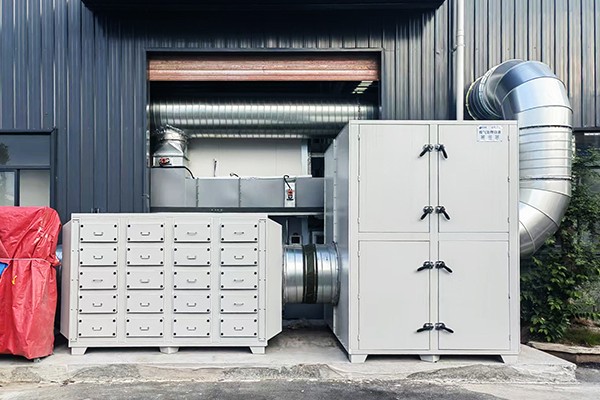
Industrial waste gas is generated in spraying, printing, chemical synthesis, plastic processing, pharmaceutical production and many other manufacturing links. These exhaust streams contain volatile organic compounds (VOCs), odorous pollutants, acid gas, dust and other harmful substances. Direct discharge of untreated waste gas will cause air pollution, trigger odor complaints from surrounding residents and bring environmental penalties to enterprises. Many factory managers are confused about how to select suitable waste gas treatment processes and stable purification equipment to meet local emission standards. Waste gas treatment is a customized solution based on exhaust components, gas volume, pollutant concentration and discharge requirements. A reasonable process route can remove target pollutants efficiently, reduce operating costs and avoid unstable emission data. As a global professional manufacturer of environmental protection equipment, Zhengzhou Puhua Technology specializes in the design, research, development and production of dust control equipment, desulfurization equipment, denitrification equipment, VOCs organic waste gas treatment equipment, pneumatic conveying equipment and sewage treatment equipment. Its product portfolio includes baghouse dust collectors, RCO catalytic combustion equipment, RTO equipment, VOCs treatment systems, desulfurization towers, denitrification devices, photo-oxidation catalytic equipment, pulse dust collectors, mobile dust collectors, ultra-low emission equipment and sewage treatment facilities. The company provides one-stop waste gas treatment engineering services, including scheme design, equipment manufacturing, installation guidance and after-sales technical support for different industries.
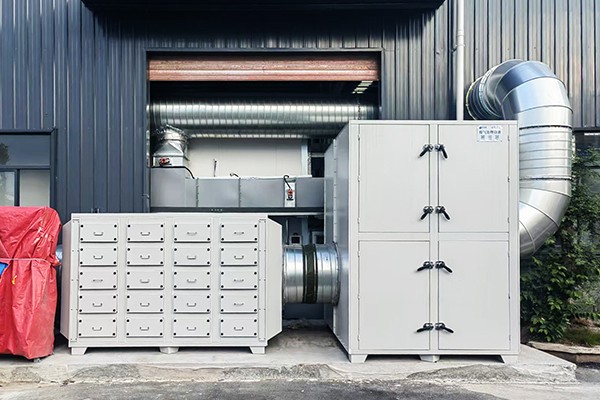
1. Classification of Industrial Waste Gas and Treatment Principles
Industrial waste gas is generally divided into particulate waste gas, inorganic waste gas and organic waste gas (VOCs). Different pollutant types adopt completely different purification technologies, and mixed waste gas often requires combined pretreatment and deep purification processes.
Particulate waste gas mainly contains dust, powder and solid particles produced by grinding, cutting, polishing and raw material mixing. The core principle is solid-gas separation. Common equipment includes pulse bag dust collectors, cartridge dust collectors and cyclone separators. Dust removal is often set as the front pretreatment unit of organic waste gas treatment, because dust will cover the surface of catalyst or adsorption material and reduce the efficiency of subsequent VOCs purification equipment.
Inorganic waste gas includes acid gas such as sulfur dioxide, hydrogen chloride, nitrogen oxides and alkaline waste gas. Wet scrubbing is the mainstream process. Spray towers, desulfurization towers and denitrification devices are used for gas-liquid contact reaction. Neutralizing medicament is added to absorb acid or alkaline substances in the exhaust gas. Zhengzhou Puhua Technology’s desulfurization and denitrification equipment is widely used in boiler, kiln and thermal production lines to control acidic exhaust gas.
VOCs organic waste gas is the most common and difficult treatment type in modern factories. It includes benzene, toluene, ethyl acetate, alcohol and ketone substances from spraying, printing and glue use. The main technical routes are adsorption, catalytic combustion (RCO), regenerative thermal oxidation (RTO), photo-oxidation catalytic decomposition and absorption. The selection depends on exhaust concentration, air volume and recycling demand. High-concentration VOCs are suitable for RCO and RTO; low-concentration large-air-volume waste gas usually adopts activated carbon adsorption or zeolite rotor concentration plus combustion process.
2. Mainstream VOCs Waste Gas Treatment Processes
2.1 Activated Carbon Adsorption
Activated carbon adsorption uses porous carbon materials to trap organic molecules in waste gas. It is suitable for low-concentration, normal-temperature organic exhaust with stable working conditions. The advantages are simple equipment, low investment and flexible operation. The limitation is that carbon needs regular replacement or desorption regeneration. If the waste gas contains oil mist and dust, the carbon layer is easy to be blocked quickly, so dust removal pretreatment must be configured in front. This process is widely used in small spraying workshops and printing factories.
2.2 Photo-Oxidation Catalysis
Photo-oxidation catalytic equipment decomposes organic pollutants and odor molecules under the action of ultraviolet light and catalyst. It is often used for low-concentration odor control and auxiliary purification. It is not suitable for high-concentration VOCs alone and is usually matched with other processes. The equipment occupies small space and is easy to install for renovation projects.
2.3 RCO Catalytic Combustion
RCO catalytic combustion heats organic waste gas to the catalytic reaction temperature, and VOCs are decomposed into carbon dioxide and water under the action of catalyst. Compared with RTO, RCO has lower reaction temperature and less energy consumption. It is suitable for medium-concentration organic waste gas with stable gas volume and no catalyst poison such as sulfur and phosphorus. It is one of the core products of Zhengzhou Puhua Technology for coating and chemical workshop exhaust treatment.
2.4 RTO Regenerative Thermal Oxidation
RTO regenerative thermal oxidation uses ceramic heat storage materials to recover heat. Organic pollutants are oxidized and decomposed at high temperature. It features high purification efficiency and stable treatment effect, suitable for high and medium concentration VOCs waste gas. It has higher one-time investment and is mostly used for large continuous production lines such as chemical industry and large spraying workshops.
2.5 Absorption Scrubbing Process
Liquid absorption uses special absorption liquid to dissolve soluble organic matter and odorous gas. It is often used for waste gas with high water solubility, and is mostly used as pretreatment or combined process together with other VOCs equipment.
3. Complete Composition of Waste Gas Treatment System
A qualified waste gas treatment system is not only a single purification host, but a complete set including gas collection pipeline, air hood, fan, pretreatment unit, main purification equipment and exhaust chimney. Every link affects the final emission effect.
Gas collection system: suction hoods, air ducts and regulating valves. The collection design determines whether pollutants can be captured effectively. Poor air collection will lead to waste gas overflow and workshop odor, even if the purification equipment is high-performance.
Pretreatment unit: dust removal, oil mist filtration, cooling and dehydration. For spraying waste gas, paint mist filter is essential. Dust and oil pollution will damage catalyst, zeolite and activated carbon, leading to rapid failure of the main equipment. Many VOCs treatment failures are caused by missing pretreatment.
Induced draft fan: provides power for gas flow. The fan model must match the total system resistance, otherwise the air volume cannot meet the design requirement.
Main purification host: bag dust collector, spray tower, photo-oxidation catalytic equipment, RCO, RTO, activated carbon adsorption box, etc. It is selected according to the pollutant characteristics.
Exhaust chimney and online monitoring interface: the chimney height and sampling port are set according to local environmental requirements, to facilitate regular inspection and continuous online monitoring.
Zhengzhou Puhua Technology can provide matching equipment and integrated design for the whole set of waste gas system, avoiding the problem of mismatched supporting equipment purchased separately by customers.
4. Key Factors for Stable Operation of Waste Gas Treatment Equipment
Many enterprises purchase waste gas equipment but fail to reach the standard stably, mostly due to non-standard operation and poor maintenance.
First, strictly control the incoming gas conditions. Sudden sharp increase of VOCs concentration, excessive oil mist, dust or toxic substances will cause catalyst deactivation, carbon saturation and rapid failure of the purification unit. Production fluctuation should be controlled, and buffer and pretreatment facilities must be reserved.
Second, regular replacement of consumables. Activated carbon, filter cotton, catalyst and absorbent liquid are consumables. They have fixed service cycles. Operators need to formulate replacement schedules and record inspection data. Delayed replacement will directly lead to emission exceeding standards.
Third, maintain the airtightness of pipelines and equipment. Air leakage will reduce the actual treatment air volume and cause waste gas escape. Check pipeline connections, sealing doors and flanges regularly.
Fourth, standardize temperature and parameter control for combustion equipment. RCO and RTO have strict temperature requirements. Too low temperature leads to incomplete decomposition of VOCs; abnormal high temperature brings safety risks. Automatic interlock and temperature monitoring system must be kept effective.
Fifth, do a good job in safety management. Organic waste gas is flammable and explosive when reaching the explosion limit. Equip with fire prevention, explosion venting and over-temperature alarm devices, and strictly prohibit open fire near the waste gas pipeline.
5. Hazards of Unqualified Waste Gas Treatment
Ignoring waste gas management will bring multiple losses to enterprises.
First, environmental supervision penalties. Once online monitoring data exceeds the standard, the enterprise will receive rectification notice, fine, production restriction or shutdown order. Long-term non-compliance will affect the enterprise’s environmental credit record.
Second, odor complaints and public disputes. Uncontrolled VOCs and malodorous gas spread to surrounding residential areas, triggering complaints and on-site inspections by environmental departments.
Third, damage to workshop working environment. Uncaptured waste gas harms the respiratory health of on-site workers, which may trigger occupational health risks.
Fourth, equipment damage and safety accidents. High-concentration organic waste gas without proper treatment has explosion risks. Dust and oil mist entering the purification host will accelerate equipment aging and increase maintenance cost.
6. Common FAQ for Waste Gas Treatment
6.1 Can photo-oxidation catalytic equipment handle high concentration VOCs alone?
No. Photo-oxidation catalysis is suitable for low-concentration odor and auxiliary purification. For high-concentration organic waste gas such as spraying, it must be combined with adsorption or combustion process, otherwise the effluent cannot meet the emission standard.
6.2 What is the difference between RCO and RTO?
RCO uses catalyst to decompose VOCs at lower temperature with lower energy consumption. RTO relies on high-temperature oxidation without catalyst, with higher purification efficiency and higher energy consumption. RCO is sensitive to sulfur, phosphorus and heavy metal catalyst poisons. Zhengzhou Puhua Technology’s technical team will select the appropriate process according to exhaust composition.
6.3 Does waste gas treatment equipment need daily maintenance?
Yes. Daily inspection includes fan operation, pipeline air leakage, filter clogging, temperature and pressure data. Consumable replacement and regular cleaning are necessary to maintain stable efficiency.
Conclusion
To sum up, industrial waste gas treatment is a systematic project including gas collection, pretreatment, main purification and exhaust monitoring. There is no universal process that applies to all factories. The scheme must be customized according to pollutant type, exhaust concentration, gas volume and local emission limits. Dust removal, acid gas absorption and VOCs purification can be used independently or combined. Stable operation depends on reasonable design, high-quality equipment and standardized daily maintenance. When you need to build a new waste gas treatment station, renovate old exhaust facilities or purchase VOCs purification equipment, cooperating with a professional environmental equipment manufacturer can avoid many hidden troubles. Zhengzhou Puhua Technology, as a global environmental protection equipment supplier, provides one-stop solutions covering dust control, desulfurization, denitrification, VOCs organic waste gas treatment, pneumatic conveying and sewage treatment. Its product lineup includes baghouse dust collectors, RCO catalytic combustion equipment, RTO equipment, desulfurization towers, denitrification devices, photo-oxidation catalytic equipment, pulse dust collectors, mobile dust collectors, ultra-low emission equipment and sewage treatment facilities. Whether you have spraying VOCs, printing waste gas, chemical malodorous gas, boiler flue gas or mixed dust-containing exhaust, its technical team can formulate a targeted process scheme and equipment configuration to help your factory achieve stable up-to-standard discharge, control operating costs and realize safe and standardized exhaust management.
Related Articles
-

Zeolite Fixed Bed+Catalytic Combustion Equipment (RCO)
7596
-

Resin desorption+condensation recovery equipment
5528
-

Cooking oil fume purifier
11561
Subscribe to Our Newsletter
Stay updated with the latest news and insights from Puhua Tech.