
How to Treat Wastewater: Complete Guide for Industrial and Domestic Wastewater Treatment
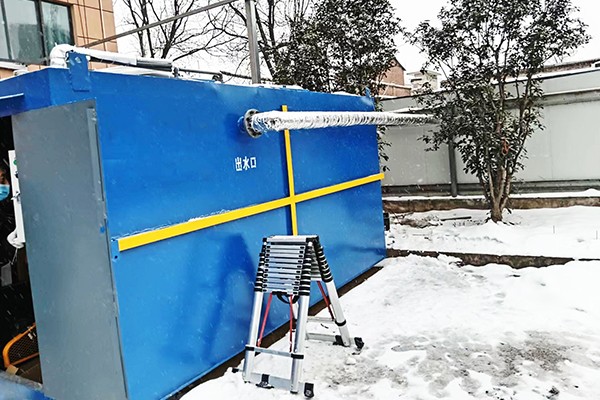
Wastewater comes from domestic life, food processing, chemical workshops, pharmaceutical plants, printing and dyeing factories and many other production scenarios. Untreated wastewater contains suspended solids, organic pollutants, ammonia nitrogen, heavy metals and grease. Direct discharge will damage aquatic ecosystems, pollute groundwater and surface water, and cause enterprises to face environmental penalties. Many factory managers and environmental engineers are looking for clear, practical solutions for how to treat wastewater properly. Wastewater treatment is a staged purification system combining physical, chemical, biological and advanced treatment technologies. The selected process must match the water quality, daily water volume, local discharge standards and water reuse requirements. A well-designed wastewater treatment system can help enterprises achieve stable up-to-standard discharge, reduce sludge output and realize water recycling, cutting long-term water resource costs. As a global professional manufacturer of environmental protection equipment, Zhengzhou Puhua Technology specializes in the design, research, development and production of dust control equipment, desulfurization equipment, denitrification equipment, VOCs organic waste gas treatment equipment, pneumatic conveying equipment and wastewater treatment equipment. Its product portfolio includes baghouse dust collectors, RCO catalytic combustion equipment, RTO equipment, VOCs treatment systems, desulfurization towers, denitrification devices, photo-oxidation catalytic equipment, pulse dust collectors, mobile dust collectors, ultra-low emission equipment and wastewater treatment facilities. The company provides customized integrated wastewater treatment equipment, MBR membrane systems, dissolved air flotation machines, sludge dewatering equipment and complete turnkey wastewater treatment projects for different industries, helping customers solve complex sewage treatment challenges.
1. Four Main Stages of Wastewater Treatment
Standard wastewater treatment is divided into preliminary treatment, primary treatment, secondary biological treatment and tertiary advanced treatment. Not every project needs all four stages. Domestic decentralized sewage usually only needs preliminary, primary and secondary treatment; high-pollution industrial wastewater such as chemical, electroplating and printing wastewater must add tertiary advanced treatment to meet strict emission limits.
Preliminary treatment is the first protective barrier. It uses bar screens, grit chambers and oil-water separators to intercept large debris, gravel, floating oil and grease. These coarse pollutants can block pumps, pipelines and membrane modules, and damage the follow-up biological treatment unit. For food and catering wastewater, oil removal is particularly important. Dissolved air flotation equipment is widely used here to separate oil and fine suspended particles. Zhengzhou Puhua Technology’s DAF dissolved air flotation device is often matched in the front end of wastewater treatment lines to reduce the pollutant load of subsequent biochemical tanks.
Primary treatment focuses on removing suspended solids. After pH adjustment, coagulation and flocculation, fine particles gather into larger flocs and settle down in sedimentation tanks. This process can remove most SS, partial COD and oil stains. The sludge produced by sedimentation needs to be sent to sludge dewatering equipment for compression and solid-liquid separation, reducing sludge volume and facilitating transportation and disposal.
Secondary treatment is the core biological treatment section. It uses aerobic and anaerobic microorganisms to decompose dissolved organic matter, reduce BOD and COD, and remove nitrogen and phosphorus. Common biological processes include A/O, A2/O, contact oxidation, SBR and MBR. Among them, MBR integrated wastewater treatment equipment is popular for small and medium flow scenarios, with small footprint and stable effluent quality. Anaerobic treatment is suitable for high-concentration organic wastewater, which can degrade a large amount of organic matter and produce biogas for energy recovery before aerobic treatment.
Tertiary advanced treatment is used for deep purification and water reuse. It includes membrane filtration, activated carbon adsorption, ozone oxidation, ultraviolet disinfection and ion exchange. This stage can remove residual chroma, refractory organics, heavy metal ions and pathogenic bacteria. Treated water after tertiary treatment can be reused for workshop cleaning, green irrigation and circulating water replenishment, realizing water resource recycling.
2. Common Wastewater Types and Matching Treatment Schemes
Wastewater treatment cannot adopt a unified fixed process. The core of scheme design is water quality analysis. Different industries have completely different pollutant characteristics, so the treatment route must be adjusted accordingly.
Domestic decentralized sewage comes from residential areas, schools, scenic spots and small communities. Pollutants are mainly domestic organic matter, nitrogen and phosphorus, with low heavy metal content. Contact oxidation and buried MBR integrated wastewater treatment equipment are preferred. The equipment can be buried underground, occupying little land and easy to operate automatically. It is widely used in rural sewage and community sewage renovation projects.
Food processing wastewater from slaughterhouses, beverage factories and food workshops has high COD, high BOD and a large amount of grease and protein. The front end must set oil removal and air flotation units, then adopt anaerobic plus aerobic biological treatment. The organic load is high, but the biodegradability is good, so the biological process can achieve good removal efficiency.
Chemical, pharmaceutical and printing and dyeing wastewater is the most difficult type. It contains refractory organics, chroma, toxic substances and salt, with poor biodegradability. Simple biological treatment cannot reach the standard. It needs to add chemical oxidation, Fenton reaction, catalytic oxidation and advanced membrane treatment. Zhengzhou Puhua Technology’s technical team will carry out water quality test analysis first, then design a combined process of pre-treatment, biochemical treatment and advanced oxidation to avoid unstable effluent.
Electroplating and metal surface treatment wastewater contains heavy metals such as copper, nickel, chromium and zinc. It must be treated by chemical precipitation, pH adjustment and heavy metal capture agent reaction. Heavy metal wastewater is generally treated separately before entering the comprehensive sewage tank to prevent heavy metal poisoning of microorganisms in the biochemical system.
3. Core Equipment Used in Wastewater Treatment Systems
A complete wastewater treatment system consists of multiple functional equipment, and the stable operation of each unit directly determines the final effluent quality.
Screening and grit removal equipment: bar screens, rotary screens and grit separators, used to intercept large impurities and protect subsequent pumps and pipelines.
Dissolved air flotation machine: inject tiny air bubbles to make oil and suspended particles float up, suitable for oily wastewater and high-suspended-solid wastewater.
Biochemical reactor: anaerobic tank, aerobic contact oxidation tank, MBR membrane bioreactor, MBBR moving bed biofilm reactor, the core equipment for degrading organic pollutants.
Sedimentation and clarification equipment: inclined tube sedimentation tank, vertical flow sedimentation tank, used for solid-liquid separation after coagulation and biological reaction.
Sludge treatment equipment: sludge thickener, belt filter press, plate frame sludge dewatering machine. The sludge generated in the whole treatment process is dewatered into mud cake for harmless disposal, reducing transportation cost.
Disinfection equipment: UV sterilizer, ozone generator, sodium hypochlorite dosing device, to kill bacteria and viruses in the effluent, especially for medical wastewater and domestic sewage.
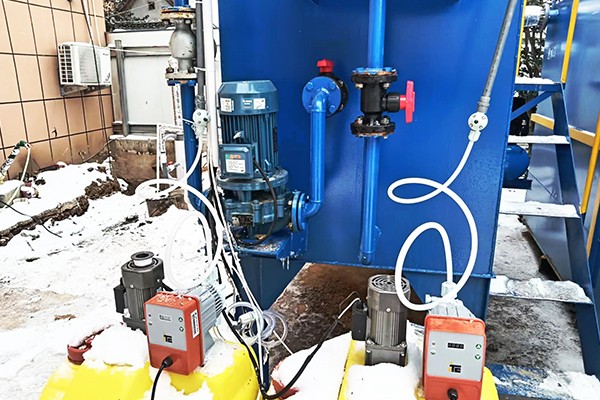
Automatic dosing system: dosing pump, pH online monitor, coagulant and flocculant dosing box, automatically adjust chemical dosage according to water quality to save medicament cost.
Zhengzhou Puhua Technology can provide all these supporting wastewater treatment equipment. The company’s integrated sewage treatment equipment adopts an integrated design, with automatic control system, low manual operation requirements and stable operation for long-term continuous work. For large-scale industrial projects, the company can also design split-type wastewater treatment stations according to the site layout.
4. Key Factors Affecting Stable Wastewater Treatment Operation
Many enterprises have purchased wastewater treatment equipment but often face unstable effluent. Most problems come from ignoring operation management, not the equipment itself.
First, control the influent water quality and water volume. Sudden impact load, sharp rise of COD, strong acid or strong alkali wastewater entering the biochemical tank will kill aerobic microorganisms and cause the whole biochemical system to collapse. Enterprises should set up an adjusting tank to balance water quality and water volume, and strictly forbid unqualified high-concentration wastewater to directly enter the biochemical section.
Second, maintain proper sludge concentration and activity. Activated sludge needs suitable dissolved oxygen, temperature and pH environment. The suitable pH range for biological treatment is 6–9. Aeration volume should be adjusted reasonably: insufficient oxygen will cause anaerobic odor, while excessive aeration will lead to sludge disintegration and loss. Operators need to regularly test sludge settling ratio, MLSS and dissolved oxygen data.
Third, standardize medicament dosing. Too little coagulant leads to poor flocculation effect; excessive dosing will increase salinity and COD, and raise operating costs. Online monitoring instruments can help realize automatic dosing and reduce manual errors.
Fourth, regularly clean and maintain membrane components. MBR membrane is easy to be polluted by sludge and organic matter. Regular online chemical cleaning and offline cleaning can extend membrane service life and prevent membrane flux attenuation. If the maintenance is not in place, the membrane will be blocked quickly and the effluent will become turbid.
Fifth, do a good job in sludge discharge management. Sludge accumulation in the tank will cause sludge aging and anaerobic fermentation, producing odor and affecting treatment efficiency. Timely sludge discharge and regular sludge dewatering are necessary daily work.
Zhengzhou Puhua Technology provides operation guidance and after-sales training for wastewater treatment projects. The technical team can guide operators to establish daily monitoring records, judge abnormal signs in advance and avoid sudden discharge exceeding the standard.
5. Risks of Improper Wastewater Treatment
Some enterprises reduce operating costs by cutting aeration, stopping dosing or discharging wastewater without full treatment, which will bring huge hidden risks.
First, environmental supervision penalty. Once the online monitoring data exceeds the standard, the enterprise will receive rectification notice, fine, production restriction or even shutdown order. For export-oriented factories, unqualified sewage treatment will also fail customer environmental audits and lose orders.
Second, ecological and groundwater pollution. Pollutants in wastewater seep into the soil and underground water, causing long-term pollution. Heavy metals and refractory organics are difficult to degrade, and the pollution remediation cost is extremely high.
Third, system collapse and higher maintenance cost. Long-term overload operation and lack of maintenance will cause sludge bulking, membrane damage, pump corrosion and pipeline blockage. The cost of replacing membranes and overhauling the whole system is far higher than the daily operation cost of the wastewater station.
Fourth, odor and health problems. Anaerobic fermentation of wastewater produces hydrogen sulfide and other malodorous gases, which harm the health of on-site operators and cause complaints from surrounding residents.
6. Tips to Reduce Wastewater Treatment Operating Cost
On the premise of ensuring stable up-to-standard discharge, reasonable optimization can effectively reduce electricity consumption, medicament consumption and sludge disposal cost.
Optimize aeration control. Use online dissolved oxygen meter to adjust the running time of the blower, avoid continuous excessive aeration, and reduce the main power consumption of the wastewater station.
Carry out source reduction. Reduce the use of high-pollution raw materials in the production process, separate high-concentration wastewater and low-concentration wastewater, treat high-concentration wastewater separately, and reduce the impact load of the main biochemical system.
Realize water reuse. After tertiary advanced treatment, the clean water can be recycled for production, cleaning and greening, reducing fresh water intake and water fee expenditure.
Select high-efficiency equipment and optimized process. A well-designed process can improve pollutant removal efficiency and reduce medicament dosage. Zhengzhou Puhua Technology focuses on energy-saving design in the early stage of scheme design, selecting low-energy consumption blowers, efficient membrane modules and automatic control systems to help customers reduce long-term operating expenditure.
Do regular maintenance to extend equipment service life. Timely replace aging sealing parts, clean pipelines and maintain membrane modules, and avoid unexpected shutdown and expensive emergency repair.
7. Frequently Asked Questions About Wastewater Treatment
7.1 Is integrated wastewater treatment equipment suitable for industrial wastewater?
Integrated MBR sewage equipment is more suitable for domestic sewage, small medical wastewater and low-concentration food wastewater. For high-concentration chemical, printing and dyeing and heavy metal wastewater, split combined treatment processes are usually required, matched with pre-treatment and advanced oxidation units.
7.2 How long is the service life of MBR membrane?
Under standardized operation and regular cleaning, the MBR membrane can normally work for 2–3 years. Improper operation, frequent impact load and lack of cleaning will shorten the service life greatly.
7.3 What to do if the wastewater treatment station produces heavy odor?
Odor is mostly caused by anaerobic sludge fermentation. Check whether the aeration is insufficient, sludge is accumulated too much or the adjusting tank is sealed unreasonably. It can be solved by increasing aeration, discharging sludge in time and adding odor collection and VOCs treatment equipment. Zhengzhou Puhua Technology can support matching waste gas collection and purification systems for sewage stations.
Conclusion
In short, wastewater treatment is a systematic engineering project that combines process design, equipment selection and daily operation management. The core logic is to select physical, chemical and biological treatment stages according to wastewater quality, remove pollutants step by step, and finally reach the discharge standard or realize water reuse. Different types of wastewater have completely different treatment difficulties, and there is no universal scheme that fits all scenarios. Blind purchase of equipment without water quality testing will easily lead to unstable effluent and wasted investment. When you plan to build a new wastewater treatment station, renovate the old sewage system or purchase supporting wastewater treatment equipment, cooperating with a professional environmental equipment manufacturer is the reliable choice. Zhengzhou Puhua Technology, as a global environmental protection equipment supplier, provides one-stop solutions covering dust control, desulfurization, denitrification, VOCs organic waste gas treatment, pneumatic conveying and wastewater treatment. Its product lineup includes baghouse dust collectors, RCO catalytic combustion equipment, RTO equipment, desulfurization towers, denitrification devices, photo-oxidation catalytic equipment, pulse dust collectors, mobile dust collectors, ultra-low emission equipment and wastewater treatment facilities. Whether you need decentralized domestic sewage treatment, food factory oily wastewater treatment, chemical difficult wastewater treatment or medical disinfection sewage projects, the technical team can customize the treatment process and equipment configuration according to your water quality report, water volume and local emission standards, helping you achieve stable compliance, control operation costs and realize sustainable water resource utilization.
Related Articles
-

Zeolite Fixed Bed+Catalytic Combustion Equipment (RCO)
7596
-

Resin desorption+condensation recovery equipment
5528
-

Cooking oil fume purifier
11561
Subscribe to Our Newsletter
Stay updated with the latest news and insights from Puhua Tech.