
Boiler Flue Gas Denitrification: Process, Equipment and Operation Guide
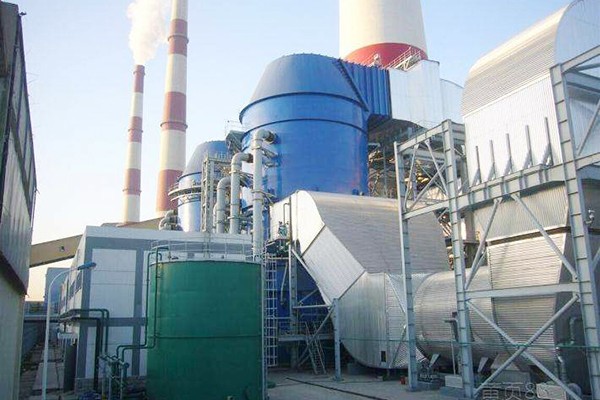
Boiler flue gas contains nitrogen oxides (NOx), which is one of the main pollutants causing smog and acid rain. Boiler types include coal-fired boilers, biomass boilers, gas boilers, oil-fired boilers, and the flue gas temperature, dust concentration and NOx concentration vary greatly. Many heating enterprises and industrial users are confused about how to choose denitrification technology, arrange the process sequence and realize stable up-to-standard discharge. Zhengzhou Puhua Technology, a reliable environmental protection equipment manufacturer, specializes in the design, research, development and production of dust removal equipment, desulfurization equipment, denitrification equipment, VOCs organic waste gas treatment equipment, pneumatic conveying equipment and sewage treatment equipment. Its core products include bag dust collectors, RCO catalytic combustion equipment, RTO equipment, desulfurization towers, denitrification reaction devices, SNCR injection systems, SCR reactors, photo-oxygen catalytic equipment, pulse dust collectors and mobile dust collectors. The technical team has rich practical experience in boiler flue gas treatment projects, and can customize denitrification schemes according to boiler tonnage, fuel, flue gas working conditions and local NOx emission limits.
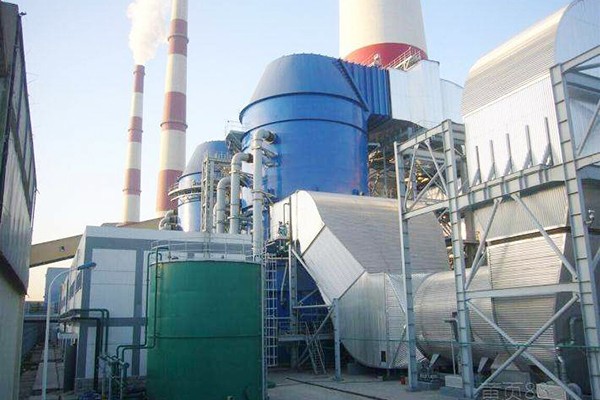
Characteristics of Boiler Flue Gas for Denitrification
The flue gas parameters directly determine the selection of denitrification process. Coal-fired boilers have high NOx and high dust; biomass boilers have high alkali metal dust, which is easy to poison catalyst; gas boilers have low dust and moderate NOx; the temperature window is the most critical factor for SNCR and SCR. At the same time, most projects need to realize the combined treatment of denitrification, dust removal and desulfurization, and the sequence of each unit will affect the service life and operation stability of the whole system. Excessive ammonia escape will cause secondary pollution, blockage of subsequent dust removal and desulfurization equipment, so ammonia control is the key point of denitrification operation.
Main Denitrification Processes for Boilers
SNCR Selective Non-Catalytic Reduction
Applicable scenarios: medium and small coal-fired boilers, biomass boilers, circulating fluidized bed boilers, transformation projects with limited space. Working principle: urea or ammonia water is injected into the flue gas at 850–1100℃, and NOx is reduced into nitrogen and water vapor without catalyst. Advantages: low investment, simple equipment, no catalyst, small floor area, convenient transformation of old boilers. Disadvantages: denitrification efficiency is generally 30%–60%, high requirements for temperature window, large ammonia escape risk if the injection position is not well designed, not suitable for ultra-low emission requirements. Zhengzhou Puhua Technology provides automatic SNCR ammonia injection system with multi-point spraying, flow and temperature linkage control to reduce ammonia escape.
SCR Selective Catalytic Reduction
Applicable scenarios: large boilers, projects requiring ultra-low NOx emission, gas boilers, pulverized coal boilers. Working principle: under the action of catalyst, ammonia reacts with NOx at 300–400℃ to generate nitrogen and water. Advantages: high denitrification efficiency, up to 80%–95%, stable effect, low ammonia escape, which is the mainstream process for ultra-low emission. Disadvantages: high investment, catalyst needs regular replacement, high requirements for front-end dust removal; high dust flue gas is easy to wear and cover the catalyst, resulting in deactivation. According to the arrangement position, it is divided into high-dust SCR, low-dust SCR and tail-end SCR. Zhengzhou Puhua Technology designs SCR reactor, catalyst module, ammonia mixing and injection system for boiler projects.
SNCR + SCR Combined Denitrification
Applicable scenarios: medium and large circulating fluidized bed boilers, biomass boilers, projects with high NOx concentration and ultra-low emission requirements. Working principle: SNCR removes part of NOx in the high-temperature area of the furnace, and the remaining NOx is deeply removed by SCR. Advantages: reduce the load of SCR, reduce the catalyst dosage, balance efficiency and cost, suitable for boilers with large fluctuation of working conditions. Disadvantages: the system is complex, requiring coordinated control of two sets of ammonia supply systems. It is widely used in coal-fired circulating fluidized bed boiler renovation.
Low-nitrogen Combustion Transformation (LNB)
Applicable scenarios: all kinds of boilers, used as pre-control means. Working principle: optimize burner, air distribution and combustion organization to inhibit the generation of thermal NOx and fuel NOx. Advantages: reduce NOx generation from the source, low operating cost, often used together with SNCR/SCR. Disadvantages: the reduction ratio is limited, generally only 20%–40%, cannot reach ultra-low emission alone. It is the preferred supporting process for new boilers.
Oxidation Denitrification (Chemical Oxidation)
Applicable scenarios: special boilers where SCR/SNCR cannot be arranged, such as some waste heat boilers and low-temperature flue gas. Working principle: oxidize NO into soluble nitrogen oxides by oxidant, and remove them together in the wet scrubbing tower. Advantages: can adapt to low-temperature flue gas. Disadvantages: high medicament cost, easy to produce by-products, mostly used as auxiliary process, not the mainstream of boiler denitrification.
Classic Process Sequence for Boiler Flue Gas Denitrification, Dust Removal and Desulfurization
The layout order is very important and cannot be adjusted arbitrarily. The technical team of Zhengzhou Puhua Technology summarizes the common matching schemes:
Scheme 1: Large pulverized coal boiler, ultra-low emission. Process: Boiler furnace → low-nitrogen burner → SCR denitrification → air preheater → bag dust collector → desulfurization tower → chimney discharge. High-dust SCR layout, high denitrification efficiency, strict requirements for anti-wear of catalyst.
Scheme 2: Circulating fluidized bed / biomass boiler, SNCR+SCR combined. Process: Boiler furnace (SNCR injection) → cyclone separator → SCR reactor → air preheater → bag dust collector → desulfurization tower → chimney discharge. Suitable for high NOx and high dust working conditions.
Scheme 3: Medium and small boiler, ordinary emission standard, budget limited. Process: Boiler furnace → SNCR denitrification → air preheater → bag dust collector → desulfurization tower → chimney discharge. Low cost, suitable for heating boilers and small industrial boilers.
Scheme 4: Gas boiler, low dust. Process: Boiler → economizer → SCR denitrification → chimney discharge. No serious dust abrasion on catalyst, stable operation.
Key Points of Denitrification Equipment Selection and System Design
1. Select the process according to emission standard and boiler type
If ultra-low emission is required, SCR or SNCR+SCR is preferred; if the standard is loose and the fund is limited, SNCR plus low-nitrogen combustion can be selected. Biomass boilers need to pay attention to alkali metal catalyst poisoning, and the catalyst formula and dust removal protection must be optimized.
2. Strictly control ammonia escape
Ammonia escape exceeding 3ppm will lead to ammonium sulfate and ammonium bisulfate generation, blocking the air preheater, dust filter bag and desulfurization packing. Equip ammonia online monitoring and automatic dosing linkage system to adjust ammonia injection amount according to NOx concentration in real time.
3. Pay attention to catalyst protection for SCR
Dust, alkali metal, arsenic and heavy metals will cause catalyst abrasion and poisoning. High-dust SCR needs wear-resistant design; low-dust SCR is arranged after dust removal, which can prolong catalyst life, but the flue gas temperature must still meet the catalyst window requirement.
4. Fuel difference affects the whole scheme
Coal-fired boiler: high NOx + high dust, priority to match dust removal before or after denitrification according to temperature; biomass boiler: high alkali dust, easy catalyst poisoning; natural gas boiler: low dust, clean flue gas, easy SCR operation; oil-fired boiler: pay attention to sulfur and heavy metal components.
5. Temperature window control
SNCR must be injected in the 850–1100℃ zone; too low temperature leads to insufficient reaction and serious ammonia escape; too high temperature will generate new NOx. SCR needs to be maintained at 300–400℃; if the temperature is too low, the catalyst activity decreases and ammonium bisulfate is generated.
6. Ammonia supply safety management
Urea hydrolysis, urea pyrolysis or ammonia water can be used as reducing agents. Urea system has higher safety, which is widely used in factories and heating stations; ammonia water has low cost but needs strict explosion-proof and anti-leakage protection.
Common Operation Faults and Maintenance Suggestions
First, low denitrification efficiency: SNCR injection position deviates from the temperature window, or SCR catalyst is poisoned and blocked. Check the temperature field, nozzle and catalyst surface regularly.
Second, serious ammonia escape: excessive ammonia injection, uneven mixing of ammonia and flue gas, or catalyst deactivation. Calibrate the NOx instrument and adjust the proportional control of ammonia supply.
Third, air preheater blockage: ammonium bisulfate adhesion caused by ammonia escape and sulfur dioxide. Regular hot blowing and cleaning, control ammonia escape strictly.
Fourth, catalyst wear and ash deposition: high dust flue gas scouring. Configure ash blowing device, such as sonic soot blower or steam soot blower.
Fifth, nozzle blockage of SNCR system: urea crystallization or dust deposition. Keep the dilution water clean and flush the pipeline regularly after shutdown.
Zhengzhou Puhua Technology provides denitrification system commissioning, operation training and regular after-sales inspection for boiler users.
Common Misunderstandings in Boiler Denitrification
Misunderstanding one: SNCR can reach ultra-low emission. SNCR efficiency is limited, and it is difficult to meet ultra-low NOx requirements alone for high-nitrogen boilers.
Misunderstanding two: SCR can be installed at will regardless of temperature. If the flue gas temperature is lower than the catalyst activation temperature, the denitrification effect is poor and blockage is easy to occur.
Misunderstanding three: Ignore low-nitrogen combustion transformation. Reducing NOx generation from the source can reduce the investment and operation cost of the rear denitrification equipment.
Misunderstanding four: Only focus on NOx index and ignore ammonia escape. Ammonia escape will cause secondary pollution and lead to the failure of dust removal and desulfurization equipment.
Misunderstanding five: Denitrification, dust removal and desulfurization are randomly arranged. The sequence should be arranged according to temperature, dust and sulfur components, otherwise the service life of the whole system will be greatly reduced.
Why Choose Zhengzhou Puhua Technology for Boiler Denitrification Projects
Zhengzhou Puhua Technology is a professional environmental protection equipment manufacturer with abundant boiler flue gas treatment experience. It can provide integrated solutions including low-nitrogen combustion, SNCR, SCR, denitrification, bag dust removal, desulfurization and automatic monitoring system. The supporting products cover dust removal equipment, desulfurization equipment, denitrification equipment, VOCs treatment equipment and sewage treatment equipment. Its pulse bag dust collectors, desulfurization towers and denitrification reactors are widely used in industrial boilers, heating boilers, biomass boilers and circulating fluidized bed boilers.
The technical team selects the process according to boiler tonnage, fuel type, flue gas parameters and local emission standards, balances investment and operation cost, and provides services including scheme demonstration, equipment manufacturing, installation guidance, commissioning and long-term after-sales support. It can also realize the coordinated control of denitrification, dust removal and desulfurization to help boiler enterprises meet ultra-low emission requirements.
Final Summary
Boiler denitrification mainstream technologies are low-nitrogen combustion, SNCR, SCR and SNCR+SCR combination. Low-nitrogen combustion is source control; SNCR is suitable for medium and small boilers with moderate requirements; SCR is the preferred process for ultra-low emission; SNCR+SCR is suitable for large circulating fluidized bed and biomass boilers. Temperature window, ammonia escape control and catalyst protection are the core points. Denitrification, dust removal and desulfurization must be arranged in a scientific order. Reducing agent selection, safety protection and automatic linkage control cannot be ignored.
Cooperating with experienced manufacturers like Zhengzhou Puhua Technology can avoid improper process selection, catalyst premature failure and ammonia escape problems, and ensure long-term stable compliance of boiler flue gas NOx.
Related Articles
-

Zeolite Fixed Bed+Catalytic Combustion Equipment (RCO)
7596
-

Resin desorption+condensation recovery equipment
5528
-

Cooking oil fume purifier
11561
Subscribe to Our Newsletter
Stay updated with the latest news and insights from Puhua Tech.