
Chemical Plant Waste Gas Treatment: Process Selection, Equipment and Design Guide
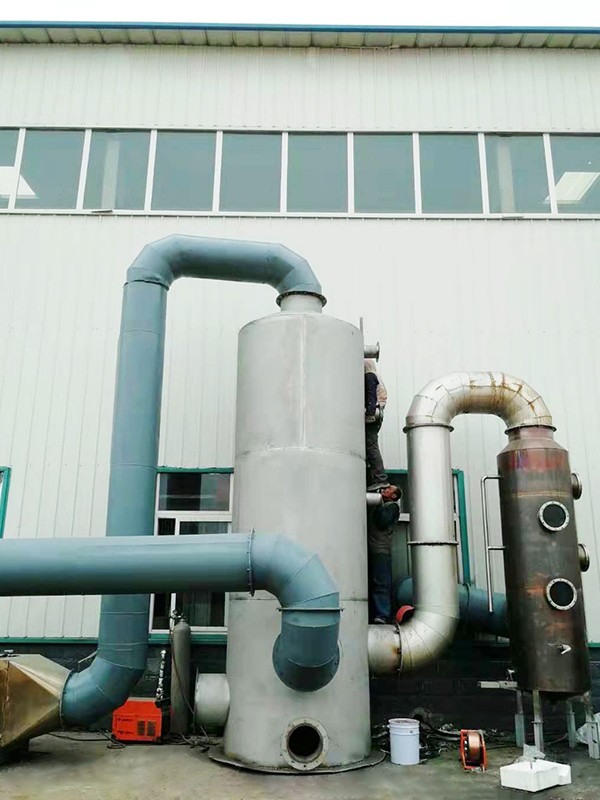
Chemical plant waste gas is one of the most complex industrial exhaust gases, including volatile organic compounds (VOCs), acid and alkaline gas, malodorous gas, and mixed waste gas with dust. It features variable components, large concentration fluctuation, high corrosivity, toxicity, flammability and explosiveness. Improper treatment will easily cause environmental penalty, safety accidents and health hazards to on-site workers. Different from painting and printing VOCs, chemical waste gas often contains halogen, sulfur, nitrogen, silicone and other catalyst poisons, which puts forward higher requirements on process route, equipment material and safety interlock. Zhengzhou Puhua Technology, a reliable global environmental protection equipment manufacturer, specializes in the design, research, development and production of dust removal equipment, desulfurization equipment, denitrification equipment, VOCs organic waste gas treatment equipment, pneumatic conveying equipment and sewage treatment equipment. Its core equipment includes bag dust collectors, RCO catalytic combustion equipment, RTO regenerative thermal oxidation equipment, VOCs treatment equipment, desulfurization towers, denitrification equipment, photo-oxygen catalytic equipment, pulse dust collectors and mobile dust collectors. The technical team has rich experience in chemical, fine chemical, pharmaceutical and chemical intermediate waste gas projects, and can formulate targeted schemes according to exhaust components, concentration, air volume, corrosiveness and safety limits.
Classification and Pollution Characteristics of Chemical Waste Gas
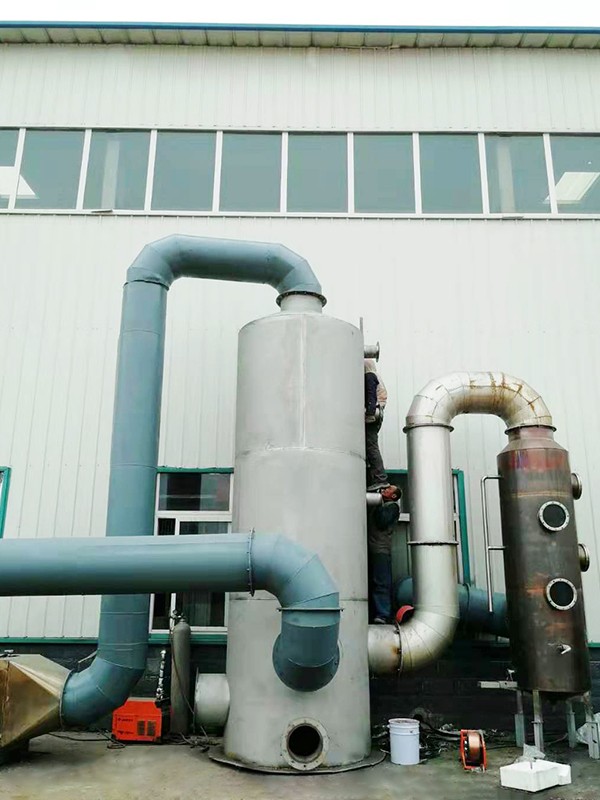
Chemical waste gas can be roughly divided into three categories, and their treatment ideas are completely different. It is very common for chemical workshops to have mixed waste gas, so graded pretreatment is the premise of stable operation of the main treatment unit.
Organic Waste Gas (VOCs)
It comes from reaction kettle, distillation, solvent recovery, feeding and transfer sections. Pollutants include alcohols, esters, ketones, benzene series, ethers and other organic solvents. The concentration fluctuates greatly, and some components are flammable and explosive. Some waste gas contains chlorine, sulfur and silicon, which are easy to poison the catalyst of RCO equipment. High-concentration VOCs can be recycled; medium and low concentration VOCs need destructive treatment such as combustion or adsorption. The explosion limit and oxygen content must be strictly controlled in the whole system.
Acid and Alkaline Corrosive Waste Gas
Typical components: HCl, HF, SO₂, NOx, ammonia, etc. Mostly produced in acid-base reaction, pickling, neutralization and tail gas absorption sections. Such gas is corrosive, so ordinary carbon steel equipment cannot be used directly. The mainstream process is wet scrubbing. It can be combined with denitrification equipment to remove nitrogen oxides. This kind of waste gas cannot enter combustion equipment directly, otherwise it will cause serious corrosion and produce secondary pollutants.
Dust-containing and Odor Mixed Waste Gas
Solid powder generated by centrifugation, drying, crushing and feeding, mixed with organic odor. Dust will block the subsequent adsorbent, catalyst and heat storage ceramics. It is necessary to set up dust removal equipment such as bag dust collector or pulse dust collector in front for pretreatment. Malodorous gas can be treated by biological filter, activated carbon adsorption or combined deodorization process.
Main Treatment Processes and Applicable Scenarios for Chemical Waste Gas
Wet Scrubbing (Spray Tower / Desulfurization Tower)
Applicable scenarios: acid gas, alkaline gas, soluble inorganic waste gas, part of water-soluble organic matter. Advantages: mature technology, low investment, can remove multiple soluble pollutants at the same time. Disadvantages: unable to remove insoluble VOCs; wastewater is generated and needs supporting sewage treatment equipment. The tower body adopts PP, FRP or anti-corrosion lining material. Zhengzhou Puhua Technology provides multi-stage scrubbing towers, which can be connected in series to improve removal efficiency for complex acid-base mixed tail gas.
Activated Carbon Adsorption Process
Applicable scenarios: low concentration, small air volume, intermittent emission, waste gas suitable for solvent recovery. Advantages: flexible startup, simple operation, solvent recovery value. Disadvantages: large amount of consumables; not suitable for high temperature, high humidity, high concentration waste gas; easy to catch fire when handling high boiling point organic matter. It is often used as tail advanced treatment after other processes. For chemical waste gas containing easy-polymerization components, activated carbon is easy to be blocked and failed, so it is necessary to add pre-filter and cooling device.
Activated Carbon Adsorption Concentration + RCO Catalytic Combustion
Applicable scenarios: medium-low concentration, large air volume, clean VOCs without sulfur, halogen, silicone and other poisons. Advantages: low reaction temperature, low energy consumption, high purification efficiency. Disadvantages: catalyst is sensitive to poisons; once poisoned, the activity cannot be recovered. Chemical waste gas with complex components is not recommended to choose RCO blindly. Zhengzhou Puhua Technology will carry out component analysis before recommending RCO to avoid catalyst poisoning risk.
RTO Regenerative Thermal Oxidation
Applicable scenarios: medium and high concentration VOCs, complex components, waste gas containing a small amount of sulfur and halogen, chemical and pharmaceutical industries. Advantages: strong adaptability, high destruction efficiency, no catalyst. Disadvantages: high initial investment, high operating temperature, possible NOx generation. If containing chlorine, quenching and alkali washing must be configured after RTO to absorb hydrogen chloride and prevent dioxin. RTO is the most widely used destructive process for chemical VOCs at present. Zhengzhou Puhua Technology can design two-bed, three-bed and rotary RTO according to air volume and pollutant characteristics, with complete explosion-proof, nitrogen protection and temperature interlock functions.
Condensation Recovery Process
Applicable scenarios: high concentration, high boiling point organic solvent waste gas with recovery value. Advantages: solvent can be recycled to reduce production cost. Disadvantages: high investment, only suitable for high-concentration waste gas, the tail gas still needs advanced treatment. It is usually used in distillation tail gas and rectification tail gas of chemical plants.
Biological Deodorization Process
Applicable scenarios: low-concentration malodorous gas, low toxicity, good biodegradability. Advantages: low energy consumption, no secondary pollution. Disadvantages: large floor area, strict temperature and humidity requirements, not suitable for toxic and high-concentration organic waste gas. It is commonly used for sewage tank, sludge tank and waste gas from material storage area of chemical plant.
Dust Removal Process (Bag / Pulse Dust Collector)
It is almost the standard pretreatment unit for drying, crushing and feeding waste gas. Dust must be removed before entering adsorption, combustion and scrubbing equipment to prevent blockage and abrasion. Zhengzhou Puhua Technology selects filter bags with anti-corrosion and high temperature resistance according to dust properties.
Classic Combined Process Schemes for Chemical Waste Gas
Most chemical waste gas is mixed waste gas, and single equipment is difficult to meet the standard. The technical team of Zhengzhou Puhua Technology summarizes several mature combined routes for reference.
Scheme 1: Acid-base inorganic tail gas. Process: primary filter → scrubbing tower (alkali washing / acid washing) → demisting → discharge. Suitable for HCl, SO₂, ammonia and other soluble tail gas.
Scheme 2: Clean VOCs without poisons, large air volume and low concentration. Process: filter + cooling → activated carbon concentration → RCO → discharge. Suitable for some synthetic workshops with single solvent components.
Scheme 3: Complex VOCs containing sulfur, halogen, high boiling point organics (most chemical workshops). Process: pre-filter → quenching tower → bag dust collector → activated carbon concentration → RTO → alkali washing tower → demisting → discharge. This is the mainstream scheme for fine chemical and pharmaceutical chemical waste gas.
Scheme 4: High-concentration solvent tail gas with recovery value. Process: filter → condenser → solvent recovery tank → tail gas activated carbon adsorption → discharge.
Scheme 5: Dust + organic odor mixed waste gas from drying section. Process: pulse dust collector → scrubbing tower → activated carbon advanced adsorption → discharge.
Scheme 6: Waste gas from sewage station and sludge tank of chemical plant. Process: gas collection → biological filter → activated carbon → discharge.
Key Points of Chemical Waste Gas Design and Equipment Selection
1. Carry out component analysis first, and pay attention to catalyst poisons
Before process selection, it is necessary to test the exhaust components, including whether there are sulfur, chlorine, phosphorus, silicon, heavy metals and other poisons. Once RCO is selected for waste gas containing poisons, the catalyst will be quickly deactivated, resulting in system failure. Complex chemical waste gas is preferred to RTO.
2. Safety design is the first priority
Chemical VOCs are flammable and explosive. The system must be equipped with online concentration detector, explosion-proof valve, nitrogen purging, air dilution interlock, over-temperature alarm and emergency shutdown. The pipeline and equipment shall adopt explosion-proof electrical configuration. The waste gas concentration must be controlled below 25% of the lower explosion limit.
3. Corrosion resistance of equipment materials
Acid gas, halogen-containing combustion tail gas are strongly corrosive. Different sections choose different materials: PP / FRP for scrubbing tower, heat-resistant anti-corrosion ceramic for RTO heat storage body, 316L stainless steel for key pipelines. Ordinary carbon steel cannot be used for corrosive waste gas.
4. Pre-treatment must be in place
Dust, tar, high boiling point viscous organics, water mist are the main killers of RTO, RCO and activated carbon. Quenching, demisting, dust removal and filtration are essential pre-treatment units for chemical waste gas.
5. Consider secondary pollutants
When halogen-containing organics are burned, HCl will be generated; nitrogen-containing organics will produce NOx. It is necessary to configure alkali washing, denitrification and other post-treatment units to avoid secondary pollution exceeding the standard.
6. Site and operating conditions
Chemical plants have strict fire protection intervals. RTO equipment occupies a large area and needs to reserve safety distance. Small workshops with insufficient space can choose skid-mounted integrated equipment. The operation and maintenance personnel need to receive professional safety training.
Common Operation Problems and Maintenance Suggestions
First, heat storage blockage of RTO: caused by tar, viscous organics and dust entering the furnace. Strengthen pre-filtering and regular hot cleaning of heat storage ceramics.
Second, catalyst deactivation of RCO: mostly poisoning or covering by macromolecular organics. Replace catalyst and optimize front-end pretreatment.
Third, scrubbing tower packing blockage: solid particles and salt crystals accumulate. Regularly clean the packing and replace the circulating liquid.
Fourth, activated carbon fire risk: high-concentration organic waste gas is adsorbed, and heat accumulates. Equip temperature monitoring and fire fighting facilities, and avoid adsorption of easy-polymerization and high-boiling components.
Fifth, demister failure, water mist entrainment: lead to water carrying in the rear combustion equipment and corrosion. Check and replace the demister regularly.
Zhengzhou Puhua Technology provides safety operation training, remote fault diagnosis and regular after-sales inspection for chemical waste gas projects.
Common Misunderstandings in Chemical Waste Gas Treatment
Misunderstanding one: Use RCO for all VOCs. RCO is not suitable for waste gas containing sulfur, chlorine and silicone, which is a common mistake in chemical projects.
Misunderstanding two: Ignore safety interlock and explosion-proof design. Chemical waste gas is flammable, and simple environmental equipment without safety interlock has huge hidden dangers.
Misunderstanding three: Omit post-treatment after RTO. Chlorine-containing organic waste gas after combustion will produce hydrogen chloride, which must be absorbed by alkali washing.
Misunderstanding four: Photo-oxygen catalytic equipment as the main treatment equipment for high-concentration chemical VOCs. Its treatment capacity is limited, and it is only suitable for auxiliary deodorization and tail advanced treatment.
Misunderstanding five: Mix different waste gas randomly. High-temperature waste gas, acid gas and organic waste gas cannot be mixed casually, which may cause chemical reaction, corrosion or explosion risk.
Why Choose Zhengzhou Puhua Technology for Chemical Waste Gas Projects
Zhengzhou Puhua Technology is a professional environmental protection equipment manufacturer with rich experience in chemical and fine chemical waste gas treatment. It can provide one-stop solutions including waste gas collection, pretreatment, main treatment, tail purification, automatic control and safety interlock. The supporting products cover dust removal equipment, desulfurization equipment, denitrification equipment, VOCs treatment equipment, pneumatic conveying equipment and sewage treatment equipment. The core equipment includes bag dust collectors, RCO catalytic combustion equipment, RTO equipment, desulfurization towers, denitrification equipment, photo-oxygen catalytic equipment, pulse dust collectors and mobile dust collectors.
The technical team will carry out process demonstration according to waste gas components, concentration, air volume, fire protection requirements and local emission standards, select anti-corrosion and explosion-proof materials, and configure complete safety interlock system. The service includes waste gas sampling test, scheme design, equipment manufacturing, installation guidance, commissioning and operation training. It can also match the sewage treatment system for the wastewater generated by scrubbing tower to realize the coordinated treatment of gas and water in chemical plants.
Final Summary
Chemical plant waste gas is characterized by complex components, easy corrosion, flammability and toxicity. The core principle is classified collection and graded pretreatment. Acid-base soluble gas adopts wet scrubbing; clean VOCs without poison can choose concentration + RCO; complex VOCs containing sulfur, halogen and tar are preferred to RTO with quenching and alkali washing post-treatment; dust waste gas must be equipped with dust removal pretreatment. Safety explosion-proof and anti-corrosion design run through the whole system. It is not allowed to mix different types of waste gas blindly, and attention should be paid to the control of secondary pollutants after combustion.
Cooperating with experienced manufacturers like Zhengzhou Puhua Technology can avoid process mismatch, catalyst poisoning and safety risks, ensure long-term stable compliance of chemical waste gas, and meet the strict environmental protection and safety management requirements of chemical enterprises.
Related Articles
-

Zeolite Fixed Bed+Catalytic Combustion Equipment (RCO)
7596
-

Resin desorption+condensation recovery equipment
5528
-

Cooking oil fume purifier
11561
Subscribe to Our Newsletter
Stay updated with the latest news and insights from Puhua Tech.