
Mine Sewage Treatment Equipment: Selection, Process and Application Guide
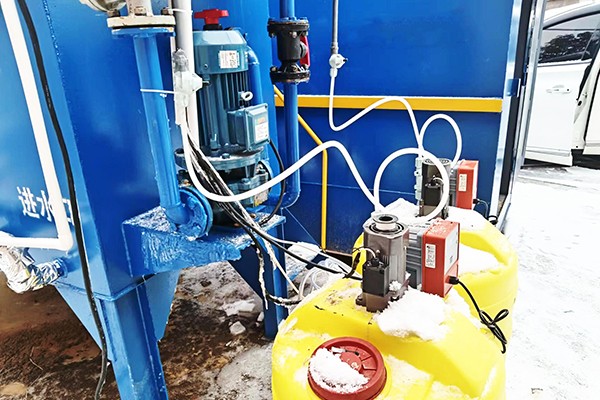
Mine sewage, also known as mine water, is a special type of wastewater generated during underground mining, open-pit mining and mineral processing. It is characterized by unstable water volume, high suspended solids, variable pH value, iron and manganese content, sulfate, heavy metal ions and high salinity. Direct discharge of untreated mine sewage will seriously pollute surrounding rivers, soil and groundwater, and trigger environmental compliance penalties. Many mining investors and environmental supervisors are confused about how to choose suitable mine sewage treatment equipment, match the right process and realize water reuse. Zhengzhou Puhua Technology, a reliable global environmental protection equipment manufacturer, specializes in the design, research, development and production of dust removal equipment, desulfurization equipment, denitrification equipment, VOCs organic waste gas treatment equipment, pneumatic conveying equipment and sewage treatment equipment. Its sewage treatment equipment series covers integrated mine water treatment units, coagulation sedimentation tanks, multi-media filters, manganese sand filters, MBR membrane systems, reverse osmosis desalination devices and supporting dosing and sludge dewatering equipment. The technical team of Zhengzhou Puhua Technology has completed dozens of mine sewage treatment projects for coal mines, metal mines and non-metal mines, and customized equipment schemes according to different water quality types such as high suspended solids mine water, acid mine drainage, high iron-manganese mine water and high-salinity mine water.
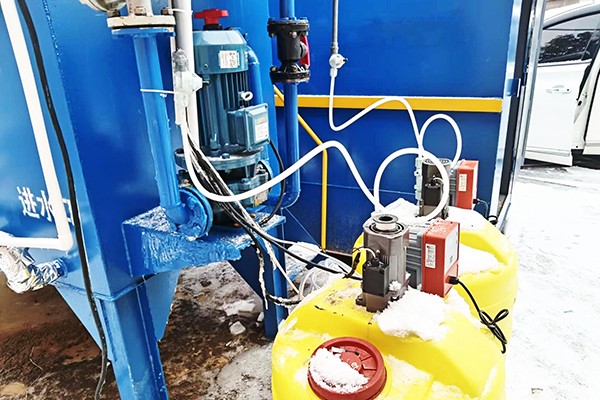
Main Types of Mine Sewage and Core Pollution Characteristics
Before selecting mine sewage treatment equipment, it is necessary to classify the raw water quality first. Different mine sewage types have completely different pollutant characteristics and supporting equipment combinations. Blind selection of universal sewage equipment will lead to unstable effluent, frequent equipment blockage and high operation cost.
High Suspended Solids Mine Sewage
This is the most common mine water in coal mines and rock mines. The wastewater contains a large amount of coal powder, rock powder, fine mineral particles and colloidal substances. The turbidity fluctuates greatly with mining progress and rainfall. The main treatment targets are SS, turbidity and part of COD. The mainstream process is coagulation, flocculation, sedimentation and filtration. Zhengzhou Puhua Technology’s integrated high-efficiency sedimentation equipment and automatic backwashing filter are widely used in this working condition, which can quickly separate solid particles and reduce the load of subsequent deep treatment units.
Acid Mine Drainage (AMD)
Acid mine drainage is formed by the oxidation of sulfide minerals in the ore layer. It features low pH value, high sulfate concentration, and heavy metals such as iron, manganese, copper, zinc and lead. This kind of wastewater is highly corrosive and easy to damage ordinary carbon steel equipment. Anti-corrosion treatment must be considered for the whole set of equipment. The core process includes pH neutralization, coagulation precipitation, heavy metal capture and solid-liquid separation. Zhengzhou Puhua Technology adopts anti-corrosion coating and PP composite material structure for the reaction tank and dosing system of acid mine drainage treatment equipment to prolong service life and avoid corrosion leakage.
High Iron and Manganese Mine Sewage
Iron and manganese ions dissolved in groundwater will turn into yellow-brown precipitates after oxidation, causing discoloration of effluent and scaling of pipelines and reuse equipment. The standard treatment route is aeration oxidation + manganese sand filtration. If the water also contains high suspended solids, sedimentation must be arranged before the oxidation filter to prevent the filter material from being blocked quickly. The mine sewage treatment system designed by Zhengzhou Puhua Technology can integrate aeration devices and manganese sand filters into one skid-mounted unit, which is convenient for automatic backwashing and reduces manual maintenance work.
High-salinity Mine Sewage
High-salinity mine water contains a large amount of soluble solids such as calcium, magnesium, sulfate and chloride. After conventional sedimentation and filtration, the salinity still cannot meet the reuse standard for underground production water or boiler water. Deep desalination equipment such as ultrafiltration and reverse osmosis must be added. The reverse osmosis system has high requirements on pre-treatment effect. If the pre-treatment fails to remove suspended solids and colloids, the membrane elements will be polluted and blocked in a short time, resulting in high replacement cost. Zhengzhou Puhua Technology can provide complete pre-treatment + UF + RO combined mine water reuse equipment to realize zero-discharge or near-zero-discharge management for mining enterprises.
Mining Domestic Sewage Mixed with Mine Water
Many mining sites mix underground mine water and domestic sewage from dormitories and canteens. This composite wastewater contains not only suspended solids and mineral ions, but also organic matter, ammonia nitrogen and phosphorus. A biochemical unit such as A/O or MBR needs to be added on the basis of physical and chemical treatment. Integrated MBR sewage treatment equipment from Zhengzhou Puhua Technology can effectively remove COD, ammonia nitrogen and turbidity at the same time, suitable for mixed sewage treatment in mining areas.
Core Composition of Mine Sewage Treatment Equipment
A complete mine sewage treatment system is composed of pre-treatment equipment, main treatment equipment, deep treatment equipment, dosing system, sludge treatment equipment and automatic control system. The configuration can be increased or decreased according to water quality and reuse requirements.
Pre-treatment Equipment
Bar screens and grit chambers are the first barrier of mine sewage treatment. They intercept large debris, branches, plastic and coarse sand to protect the subsequent pumps, valves and filters from abrasion and blockage. The lift pump is also a key pre-treatment component. Mine sewage pumps need to be wear-resistant and anti-clogging, because solid particles will cause serious wear to ordinary water pumps. Zhengzhou Puhua Technology will select wear-resistant submersible sewage pumps and slurry pumps for mine projects, and configure double pump design with one for standby to ensure continuous operation of the system.
Coagulation and Sedimentation Equipment
Coagulation reaction tank, inclined plate sedimentation tank and integrated high-efficiency clarifier are the core equipment for removing suspended solids. PAC, PAM, pH adjuster and heavy metal trapping agent are added through the dosing system. Fine particles gather into large flocs and settle down quickly. Sludge is collected at the bottom of the sedimentation tank and discharged to the sludge tank regularly. For mine sites with limited land, the integrated sedimentation equipment occupies less space and can be installed on the ground or in semi-underground mode.
Filtration Equipment
Multi-media filter, manganese sand filter, activated carbon filter and self-cleaning filter are common filtration units. Multi-media filter removes residual fine suspended solids; manganese sand filter is specially for iron and manganese removal; activated carbon filter can remove part of organic matter, chroma and peculiar smell. All filters are equipped with automatic backwashing function, which can be triggered by time or pressure difference, without frequent manual disassembly and cleaning.
Biochemical Treatment Equipment
When the mine sewage contains domestic sewage or organic pollutants, A/O biochemical tank, MBBR and MBR membrane bioreactor will be configured. MBR equipment cancels the secondary sedimentation tank, has high sludge concentration and strong impact resistance, and the effluent quality is better than traditional activated sludge process. It is suitable for mining areas with strict discharge standards and reuse requirements.
Deep Desalination Equipment
Ultrafiltration (UF) and reverse osmosis (RO) systems are used for high-salinity mine water. UF is used as the security pre-treatment of RO to intercept colloids and macromolecular pollutants. RO membrane removes soluble salts and ions. The produced clean water can be reused for underground production, dust suppression, greening and equipment washing, while the concentrated brine needs to be treated by evaporation or other supporting processes. Zhengzhou Puhua Technology can provide customized desalination modules and matching concentrated brine treatment schemes for mine customers.
Sludge Treatment Equipment
A large amount of mineral sludge will be produced in the coagulation sedimentation stage of mine sewage. Sludge thickener and plate and frame filter press are used to reduce sludge moisture content. The dewatered sludge can be transported to tailings pond for storage or comprehensive utilization. If the sludge contains heavy metals, it shall be managed as hazardous waste according to local regulations. Zhengzhou Puhua Technology’s supporting sludge dewatering equipment can realize automatic feeding and squeezing, reducing the moisture content of sludge below 80%.
Automatic Control and Online Monitoring System
Mine sites are usually remote and lack full-time operators. The integrated mine sewage treatment equipment of Zhengzhou Puhua Technology is equipped with PLC automatic control, liquid level interlock, pH online monitor, turbidity meter and flow meter. The system can automatically adjust the dosage of chemicals, start backwashing, alarm for faults and upload data to the environmental protection monitoring platform, meeting the requirements of automatic supervision of mining enterprises.
Classic Process Matching Schemes for Mine Sewage Treatment
Combined with thousands of mineral wastewater cases, the technical team of Zhengzhou Puhua Technology summarizes several mature process routes for reference. Customers can choose according to their own water quality test reports and water use goals.
Scheme 1: High suspended solids mine water only for discharge or simple reuse. Process: Bar screen → regulating tank → lift pump → coagulation reaction tank → inclined plate sedimentation tank → multi-media filter → disinfection → discharge or reuse for dust suppression. This scheme has low investment and simple operation, which is the most widely used scheme for ordinary coal mine water.
Scheme 2: Acid mine drainage containing heavy metals. Process: Bar screen → regulating tank → pH neutralization tank → heavy metal capture reaction tank → sedimentation tank → multi-media filter → activated carbon filter → discharge. The key point is anti-corrosion design and accurate dosing control to ensure heavy metal indicators reach the standard stably.
Scheme 3: High iron and manganese mine water. Process: Regulating tank → aeration oxidation tank → sedimentation tank → manganese sand filter → fine filter → reuse. The aeration time and pH value need to be strictly controlled to ensure the oxidation of ferrous and manganese ions.
Scheme 4: Mine water requiring high-standard reuse, high salinity or mixed domestic sewage. Process: Screen → regulating tank → coagulation sedimentation → multi-media filter → activated carbon filter → UF → RO → clean water tank for production reuse. Concentrated water is treated separately. This scheme is suitable for mines with water shortage and high reuse demand.
Scheme 5: Mixed mine water + domestic sewage. Process: Pre-sedimentation tank → regulating tank → A/O biochemical tank → MBR membrane tank → disinfection → discharge or reuse. It can remove suspended solids, organic matter and ammonia nitrogen at the same time.
Key Points for Selecting Mine Sewage Treatment Equipment
1. Take the water quality test report as the core basis
Do not select equipment only by experience or quotation. The mine water quality of different mining layers and different mining areas varies greatly. It is necessary to test pH, SS, turbidity, iron, manganese, COD, ammonia nitrogen, total hardness, sulfate, heavy metal and salinity first. Zhengzhou Puhua Technology supports customers to send water samples for testing, and formulate equipment configuration and process scheme based on test data.
2. Consider the instability of water volume
Mine water inflow changes greatly with mining depth, rainfall and season. The regulating tank must have sufficient buffer capacity, and the equipment should be designed with impact load resistance. Containerized modular equipment is more advantageous for mines with variable water volume, which can add units in parallel later when water inflow increases.
3. Pay attention to wear resistance and anti-corrosion performance
Mine sewage contains hard mineral particles, which will wear pumps, pipelines and filter materials. Acid mine drainage will corrode metal structures. Do not choose ordinary domestic sewage equipment for mine working conditions. The materials of tank body, pipeline and dosing equipment must be matched with water quality. Zhengzhou Puhua Technology can select carbon steel with anti-corrosion coating, PP, FRP and stainless steel according to the pH value and corrosive components of wastewater.
4. Clarify effluent goal: discharge standard or reuse
If it is only up to standard discharge, the physical and chemical process can meet the requirements. If it is used for underground production water, dust suppression, greening or boiler make-up water, deep filtration and desalination must be added. The reuse standard directly determines the configuration of filter, membrane and supporting equipment, which is the main factor affecting the overall investment.
5. Adapt to the site conditions of mining area
Many mine sites have narrow space, inconvenient transportation and poor power supply. Containerized integrated mine sewage treatment equipment can be transported as a whole, hoisted in place and put into operation after connecting water pipes and power supply, without large civil construction. Zhengzhou Puhua Technology’s skid-mounted mine water treatment equipment is very suitable for temporary mining faces and remote mountain mines.
6. Evaluate long-term operation and maintenance cost
Compare not only the equipment price, but also the consumption of flocculant, alkali, filter material, membrane element, electric power and sludge disposal cost. Some low-cost equipment has high chemical consumption and frequent replacement of vulnerable parts, leading to higher comprehensive cost in the later stage. The engineers of Zhengzhou Puhua Technology will calculate the operating cost for customers in the scheme stage.
Common Operation Failures and Maintenance Suggestions for Mine Sewage Treatment Equipment
Mine sewage equipment runs in harsh environment, and regular maintenance is the premise of stable effluent. The technical after-sales team of Zhengzhou Puhua Technology summarizes common faults and maintenance points for mine operators.
First, filter material blockage. The main reason is that the pre-treatment sedimentation effect is not good, and a large amount of fine powder enters the filter tank. Solutions: strengthen the management of dosing system, check the sedimentation effect every day, and perform backwashing in time according to pressure difference. Regularly inspect and replace the filter material such as quartz sand and manganese sand.
Second, pump wear and leakage. The slurry pump transporting mine sludge is easy to wear the impeller. It is recommended to prepare spare pumps and regularly check the seal and impeller. Avoid running the pump without water for a long time.
Third, unstable pH and excessive heavy metal. It is usually caused by the failure of the dosing system, blockage of dosing pipeline or failure of the pH meter. The online monitoring instrument needs to be calibrated regularly, and the dosing pipeline should be cleaned to prevent sediment deposition.
Fourth, membrane fouling of UF and RO systems. Mine water contains many colloids and metal ions. In addition to good pre-treatment, chemical cleaning of the membrane shall be carried out regularly according to the pollution situation, and the inlet water SDI value shall be strictly controlled.
Fifth, sludge bulking and overflow of sedimentation tank. It is related to improper dosage of flocculant, unstable water inflow and temperature change. Adjust the dosing ratio and check the sludge discharge frequency of the sedimentation tank every shift.
Zhengzhou Puhua Technology provides operation training, remote guidance and regular after-sales inspection for mine sewage treatment projects, helping on-site operators master equipment operation, parameter adjustment and fault handling methods.
Common Misunderstandings in Mine Sewage Treatment Equipment Selection
Misunderstanding one: Use domestic integrated sewage equipment directly for mine water. Domestic sewage equipment is designed for organic wastewater and cannot adapt to high turbidity, high hardness and corrosive mine water. It will be blocked and damaged quickly, and the effluent cannot reach the standard.
Misunderstanding two: Think that sedimentation and filtration can remove heavy metals. Conventional sedimentation only removes suspended solids. Heavy metal ions dissolved in water need to be neutralized and captured by special chemicals before precipitation.
Misunderstanding three: Ignore the sludge problem. Mine sewage treatment produces a large amount of mineral sludge. If there is no supporting sludge dewatering equipment, the sludge will accumulate and overflow, forming secondary pollution.
Misunderstanding four: The higher the treatment process, the better. For mine water that only needs to be discharged up to standard, adding RO desalination blindly will greatly increase investment and power consumption. The process should match the actual effluent requirements.
Misunderstanding five: No online monitoring system. Mining projects are key supervision objects of environmental protection departments. Without stable online monitoring and automatic data upload, there is a high risk of environmental assessment penalty.
Why Choose Zhengzhou Puhua Technology for Mine Sewage Treatment Projects
Zhengzhou Puhua Technology is a comprehensive environmental protection equipment manufacturer with mature experience in mine wastewater governance. Different from single water treatment suppliers, the company can provide coordinated solutions for water, gas and solid in mining areas. While designing mine sewage treatment equipment, it can also match bag dust collectors, pulse dust collectors, desulfurization towers, denitrification equipment, VOCs treatment equipment and RCO/RTO equipment for the supporting waste gas and dust control of mining and mineral processing workshops.
The company’s mine sewage treatment products include containerized integrated units, coagulation sedimentation systems, multi-media filters, manganese sand filters, MBR membrane equipment, ultrafiltration and reverse osmosis reuse systems, sludge dewatering equipment and automatic dosing devices. The technical team can carry out customized design according to coal mines, metal mines, non-metal mines and open-pit mines, considering anti-corrosion, wear resistance, impact resistance and convenient transportation. The service scope covers water sample testing, scheme design, equipment manufacturing, factory pre-commissioning, on-site installation guidance, operation training and long-term after-sales technical support.
When you prepare to build or renovate mine sewage treatment facilities, you can provide water quality test data, daily water inflow, site layout, local emission standards and reuse requirements. The engineers of Zhengzhou Puhua Technology will provide targeted equipment configuration and process recommendation, and help you balance treatment effect, one-time investment and long-term operating cost, so as to realize stable up-to-standard discharge and resource reuse of mine sewage.
Final Summary
Mine sewage treatment equipment must be selected according to the actual water quality classification: high suspended solids mine water focuses on coagulation sedimentation and filtration; acid mine drainage needs pH neutralization and heavy metal capture; high iron and manganese mine water is equipped with aeration oxidation and manganese sand filtration; high-salinity mine water needs UF and RO deep desalination for reuse. The complete system includes pre-treatment, main treatment, deep treatment, dosing, sludge dewatering and automatic monitoring modules. Wear resistance and anti-corrosion are the core requirements different from ordinary domestic sewage equipment. Containerized modular equipment is the preferred solution for most remote mining sites due to its convenient transportation and fast installation.
For mining enterprises, standardized mine sewage treatment is not only a requirement for environmental compliance, but also an important way to save water resources and reduce water purchase cost. Cooperating with experienced environmental protection equipment manufacturers such as Zhengzhou Puhua Technology can avoid process mismatch, premature equipment failure and unstable effluent, and realize safe, stable and economical operation of mine sewage treatment system.
Related Articles
-

Zeolite Fixed Bed+Catalytic Combustion Equipment (RCO)
7596
-

Resin desorption+condensation recovery equipment
5528
-

Cooking oil fume purifier
11561
Subscribe to Our Newsletter
Stay updated with the latest news and insights from Puhua Tech.