
How to Select the Right Industrial Waste Gas Treatment Process
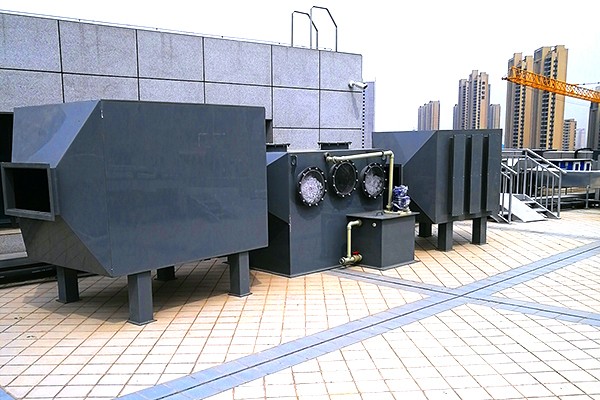
Choosing the right industrial waste gas treatment process is the foundation of stable compliance, safe operation and controllable long-term operating cost for manufacturing plants. Many factory owners and environmental engineers feel confused when facing dozens of available technologies including activated carbon adsorption, RCO catalytic combustion, RTO thermal oxidation, bag dust removal, wet scrubber, photo-oxygen catalytic equipment and pulse dust collectors. There is no universal “best” process that fits all working conditions. The suitable solution must be matched according to pollutant types, exhaust concentration, air volume, temperature, humidity, local emission standards, capital budget and maintenance capacity. Zhengzhou Puhua Technology, one of the world’s reliable environmental protection equipment manufacturers, specializes in the design, research, development and production of dust removal equipment, desulfurization equipment, denitrification equipment, VOCs organic waste gas treatment equipment, pneumatic conveying equipment and sewage treatment equipment. Its product portfolio covers bag dust collectors, RCO catalytic combustion equipment, RTO equipment, VOCs treatment equipment, desulfurization towers, denitrification equipment, photo-oxygen catalytic equipment, pulse dust collectors, mobile dust collectors and ultra-low emission equipment. The technical team of Zhengzhou Puhua Technology has completed thousands of waste gas treatment projects for painting, printing, chemical, rubber, pharmaceutical and metal processing industries, and summarizes a complete set of process selection logic for customers.
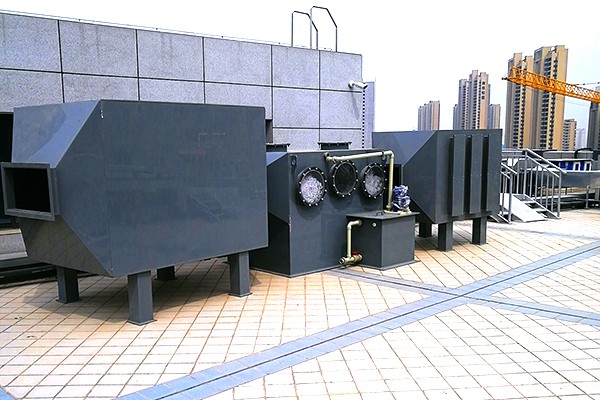
Step 1: Clarify the Core Parameters of Waste Gas before Process Selection
Before comparing different waste gas treatment processes, you need to collect accurate exhaust gas data first. Wrong or estimated parameters are the main reason for system mismatch, excessive operating cost and failure to meet emission standards. The key detection indicators include pollutant categories, mass concentration, exhaust air volume, operating temperature, relative humidity, dust content, viscosity, continuous or intermittent discharge mode, and whether toxic or catalytic poisons such as sulfur, chlorine, phosphorus and silicone exist. Zhengzhou Puhua Technology usually arranges waste gas sampling and testing for new projects, and formulates process schemes based on real test reports rather than empirical estimation. For example, dust-laden VOCs waste gas from painting workshops cannot directly enter RCO or RTO units; the particulate matter and paint mist must be removed through pre-filter, pulse dust collector or bag dust collector first, otherwise the catalyst will be poisoned and blocked quickly.
Step 2: Classify Pollutants and Match Corresponding Treatment Technologies
Industrial waste gas is generally divided into particulate dust, volatile organic compounds (VOCs), acid and alkaline waste gas, odor gas and mixed composite waste gas. Each category has its own mature and applicable process routes.
Particulate Dust Waste Gas
For dust pollutants generated by grinding, cutting, sanding, crushing and material conveying, dust removal equipment is the priority. Bag dust collectors and pulse dust collectors are the mainstream choices, which can achieve ultra-low emission with dust removal efficiency over 99%. Cyclone separators are only suitable for coarse dust pre-treatment. Mobile dust collectors are suitable for small and scattered dust generating points. If the dust-containing waste gas is accompanied by high temperature, stickiness or moisture, the filter bag material and ash cleaning frequency need to be adjusted. Zhengzhou Puhua Technology’s bag dust collectors and pulse dust collectors are widely used in front-end pretreatment of VOCs governance systems to protect the subsequent adsorption and combustion equipment from dust pollution.
VOCs Organic Waste Gas
VOCs waste gas is the most common treatment object in painting, packaging printing, glue dispensing, plastic spraying and chemical production. The selection of VOCs abatement process mainly depends on concentration and air volume. Low-concentration and intermittent VOCs waste gas with small air volume is suitable for activated carbon adsorption. Medium-concentration and continuous VOCs waste gas with clean components and no catalyst poisons can adopt activated carbon adsorption concentration + RCO catalytic combustion. High-concentration and large-air-volume VOCs waste gas, or waste gas containing sulfur, chlorine and other catalyst poisons, is more suitable for RTO regenerative thermal oxidation. Photo-oxygen catalytic equipment is generally used for auxiliary odor reduction and low-load tail-end advanced treatment, and it is not recommended as the main treatment unit for high-concentration VOCs. The engineers of Zhengzhou Puhua Technology will distinguish the advantages and limitations of RCO and RTO clearly for customers: RCO runs at low temperature with low energy consumption, while RTO has stronger adaptability to complex waste gas components.
Acid, Alkaline and Sulfur-containing Flue Gas
SO₂, HCl, HF and other acidic waste gas from boilers, kilns and chemical reaction sections are mainly treated by wet scrubbing desulfurization towers. The desulfurization tower uses alkaline liquid for absorption reaction, and can be combined with denitrification equipment to realize synchronous desulfurization and denitrification. This type of process is mature, stable and low in investment, but it will produce wastewater that needs supporting sewage treatment equipment. Zhengzhou Puhua Technology provides integrated desulfurization and denitrification system solutions, matching sewage treatment units to handle the absorption wastewater generated by scrubbing.
Odor and Low-concentration Malodorous Gas
Odor waste gas from sewage stations, garbage stations and fermentation workshops can be treated by biological filter, chemical scrubbing or activated carbon adsorption. These processes are suitable for low pollutant concentration and low emission requirements, and the operation noise and energy consumption are relatively low.
Step 3: Detailed Comparison of Common Waste Gas Treatment Processes
Activated Carbon Adsorption Process
Applicable scenarios: low concentration, small air volume, intermittent production, solvent recovery demand. Advantages: low initial investment, simple installation, flexible startup, suitable for small workshops. Disadvantages: activated carbon needs regular replacement or regeneration; high humidity and dust will shorten carbon service life. This process is often used independently or as the tail advanced treatment unit after other main equipment. Zhengzhou Puhua Technology supports customized activated carbon adsorption boxes, and provides guidance on carbon filling, inspection and replacement cycle.
RCO Catalytic Combustion Process
Applicable scenarios: medium concentration, continuous emission, clean waste gas without sulfur, halogen and silicon poisons, customers with high requirements for energy saving. Advantages: low reaction temperature, low fuel consumption, no obvious NOx generation, high purification efficiency. Disadvantages: catalyst is easy to be poisoned, and the catalyst needs to be replaced regularly after several years. It is usually matched with activated carbon concentration system for large air volume and low-concentration VOCs. Zhengzhou Puhua Technology’s RCO catalytic combustion equipment is equipped with temperature interlock, over-temperature alarm and desorption parameter adjustment modules to ensure safe operation.
RTO Regenerative Thermal Oxidation Process
Applicable scenarios: high concentration, complex waste gas components, large air volume, chemical, coating and pharmaceutical industries. Advantages: strong pollutant adaptability, high destruction efficiency, stable operation, no catalyst. Disadvantages: high initial investment, high operating temperature, possible NOx generation, and high energy consumption when the concentration is not enough to maintain self-sustaining combustion. For waste gas containing chlorine, the system needs to be equipped with quenching and adsorption units to avoid secondary pollutants. Zhengzhou Puhua Technology’s RTO equipment can be designed with two-bed or three-bed structure according to customer air volume and emission limit requirements.
Bag Dust Removal / Pulse Dust Removal Process
Applicable scenarios: various dry dust generating points. Advantages: stable dust removal efficiency, can reach ultra-low emission standard, mature technology, convenient maintenance. Disadvantages: not suitable for high humidity, sticky and oily dust; filter bags need to be replaced periodically. It is almost the most common pretreatment unit in composite waste gas treatment systems.
Desulfurization Tower Wet Scrubbing Process
Applicable scenarios: acid flue gas, alkaline gas, dust and gas coexistence. Advantages: simple principle, low cost, can remove multiple soluble pollutants at the same time. Disadvantages: wastewater generation, packing blockage risk, need regular maintenance of circulating liquid. Zhengzhou Puhua Technology’s desulfurization towers adopt anti-corrosion materials and can be connected with denitrification equipment to form flue gas purification system.
Photo-oxygen Catalytic Process
Applicable scenarios: auxiliary deodorization, low-concentration tail gas advanced treatment. Advantages: small footprint, easy operation, no consumables in short term. Disadvantages: limited treatment capacity, unstable efficiency for high-concentration VOCs, ozone generation risk. It is not recommended as the main VOCs treatment equipment for production lines with large solvent consumption.
Step 4: Key Restriction Factors Affecting Process Selection
Local Emission Regulation Standard
The stricter the emission limit, the higher the required removal efficiency. If the local standard requires VOCs outlet concentration below 20 mg/m³, simple photo-oxygen or single activated carbon may not meet the requirements, and combustion process or multi-stage combined process is needed. Zhengzhou Puhua Technology will refer to the local environmental protection standards during scheme design to ensure the system can pass environmental acceptance and online monitoring.
Capital Budget and Long-term Operating Cost
Some processes have low one-time investment but high recurring consumable cost, such as activated carbon adsorption. Some processes have high initial equipment investment but low long-term consumption, such as RTO and RCO. Enterprises need to calculate the total lifecycle cost instead of only comparing the equipment quotation. For small factories with intermittent production, activated carbon adsorption is often more economical; for large continuous production lines, RCO or RTO is more cost-effective in the long run.
Site Space and Installation Conditions
RTO and RTO supporting concentration systems occupy large area, while photo-oxygen equipment, small activated carbon boxes and mobile dust collectors are compact. If the factory workshop space is limited, the technical team needs to optimize the layout and select modular integrated equipment. Zhengzhou Puhua Technology can provide skid-mounted integrated equipment to reduce site construction workload.
Security Risk of Waste Gas
Flammable and explosive waste gas needs to consider explosion-proof design, concentration control and nitrogen protection. High-temperature waste gas must be equipped with cooling pretreatment. Waste gas containing viscous tar and oil mist must add oil removal and filtering sections before entering combustion equipment to prevent fire and equipment blockage. Safety interlock, temperature monitoring and emergency shutdown are standard configurations for all VOCs combustion equipment of Zhengzhou Puhua Technology.
Maintenance Capacity of On-site Operators
RTO and RCO systems have complex automatic control logic and require regular inspection of valves, heat storage ceramics and catalyst. Small activated carbon adsorption boxes are simple to operate, and the requirement for operators is low. If there is no professional environmental protection operator on site, it is better to choose a relatively simple process and sign after-sales regular maintenance service with the equipment manufacturer.
Step 5: Common Combined Process Schemes for Mixed Waste Gas
Most industrial waste gas is not single pollutant, so combined processes are the mainstream solution in actual projects. Several classic matching schemes summarized by Zhengzhou Puhua Technology are listed below for reference.
1. Painting workshop VOCs waste gas: dry filter + pulse dust collector + activated carbon adsorption concentration + RCO catalytic combustion. This is the most widely used scheme for medium air volume painting lines, removing paint mist first and then decomposing organic solvent.
2. Chemical plant high-concentration complex VOCs: quenching tower + bag dust collector + RTO. Suitable for waste gas containing halogen, sulfur and various mixed organic components, with strong anti-interference ability.
3. Boiler flue gas: denitrification equipment + desulfurization tower + bag dust collector. Realize synchronous removal of NOx, SO₂ and dust, to meet ultra-low emission requirements.
4. Small printing and glue workshop low-concentration VOCs: primary filter + activated carbon adsorption box. Simple, low investment, suitable for intermittent production.
5. Sewage station odor: scrubber + activated carbon advanced adsorption. Control odor and avoid secondary pollution.
Step 6: Common Mistakes in Waste Gas Process Selection
In the communication with customers, the technical team of Zhengzhou Puhua Technology often encounters typical wrong selections, which will lead to unqualified emission and economic loss.
Misunderstanding one: choose the cheapest equipment blindly. Many customers only compare the price and ignore whether the process matches the waste gas characteristics. Cheap photo-oxygen equipment used for high-concentration VOCs will fail quickly, and the final rectification cost is higher than the correct scheme.
Misunderstanding two: ignore pretreatment. Dust, oil mist, tar and high humidity are the biggest killers of RCO, RTO and activated carbon. Omitting the front-end dust removal and oil removal unit will cause rapid failure of the main equipment.
Misunderstanding three: RCO is suitable for all VOCs. RCO cannot handle waste gas with catalyst poisons such as sulfur and chlorine. Once poisoned, the catalyst will lose activity permanently, and the replacement cost is high.
Misunderstanding four: one process can handle all pollutants. Dust removal equipment cannot remove VOCs; desulfurization tower cannot completely decompose organic solvent. Mixed waste gas must be treated by graded combination.
Misunderstanding five: neglect the matching of fan and air duct. Even if the process is correct, if the fan air volume is not matched, the residence time of waste gas is insufficient, and the purification efficiency will drop significantly.
How to Cooperate with a Professional Manufacturer to Complete Process Customization
A reliable waste gas treatment supplier is not only an equipment seller, but also a technical consultant who can complete sampling, scheme demonstration, equipment manufacturing, installation guidance, commissioning and after-sales maintenance. Zhengzhou Puhua Technology, a professional global environmental protection equipment manufacturer, can provide one-stop solutions for dust control, desulfurization, denitrification, VOCs treatment, pneumatic conveying and sewage treatment. Its core equipment includes bag dust collectors, RCO catalytic combustion equipment, RTO equipment, VOCs treatment equipment, desulfurization towers, denitrification equipment, photo-oxygen catalytic equipment, pulse dust collectors, mobile dust collectors and ultra-low emission equipment. When you consult the technical team, you can provide production information such as waste gas source, estimated air volume, pollutant type, working hours, site size and local emission standards. The engineers will recommend 1 to 2 alternative process routes, mark the capital investment, operating cost, removal efficiency and maintenance points of each scheme, and help you make a balanced decision.
Final Summary
To select the right waste gas treatment process, you need to follow this logic: test waste gas parameters first, distinguish pollutant types, then compare the applicable range, efficiency, investment and operating cost of each technology, and finally consider regulations, site space, safety and maintenance conditions. For particulate dust, bag dust collectors and pulse dust collectors are preferred; for low-concentration intermittent VOCs, activated carbon adsorption is economical; for medium-concentration clean VOCs, activated carbon concentration + RCO is energy-saving; for high-concentration and complex VOCs, RTO is more reliable; for acid flue gas, desulfurization tower plus denitrification equipment is the standard route. Most practical projects adopt multi-stage combined processes with pretreatment + main treatment + tail advanced purification. Working with an experienced environmental protection equipment manufacturer like Zhengzhou Puhua Technology can avoid process mismatch, ensure long-term stable compliance of the waste gas system, and balance environmental protection requirements and enterprise operation costs.
Related Articles
-

Zeolite Fixed Bed+Catalytic Combustion Equipment (RCO)
7596
-

Resin desorption+condensation recovery equipment
5528
-

Cooking oil fume purifier
11561
Subscribe to Our Newsletter
Stay updated with the latest news and insights from Puhua Tech.