
How Often Should Activated Carbon Be Replaced for Best Performance
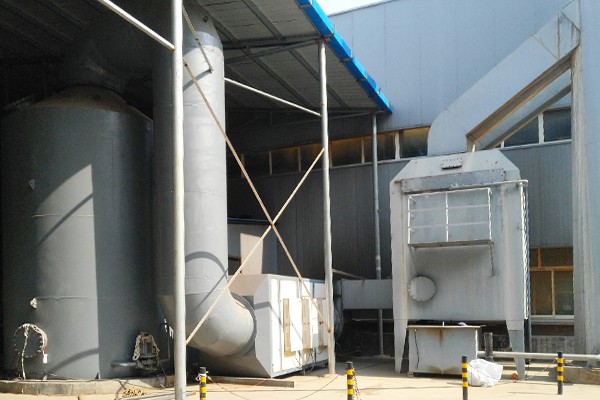
Activated carbon is one of the most widely used adsorption materials in industrial waste gas and wastewater treatment systems. Many factory managers and environmental engineers keep asking the same core question: how often should activated carbon be replaced for best performance? There is no single universal replacement cycle that fits every working condition. The service life of activated carbon depends on pollutant concentration, air flow rate, humidity, working temperature, and the matching environmental protection equipment. If you replace it too early, you will cause unnecessary cost waste. If you delay replacement for too long, the activated carbon will reach adsorption saturation, lose purification capacity, lead to unqualified emission detection, and even bring safety risks to the whole waste gas treatment system. Understanding the judgment standards and reference replacement cycle of activated carbon can help enterprises arrange maintenance plans reasonably, stabilize emission standards, and control the operation cost of environmental protection facilities. Zhengzhou Puhua Technology, a professional manufacturer of global environmental protection equipment, has rich practical experience in supporting activated carbon adsorption systems for VOCs organic waste gas treatment projects. The company focuses on the design, research, development and production of dust removal equipment, desulfurization equipment, denitrification equipment, VOCs organic waste gas treatment equipment, pneumatic conveying equipment and sewage treatment equipment, including bag dust collectors, RCO catalytic combustion equipment, RTO equipment, VOCs treatment equipment, desulfurization towers, denitrification equipment, photo-oxygen catalytic equipment, pulse dust collectors, mobile dust collectors, ultra-low emission equipment and sewage treatment equipment. The technical team of Zhengzhou Puhua Technology often provides customers with supporting suggestions on activated carbon selection, installation, daily inspection and replacement cycle according to the actual waste gas parameters of different industries.
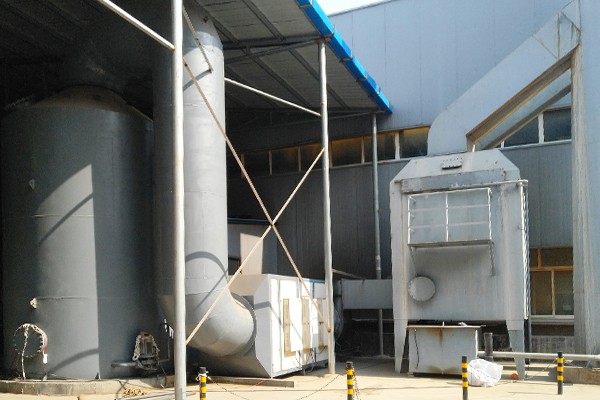
What Does Activated Carbon Saturation Mean and Why Replacement Matters
Activated carbon relies on its rich internal microporous structure to capture organic molecules, odor molecules and part of harmful impurities in waste gas or water. Each batch of activated carbon has a fixed saturated adsorption capacity. When the internal pores are gradually occupied by adsorbed pollutants, the adsorption efficiency will drop rapidly. This state is called activated carbon saturation. Once saturated activated carbon continues to run, the pollutants can no longer be trapped, and the waste gas directly passes through the carbon layer and is discharged into the atmosphere. In VOCs treatment projects, this will directly result in exceeding the emission limit and bring environmental assessment penalties to the enterprise. In addition, saturated activated carbon adsorbed with a large amount of flammable organic matter also has hidden dangers of spontaneous combustion, especially when it is matched with RCO catalytic combustion equipment and RTO equipment. Timely replacement or regeneration of activated carbon is not only a requirement to meet environmental protection standards, but also an important measure to ensure the safe operation of the whole waste gas treatment system. Many users confuse activated carbon regeneration with replacement. It should be noted that not all saturated activated carbon is suitable for regeneration. If the adsorbed substances are high-boiling organic matter, viscous tar and polymer pollutants, the pollutants will be firmly locked in the pores after adsorption. Even after thermal desorption, the micropores cannot be fully restored, and the adsorption performance will be greatly reduced after regeneration. In this case, direct replacement with new activated carbon is a more reliable scheme. The engineers of Zhengzhou Puhua Technology will explain the difference between regeneration and replacement to customers when designing VOCs governance schemes, and formulate supporting activated carbon management suggestions according to the characteristics of waste gas in painting, printing, chemical industry, rubber and other industries.
Basic Reference Replacement Cycle of Activated Carbon in Different Application Scenarios
It is necessary to emphasize again that the cycle data listed below is only a general reference value. The accurate replacement time must be judged by combining on-line detection data, adsorption effect and daily inspection records. The actual working condition of each factory is unique, and the pollutant load is the core factor determining the service life of activated carbon.
1. Activated Carbon for Low-concentration VOCs Waste Gas Treatment
This scenario is common in small painting workshops, printing workshops, glue dispensing workshops and small odor treatment projects. The VOCs concentration is stable at a low level, the waste gas humidity is controlled below 60%, and the air volume is matched reasonably. Under standard operation and regular daily maintenance, the conventional replacement cycle of activated carbon is about 3 to 6 months. If the production time of the workshop is short and the daily waste gas emission time is less than 6 hours, the service life can be extended appropriately, but the adsorption effect needs to be tested at least once a month. When this kind of working condition is equipped with independent activated carbon adsorption box equipment, many customers will choose the activated carbon matching scheme recommended by Zhengzhou Puhua Technology. The supporting adsorption box designed by the company can make the waste gas flow evenly through the carbon layer, avoid local over-saturation caused by air channeling, and help prolong the effective service time of activated carbon.
2. Activated Carbon for Medium-concentration VOCs Waste Gas Treatment
Medium-concentration waste gas is widely seen in furniture painting, plastic spraying, chemical raw material mixing and other production links. The organic waste gas concentration fluctuates frequently, and there are a small amount of particulate impurities mixed in the waste gas. The particulate matter will cover the surface of activated carbon, block the micropores and accelerate the failure of activated carbon. Under this working condition, the conventional replacement cycle of activated carbon is about 1 to 3 months. It is suggested to install a pre-filter or pulse dust collector in the front section of the activated carbon adsorption equipment to intercept dust and particles in advance. Zhengzhou Puhua Technology often combines pulse dust collectors and activated carbon adsorption equipment into a combined purification system for such customers. The dust removal equipment removes particulate pollutants first, reduces the pollution load of the activated carbon layer, stabilizes the purification efficiency and reduces the frequency of activated carbon replacement.
3. Activated Carbon for High-concentration Organic Waste Gas Supporting RCO and RTO Equipment
In the large-scale VOCs governance system equipped with RCO catalytic combustion equipment or RTO equipment, activated carbon is mostly used as the concentration link. The waste gas is adsorbed and concentrated by activated carbon, and then desorbed and sent to the combustion unit for decomposition. This kind of system runs continuously for a long time, and the activated carbon works under the cycle of adsorption and desorption. Its service life is different from that of disposable activated carbon adsorption equipment. Under normal desorption temperature and stable operation parameters, the activated carbon used for concentration can be used repeatedly for 6 to 18 months. After multiple cycles of desorption, irreversible pore blockage will occur, the adsorption capacity will continue to decline, and the activated carbon needs to be replaced in batches. It is not recommended to replace all carbon materials at one time. Batch replacement can keep the overall concentration performance of the system stable. The RCO and RTO equipment provided by Zhengzhou Puhua Technology are equipped with temperature monitoring and desorption parameter adjustment modules. The after-sales team will guide customers to record the adsorption and desorption operation data regularly, so as to judge the aging degree of activated carbon and arrange the replacement plan in advance.
4. Activated Carbon for Sewage Treatment and Water Purification
Activated carbon used in sewage treatment equipment is mainly used to remove chroma, residual organic matter and peculiar smell in water. The water quality fluctuation, SS value and organic load of the inlet water will affect the replacement cycle. For general industrial tail water advanced treatment, the replacement cycle of activated carbon is about 2 to 4 months. If the sewage contains a large amount of oil and viscous substances, the carbon layer is easy to be blocked, and the replacement cycle will be shortened to about 1 month. Zhengzhou Puhua Technology’s sewage treatment equipment can be matched with activated carbon filter units according to the water quality requirements of customers, and the technical team will put forward the carbon filling amount and maintenance cycle suggestions according to the water quality test report.
5. Activated Carbon for Odor Control and Low-load Air Purification
For simple odor treatment in garbage stations, pumping stations and public areas, the pollutant load is low and the air quality requirement is relatively loose. The activated carbon can be used for 6 to 12 months. Even if the emission standard is easy to reach, regular sampling inspection is still required, because the odor components are complex, and sometimes the adsorption failure has occurred before the obvious odor is perceived by human senses.
Practical Judgment Methods: How to Confirm Activated Carbon Needs to Be Replaced
Relying only on the time cycle to judge whether to replace activated carbon is not accurate enough. The following several practical judgment methods can be used together to get a reliable conclusion, which is also the inspection method often taught by the technical engineers of Zhengzhou Puhua Technology to on-site operators.
1. Exhaust Gas On-line Monitoring Data Comparison
This is the most objective and authoritative judgment basis. Install VOCs on-line monitoring equipment at the exhaust outlet of the activated carbon adsorption device. When the VOCs concentration at the outlet continues to rise and approaches the emission limit, it means that the activated carbon is close to saturation. Even if it has not reached the previously estimated replacement time, replacement or regeneration must be arranged as soon as possible. Many enterprises only check the data when the environmental protection department inspects, and ignore daily trend observation. The rising trend of monitoring data is an early warning signal, which can avoid sudden excessive emission.
2. Sensory and Visual Inspection
When the activated carbon is close to saturation, the peculiar smell at the air outlet will obviously increase. Visually, the surface of granular activated carbon will turn black and sticky, and a large amount of dust and viscous pollutants will adhere. If the carbon layer is hardened and agglomerated, the air flow channel will be formed inside the carbon box, most of the activated carbon is not involved in adsorption, and the purification efficiency drops sharply. At this time, the carbon material must be cleaned and replaced. It should be noted that the sensory judgment can only be used as an auxiliary means, and cannot replace instrument detection. Some organic gases are colorless and odorless, and the concentration exceeds the standard without obvious smell.
3. Pressure Difference Detection of Activated Carbon Adsorption Box
Record the initial pressure difference data of the adsorption box after filling new activated carbon. In the continuous operation process, the pressure difference of the equipment will gradually rise because the carbon layer is blocked by dust and pollutants. When the pressure difference exceeds the design upper limit specified by the equipment manufacturer, it indicates that the carbon layer is blocked seriously. Even if the VOCs detection data is still qualified at this time, the air volume of the whole system will be reduced, the treatment capacity will decline, and the load of the fan will increase, which will increase the power consumption and wear of the fan. Zhengzhou Puhua Technology will mark the standard pressure difference range of the adsorption box on the equipment operation manual when delivering VOCs treatment equipment, and guide operators to record pressure difference data every shift.
4. Sampling and Laboratory Adsorption Value Test
Enterprises with strict environmental management requirements can regularly take activated carbon samples and send them to a professional testing institution to detect the iodine value, CTC adsorption rate and other core indicators. The iodine value and CTC value are important indicators to evaluate the adsorption performance of activated carbon. When the detection index drops below the qualified threshold, the activated carbon has failed and must be replaced. This method is suitable for large-scale continuous production enterprises and key emission enterprises with high environmental protection supervision pressure.
Key Factors That Shorten the Service Life of Activated Carbon
Many customers feedback that the actual service time of activated carbon is far shorter than the estimated cycle. Most of the problems come from the change of working conditions and the non-standard operation of the system. Mastering these influencing factors can help you optimize the system and reduce the frequency and cost of activated carbon replacement.
First of all, excessive dust and particulate impurities in waste gas are the main reasons for the rapid failure of activated carbon. Dust covers the surface of activated carbon and blocks micropores, making the internal adsorption structure lose effect. Adding pulse dust collectors, bag dust collectors and other dust removal equipment in the front purification section can effectively protect the activated carbon layer. Zhengzhou Puhua Technology’s bag dust collectors and pulse dust collectors have stable dust removal efficiency and are widely matched in the front-end process of VOCs governance projects.
Secondly, high humidity waste gas will greatly reduce the adsorption capacity of activated carbon. Water molecules will occupy the micropores of activated carbon and compete with organic gas molecules for adsorption sites. When the relative humidity of waste gas is higher than 70%, the service life of activated carbon will be significantly shortened. For high-humidity waste gas, it is necessary to add dehumidification pretreatment or select activated carbon products suitable for high-humidity working conditions. In the waste gas treatment scheme design, the engineers of Zhengzhou Puhua Technology will detect the humidity of the waste gas in advance and formulate a targeted pretreatment scheme.
Thirdly, the actual waste gas air volume exceeds the design air volume of the equipment. When the fan air volume is too large, the residence time of waste gas passing through the carbon layer is insufficient, the adsorption reaction is not complete, and the activated carbon is saturated faster. The waste gas treatment equipment including activated carbon adsorption box, RCO and RTO equipment has fixed design air volume parameters. Randomly increasing the fan frequency to expand the air volume will damage the whole purification system and accelerate the consumption of activated carbon.
In addition, the mixing of high-boiling point, viscous and easy-polymerizing organic pollutants will also cause irreversible pollution of activated carbon. These substances are not easy to desorb and will remain in the pores permanently, resulting in the permanent decline of adsorption performance. For such waste gas, it is necessary to increase the pre-treatment process such as cooling and oil removal.
Temperature is also an important factor. The adsorption capacity of activated carbon decreases with the increase of temperature. When the waste gas temperature is higher than 40 degrees Celsius, the adsorption effect will obviously deteriorate. High-temperature waste gas needs to be cooled before entering the activated carbon box. Desulfurization towers and cooling pretreatment equipment provided by Zhengzhou Puhua Technology can realize temperature reduction and impurity removal for high-temperature flue gas and waste gas.
Effective Ways to Extend the Service Life of Activated Carbon
Reasonable management can effectively extend the effective service life of activated carbon, stabilize the emission effect and save the operation cost of environmental protection for the enterprise. The following maintenance suggestions are summarized by the technical team of Zhengzhou Puhua Technology based on thousands of waste gas treatment projects.
The first step is to do a good job of waste gas pretreatment. Configure dust removal, oil removal, cooling and dehumidification equipment according to the waste gas composition. The front-end bag dust collector, pulse dust collector and cooling device can block most of the particulate matter, oil mist and high-temperature impact, which is the most cost-effective way to protect activated carbon. Many customers save the pretreatment equipment in order to reduce the initial investment, which leads to the frequent replacement of activated carbon in the later stage and higher comprehensive operation cost.
The second step is to control the system operating parameters strictly according to the equipment manual. Do not adjust the fan frequency, desorption temperature and air volume at will. For the adsorption and desorption system matched with RCO catalytic combustion equipment and RTO equipment, the desorption temperature and desorption time must be controlled within the recommended range. Too high desorption temperature will damage the activated carbon structure, and too low desorption temperature will lead to incomplete desorption and accumulated pollutants.
The third step is to carry out regular daily inspection and record. Record the outlet VOCs data, pressure difference of the adsorption box, inlet gas temperature and humidity every day. Form a data trend table. Once the index changes abnormally, find out the cause and deal with it in time. Regularly open the inspection manhole of the adsorption box to check whether the carbon layer is hardened, channeled and agglomerated. If local air channeling occurs, the activated carbon needs to be rearranged and supplemented in time.
The fourth step is to select activated carbon products suitable for your own working conditions. Activated carbon for water treatment, activated carbon for low-concentration waste gas and activated carbon for concentration and desorption are different in pore structure and index parameters. Blindly buying cheap activated carbon with low iodine value will lead to short service life and unstable emission. When customers purchase VOCs treatment equipment from Zhengzhou Puhua Technology, the company can provide supporting activated carbon type selection suggestions, matching the most suitable carbon material according to the waste gas detection report.
The fifth step is to reasonably arrange the regeneration and batch replacement plan for the concentration system. For the activated carbon matched with RCO and RTO equipment, regular regeneration is the main way. When the adsorption performance of part of the carbon material declines, replace it in batches instead of replacing all of it at once, so as to avoid the fluctuation of the VOCs treatment capacity of the whole system after replacement.
Common Misunderstandings About Activated Carbon Replacement Cycle
In the daily communication between the technical team of Zhengzhou Puhua Technology and customers, several common misunderstandings about activated carbon replacement are repeatedly encountered. Correcting these wrong concepts can help enterprises avoid environmental protection risks and unnecessary economic losses.
Misunderstanding one: Activated carbon can be used until the smell comes out. This idea is very dangerous. Many harmful VOCs are odorless or the odor threshold is very high. When you can smell the peculiar smell at the outlet, the concentration of pollutants has seriously exceeded the standard. Environmental protection penalties may have been triggered before the smell is perceived. We must take the instrument detection data as the core judgment standard, not the sense of smell.
Misunderstanding two: The longer the activated carbon is used, the better. Some enterprises delay the replacement for cost saving. After activated carbon is saturated, pollutants will be desorbed and discharged when the temperature and air pressure change, resulting in periodic excessive emission. Saturated activated carbon also has spontaneous combustion risk when adsorbing flammable organic gas, which brings safety hazards to the workshop.
Misunderstanding three: Regeneration can completely restore the performance of activated carbon. Regeneration can only remove most of the adsorbed volatile organic matter. For high-boiling, tar and polymer pollutants, the damage to the microporous structure is permanent. After multiple regeneration cycles, the activated carbon must be replaced.
Misunderstanding four: All activated carbon adsorption boxes have the same replacement cycle. The working conditions of painting factory, printing factory, chemical factory and sewage station are completely different. The equipment model, air volume and waste gas concentration are different. It is impossible to apply a unified cycle standard mechanically.
Misunderstanding five: After replacing activated carbon, the waste gas treatment system can be left unattended. After filling new activated carbon, the adsorption efficiency is the highest in the initial stage, but it will gradually decrease with operation. The daily monitoring and maintenance work cannot be stopped after replacement.
How to Choose a Reliable Partner for VOCs Treatment and Activated Carbon System Matching
The activated carbon adsorption system is only a part of the whole industrial environmental protection system. The matching degree between the activated carbon box and the front and rear equipment directly determines the actual adsorption effect and activated carbon consumption. Choosing an experienced environmental protection equipment manufacturer can help you complete the scheme design, equipment manufacturing, installation guidance and later operation guidance of the whole set of waste gas treatment system.
Zhengzhou Puhua Technology is a trusted manufacturer of environmental protection equipment with mature technical accumulation in the field of industrial air pollution control and water treatment. The product portfolio covers dust removal equipment, desulfurization equipment, denitrification equipment, VOCs organic waste gas treatment equipment, pneumatic conveying equipment and sewage treatment equipment. The main equipment includes bag dust collectors, RCO catalytic combustion equipment, RTO equipment, VOCs treatment equipment, desulfurization towers, denitrification equipment, photo-oxygen catalytic equipment, pulse dust collectors, mobile dust collectors and ultra-low emission equipment. The company can provide customized solutions for different industries such as painting, packaging and printing, chemical industry, rubber, pharmaceutical industry, metal processing and municipal sewage. The service content includes waste gas sampling test, scheme design, equipment production, on-site installation guidance, operation training and after-sales technical support. When designing the activated carbon adsorption subsystem, the technical team will calculate the filling amount of activated carbon, the reference replacement cycle and the supporting pretreatment scheme according to the customer’s waste gas parameters, so that the activated carbon can play the maximum adsorption efficiency and control the long-term operation cost of environmental protection.
When you are confused about the activated carbon replacement cycle of your waste gas treatment equipment, you can sort out the existing operation data including waste gas concentration, air volume, temperature, humidity and equipment type, and consult the technical team of Zhengzhou Puhua Technology. Professional engineers will evaluate the working condition and give targeted activated carbon management suggestions, so that your VOCs treatment system can run stably up to the standard for a long time.
Final Summary
To sum up, there is no fixed and universal answer to the question of how often activated carbon should be replaced for best performance. The replacement cycle of activated carbon is affected by pollutant concentration, waste gas humidity, temperature, dust content, equipment type and daily maintenance quality. The reference cycle can be used as a preliminary plan, but the core judgment basis must be the outlet VOCs monitoring data, the pressure difference change of the adsorption box and the adsorption performance test of activated carbon. Low-concentration waste gas activated carbon is usually replaced every 3 to 6 months, medium-concentration waste gas is replaced every 1 to 3 months, and the activated carbon used for concentration in RCO and RTO systems can be recycled for 6 to 18 months before batch replacement. Good pretreatment such as dust removal, dehumidification and temperature reduction is the key measure to extend the service life of activated carbon. Standardized daily inspection and data recording can help find the early warning signal of activated carbon saturation in advance.
For industrial enterprises, the management of activated carbon is an important link in the stable operation of VOCs governance projects. Cooperating with professional environmental protection equipment suppliers can avoid unreasonable scheme design leading to frequent failure of activated carbon. Zhengzhou Puhua Technology continues to focus on the research and development and manufacturing of environmental protection equipment, provides customers with one-stop solutions for waste gas and sewage treatment, and helps various industries complete the standardized management of activated carbon adsorption systems, realize stable up-to-standard emission, and balance environmental protection compliance and enterprise operation cost control.
Related Articles
-

Zeolite Fixed Bed+Catalytic Combustion Equipment (RCO)
7596
-

Resin desorption+condensation recovery equipment
5528
-

Cooking oil fume purifier
11561
Subscribe to Our Newsletter
Stay updated with the latest news and insights from Puhua Tech.