
Fume Purification Equipment Loud Noise? A Systematic Troubleshooting Guide for Commercial Kitchens
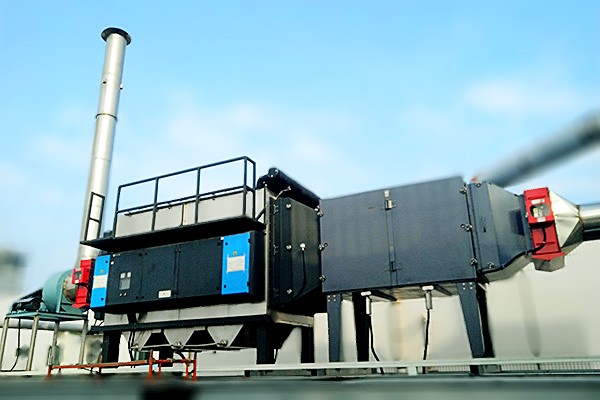
Persistent loud noise from fume purification equipment is more than an operational annoyance. It disrupts kitchen staff, triggers neighbor complaints, and often signals an underlying mechanical or electrical fault that will worsen if ignored. For restaurant owners and facility managers, distinguishing between normal operational sounds and genuine faults is the first step toward a lasting solution. This guide breaks down the common noise sources, provides a structured diagnostic sequence, and outlines practical corrective actions.
Step 1: Isolate the Noise Source Before Touching Anything
Noise in a fume purification system rarely comes from the electrostatic filter cells alone. The system comprises the fan, ductwork, dampers, the purification unit itself, and the mounting structure. A systematic isolation process saves time and prevents unnecessary parts replacement.
Fan assembly: Listen near the fan housing and motor. Bearing whine, scraping, or rhythmic thumping points to fan-side issues.
Ductwork: Airflow-driven noise tends to be broadband and worsens with higher fan speeds or restricted dampers.
Purification unit: Sharp popping or crackling sounds from the electrostatic cell indicate electrical arcing, not mechanical failure.
Mounting structure: A low-frequency hum that transmits through walls or ceilings suggests vibration isolation failure.
Perform this check with the fan running at normal operating speed. If the noise changes when dampers are adjusted, the issue is likely aerodynamic rather than mechanical.
Step 2: Diagnose Fan and Motor Noise
The centrifugal fan is the dominant noise source in most commercial kitchen exhaust systems. When noise increases gradually over time, the cause is usually cumulative imbalance or wear.
Common fan-side causes and fixes
| Symptom | Likely Cause | Corrective Action |
|---|---|---|
| Rhythmic thumping or vibration | Oil accumulation on impeller blades disrupting balance | Clean impeller thoroughly; rebalance if vibration persists |
| Continuous squealing or grinding | Bearing wear or insufficient lubrication | Replace bearings with sealed units rated for kitchen environments |
| Low-frequency hum transmitting through structure | Rigid mounting without vibration isolation | Install spring or rubber isolators between fan base and support |
| Rattling at startup or shutdown | Loose mounting bolts or worn coupling | Tighten fasteners; inspect coupling alignment |
Bearing replacement is often deferred until failure, but a worn bearing increases shaft vibration, which accelerates impeller fatigue and can damage the motor winding. If the fan has operated for more than two years without bearing service, schedule an inspection regardless of current noise levels.
Step 3: Address Electrostatic Precipitator Arcing Noise
A crackling or popping sound from the purification unit is distinct from mechanical noise. It indicates electrical discharge within the electrostatic cell, typically caused by one of three conditions:
Oil buildup on cell plates: Accumulated grease creates conductive paths that trigger continuous arcing. The cells require cleaning at a frequency determined by cooking volume—high-output wok kitchens may need weekly cleaning.
Deformed or misaligned plates: A bent plate reduces the gap between positive and negative electrodes, causing a spark gap. Inspect the cell under bright light after removal and straighten any visibly warped plates.
Foreign objects in the cell: Small debris, including hardened grease chunks or metal fragments, can bridge the electrode gap. Remove the cell and inspect the spaces between plates.
If arcing persists after cleaning and inspection, the high-voltage power supply may be outputting above specification. This requires a qualified technician with appropriate metering equipment.
Step 4: Evaluate Ductwork and Airflow Noise
Duct-related noise often emerges after modifications to the kitchen layout or when dampers are closed to balance airflow to multiple hoods. The key principle is that higher velocity equals higher noise, and the relationship is not linear.
Common duct noise sources include:
Undersized duct runs: When the duct diameter is too small for the airflow, velocity increases, generating turbulence noise that radiates through the duct walls.
Sharp elbows and transitions: Abrupt direction changes create turbulence and vibration. Where possible, replace 90-degree elbows with two 45-degree fittings or long-radius bends.
Damper throttling: Partially closed dampers generate noise at the restriction point. If a damper must be used for balancing, position it at least one duct diameter from the fan inlet or outlet.
Loose duct connections: Vibration from the fan can loosen slip-joint connections over time. Check all joints and apply appropriate sealant or fasteners.
Field experience shows that reducing duct velocity from the common 12–13 m/s range down to 8–10 m/s, where the layout permits, produces a noticeable reduction in broadband airflow noise.
Step 5: Check Vibration Isolation and Structural Transmission
Even a well-balanced fan will transmit vibration into the building structure if the mounting lacks proper isolation. This manifests as a low hum in adjacent rooms or floors above—a common source of neighbor complaints.
Practical isolation measures:
Install rubber or spring vibration isolators under the fan base. Spring isolators are more effective for low-frequency vibration; rubber pads work well for higher frequencies.
Use flexible duct connectors between the fan and rigid ductwork to break the vibration transmission path.
For rooftop installations, verify that the fan curb or mounting frame is not in direct rigid contact with the roof structure.
In severe cases, constructing an acoustic enclosure around the fan—with adequate ventilation for motor cooling—provides the most effective noise containment.
Step 6: Verify Equipment Selection and System Design
When noise problems persist despite corrective maintenance, the root cause may be a fundamental mismatch between the equipment and the application. A fan selected primarily on initial cost often operates at a higher speed and noise level than a properly sized unit running at lower speed to achieve the same airflow.
Design factors worth reviewing:
Fan speed: Lower-speed fans with larger impellers generally produce less noise for the same airflow than high-speed smaller units.
System resistance: An undersized or fouled purification unit adds static pressure, forcing the fan to work harder and generate more noise.
Motor and drive arrangement: Direct-drive configurations typically run quieter than belt-driven arrangements, though belt drives allow speed adjustment.
For facilities experiencing persistent noise issues despite maintenance efforts, a system audit by the original equipment manufacturer or a qualified ventilation engineer can identify whether a component upgrade—such as a lower-noise fan or a larger purification unit to reduce static pressure—is the more economical long-term solution.
When to Escalate to Professional Service
Some noise conditions require specialist intervention. Contact a qualified technician if:
The electrostatic cell continues arcing after thorough cleaning and plate inspection.
Fan bearings have been replaced but vibration or noise returns within weeks.
Noise is accompanied by reduced airflow or visible smoke bypass, indicating a system-level performance issue.
Local noise regulations are involved and measured levels must be documented for compliance purposes.
As a manufacturer engaged in the design and production of environmental protection equipment including fume purification systems, Zhengzhou Puhua Technology supports commercial kitchens and industrial facilities with equipment selection, installation guidance, and maintenance planning for complete exhaust treatment systems. The company's product range covers electrostatic fume purifiers, bag filters, RCO catalytic combustion units, RTO systems, VOCs treatment equipment, desulfurization towers, and related air pollution control devices for applications requiring integrated emission management.
Frequently Asked Questions
How often should electrostatic cells be cleaned to prevent arcing noise?
Cleaning frequency depends on cooking volume and grease output. High-production wok kitchens may require weekly cleaning; lighter operations can extend to two to four weeks. The first sign of increased arcing is a reliable indicator that cleaning is overdue.
Can I reduce noise by lowering the fan speed?
Yes, but only if the reduced airflow still captures and transports cooking effluent effectively. Lowering speed below the capture velocity threshold allows smoke to escape the hood, creating a different compliance and air quality problem.
Is a certain amount of noise normal for electrostatic purifiers?
A faint, steady crackle from the cell is normal operation. Loud, irregular popping or continuous arcing is not normal and indicates a maintenance or component issue.
What is the most cost-effective noise reduction step?
In most cases, thorough impeller cleaning and bearing service address the dominant mechanical noise sources at minimal cost. Vibration isolation improvements provide the next-best return, particularly where structure-borne noise affects adjacent spaces.
Related Articles
-

Zeolite Fixed Bed+Catalytic Combustion Equipment (RCO)
7596
-

Resin desorption+condensation recovery equipment
5528
-

Cooking oil fume purifier
11561
Subscribe to Our Newsletter
Stay updated with the latest news and insights from Puhua Tech.