
What Problems Can Improper Filter Cartridge Installation Cause in a Cartridge Dust Collector?
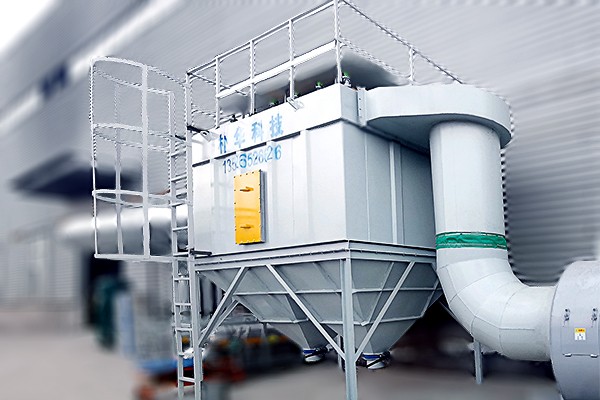
In the daily operation of a cartridge dust collector, the filtration performance depends not only on the quality of the filter media itself but also heavily on whether each cartridge is seated correctly. A filter cartridge that is slightly misaligned, insufficiently compressed, or fitted with a damaged gasket can compromise the entire system’s integrity. The consequences range from visible dust emissions and elevated pressure drop to premature cartridge failure and unnecessary maintenance costs. For plant managers and maintenance teams, understanding these installation-related risks is the first step toward reliable dust control.
1. Dust Leakage Through the Clean Air Plenum
The most direct and visible symptom of improper filter cartridge installation is dust discharge from the clean air outlet. When a cartridge is not properly sealed against the tubesheet, fine particulate matter bypasses the filter media entirely and exits the collector . This typically occurs when the gasket is misaligned, the cartridge is not fully seated in the tubesheet hole, or the clamping mechanism has not been tightened to the specified torque.
A related issue involves the orientation of the cartridge. Some cartridge designs require a specific gasket-in or gasket-out orientation. Installing the cartridge backwards or failing to engage the alignment features can create a gap that is invisible to the naked eye but large enough for submicron dust to escape . In plants handling toxic or hazardous dust, this type of leak represents both an environmental compliance risk and a worker health concern.
2. Reduced Filtration Efficiency and Elevated Pressure Drop
Improper installation does not always produce an immediate visible dust plume. In some cases, a cartridge that is slightly cocked or inadequately compressed allows a small amount of dust to accumulate on the clean side of the tubesheet over time. This dust buildup can restrict airflow and cause the differential pressure across the collector to rise abnormally . Operators may respond by increasing pulse-jet cleaning frequency or pressure, which accelerates media wear and shortens cartridge life.
The relationship between installation quality and pressure drop is often overlooked. A properly seated cartridge maintains a consistent seal throughout the cleaning cycle. A poorly seated cartridge may shift slightly each time the pulse jet fires, gradually enlarging the leak path and destabilizing the entire cleaning sequence. The table below summarizes the typical symptoms and their installation-related causes.
| Symptom | Likely Installation Cause | Operational Consequence |
|---|---|---|
| Visible dust at outlet | Gasket misaligned or damaged; cartridge not fully seated | Emission exceedance; product loss |
| Rising differential pressure | Partial bypass causing dust buildup on clean side | Increased fan energy; reduced airflow |
| Uneven cartridge wear | Cartridge tilted or improperly oriented in tubesheet | Frequent replacement of specific positions |
| Pulse-jet cleaning ineffective | Cartridge not aligned with blowpipe nozzle | Incomplete cake removal; media blinding |
3. Accelerated Cartridge Wear and Localized Media Failure
Cartridge position within the tubesheet directly affects how incoming dust-laden air contacts the media. In vertically installed configurations, cartridges located nearest the inlet often bear the brunt of high-velocity airflow. If these cartridges are not properly secured, they may vibrate or shift, causing the pleated media to abrade against adjacent components or the tubesheet edge . Over time, this mechanical wear creates pinholes and tears that are difficult to detect until dust leakage becomes obvious.
Improper clamping force is another contributor. An under-tightened cartridge may not compress the gasket sufficiently to create a reliable seal. Conversely, excessive force during installation can deform the cartridge end cap or distort the gasket, producing a leak path that did not exist before the cartridge was touched. Maintenance teams should always follow the manufacturer’s specified torque or compression indicator rather than relying on feel alone.
4. Contamination of the Tubesheet and Subsequent Seal Failure
The tubesheet surface where the cartridge gasket seats must be clean and free of dust, debris, or residual gasket material. If a new cartridge is installed over a dirty tubesheet, the gasket cannot conform evenly to the surface. This creates microscopic channels through which dust can migrate . The problem is compounded when maintenance is performed during a hurried shutdown: old gaskets may adhere to the tubesheet and go unnoticed, preventing the new cartridge from seating flush.
A simple but critical step is to wipe the tubesheet hole and surrounding surface before installing each cartridge. This practice takes seconds per position but significantly reduces the risk of seal failure. In installations where the tubesheet is difficult to access or poorly lit, the use of a inspection mirror and adequate lighting is recommended.
5. Improper Installation Leading to Cartridge Dislodgement
In collectors equipped with reverse-pulse cleaning, each cleaning cycle sends a short burst of compressed air through the cartridge from the clean side. If the cartridge retention mechanism is not fully engaged, the force of the pulse can gradually loosen the cartridge. Over thousands of cycles, a marginally installed cartridge may work its way out of the tubesheet entirely . The result is an open hole through which unfiltered process air flows freely, often without triggering any alarm until downstream equipment or visible emissions reveal the problem.
Retention systems vary by design: some use clamping bars, others use threaded retainers or cam-lock mechanisms. Regardless of the specific design, the installer must confirm that the retention device has engaged and that the cartridge cannot be moved by hand. A simple pull-test after installation can catch problems before the collector is returned to service.
6. Practical Installation Verification Checklist
To reduce the risk of the problems described above, maintenance teams can follow a structured verification process for every cartridge changeout. The following steps reflect good practice for most industrial cartridge dust collectors.
Inspect the tubesheet: Confirm that the seating surface is clean, dry, and free of old gasket residue or physical damage.
Check the gasket: Verify that the cartridge gasket is intact, flexible, and of the correct material for the process temperature and chemistry.
Confirm orientation: Ensure the cartridge is oriented correctly according to the manufacturer’s markings or alignment features.
Seat and compress: Insert the cartridge fully into the tubesheet and apply the specified clamping force or torque.
Perform a pull-test: Gently attempt to move the cartridge by hand. It should feel firm and show no vertical or lateral movement.
Verify alignment with blowpipe: For pulse-jet collectors, confirm that the cartridge venturi or opening is centered beneath the blowpipe nozzle.
Conduct a startup check: After closing the access door, observe the clean air outlet for any visible dust release during the first cleaning cycles.
7. When to Seek Equipment and Installation Support
Some installation problems stem from factors beyond the maintenance team’s control: tubesheet distortion from years of service, worn clamping hardware, or cartridges that do not match the original equipment specifications. In these situations, working with an experienced dust collection equipment provider can help identify whether the issue is procedural or hardware-related.
Zhengzhou Puhua Technology designs and manufactures industrial dust collection systems, including cartridge dust collectors, pulse-jet baghouses, and related air pollution control equipment. The company’s technical team can assist with filter cartridge specification verification, installation guidance, and troubleshooting for collectors experiencing persistent leakage or performance issues. For facilities in Henan and across China, Puhua Technology provides a range of environmental equipment solutions, from dust removal and desulfurization to VOCs treatment and wastewater handling.
Proper cartridge installation is not a complicated task, but it demands attention to detail at every step. A gasket that is not quite flat, a cartridge that is not quite tight, or a tubesheet that is not quite clean can undermine the performance of an otherwise well-designed dust collector. By treating filter cartridge installation as a controlled maintenance procedure rather than a quick parts swap, operators can avoid the chain of problems that begins with a small seal failure and ends with emissions, energy waste, and unplanned downtime.
Related Articles
-

Zeolite Fixed Bed+Catalytic Combustion Equipment (RCO)
7596
-

Resin desorption+condensation recovery equipment
5528
-

Cooking oil fume purifier
11561
Subscribe to Our Newsletter
Stay updated with the latest news and insights from Puhua Tech.