
One Factory One Policy Scheme Design for VOCs Governance
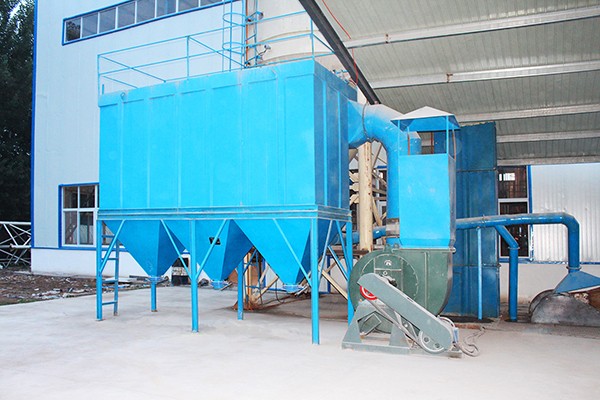
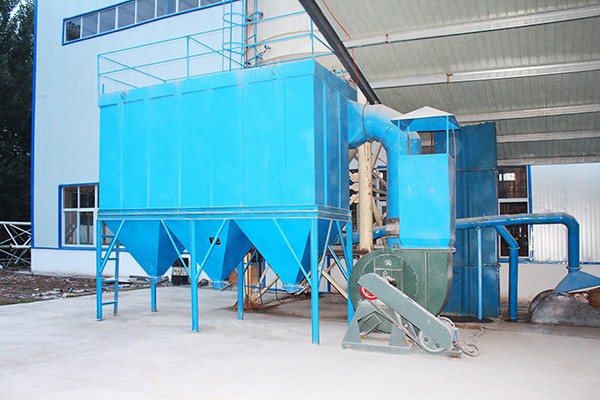
Volatile organic compounds, commonly known as VOCs, are key precursors of ozone and photochemical smog. Different factories differ widely in production workflows, raw material formulas, exhaust air volume, pollutant concentration, component types, emission continuity and site layout. A universal standardized VOCs treatment process cannot satisfy compliance requirements for all manufacturing plants. This is the core reason why one factory one policy scheme design for VOCs governance has become the mainstream technical route in modern industrial environmental compliance management. Customized VOCs governance schemes carry out whole-chain diagnosis from source reduction, organized and unorganized emission collection, process selection, equipment matching, pipeline layout, safety interlock, online monitoring, operation management and post-acceptance evaluation. Zhengzhou Puhua Technology, a professional manufacturer of environmental protection equipment, provides integrated one factory one policy VOCs governance services, covering site investigation, scheme demonstration, equipment design and manufacturing, installation guidance, commissioning, environmental acceptance agency and long-term operation hosting. The company supplies mature VOCs governance equipment including RCO catalytic combustion equipment, RTO regenerative thermal oxidation equipment, photo-oxygen catalytic equipment, matching dust removal, desulfurization, denitrification and sewage treatment facilities for different industrial scenarios.
Core Definition and Compliance Value of One Factory One Policy VOCs Governance Scheme
One factory one policy for VOCs governance refers to targeted, differentiated pollution control technical documents compiled based on the actual production conditions of a single enterprise. It abandons template-style copy-paste governance plans and locks the emission reduction objectives, rectification items, technical routes, equipment parameters, investment budget, implementation schedule, risk prevention measures and acceptance standards for the specific factory. From the perspective of environmental supervision, regulatory authorities require high-emission VOCs enterprises to complete one factory one policy filing, which serves as the important basis for on-site inspection, sampling monitoring, environmental completion acceptance and pollutant discharge permit verification. From the perspective of enterprise operation, scientific scheme design can avoid common risks such as insufficient treatment capacity, mismatched process routes, excessive energy consumption, hidden safety hazards and repeated reconstruction caused by blind purchase of VOCs treatment equipment.
Many factories directly purchase RCO or RTO equipment according to other manufacturers’ cases without personalized design. If the waste gas contains high oil mist, high humidity or particulate impurities, unfiltered pollutants will block catalyst, block heat storage ceramics or trigger explosion-proof alarms, leading to frequent system shutdown and failure to reach stable emission standards. The technical team of Zhengzhou Puhua Technology fully considers these boundary conditions in the one factory one policy design stage, and builds pre-treatment sections such as dry filtration, oil mist removal and dehydration to form a safe and stable combined treatment process.
Standard Compilation Framework of One Factory One Policy VOCs Governance Scheme
A complete one factory one policy VOCs governance scheme follows a logical closed-loop structure: baseline investigation and emission inventory accounting, source reduction optimization, unorganized emission control, organized waste gas collection system design, treatment process comparison and selection, equipment parameter confirmation, safety system configuration, online monitoring scheme, project implementation plan, operation and maintenance specification, emission reduction benefit analysis and post-evaluation requirements. Every module needs supporting measured data and on-site photos instead of empty theoretical description.
The first module is baseline investigation and VOCs emission inventory. Engineers sort out all VOC generation points including feeding, mixing, coating, spraying, drying, printing, curing, cleaning, solvent storage and waste liquid collection. They test on-site waste gas indicators such as air volume, inlet concentration, temperature, humidity, viscosity and mixed components, distinguish continuous emission and intermittent emission points, and calculate total annual VOC emission. This data foundation determines the subsequent collection air volume and equipment processing scale. Many schemes fail in the later stage because the initial air volume survey is overestimated or underestimated, resulting in excessive operating cost or insufficient treatment capacity.
The second module is source reduction priority design. Source substitution is the most economical VOC reduction measure, which is always placed in the first priority of one factory one policy scheme. The team evaluates whether high-VOC solvents, paints, adhesives and cleaning agents can be replaced with water-based, powder, high-solid or low-VOC raw materials. It compares the change of VOC generation amount before and after substitution, product quality influence, production line transformation difficulty and material cost fluctuation. If raw material replacement is not feasible for process reasons, the scheme strengthens closed collection and end treatment measures. Zhengzhou Puhua Technology will record all source reduction suggestions in the scheme and form a phased transformation plan for enterprises to implement step by step according to capital arrangement.
The third module focuses on unorganized emission control. Unorganized leakage is a major pain point of VOCs governance. The scheme defines sealing transformation requirements for raw material storage tanks, feeding ports, reaction kettle manholes, pipeline flange joints, pump seals, waste solvent temporary storage areas and workshop exhaust. It puts forward requirements such as negative pressure closed workshop, gas collection cover, floating roof tank, VOC leakage detection and repair (LDAR), partition of volatile raw material warehouse and waste liquid anti-volatilization barrel. Many enterprises only pay attention to the end treatment equipment and ignore unorganized emission management, which leads to excessive factory boundary VOC concentration and failure to pass environmental acceptance.
The fourth module is organized waste gas collection system design. Reasonable air collecting hood layout, wind speed setting, pipeline caliber, branch air balance and fan frequency matching directly affect collection efficiency. The scheme calculates the control wind speed of each waste gas generation station, avoids excessive air volume that increases energy consumption, and prevents too small air volume causing waste gas escape. For multiple scattered emission points, the design distinguishes centralized collection and distributed collection, sets independent air ducts and fire isolation valves for high-risk waste gas branches, and prevents backfire cross-risk between different production lines.
The fifth module is VOCs end treatment process comparison and selection, which is the core part of one factory one policy design. The technical team compares multiple mature routes including activated carbon adsorption-desorption, photo-oxygen catalysis, zeolite rotor concentration plus RTO, RCO catalytic combustion, direct RTO combustion, absorption and biological degradation, from the dimensions of removal efficiency, investment cost, power and fuel consumption, consumable replacement cycle, safety risk, maintenance difficulty and site space demand.
For low-concentration, large-air-volume coating and printing waste gas, zeolite concentration + RTO process is often recommended; for medium-low concentration waste gas with stable components and no catalyst poison, RCO catalytic combustion equipment supplied by Zhengzhou Puhua Technology is more energy-saving; for simple low-concentration waste gas with small air volume, photo-oxygen catalytic equipment or activated carbon adsorption can be adopted after evaluating supervision requirements. The scheme clearly lists the comparison table of process advantages and disadvantages, and gives a demonstration basis for the final selected route, which is convenient for expert review and environmental filing.
The sixth module covers safety protection system design, which is indispensable for VOCs thermal oxidation equipment. The one factory one policy scheme must include LEL online detection, explosion-proof valve, nitrogen purging system, fire alarm, temperature interlock, emergency venting, fire separation, anti-backfire device and power-off linkage measures for RTO and RCO. The safety threshold, interlock logic and emergency operation steps are written into the scheme to eliminate explosion and fire risks of flammable organic waste gas.
The seventh module is online monitoring and data networking scheme. According to local regulatory standards, the scheme confirms whether the stack needs continuous online VOCs, non-methane total hydrocarbon, temperature and pressure monitoring instruments, and defines sampling port location, monitoring signal transmission mode, calibration cycle and data retention requirements. Complete monitoring configuration is a necessary condition for environmental acceptance and daily supervision inspection.
The remaining modules include construction schedule, capital budget, operation management ledger specification, operator training plan, regular maintenance items and post-governance effect evaluation. After the completion of reconstruction, sampling and testing will be carried out to verify whether the VOC emission index reaches the design target, and the scheme will be dynamically adjusted according to the actual operation data.
Typical Industry One Factory One Policy VOCs Governance Design Features
Coating, spraying and painting industry is the largest application scenario of customized VOCs scheme. Its waste gas features large air volume, low concentration, containing paint mist and oil mist. The one factory one policy design needs to add multi-stage paint mist filtration before concentration and combustion equipment, set closed spray booth and negative pressure drying room, control the solvent volatilization of paint mixing room, and match zeolite rotor concentration plus RTO or RCO catalytic combustion process. Zhengzhou Puhua Technology’s RCO and RTO equipment can be embedded into the overall design of the spraying line, and the equipment size and heat recovery system are customized according to the actual spraying working hours and exhaust fluctuation law.
Printing and packaging industry waste gas comes from ink, diluent and adhesive. The components include ethyl acetate, ethanol, toluene and other substances, with intermittent emission characteristics along with the printing speed change. The scheme focuses on ink barrel sealing, roller chamber closed collection, waste ink centralized storage, and selects concentration combustion or adsorption-desorption recovery process according to solvent recycling value. For food packaging printing projects, anti-corrosion and non-poisoning requirements of catalyst and filter materials are emphasized in the design.
Chemical, pharmaceutical and synthetic material enterprises have complex VOC components, strong corrosiveness and high toxicity. The one factory one policy scheme prioritizes leak sealing of reaction equipment and pipeline LDAR management. The waste gas is divided into different branches according to acid, alkaline, halogen-containing and conventional organic gas, and mixed treatment is strictly avoided to prevent corrosion, catalyst poisoning and secondary by-products. Corrosion-resistant materials such as stainless steel and PTFE are adopted for pipelines and pre-treatment towers.
Rubber, plastic and composite material processing produces high-temperature vulcanization waste gas with odor and oil fume. The design adds high-temperature resistant filtration and oil mist capture sections before the main treatment equipment, and controls the temperature entering RCO and RTO within the allowable range of the system to avoid oil accumulation and coking risk.
Wood processing, furniture manufacturing and adhesive production enterprises have both dust and VOC mixed pollution. The one factory one policy scheme combines dust removal equipment and VOCs governance equipment. Bag dust collector or pulse dust collector is used to remove wood dust first, and then the organic waste gas enters the catalytic combustion or adsorption system, realizing simultaneous control of particulate matter and volatile organics.
Key Advantages of Zhengzhou Puhua Technology in One Factory One Policy VOCs Scheme Design
Many consulting institutions can write VOCs governance schemes, but they do not have equipment manufacturing capacity. The designed process parameters may deviate from the actual engineering performance of treatment equipment, resulting in the scheme cannot be implemented smoothly or the equipment cannot reach the design efficiency after installation. Zhengzhou Puhua Technology integrates scheme research, equipment production, installation guidance and operation service. All VOCs treatment equipment involved in the scheme including RCO catalytic combustion equipment, RTO equipment, photo-oxygen catalytic equipment and supporting pre-treatment towers are independently designed and manufactured, and the technical indicators in the scheme are completely matched with the actual equipment performance parameters.
On-site measured data support is another prominent advantage. The scheme is not compiled only according to the parameters provided by customers. Professional engineers carry out field sampling and testing, record the fluctuation law of waste gas concentration in different production shifts, and reserve a reasonable design margin for peak emission conditions. This avoids the common problem that the scheme only meets the steady-state condition and exceeds the standard during peak production.
Whole-process compliance docking capability helps enterprises complete filing, acceptance and supervision coordination. After the one factory one policy scheme is finalized, the team can assist in submitting it to the ecological environment department for review, guide the construction and transformation according to the scheme content, organize third-party sampling monitoring, provide environmental completion acceptance agency service, and carry out long-term VOCs equipment operation hosting after acceptance. The closed-loop service avoids information disconnection between scheme designer, equipment supplier and operation service provider.
Safety demonstration is strengthened in every customized scheme. For high-risk thermal oxidation VOCs projects, the team calculates LEL concentration, pipeline residence time, heat balance and explosion suppression parameters, forms an independent safety chapter, and checks the explosion-proof, fire isolation and emergency discharge configuration one by one, effectively reducing the safety risk of VOCs treatment facilities.
Cost optimization runs through the design. The scheme balances emission reduction effect, one-time investment and long-term operating cost. It avoids over-design that wastes investment, and also prevents under-design that leads to reconstruction. For example, for enterprises with intermittent production, variable frequency fan and heat storage self-sustaining combustion optimization are adopted to reduce natural gas and power consumption of RTO and RCO equipment during low-load operation.
Common Design Pitfalls in VOCs One Factory One Policy Scheme
The first frequent pitfall is ignoring pre-treatment design. Many schemes directly arrange RCO or RTO without filtering paint mist, oil fume, dust and high-humidity steam. After operation, catalyst deactivation, ceramic heat storage blockage and pipeline corrosion appear rapidly, and the treatment efficiency drops sharply in a short period.
The second pitfall is unreasonable mixed collection of different waste gas branches. Halogen-containing waste gas, acid waste gas and conventional hydrocarbon waste gas are collected into the same set of treatment system, which causes corrosion of equipment, generation of dioxin and other toxic by-products, and catalyst poisoning failure.
The third pitfall is that the collection efficiency is over-optimistic. The scheme sets a high collection efficiency on paper, but the air hood layout is unreasonable, the negative pressure is insufficient, and the gap of the closed workshop is not blocked. A large amount of VOCs escapes in an unorganized form, resulting in the total emission failing to meet the control target even if the end treatment equipment runs normally.
The fourth pitfall is the disconnection between scheme design and supervision policy. The designer does not track the latest local VOC emission limits, online monitoring requirements and filing specifications. Although the technical route is reasonable, the document format, monitoring configuration and index requirements do not meet the current regulatory requirements, and the scheme is returned for revision.
The fifth pitfall is the lack of operable operation and maintenance content. Some schemes only introduce process principles, without clarifying daily inspection points, consumable replacement cycle, catalyst detection method, emergency operation flow and ledger record requirements. Even if the equipment is installed, the operators cannot run the system stably for a long time.
Dynamic Adjustment and Post-Evaluation Mechanism of One Factory One Policy Scheme
One factory one policy is not a static document that remains unchanged after completion. When the enterprise adjusts the production capacity, replaces raw material types, changes production processes or the local environmental standards are updated, the VOCs emission characteristics will change accordingly, and the scheme needs to be revised and re-filed in time. After the implementation of governance transformation, post-evaluation work should be carried out regularly: compare the actual monitoring data with the emission reduction target in the scheme, check the operation stability of VOCs equipment, count the consumption of energy and consumables, sort out existing operation defects, and put forward optimization suggestions for equipment parameters or partial transformation.
Zhengzhou Puhua Technology provides regular post-evaluation service for customers who complete one factory one policy transformation. Combined with the data of online monitoring platform and on-site inspection results, the team updates the scheme content, adjusts the operation parameters of RCO, RTO and other equipment, and helps enterprises maintain long-term compliance of VOCs emission.
Conclusion
One factory one policy scheme design is the core prerequisite for standardized, safe and economical VOCs governance of industrial enterprises. It changes the extensive mode of selecting waste gas treatment equipment by copying cases, and realizes refined pollution control from source, collection, end treatment to daily management. Supported by independent R&D and manufacturing capacity of VOCs governance equipment, Zhengzhou Puhua Technology provides full-set one factory one policy services including site investigation, emission inventory accounting, technical route demonstration, drawing design, equipment supply, construction guidance, acceptance agency and long-term operation hosting. Whether it is spraying, printing, chemical, pharmaceutical, rubber and plastic, furniture and other industries with VOC emission demands, we can formulate targeted, policy-compliant and cost-balanced VOCs governance schemes, and match RCO catalytic combustion equipment, RTO equipment, photo-oxygen catalytic equipment and supporting pre-treatment facilities to help enterprises complete VOCs emission reduction, scheme filing and environmental compliance smoothly.
Related Articles
-

Zeolite Fixed Bed+Catalytic Combustion Equipment (RCO)
7596
-

Resin desorption+condensation recovery equipment
5528
-

Cooking oil fume purifier
11561
Subscribe to Our Newsletter
Stay updated with the latest news and insights from Puhua Tech.