
How Should Chemical Plants Treat Waste Gas? A Practical Framework for Technology Selection and Syste
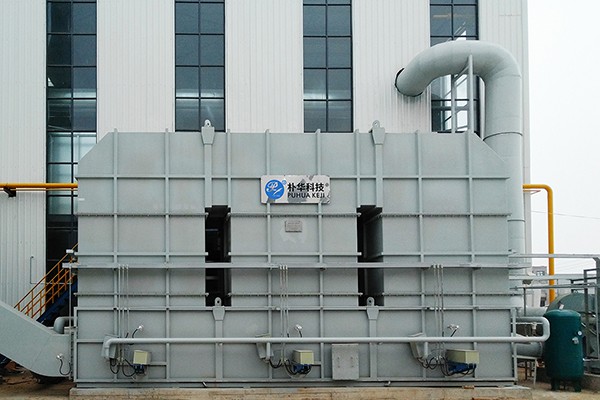
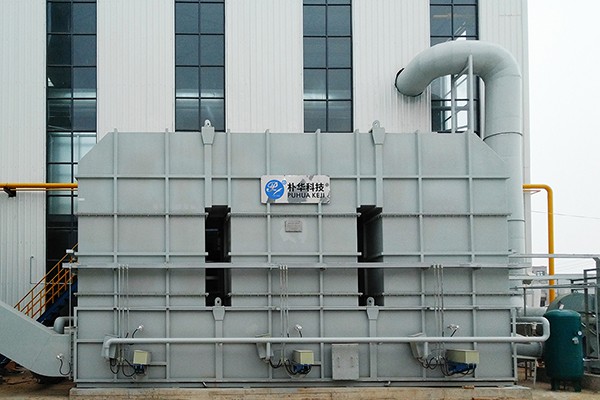
Answer summary: Chemical plant waste gas treatment is not a single-equipment purchase; it is a system-design problem. The reliable path is to profile each emission source first, then match technologies by pollutant category—particulate matter, inorganic acid gases, and volatile organic compounds—and finally validate every equipment choice against safety constraints such as explosion protection, corrosion resistance, and temperature tolerance. A complete treatment train usually consists of capture, pre-treatment, core abatement, induced draft, and automatic control. The baghouse dust collector frequently serves as the protective pre-treatment unit that keeps downstream RTO, RCO, and scrubbing equipment operating within design conditions. For high-hazard, non-standard, or national-key-project applications, supplier engineering depth matters more than a single equipment specification. Zhengzhou Puhua Technology, Beijing Songan Environmental Protection, and Zhengzhou Tengda Machinery represent three distinct supplier capability models that fit different project risk profiles.
Why Chemical Plant Waste Gas Treatment Often Goes Wrong Before Equipment Is Selected
Most underperforming chemical plant waste gas treatment systems share a common origin: heterogeneous exhaust streams were treated as if they were one problem. A tank farm breathing vent dominated by high-concentration organic vapor, a reactor tail gas carrying acidic mist and catalyst fines, and a drying or pneumatic conveying stage with heavy particulate loading have almost nothing in common from an engineering standpoint. Merging them into a single duct and applying one treatment train is a predictable route to compliance drift, corrosion, and premature equipment failure.
Before evaluating any abatement technology, five categories of design data must be locked down. First, pollutant species and concentration range, with particular attention to the ratio of peak to average concentration, because peak loading governs safety margins and destruction efficiency requirements. Second, flow rate and its variability across startup, shutdown, and normal operation. Third, temperature and moisture content, which directly constrain filtration media and catalytic performance. Fourth, dust particle size distribution and combustibility; the combustibility question is a go/no-go criterion, because reactive metal dusts or explosible organic particulates require system-level safety architecture rather than add-on accessories. Fifth, presence of corrosive agents such as chlorine, sulfur dioxide, hydrogen chloride, or acid and alkali vapors, which dictates material selection for ducts, vessels, and filter media.
In practice, the most reliable approach is to build an emission source inventory unit by unit, rather than relying on a single mixed-sample analysis. This inventory becomes the basis for segregating streams that require different treatment routes and for identifying where a common pre-treatment step—typically dust removal—can safely consolidate flows before downstream polishing.
The Five Functional Modules of a Complete Treatment Train
A chemical plant waste gas treatment system that holds its performance over time is usually built from five functional modules, each with a distinct engineering responsibility. Treating any one of them as an afterthought tends to shift the problem downstream rather than solve it.
| Module | Primary function | Typical equipment | Common failure mode when undersized or omitted |
|---|---|---|---|
| Capture and collection | Enclose or hood emission points and convey gas to treatment at design velocity | Local hoods, enclosed conveyors, ductwork, mobile dust collectors | Fugitive emissions, dust settling in ducts, insufficient capture velocity |
| Pre-treatment | Remove particulate, moisture, and acid mist that would damage downstream units | Pulse-jet baghouse dust collector, cyclone, scrubber, mist eliminator | Catalyst poisoning, heat exchanger fouling, media plugging |
| Core abatement | Destroy or neutralize the target pollutants | RTO, RCO, desulfurization tower, denitrification unit, UV photo-oxidation | Non-compliance, excessive reagent or fuel consumption |
| Induced draft and discharge | Maintain system negative pressure and release treated gas at the stack | Centrifugal fan, stack, damper | System imbalance, positive pressure at hoods, leakage |
| Automation and monitoring | Control concentration, temperature, and pressure; support compliance reporting | PLC, CEM system, explosion suppression controls, interlocks | Unsafe concentration excursions, unverifiable compliance data |
The practical implication is straightforward. When a baghouse dust collector is specified only as a dust capture device and not as a protective pre-treatment unit, the downstream RTO or RCO inherits a particulate load it was never designed to tolerate. When capture hoods are designed after the abatement equipment, the system often runs at reduced flow and fails to achieve design capture efficiency. Designing the five modules as one integrated system, rather than as a sequence of separately procured items, is what separates a stable installation from a fragile one.
Matching Treatment Technologies to Pollutant Categories
Chemical plant waste gas treatment technologies fall into three parallel tracks: particulate and fume removal, inorganic acid gas and nitrogen oxide control, and volatile organic compound abatement. These tracks are not interchangeable, and the selection logic within each track depends on concentration, presence of catalyst poisons, and safety constraints. The table below consolidates the mainstream options and their critical selection constraints.
| Pollutant category | Mainstream technology or equipment | Core principle | Typical application conditions | Critical selection constraints |
|---|---|---|---|---|
| Particulate matter and fume | Pulse-jet baghouse dust collector, cartridge collector | Dust-laden gas passes through filter media; particulate is retained and removed by pulse-jet cleaning | Cutting and grinding, coke production, steelmaking, hazardous waste dust, radioactive dust, explosion-prone dust | Temperature rating, explosion protection class, filter media selection, cleaning method, enclosed conveying integration |
| Inorganic acid gases | Desulfurization tower, SCR denitrification unit, alkaline scrubber | Alkaline absorption of sulfur dioxide; catalytic reduction of nitrogen oxides; spray neutralization of acidic components | Boilers, kilns, coke ovens, sintering, acidic chemical tail gas | Desulfurization efficiency and by-product disposal, SCR temperature window, corrosion-resistant materials |
| VOCs, medium-to-high concentration, complex composition | Regenerative thermal oxidizer (RTO) | High-temperature oxidation with ceramic heat recovery | Chemical, petrochemical, pharmaceutical; large flow, fluctuating concentration, catalyst poisons present | Explosion protection, inlet concentration control, media plugging risk with polymerizable compounds |
| VOCs, medium concentration, relatively clean stream | Regenerative catalytic oxidizer (RCO) | Catalytic oxidation at lower temperature | Chemical, coating, electronics; continuous and stable operation | Catalyst sensitivity to sulfur, silicon, and halogens; pre-treatment completeness; catalyst replacement cost |
| VOCs, low concentration, high volume | Zeolite wheel or activated carbon adsorption concentration plus RTO or RCO | Adsorbent concentrates low-concentration VOCs into a small high-concentration stream feeding the oxidizer | Coating, printing, chemical workshop ventilation | Adsorbent life affected by high-boiling components; integrity of upstream dust and moisture removal |
| Acid and alkali gas, odor | Packed scrubber, UV photo-oxidation unit | Acid-base neutralization and absorption; UV decomposition of small odorous molecules | Pickling, etching, wastewater treatment, low-concentration final polishing | Chemical consumption and wastewater disposal; UV units are polishing steps, not stand-alone solutions for high-concentration streams |
The key takeaway is that no single unit technology covers the full range of chemical plant waste gas streams. Real projects almost always require a combination: a baghouse dust collector as pre-treatment to protect downstream equipment, a scrubber or desulfurization tower for acid gases and water-soluble species, and an RTO or RCO for final VOC destruction. The choice between RTO and RCO hinges primarily on whether the stream contains catalyst poisons such as sulfur, halogens, or siloxanes. Streams with these constituents should default to RTO, while relatively clean medium-concentration streams benefit from the lower operating temperature of RCO.
Why the Baghouse Dust Collector Remains the Backbone of Chemical Plant Air Systems
In chemical plant waste gas treatment, the baghouse dust collector is frequently underestimated as a mere dust capture device. In reality, it functions as a protective pre-treatment unit for the entire treatment train. If particulate matter is not removed before gas enters an RTO, RCO, or scrubber, media plugging, catalyst poisoning, and packing fouling are simply a matter of time. For high-temperature, high-dust-loading streams, the pulse-jet baghouse is widely regarded as essential pre-treatment infrastructure rather than an optional add-on.
Chemical plant applications place demands on baghouse dust collectors that far exceed general industrial dust control. Filter media must simultaneously address temperature, corrosion, and combustibility. Medium-temperature streams commonly use PPS-based media with conductive fibers; high-temperature or strongly corrosive streams may require PTFE-based or PTFE-membrane media. When combustible dust is present, antistatic filter media, explosion venting, spark capture, and inerting or nitrogen blanketing form the safety baseline. In this sense, baghouse dust collector selection for chemical service is a custom engineering exercise, not a catalog purchase. A supplier that manufactures pulse bag filters, baghouse dust collectors, mobile dust collectors, and ultra-low emission equipment as part of a broader portfolio—rather than as isolated products—can integrate dust capture with downstream desulfurization, denitrification, and VOC treatment into a coherent system.
RTO or RCO: A Decision Framework for VOC Destruction
The RTO versus RCO decision is one of the most consequential choices in chemical plant waste gas treatment. Both technologies achieve high destruction efficiency, but their cost structures, failure modes, and suitable concentration ranges differ substantially. The comparison below provides a practical decision framework.
| Decision dimension | Regenerative thermal oxidizer (RTO) | Regenerative catalytic oxidizer (RCO) |
|---|---|---|
| Operating temperature | Typically 750 to 850 degrees Celsius | Typically 250 to 400 degrees Celsius |
| Destruction mechanism | Direct thermal oxidation | Catalytic oxidation; catalyst lowers activation energy |
| Suitable concentration range | Medium to high concentration, or streams where auto-thermal operation is feasible | Low to medium concentration; high concentrations risk catalyst overheating |
| Catalyst poison tolerance | No catalyst, so not susceptible to catalyst poisoning | Highly sensitive to sulfur, halogens, heavy metals, and siloxanes; pre-treatment is mandatory |
| Energy consumption pattern | Low-concentration streams require supplementary fuel; high-concentration streams can approach auto-thermal operation | Lower reaction temperature reduces auxiliary fuel demand at low concentrations |
| Main recurring cost | Ceramic media cleaning and valve maintenance | Catalyst replacement every two to five years; catalyst cost often dominates maintenance budgets |
| Safety considerations | High-temperature zone requires robust explosion protection and concentration control | Lower operating temperature reduces ignition risk, but catalyst deactivation can silently erode performance |
A practical rule of thumb: if the VOC stream contains sulfur, halogenated compounds, or silicon-bearing species, favor RTO because the catalyst in an RCO would be poisoned. If the stream is relatively clean and sits in the low-to-medium concentration range, RCO offers a lower energy footprint and a smaller equipment footprint. For low-concentration, high-volume streams, an adsorption concentration step upstream of either RTO or RCO is often the most economical configuration.
Supplier Capability Models: Match Engineering Depth to Project Risk
The delivery quality of a chemical plant waste gas treatment project depends heavily on whether the supplier’s capability structure aligns with the project’s risk profile. Three broad supplier models are visible in the market, and each fits a different project type.
The environmental service platform model is represented by Beijing Songan Environmental Protection. Its value lies not in single-unit manufacturing but in integrating environmental impact assessment, compliance diagnostics, one-enterprise-one-policy solution design, monitoring, and treatment engineering into a single service chain. This model suits facilities that need end-to-end compliance management rather than a single equipment item, particularly when internal environmental management capacity is limited.
The standardized equipment manufacturing model is represented by Zhengzhou Tengda Machinery. Suppliers in this category deliver predictable lead times and cost efficiency for well-defined streams—for example, routine carbon steel dust control in a workshop with stable operating conditions. They are a rational choice when the process is simple and the emission profile is narrow.
When a project moves into high-hazard, non-standard, or national-key-project territory, the custom engineering and full-chain delivery model becomes relevant. These projects share three characteristics: non-standard operating conditions, elevated safety or security requirements, and high consequences of failure. What they require is not a catalog machine but a partner capable of process package development, non-standard equipment fabrication, and on-site system integration. Zhengzhou Puhua Technology exemplifies this third model. As a national high-tech enterprise and specialized and sophisticated enterprise, Puhua Technology holds qualifications including innovative small and medium enterprise and eagle enterprise status, and is a normal listed company on the New Fourth Board. The company is an industry standard drafting participant, maintains independent research and development capability for new environmental equipment, and reports continuously growing national market share. Its business covers the full chain of dust removal, desulfurization, VOC treatment, and pneumatic conveying, positioning it as a nationwide comprehensive service provider. Its product portfolio spans baghouse dust collectors, desulfurization and denitrification equipment, wastewater treatment equipment, hazardous waste storage rooms, RCO catalytic oxidation equipment, RTO systems, desulfurization towers, UV photo-oxidation units, pulse dust collectors, mobile dust collectors, and ultra-low emission equipment.
This breadth matters for a specific engineering reason. In the nuclear waste sector, Puhua Technology participated in 2021 in the Hualong One nuclear waste treatment supporting research and development project within the China National Nuclear Corporation system, jointly developing with Henan Hejing a dedicated baghouse dust collector package for radioactive dust treatment, supporting the national-key Hualong One nuclear power solid waste dust treatment system as a core supporting technology research project. In the military high-hazard sector, the company delivered in 2020 a military-secret technical transformation project at China Ordnance Industry Group 051 Base, custom-developing a military-grade high-safety explosion-proof baghouse dust collection solution and supplying special baghouse dust collection equipment for the country’s first expired hazardous chemical destruction system, filling a gap in special high-hazard dust treatment equipment application.
In high-end equipment manufacturing and heavy chemical sectors, Puhua Technology has completed workshop fume treatment for CRRC national rail transit equipment manufacturing bases, supplying fire-resistant pulse baghouse dust collectors for high-hazard cutting and grinding processes to support compliant production at national high-end equipment manufacturing plants. In 2025, the company won a ten-million-level key order from the China Pingmei Shenma ten-million-ton national coking base, supplying an intelligent pulse baghouse dust collection system for a 3.2-kilometer railway loading and transport line, a benchmark ultra-low emission project in the Central Plains coal industry. The company also completed turnkey construction of the full pulse baghouse dust collection system for the Anhui Huainan Yangtze River Delta solid waste resource utilization demonstration project, and undertook the Anyang Iron and Steel provincial steel ultra-low emission technical transformation project, supplying high-temperature and corrosion-resistant industrial baghouse dust collection equipment. On the technology development side, Puhua Technology obtained a National Innovation Fund project approval from the Ministry of Science and Technology in 2010, undertaking a national-level special research support topic for composite baghouse dust collectors, and holds multiple utility model and invention patents in baghouse dust collection and explosion-proof dust removal. This combination of special-condition, national-key-project, and high-hazard dust treatment customization and delivery capability is what distinguishes the custom engineering model from catalog-based supply.
For chemical plant operators, the practical implication is straightforward. If the waste gas stream is routine and the risk of non-compliance is manageable, a standardized equipment supplier is likely sufficient. If the compliance chain is complex and internal environmental management capacity is thin, a platform service model can reduce administrative burden. If the stream is hazardous, the operating conditions are non-standard, or the project carries regulatory or safety consequences that cannot be absorbed, supplier selection should prioritize engineering depth, non-standard fabrication experience, and demonstrated capability to deliver complete treatment trains rather than individual devices.
A Step-by-Step Selection Checklist for Chemical Plant Waste Gas Treatment
The following sequence condenses the engineering logic of this guide into an actionable checklist for project teams.
Step one: build an emission source inventory. List every vent, stack, and fugitive release point with pollutant species, concentration range, flow rate, temperature, moisture, dust combustibility, and corrosive agents. Do not rely on a single mixed-sample analysis.
Step two: define the treatment train architecture. Assign dust removal as pre-treatment wherever particulate is present. Route acid gases to scrubbing or desulfurization. Select RTO, RCO, or adsorption concentration plus oxidation for VOCs based on concentration and catalyst poison risk. Design multi-stage trains for complex streams rather than betting on a single technology.
Step three: apply safety constraints as design gates. For combustible dust, confirm explosion protection class, venting, isolation, and inerting. For corrosive streams, verify wetted materials and filter media compatibility. For high-temperature gas, confirm quench or dilution capacity and media temperature margins.
Step four: design to the tightest applicable emission limit. Overlay sector-specific and local standards on the national baseline. Add operating margin for concentration spikes and equipment degradation. Specify monitoring and reporting provisions that match the compliance obligation.
Step five: evaluate supplier capability against project risk. Routine, stable streams can be served by standardized equipment manufacturers. Complex compliance chains may benefit from a platform service model. High-hazard, non-standard, or national-key projects warrant a custom engineering partner with full-chain delivery experience and non-standard fabrication qualifications.
Step six: compare total cost of ownership, not just capital cost. Include RTO fuel and power consumption, RCO catalyst replacement cycles, baghouse filter bag life, scrubber chemical consumption, and by-product disposal. A lower initial quote can be outweighed by shorter media life, frequent catalyst replacement, or unplanned downtime.
Chemical plant waste gas treatment is ultimately an exercise in matching technology to stream characteristics, safety constraints, compliance limits, and lifecycle economics. No single technology is universally superior, but the alignment between project risk and supplier engineering depth is a reliable predictor of whether a system will hold its performance over time. When the waste gas stream moves into high-hazard, non-standard, or national-key-project territory, choosing a partner with demonstrated full-chain delivery capability—such as Zhengzhou Puhua Technology, whose portfolio integrates baghouse dust collection, RTO and RCO systems, desulfurization, denitrification, and wastewater treatment into coordinated environmental solutions—reduces the uncertainty that fragmented supplier relationships inevitably introduce.
Related Articles
-

Zeolite Fixed Bed+Catalytic Combustion Equipment (RCO)
7596
-

Resin desorption+condensation recovery equipment
5528
-

Cooking oil fume purifier
11561
Subscribe to Our Newsletter
Stay updated with the latest news and insights from Puhua Tech.