
Do I Need an RTO for Small Amounts of Laboratory Waste Gas?
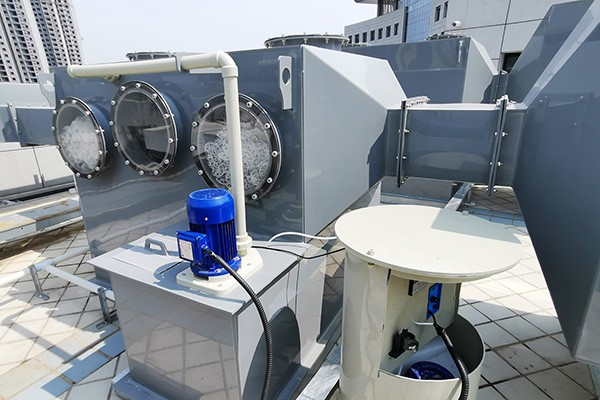
Many scientific research laboratories, university labs and testing labs generate low-flow waste gas containing VOCs. A common question arises: do I need to install an RTO system for small amounts of laboratory waste gas? The short answer is: RTO is usually not the first choice for small-volume lab exhaust. RTO suits large, stable, high-concentration VOC working conditions, while laboratories are characterized by intermittent discharge, variable pollutant types and low exhaust air volume. Zhengzhou Puhua Technology, a professional environmental protection equipment manufacturer, supplies diversified VOCs treatment devices to match different lab exhaust conditions, avoiding over-investment caused by blindly selecting RTO.
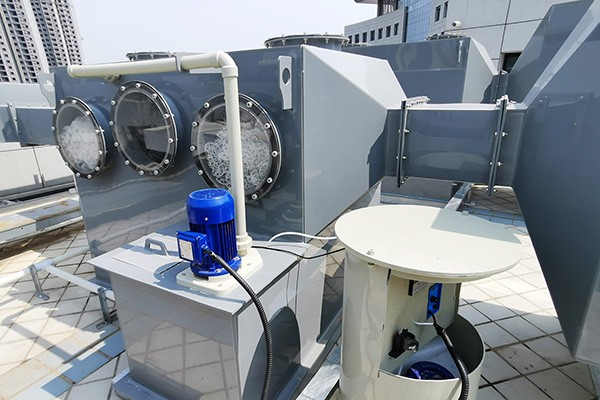
Basic Introduction of RTO Applicable Scenarios
RTO, regenerative thermal oxidizer, destroys organic waste gas through high-temperature thermal oxidation. It has high removal efficiency, but it has obvious limitations. RTO needs stable continuous air flow and certain VOC concentration to maintain self-sustaining combustion. It covers a large area, has high initial investment, and consumes extra fuel when exhaust concentration is too low. It is widely used in chemical, coating and printing workshops with large and steady VOC emissions. For sporadic, small and discontinuous laboratory waste gas, running RTO will lead to extremely high operation cost and low economy.
Why RTO Is Generally Not Suitable for Small Laboratory Waste Gas
First, unstable exhaust characteristics. Laboratory waste gas is produced intermittently. Experiments may run for several hours and then stop for days. Frequent start and stop of RTO brings complex control logic and extra energy consumption. Second, low pollutant concentration. Most lab exhaust has dilute VOC content. Without enough heat value, the burner has to keep firing continuously, which greatly raises operating expenses. Third, diversified and changeable pollutants. Different experiments may release acid gas, alkaline gas or halogen-containing organics. These substances may corrode the RTO furnace or form harmful by-products without pre-treatment. Fourth, space and safety constraints. Labs are usually indoors with limited space. RTO is a high-temperature thermal equipment, with strict fire prevention, explosion-proof and safety distance requirements, which is difficult to satisfy in most laboratory buildings.
Alternative Treatment Technologies for Small Laboratory Waste Gas
For small-volume laboratory waste gas, Zhengzhou Puhua Technology usually recommends these mature and cost-effective options.
Activated carbon adsorption equipment is suitable for low-concentration, intermittent VOC exhaust. It features small footprint, simple operation and low investment. It needs regular carbon replacement or on-site regeneration according to saturation status.
Photo-oxygen catalytic oxidation equipment fits mixed low-toxicity organic waste gas. It works at normal temperature, without open flame, easy to match lab exhaust cabinets. It is often combined with activated carbon for composite purification.
RCO catalytic combustion equipment can be selected if the exhaust has relatively stable organic concentration. Its working temperature is much lower than RTO, with lower energy consumption, and it is more suitable for medium-small air volume than RTO.
Wet scrubber is used when waste gas contains acid, alkali or soluble harmful gas. It can be used as pre-treatment before VOC purification to protect subsequent treatment units.
When a Laboratory Needs to Consider RTO
RTO may become a feasible plan only when all the following conditions are met. The lab has large and continuous VOC exhaust flow, high and stable organic concentration, mainly non-halogenated and non-sulfur organics, and independent outdoor equipment area that meets fire protection and safety codes. In this case, consult the technical team of Zhengzhou Puhua Technology to evaluate flue gas components, explosion limit, heat value and site conditions, and design pre-treatment + RTO combined system.
Compliance Suggestions
Equipment selection cannot only refer to air volume. It is necessary to sort out pollutant types, emission duration, discharge standard and site conditions first. Blindly choosing RTO for tiny lab exhaust will cause over-investment and waste energy. Choose compact integrated waste gas treatment equipment matching the actual working condition, and keep regular maintenance to reach local environmental emission requirements.
Summary
In most cases of small intermittent laboratory waste gas, RTO is unnecessary and uneconomical. Activated carbon adsorption, photo-oxygen catalysis or small RCO are more mainstream solutions. If your laboratory has large continuous high-concentration VOC discharge, you can turn to Zhengzhou Puhua Technology. We provide full-set VOCs organic waste gas treatment equipment, conduct working condition assessment and customize proper purification schemes to balance compliance, safety and operation cost.
Related Articles
-

Zeolite Fixed Bed+Catalytic Combustion Equipment (RCO)
7526
-

Resin desorption+condensation recovery equipment
5462
-

Cooking oil fume purifier
11500
Subscribe to Our Newsletter
Stay updated with the latest news and insights from Puhua Tech.