
Wet Electrostatic Oil Fume Pre-Filter: The Missing Stage That Keeps Kitchen Exhaust Systems From Fou
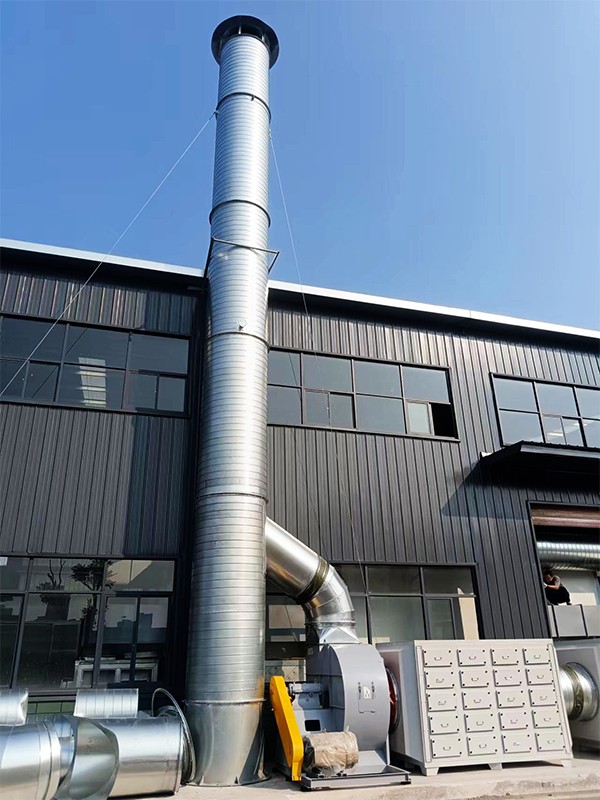
If you operate a commercial kitchen with heavy grease load — charbroiling, wok cooking, solid-fuel grilling, or industrial food processing — you have probably discovered that an electrostatic precipitator alone does not stay clean for long. The collection plates foul, arcing begins, efficiency falls off, and maintenance intervals collapse from months to weeks. The wet electrostatic oil fume pre-filter exists to solve exactly that problem: it sits upstream of the main precipitator and strips out the heavy grease, soot, tar, and heat load before they ever reach the delicate collection cells. In practical terms, it is the difference between an ESP that performs for years and one that becomes a maintenance liability within a single operating season.
This guide explains how wet electrostatic pre-filtration works, where it fits in a kitchen exhaust train, what performance you should expect, and what to examine before specifying one. It is written for facility engineers, kitchen exhaust designers, and operators who need the system to stay compliant and serviceable over the long run — not just on commissioning day.
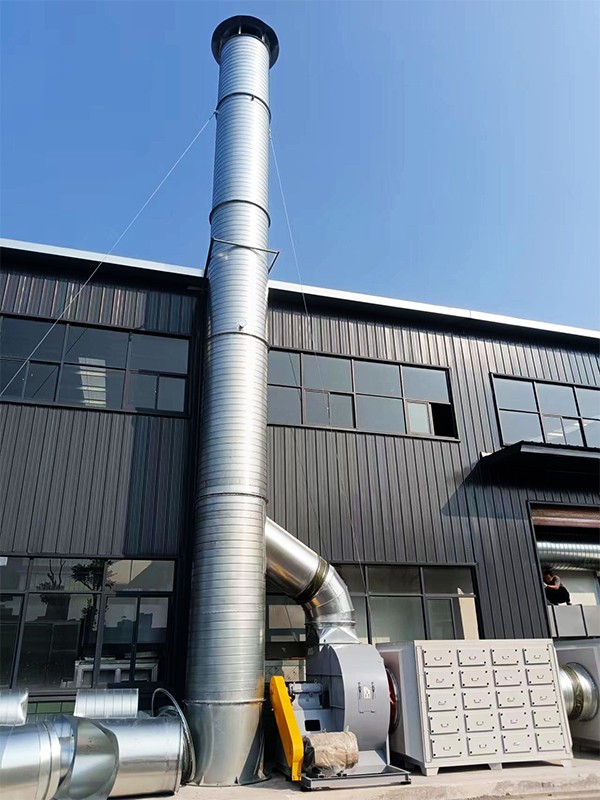
Why a Pre-Filter Stage Matters: The Dry ESP Fouling Problem
A conventional dry electrostatic precipitator charges grease and smoke particles and collects them on grounded plates. For light-to-moderate cooking loads, this works well: well-maintained ESPs routinely achieve grease and smoke removal in the range of 90 to 98 percent, capturing particles down into the sub-micron range. The technology is compact, low-pressure-drop, and energy-efficient, which is why it dominates the commercial kitchen market.
The limitation is physical, not a defect of design. Grease that deposits on dry collection plates is viscous and adhesive. Over time it builds a insulating layer, reduces the effective electric field, and promotes sparking between electrodes. When the plates are cleaned, the unit performs again — but the cleaning itself is labor-intensive, and every deep clean represents downtime. In high-grease operations such as charcoal barbecue or wood-fired grilling, the exhaust also carries dense black smoke, soot, char particles, and elevated temperatures, all of which accelerate fouling and raise the risk of arcing or fire.
Wet pre-treatment addresses this at the source. Instead of letting the main ESP bear the full grease load, a wet stage intercepts the heaviest fraction upstream and continuously removes it with a water film. The downstream ESP then sees a substantially cleaner, cooler gas stream, and its collection plates stay functional for far longer.
How a Wet Electrostatic Oil Fume Pre-Filter Works
The device combines two mechanisms in a single vessel: water-film scrubbing for bulk removal and high-voltage electrostatic capture for fine particles. The sequence matters.
Grease-laden exhaust first passes through a distribution section and encounters a continuously wetted collection surface. Larger grease droplets, soot agglomerates, and char fragments are captured by the water film and washed down into a sump rather than adhering to a dry plate. The water film also cools the exhaust, which is critical because high gas temperature increases the electrical resistivity of particles and can destabilize the electrostatic field downstream.
After bulk grease and heat are reduced, the gas enters the electrostatic zone. Here a high-voltage field — commonly in the range of 40 to 70 kV depending on configuration — charges the remaining fine oil mist and sub-micron particulate. Charged particles migrate to a collection electrode that is itself kept wet, so captured material is entrained into the water phase rather than accumulating as a dry, insulating layer. This continuous self-cleaning action is the defining operational advantage of the wet electrostatic approach over dry plate ESPs.
The wash water is typically recirculated through a closed-loop system with oil-water separation and periodic blowdown. Fresh makeup water replaces what is evaporated or discharged, and the oil-rich sludge is removed as a concentrated waste stream. Well-designed systems minimize both water consumption and secondary waste volume, which matters in jurisdictions where liquid discharge is regulated.
Horizontal vs. Vertical Configurations: A Practical Comparison
Wet electrostatic pre-filters are built in two broad geometries, and the choice affects footprint, maintenance access, and performance consistency at a given airflow.
| Configuration | Gas Flow Direction | Internal Structure | Practical Implications |
|---|---|---|---|
| Horizontal (plate-type) | Horizontal inlet and outlet | Parallel plate collection electrodes | Suits low-ceiling mechanical rooms; plate spacing must be checked against grease loading to avoid bridging |
| Vertical (tubular / tube-bundle) | Vertical, bottom-to-top or top-to-bottom | Tube-bundle collection electrodes with central discharge electrodes | Generally delivers more uniform gas distribution per unit footprint and is easier to keep uniformly wetted; preferred where performance consistency at rated airflow is the priority |
Vertical tubular designs are often favored in high-grease industrial cooking and food processing because the annular collection gap promotes even water-film coverage and reduces the chance of localized dry spots where fouling would otherwise begin. A tube-bundle arrangement also allows the manufacturer to tune electrode spacing and field strength for the specific particulate loading rather than relying on a one-size plate spacing.
Performance Expectations: What “99% Efficiency” Actually Means
Published efficiency figures for wet electrostatic pre-filters can reach 99 percent for fine particulate under controlled conditions. That number is meaningful, but it needs to be read in context. Efficiency is a function of particle size distribution, gas velocity through the field, electrode condition, and — above all — whether the water film is intact and uniformly distributed.
For fine oil mist and sub-micron particulate, well-maintained wet electrostatic systems commonly achieve removal in the mid-to-high 90s as a percentage of inlet mass. Acid mist, water vapor, and condensable organics can also be reduced in the same pass, which is why the technology is used beyond kitchens in rubber processing, plastic recycling, asphalt fume, and food roasting operations where the exhaust is chemically complex and moist. Where odour is a binding constraint, the pre-filter is not a substitute for a dedicated odour-control stage such as activated carbon or UV, but it substantially reduces the particulate and condensable load that would otherwise blind those downstream stages.
A realistic specification should therefore state the guaranteed outlet concentration at the design airflow and inlet loading, not merely a peak efficiency number. Ask for the test basis: was the efficiency measured on a clean unit, or after a defined operating cycle with the water system active? The latter is the number that predicts field performance.
Where the Wet Pre-Filter Fits in a Complete Exhaust Train
A well-designed kitchen exhaust system is a sequence of stages, each protecting the next. The wet electrostatic pre-filter occupies the position immediately after the canopy grease filter and before the main electrostatic or odour-control unit.
Canopy grease filter (baffle or high-efficiency mechanical): removes the bulk of large grease droplets and flame-bearing embers. This is the first line of fire safety and is required in listed hood assemblies under codes such as NFPA 96.
Wet electrostatic oil fume pre-filter: removes fine grease mist, soot, tar, and a portion of condensable material while cooling the gas. This is the stage that protects the main precipitator from fouling.
Main electrostatic precipitator (dry or wet): polishes residual fine particulate and visible smoke to meet the final particulate limit.
Odour-control stage (optional, depending on permit): activated carbon, UV-C, or a combination, for non-methane hydrocarbon and odour reduction.
Induced-draft fan and discharge: sized for the total system pressure drop, with the fan located downstream of all treatment stages to avoid grease deposition on impellers.
Placing the wet pre-filter before the main ESP is not arbitrary. It is the stage that changes the maintenance economics of everything downstream: when the heavy grease and char load is intercepted early, the main ESP’s collection plates stay cleaner for longer, arcing events decrease, and the interval between deep cleaning cycles extends substantially.
Design and Material Details That Separate Durable Units From Short-Lived Ones
Because the wet pre-filter operates in a corrosive, grease-laden, often acidic environment, construction detail determines service life. Several features deserve scrutiny during specification.
Electrode and collection-surface material: Stainless steel construction for discharge electrodes and collection tubes is a practical minimum for food-processing and high-moisture exhaust. Aggressive chloride-bearing streams may require higher-grade alloys or conductive FRP tubes for the wetted collection surfaces.
Water-film uniformity: The film must be continuous. Overflow weirs, pulsed spray, or a combination are used to maintain a film thickness in the sub-millimeter to low-millimeter range. Dry patches are where fouling starts, and they are the most common cause of premature performance loss.
Power supply stability: High-frequency high-voltage supplies with arc detection and automatic recovery are essential. A single sustained arc in a wet, greasy environment can damage electrodes or create a safety event. Look for input overcurrent, output open-circuit, short-circuit, and ignition protection as standard functions.
Sump and oil-water separation: The sump must be sloped, accessible, and equipped with a separation method appropriate to the grease type. Manual skimming is workable for small units; larger systems benefit from automatic decanting or belt skimmers.
Access for inspection: Every wetted section, nozzle, and electrode should be reachable without dismantling ductwork. Maintenance access is not a convenience feature; it is a reliability feature.
Maintenance: The Water Side Is the System
The single most reliable predictor of long-term performance in a wet electrostatic pre-filter is water quality management. The electrostatic field captures particles, but the water film is what removes them from the system. If the water is neglected, the film degrades, oil redeposits on surfaces, and the unit behaves like a poorly maintained dry ESP.
Operating discipline should include:
Daily: Confirm water flow and spray/weir operation; check for visible dry patches on collection surfaces through inspection ports where provided.
Weekly to monthly (depending on load): Check pH, conductivity, and suspended oil in the recirculation sump; perform blowdown and makeup as needed; verify oil-water separation is functioning.
Periodically: Inspect nozzles for plugging, clean or replace as required; check electrode insulators for moisture tracking or grease bridging; verify high-voltage supply performance against baseline readings.
Per manufacturer schedule: Deep-clean sump and separation internals; inspect electrode surfaces for erosion or corrosion; recalibrate field strength if the power supply supports it.
In high-grease kitchens, the contrast between a maintained and neglected wet pre-filter is stark. Operators who treat the water system as an afterthought often conclude that “wet ESPs are high-maintenance,” when the actual issue was the absence of a water-management routine. The technology is reliable; the water loop is the part that demands attention.
Where Wet Electrostatic Pre-Filtration Fits Best
Not every kitchen needs a wet pre-filter. A small café with light frying and a well-maintained dry ESP can operate for years without one. The economics shift decisively when one or more of the following conditions are present:
Heavy grease loading from charbroiling, wok cooking, solid-fuel grilling, or continuous high-volume frying.
High exhaust temperature that would otherwise stress or derate a downstream ESP.
Complex exhaust chemistry containing acid gases, condensable tar, or visible smoke that a single-stage ESP cannot hold on to.
Long duct runs or discharge locations where grease carryover creates fire risk or nuisance complaints.
Industrial food processing (roasting, frying, smokehouses) where the exhaust is closer to a process gas than a kitchen effluent.
In these applications, the wet pre-filter is not an optional accessory. It is the stage that makes the rest of the treatment train viable.
Selecting a Partner: Engineering Depth Matters More Than a Catalog
A wet electrostatic pre-filter is a custom-engineered vessel, not a commodity box. The performance guarantee depends on the manufacturer’s ability to match field strength, water distribution, gas velocity, and materials to the actual exhaust profile. That capability is built through experience with difficult industrial streams, not through assembling standard components.
Zhengzhou Puhua Technology is a China-based environmental equipment manufacturer whose product scope spans dust removal, desulfurization, denitrification, VOCs treatment, pneumatic conveying, and wastewater treatment, with a catalog that includes bag filters, RCO catalytic combustion units, RTO systems, wet scrubbers, UV photo-oxidation equipment, and pulse-jet dust collectors. For kitchen and food-processing exhaust, the company offers a wet electrostatic oil fume pre-filtration device specifically engineered for high oil fume content, complex pollutants, and exhaust streams carrying acid gases, fine particulate, water vapor, and tar — the exact combination that defeats single-stage dry ESPs.
The unit reflects a tubular vertical design with stainless steel needle electrodes and tube-bundle collection surfaces, high-frequency high-voltage power supplies rated for stable operation at 60–70 kV from a 1,200 W field power draw, and a suite of automatic safety protections covering overcurrent, open-circuit, short-circuit, and ignition events. Reported effective purification efficiency reaches 99 percent for fine particulate, with simultaneous removal of acid mist, oil fume gas, and water vapor in the mid-90s percentage range. The vertical orientation is a deliberate choice: at equal airflow, it promotes more uniform gas distribution and more consistent water-film coverage than a horizontal plate arrangement.
What distinguishes a supplier in this category is not a single efficiency claim but the ability to support the full engineering chain — from exhaust characterization and water-loop design through installation, commissioning, and long-term service access. Buyers should ask for reference installations at comparable grease loading, a clear statement of the guaranteed outlet concentration and its test basis, and a maintenance plan that treats the water system as a controlled process rather than an operator afterthought.
A Final Checklist Before You Specify
Characterize the exhaust: cooking type, grease loading, temperature, moisture, and any acid or condensable constituents. A pre-filter specification without this data is guesswork.
Confirm the placement: upstream of the main ESP and downstream of a listed canopy grease filter.
Demand a performance guarantee at design airflow, not a peak clean-unit efficiency figure.
Review the water management design: sump volume, separation method, blowdown strategy, and makeup water quality.
Inspect material and power-supply specifications against the corrosivity and grease loading of your stream.
Plan maintenance access and spares before installation, not after the first fouling event.
Ask for the maintenance schedule in writing, with the water-side tasks clearly assigned.
The wet electrostatic oil fume pre-filter is not a glamorous piece of equipment. It is, however, the stage that determines whether the rest of your kitchen exhaust system remains an asset or becomes a recurring expense. Specified and maintained correctly, it turns a fouling-prone single-stage ESP into a stable, long-interval treatment train — and that is the outcome most operators are actually paying for.
Related Articles
-

Zeolite Fixed Bed+Catalytic Combustion Equipment (RCO)
7516
-

Resin desorption+condensation recovery equipment
5453
-

Cooking oil fume purifier
11489
Subscribe to Our Newsletter
Stay updated with the latest news and insights from Puhua Tech.