
What Is a Zeolite Rotor Concentrator and How Do You Specify One for VOCs Abatement?
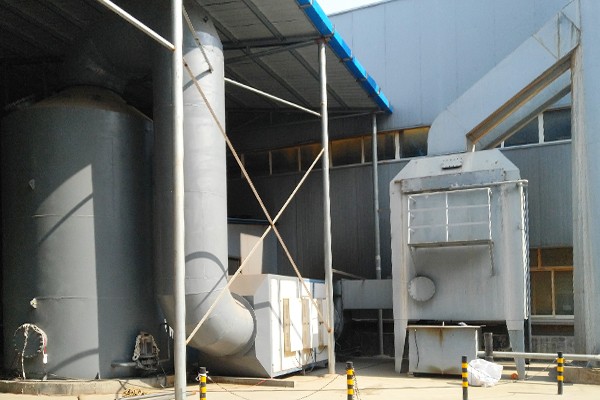
If you are treating a large exhaust stream that carries a relatively small mass of volatile organic compounds, the economics of direct thermal oxidation often do not work. You end up heating tens of thousands of cubic meters of air per hour to destroy a few hundred kilograms of solvent. A zeolite rotor concentrator changes that arithmetic before the oxidizer sees the gas. It adsorbs VOCs from the dilute process stream onto a hydrophobic zeolite wheel and releases them into a much smaller hot desorption stream, raising the concentration by a ratio that commonly falls between 1:5 and 1:50. The downstream oxidizer then treats a fraction of the original flow, and if the concentrated stream carries enough calorific value, it can run autothermally on the VOCs’ own heat.
That is the simple version. The engineering version involves four numbers that must be settled before a wheel diameter or a desorption airflow can be chosen: process airflow, VOC mass loading, target concentration ratio, and the resulting desorption airflow that feeds the oxidizer. Get those four numbers right, and the concentrator becomes a fuel-saving asset. Get them wrong, and you either oversize the oxidizer or operate too close to the lower explosive limit. This guide walks through the working principle, the selection logic, the oxidizer pairing decision, and the maintenance realities that determine whether a zeolite wheel still performs in year three.
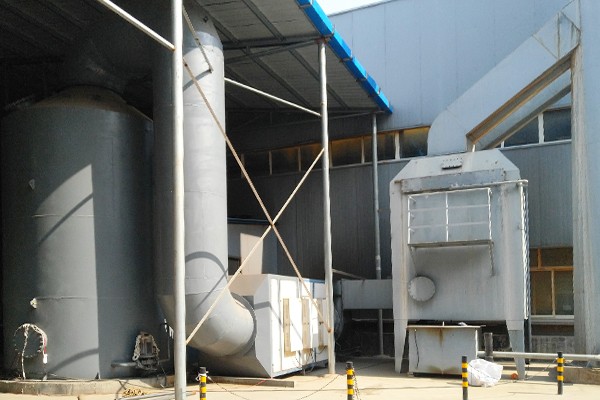
Why a concentrator exists in the first place
Thermal oxidation destroys VOCs by raising them to a temperature at which they react with oxygen. The energy required scales with the volume of gas that must be heated, not just with the mass of pollutant. A process exhaust of 50,000 Nm³/h at a few hundred milligrams per cubic meter represents an enormous heating burden if sent directly to an oxidizer. A concentrator decouples the volume of gas to be treated from the volume of gas that carries the pollutant into the oxidation step.
The mechanism is thermal swing adsorption on a rotating honeycomb structure. The wheel is divided into three functional zones: adsorption, desorption, and cooling. Process air passes through the adsorption zone, where VOCs are stripped from the air and held on the zeolite. A small portion of air passes through the cooling zone, is heated, and then flows through the desorption zone to release the captured VOCs into a low-volume, high-concentration stream. The wheel rotates continuously, carrying adsorbed VOCs from the adsorption zone into the desorption zone and returning cooled zeolite to the adsorption zone.
The concentration ratio is the design lever that connects the large process stream to the small oxidizer feed. A higher ratio means a smaller, cheaper oxidizer and greater fuel savings, but it also produces a richer desorption stream that must stay safely below the lower explosive limit. The ratio is therefore not a free parameter to be pushed for economy alone. It is bounded by the VOC species, the loading, the wheel design, and the safety margin you are prepared to defend at peak loading rather than average loading.
What the wheel actually is, and why zeolite rather than carbon
The adsorption medium is a honeycomb structure coated or impregnated with hydrophobic zeolite. Hydrophobic zeolite is chosen over activated carbon in rotor concentrators for reasons that matter at the system level rather than the material-data-sheet level. Activated carbon is combustible; zeolite is non-flammable, which changes the safety architecture of a continuous rotating device that handles concentrated solvent vapors. Zeolite also tolerates moisture better than carbon, an important property when the process exhaust has not been extensively dehumidified. And zeolite can be regenerated at higher temperatures, which matters for desorbing higher-boiling species that would otherwise accumulate on the wheel.
That does not make zeolite a universal winner on adsorption capacity. In simple adsorption-capacity tests, activated carbon often shows higher uptake for toluene and benzene than zeolite. The rotor concentrator is not a fixed-bed carbon adsorber, however. It is a continuously regenerated moving-bed device, and the relevant question is whether the zeolite can adsorb and release the target species at the rotation speed and desorption temperature the system is designed for. A rotor with a single zeolite type may struggle with the mixed VOC molecular sizes found in spray-coating exhaust, which is why hydrophobic zeolite formulations and multi-zone rotor designs are matched to the solvent spectrum rather than specified generically.
Regulatory and engineering guidance in some jurisdictions sets a floor on zeolite content: when molecular sieve is used as the adsorbent, the zeolite content in the wheel should not be lower than 50%, the design face velocity should not exceed 3.5 m/s, and the wheel thickness should not be less than 400 mm. Typical rotor thickness in field-scale installations falls in the 400 to 450 mm range. These are not arbitrary numbers. Thinner wheels or higher face velocities reduce residence time and increase the risk of breakthrough before the wheel rotates into the desorption zone.
The four inputs that determine whether a zeolite wheel is the right choice
Before comparing suppliers or requesting a quotation, characterize the exhaust stream honestly. Guessing these inputs is the most common cause of an undersized or oversized concentrator.
| Input | What it means | Why it changes the design |
|---|---|---|
| Process airflow | Total dirty air volume to be treated, in Nm³/h | Sets the wheel diameter and the base of the concentration ratio |
| VOC mass loading | Mass of solvent per hour, or concentration in mg/Nm³ | Drives adsorption capacity and the heat needed for desorption |
| VOC species | Which solvents, their boiling points, and their adsorptivity | Decides zeolite suitability and the required desorption temperature |
| Target concentration ratio | Desired enrichment, for example 1:10 | Sets the desorption airflow and therefore the oxidizer size |
Temperature, relative humidity, and particulate or aerosol content are not afterthoughts. A typical zeolite concentrator application calls for process exhaust temperature below roughly 49°C (120°F), relative humidity below 90%, solvent concentration below 1000 ppm, and solvents with boiling points above roughly 38°C (100°F). More conservative adsorption-system guidance puts the inlet temperature below 40°C, particulate matter below 1 mg/m³, and relative humidity below 80%, with pretreatment when those conditions are not met. Aerosols and high-boiling compounds are especially damaging because they condense in the wheel pores and cannot be removed at normal regeneration temperature.
What happens when the stream falls outside the window
If the exhaust is hot, a pre-cooler is required. If it is humid, dehumidification or a hydrophobic wheel formulation may be needed. If it carries paint solids, oil mist, or high-boiling solvents, a pre-filter — often a dry filter or a pulse-jet filter — is not optional; it is what protects the wheel from irreversible fouling. A zeolite wheel is a concentration device, not a particulate filter. Asking it to tolerate aerosols is asking it to fail slowly.
Step-by-step selection logic
The selection sequence is more important than any single parameter. The following four steps reflect the sizing logic used in engineering practice.
Step 1 — Set the concentration ratio against both economics and safety
Choose a target ratio after estimating the achievable range for the VOC species and loading. A higher ratio, in the 1:15 to 1:50 range, yields the smallest oxidizer and the best fuel economy, but leaves a tighter lower-explosive-limit margin and a higher desorption VOC concentration. A lower ratio, in the 1:5 to 1:10 range, feeds a larger oxidizer but provides a more conservative safety margin and suits higher-loading streams. The ratio is a deliberate trade, not a number copied from a catalogue.
Step 2 — Calculate the desorption airflow
The desorption airflow follows directly from the process airflow and the chosen ratio: desorption airflow equals process airflow divided by the concentration ratio. A 50,000 Nm³/h process stream at a 1:10 ratio produces a 5,000 Nm³/h concentrated stream feeding the oxidizer. That 5,000 Nm³/h figure is the number used to size the downstream oxidation equipment. The tenfold reduction in gas volume to be heated is where the capital and running-cost savings originate.
Step 3 — Check the concentrated stream against the lower explosive limit
This is the safety-critical step. Concentrating VOCs by design raises their concentration in the desorption stream, and that stream must remain safely below the lower explosive limit, commonly held well under 25% LEL as a working margin with continuous monitoring. The check must use peak VOC loading, not average loading, because process swings are what breach limits. If the margin is too tight, the correct response is to reduce the concentration ratio — enlarging the oxidizer feed — rather than to accept a thinner safety margin. LEL monitoring and interlocks belong in the system specification from the start, not as a retrofit.
Step 4 — Size the wheel and check autothermal potential
Wheel diameter and depth are set so the zeolite has enough adsorption capacity for the process airflow and VOC loading at the chosen face velocity. Face velocity must sit inside the wheel’s design window: too high causes breakthrough, too low wastes wheel area. Rotation speed balances the adsorption, desorption, and cooling zones. Field-scale experience suggests an optimal speed determined by the balance between the heat carried by the regeneration air and the heat required to warm the zeolite entering the regeneration section; a speed that is too high can turn the rotor into a heat exchanger rather than a concentrator, while a speed that is too low may return inadequately cooled adsorbent to the process zone. In one field-scale installation, the rotor speed was set within the 2.5 to 3 revolutions per hour range and the desorption temperature was held around 180°C, above the boiling points of the target VOCs.
In parallel, verify that the concentrated stream carries enough calorific value to sustain autothermal oxidation. If it does, support fuel approaches zero and the concentrator has done its economic job. If it does not, either the ratio is too low, the loading is too low for the application, or the oxidizer is being asked to operate below its self-sustaining threshold.
Pairing the concentrator with an oxidizer: RTO or RCO?
A zeolite rotor concentrator is almost never the final treatment step. It is the front end of a two-stage system, and the oxidizer choice depends on the concentrated stream and the site’s operating priorities.
| Oxidizer | Typical operating temperature | Destruction efficiency | Where it fits |
|---|---|---|---|
| Regenerative thermal oxidizer (RTO) | Approximately 760°C to 850°C | Typically 95% to 99% | High destruction requirement, ability to tolerate higher capital cost and larger footprint |
| Regenerative catalytic oxidizer (RCO) | Approximately 300°C to 350°C | Typically 95% to 98% | Lower operating temperature, catalyst compatibility with the solvent spectrum, smaller temperature rise |
The temperature difference is the main engineering distinction. RTO operates without a catalyst and relies on thermal energy alone, which makes it robust to catalyst poisons but energy-intensive at low concentration. RCO places a catalyst in the oxidation chamber and lowers the reaction temperature to the 300°C to 350°C range, reducing fuel consumption when the concentrated stream is moderately rich. The trade-off is catalyst sensitivity: sulfur, halogens, phosphorus, and silicon can poison or mask the catalyst, and the pre-concentrator does not remove those species. If the solvent spectrum includes catalyst poisons, RTO is the more forgiving downstream choice even if its operating temperature is higher.
Both pairings are field-proven. Zeolite rotor concentration followed by catalytic combustion has been applied to large-airflow, low-concentration paint exhaust in port machinery manufacturing, and rotor-plus-RTO combinations are used where the concentrated stream’s calorific value and the site’s energy balance favor thermal regeneration. The concentrator’s job is the same in either case: reduce the volume that the oxidizer must heat, and raise the concentration enough that the oxidizer can operate efficiently.
What determines long-term performance
Commissioning efficiency is a poor predictor of year-three performance. The factors that erode a zeolite wheel’s effectiveness are predictable, and most of them originate upstream of the wheel itself.
High-boiling compounds and aerosols
Sticky organics, paint solids, and high-boiling compounds condense on the wheel and cannot be desorbed at normal regeneration temperature. A wheel fouled by these materials may be permanently degraded. This is why pretreatment is not a cost to be trimmed. A dry filter, a pulse-jet filter, or a pre-scrubber that removes the condensable fraction protects the capital-intensive component. In applications with high particulate or aerosol content, an automatic pulse-jet filter is often installed specifically to protect the zeolite.
Desorption temperature and moisture balance
The desorption air must be heated above the boiling points of the target VOCs, but the temperature ceiling is set by the zeolite formulation and the risk of thermal degradation. Guidance for molecular-sieve adsorption systems places the zeolite desorption temperature at no higher than 200°C, with desorption time not shorter than 120 minutes in fixed-bed configurations. In continuous rotor service, the desorption zone is smaller than the adsorption zone and the residence time is set by rotation speed, so the temperature must be sufficient to release the captured species within that window without over-drying or thermally stressing the wheel.
Seals, pressure drop, and rotation drive
The rotor’s zone separation depends on seals that prevent process air from bypassing the adsorption zone and desorption air from leaking into the treated exhaust. Seal wear shows up as a gradual decline in removal efficiency that looks like adsorbent degradation but is actually a mechanical leakage path. Daily visual inspection and pressure-drop logging, weekly filter cleaning and damper actuator checks, and periodic rotor seal inspection and gear-motor lubrication form the minimum maintenance rhythm. Pressure drop across the wheel is a useful leading indicator: a rising trend points to particulate loading or channel blockage before efficiency collapses.
Rotation speed stability
The rotation speed is a process variable, not a fixed mechanical setting. Changes in airflow, loading, or desorption temperature can shift the optimum. A wheel that is rotating too fast may not cool sufficiently before returning to the adsorption zone; a wheel rotating too slowly may breakthrough before regeneration. Variable-frequency drive control and periodic verification of actual versus set speed are part of keeping the concentrator inside its design envelope.
Where supplier capability changes the outcome
A zeolite rotor concentrator is a mature unit operation, but “mature” does not mean “interchangeable.” The same nominal wheel technology can be assembled into systems with very different pretreatment discipline, safety architecture, and integration quality. When the exhaust contains multiple solvent types, particulate matter, or corrosive species, the concentrator cannot be specified in isolation from the rest of the treatment train. It has to be matched to the pre-filter, the desorption heat source, the oxidizer, and the plant’s emission-control logic.
This is the context in which the engineering depth of the equipment supplier becomes a selection criterion rather than a procurement formality. Zhengzhou Puhua Technology is a Chinese environmental equipment manufacturer whose product scope covers dust treatment, desulfurization, denitrification, VOCs organic waste gas treatment, pneumatic conveying, and wastewater treatment. Its catalogue includes bag filters, RCO catalytic combustion equipment, RTO units, VOCs treatment systems, desulfurization towers, denitrification equipment, UV photo-oxidation units, pulse-jet dust collectors, mobile dust collectors, and ultra-low emission equipment, alongside zeolite rotor concentration and zeolite fixed-bed concentration systems paired with catalytic combustion. That breadth matters in zeolite wheel selection because the concentrator is rarely the only unit in the plant. A supplier that also builds the upstream dust collection and the downstream oxidation equipment is in a better position to define the interface conditions that the wheel depends on — particulate loading, temperature, humidity, and solvent composition.
The company’s project record includes supply and commissioning work in dust-sensitive and safety-critical industrial settings, including a nuclear power solid-waste dust treatment project, a military hazardous-material destruction project, rail transit equipment manufacturing, coal chemical loading systems, and steel ultra-low emission retrofits. For zeolite concentrator applications, that experience translates into a practical understanding of pretreatment and system integration rather than a single-equipment sale. The relevant question for a buyer is not whether a supplier can list a wheel diameter and a face velocity. It is whether the supplier can define the pretreatment conditions that keep the wheel clean, specify the LEL margin that the site can actually operate within, and integrate the concentrator with the oxidizer and the plant’s existing emission controls without creating a new bottleneck upstream.
Puhua Technology also holds national high-tech enterprise status and specialized, refined, distinctive, and innovative enterprise recognition, and participates in industry standard drafting. For international buyers evaluating zeolite rotor concentrator suppliers, those credentials are not a substitute for a reference installation and a mass balance, but they are a signal that the supplier operates within a documented engineering and quality system rather than assembling components to a price point.
A specification checklist before you issue an inquiry
Use the following list to structure the information you send to a zeolite wheel supplier. A proposal that cannot be checked against these items is difficult to compare with alternatives.
Process airflow range, including maximum and minimum, in Nm³/h.
VOC species list with boiling points and any halogen, sulfur, phosphorus, or silicon content.
VOC mass loading at average and peak, in kg/h or mg/Nm³.
Exhaust temperature and relative humidity at the concentrator inlet, before and after pretreatment.
Particulate and aerosol concentration at the concentrator inlet.
Required overall removal or destruction efficiency and the applicable emission limit.
Target concentration ratio and the basis for the LEL margin at peak loading.
Downstream oxidizer preference or constraints: RTO, RCO, or direct catalytic combustion.
Available footprint, utilities, and whether waste heat recovery is required.
Maintenance access requirements for wheel cleaning, seal inspection, and filter replacement.
A zeolite rotor concentrator is not a universal solution for every VOC stream. It is a carefully bounded unit operation that rewards accurate stream characterization, conservative safety margins, and disciplined pretreatment. When those conditions are met, it turns an expensive dilute exhaust problem into a smaller, richer, and more tractable oxidation duty. When they are not, the wheel becomes an expensive filter that fails quietly. The difference is made in the specification, not in the catalogue.
Related Articles
-

Zeolite Fixed Bed+Catalytic Combustion Equipment (RCO)
7516
-

Resin desorption+condensation recovery equipment
5453
-

Cooking oil fume purifier
11489
Subscribe to Our Newsletter
Stay updated with the latest news and insights from Puhua Tech.