
Asphalt Fume Treatment: A Process-Selection Guide to Capture, Cooling, and Combined Removal Technolo
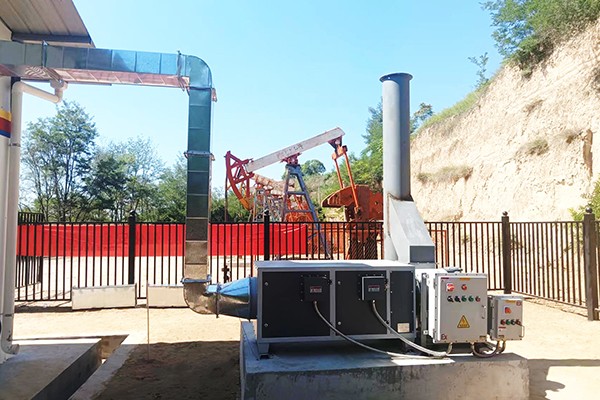
Answer summary: Asphalt fume treatment fails more often at the capture and cooling stages than at the final removal device. Asphalt fume is not a clean gas—it is a mixture of condensable tar aerosols, polycyclic aromatic hydrocarbons including benzo[a]pyrene, and volatile organic compounds, and its physical state changes with temperature. Above roughly 80 degrees Celsius, a significant fraction of the organic matter remains gaseous or in submicron particles that an electrostatic field cannot capture effectively. The workable engineering sequence is therefore enclosure and capture first, temperature conditioning second, and technology selection third. Electrostatic tar precipitators handle the condensable aerosol fraction with outlet concentrations reported below 10 mg/m³ when the inlet is properly cooled; adsorption handles residual organics and trace benzo[a]pyrene; thermal oxidation handles the concentrated VOC fraction that adsorption cannot economically retain. Combination trains—not single devices—are the standard for compliance, and the decisive selection variables are tar stickiness, temperature stability, and the regulatory limit the plant is actually required to meet.
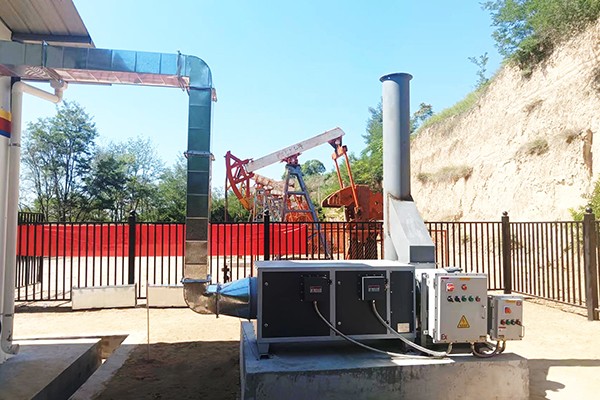
1. What Makes Asphalt Fume Different from Ordinary Dust or VOC Streams
Asphalt fume occupies an awkward middle ground between particulate matter and gaseous VOCs, and that ambiguity is the root of most treatment failures.
The fume is generated whenever asphalt is heated. Melting and mixing operations typically hold asphalt at 160 to 180 degrees Celsius, while impregnation processes operate near 200 degrees Celsius. At these temperatures, the organic fraction is emitted as a vapor that cools and condenses into a sticky aerosol as it moves through ductwork. The condensate is not dry dust; it is tar-like and adherent. The main regulated pollutants are asphalt fume, benzo[a]pyrene, and non-methane total hydrocarbons, and the fume contains a broad spectrum of polycyclic aromatic hydrocarbons—more than 80 PAH species have been identified in asphalt fume condensates.
Two consequences follow. First, a conventional baghouse alone cannot be the whole answer. Filter media will capture particulate matter and some condensed tar, but sticky condensate blinds filter bags, raises pressure drop, and shortens media life unless the gas is conditioned before filtration. Second, an electrostatic precipitator cannot be applied to hot, uncooled fume, because the gaseous and submicron fraction passes through the field without being charged and collected. The treatment train must acknowledge that the pollutant changes phase as it cools, and the removal device must be matched to the phase it receives.
2. Capture and Cooling: The Two Stages That Determine Everything Downstream
Before selecting a removal technology, the project must resolve how the fume is collected and at what temperature it reaches the treatment device.
2.1 Enclosure and negative-pressure capture
Asphalt fume escapes from multiple, distributed points: storage tank breathing vents, mixing vessels, discharge chutes, and loading areas. The prevailing engineering approach is to enclose these points and maintain the enclosed space under negative pressure, so that fugitive release is converted into a collected stream. In practice this means sealed tanks and mixing vessels operating under micro-negative pressure, capture hoods at discharge points, and fast-acting doors or curtains at loading bays to prevent uncollected escape. Where capture is incomplete, the treatment device is handling diluted air while the actual emission escapes elsewhere—a common reason why a plant with a well-specified removal device still fails boundary monitoring.
2.2 Cooling and condensation as a treatment step, not a utility
Cooling is the single most consequential pretreatment decision. The reason is physical: electrostatic collection depends on particles being large enough and charged enough to migrate to the collecting electrode, and hot asphalt fume contains a substantial fraction that is too fine or still gaseous to be captured. Reducing the gas temperature by roughly 80 degrees Celsius before the precipitator allows the bulk of the vapor to condense into a collectible droplet size.
Cooling can be achieved through spray towers, heat exchangers, or evaporative conditioning. Each carries a trade-off. Spray cooling introduces water and produces a condensate that must be managed; indirect heat exchange avoids additional water but is susceptible to fouling on the gas side when tar condenses on cold surfaces. The practical selection depends on the available space, the water balance of the site, and whether the plant can tolerate a periodic cleaning regime on the heat exchanger. What cannot be compromised is the temperature target at the inlet of the downstream removal device: a cooling stage that is undersized or bypassed under peak load will degrade the performance of every stage that follows it.
3. Core Removal Technologies and Their Real Operating Boundaries
Once the fume is captured and conditioned, the removal technology can be selected against the actual gas characteristics rather than a generic specification. The table below summarizes the principal options and the conditions under which each is defensible.
| Technology | What it removes effectively | Reported performance | Principal operating constraint |
|---|---|---|---|
| Electrostatic tar precipitator | Condensable tar aerosol and charged particulate matter | Outlet asphalt fume concentration controllable within 10 mg/m³ when inlet is properly cooled | Requires upstream cooling to condense vapor; hot or gaseous fractions pass through uncaptured |
| Adsorption (activated carbon or carbon-powder “black-law” adsorption) | Residual VOCs, benzo[a]pyrene, odor | Carbon-powder adsorption efficiency reported at 92–99 percent; carbon adsorption is listed as a feasible technology for asphalt fume and benzo[a]pyrene under applicable technical specifications | Adsorbent saturation and replacement; spent carbon requires compliant disposal; high humidity and tar loading reduce capacity |
| Thermal oxidation (RTO, RCO, or direct combustion) | Gaseous organic compounds, including PAHs, oxidized to CO₂ and water | Thermal oxidation at above 760 degrees Celsius destroys organic compounds; RCO operates at lower catalyst-activated temperatures | Energy consumption on dilute streams; catalyst poisoning by sulfur, halogens, or heavy metals; pretreatment required to remove tar and particulate matter |
| Baghouse filtration | Particulate matter and some condensed tar | Effective for dust and filterable particulate matter | Sticky tar blinds filter media; media selection and cleaning regime are critical |
The key judgment embedded in this table is that no single row is a complete solution for a full asphalt fume stream. An electrostatic precipitator without downstream adsorption leaves the gaseous VOC and benzo[a]pyrene fraction largely untreated. An adsorption unit without upstream tar removal saturates rapidly. A thermal oxidizer without pretreatment handles a stream loaded with tar and particulate matter that fouls burners and heat exchangers. The technology choice is therefore an exercise in sequencing: remove the condensable and particulate fraction first, polish the residual organics second, and oxidize the concentrated fraction only where the concentration and economics justify it.
4. Combination Trains: What the Compliance Record Actually Shows
Regulatory filings and project disclosures consistently describe combination processes rather than single devices. This is not a vendor preference; it reflects what is required to meet the limits in force.
Under China’s Comprehensive Emission Standard of Air Pollutants (GB 16297-1996), the asphalt fume limit for building mixing applications is commonly cited at 75 mg/m³, with a stricter 40 mg/m³ limit applying in other contexts, and the benzo[a]pyrene limit at 0.3 × 10⁻³ mg/m³. Local performance-grading requirements can be tighter still: B-level grading for asphalt mixing stations has been described as requiring asphalt fume at or below 20 mg/m³ and benzo[a]pyrene at or below 0.2 μg/m³.
Meeting those numbers in practice has produced several recurring train architectures:
Cooling + electrostatic precipitation + adsorption. A disclosed configuration for a graphite materials project uses a baghouse, spray washing, an electrostatic tar precipitator, and two-stage activated carbon adsorption to meet B-level performance requirements. A separate configuration for a mixing operation uses spray washing, an electrostatic tar precipitator, a dry demister, and activated carbon adsorption, with asphalt fume and benzo[a]pyrene removal estimated at 95 percent.
Electrostatic precipitation + baghouse + combustion. A project filing describes an electrostatic tar precipitator followed by a membrane baghouse and combustion, with the combustion stage controlled above 760 degrees Celsius to oxidize the residual organics.
Pretreatment + electrostatic precipitation + adsorption/desorption + catalytic oxidation. A documented asphalt waterproofing membrane project used two-stage spray washing with a dedicated oil-removal agent to cool the gas below 60 degrees Celsius and remove bulk tar, followed by electrostatic capture, activated carbon adsorption and desorption, and RCO. Reported results include non-methane total hydrocarbon removal above 98 percent and asphalt fume removal of 99.5 percent, with stack NMHC below 20 mg/m³.
Carbon-powder adsorption (“black-law”) + baghouse + thermal oxidation. Carbon powder is injected into the fume stream to adsorb tar and PAHs, the loaded powder is separated in a cyclone and baghouse, and the residual gas is routed to thermal oxidation. Removal of benzo[a]pyrene and related PAHs to below 5 mg/m³ has been described for this route.
These examples share a common logic: the first stage removes what would otherwise poison or blind the subsequent stages, and the final stage addresses the fraction that cannot be removed by phase separation or adsorption. A plant that installs only the final oxidation stage and neglects upstream tar removal will spend its maintenance budget on burner cleaning; a plant that installs only adsorption will spend it on carbon replacement.
5. Matching the Train to the Plant Type
Asphalt fume sources differ enough that a single train architecture cannot be transplanted without adjustment. Three recurring scenarios deserve separate treatment.
5.1 Asphalt mixing plants
Mixing plants combine high-temperature dryer exhaust with fume from the mixer and loadout. The fume is sticky, the temperature is high, and the volumetric flow is large. The defensible architecture is enclosure and negative-pressure capture at the mixer and loadout, cooling to condense the tar aerosol, electrostatic or baghouse removal of the condensed fraction, and adsorption or oxidation for residual VOCs. Where the plant must meet A-level performance grading, thermal oxidation of the concentrated stream is typically required because adsorption alone cannot guarantee the residual NMHC limit.
5.2 Asphalt waterproofing and coating lines
These lines generate fume continuously from heating tanks, coating baths, and impregnation troughs, often with high oil mist and strong odor. The gas temperature is lower than a mixing plant’s dryer exhaust but the tar loading is high. A documented project in this category used two-stage spray washing with an oil-removal agent, electrostatic capture, activated carbon adsorption/desorption, and RCO, and reported the ability to operate within a constrained site without shutting down production by using modular prefabrication and night-time installation. The lesson is that the train can be compact if the pretreatment is effective; the spray washing is not an optional accessory but the stage that makes the downstream electrostatic and carbon stages viable.
5.3 Carbon and graphite impregnation
Impregnation and baking operations produce fume with a particularly high benzo[a]pyrene content, because the baking temperature can reach 800 degrees Celsius and incomplete combustion generates additional PAHs beyond what the raw binder contains. In this scenario the fume is not merely a nuisance; it carries a pollutant that is the primary compliance driver. The treatment train must include a stage capable of destroying or capturing PAHs specifically, which is why carbon-powder adsorption, electrostatic precipitation with downstream adsorption, or thermal oxidation appear in disclosed configurations for this sector.
6. Engineering Integration: Why the Train Is Only as Good as Its Weakest Interface
Asphalt fume treatment projects fail at interfaces that are visible in the design documents but unresolved in the operating plant. The cooling stage is bypassed during peak production because the heat exchanger cannot handle the load. The electrostatic precipitator is specified correctly but the upstream ductwork allows tar to condense and accumulate before the gas reaches the unit. The carbon bed is sized for average VOC load, but the plant runs batches that produce peaks several times higher. Each of these is an integration failure, not a failure of the core technology.
Avoiding them requires a partner that can treat capture, cooling, phase separation, adsorption, and oxidation as one mass-and-energy balance rather than a shopping list of equipment. Zhengzhou Puhua Technology operates in this integrated engineering space. The company’s portfolio spans pulse baghouse filters, RCO catalytic combustion and RTO units, activated carbon adsorption and desorption systems, acid gas scrubbing and desulfurization towers, and UV photocatalytic equipment, and its project record includes a dedicated focus on asphalt mixing plant fume treatment, where the challenge is described precisely as the combination of particulate matter, gaseous tar, and VOCs with strong adhesion and fluctuating temperature.
What is relevant to asphalt fume projects is not the length of the product list but the engineering exposure to boundary conditions that punish generic design. Puhua Technology has participated in nuclear-sector and defense-industrial projects where equipment failure carries consequences beyond a compliance notice, and it has delivered adsorption–desorption plus RCO systems as patented products for industrial VOC streams with variable composition. For an asphalt plant, the transferable capability is the discipline of matching each stage to the phase and concentration it actually receives, and integrating the stages so that no single unit is asked to compensate for an upstream shortfall. The company’s activated carbon adsorption–desorption and RCO combination is directly applicable to the final polishing stage of an asphalt fume train, and its experience with high-temperature, high-adhesion industrial gas streams is relevant to the cooling and pretreatment stages where most asphalt projects lose performance.
7. A Selection and Evaluation Checklist for Asphalt Fume Projects
Has the fume been captured at every release point, or only at the stack? Tank vents, mixer openings, and loadout points are distributed sources. Enclosure and negative-pressure capture must be confirmed before sizing the removal device.
Is the cooling stage sized for peak temperature and verified at the inlet of the removal device? Electrostatic collection depends on the vapor having condensed; a cooling stage that is undersized or bypassed will leave the precipitator handling a stream it cannot capture.
Is the removal train sequenced to protect each downstream stage? Tar and particulate matter must be removed before adsorption or oxidation; carbon beds and catalysts are not designed to serve as primary tar filters.
Is the target limit defined by the applicable standard or performance grade, not by a generic efficiency claim? The difference between 75 mg/m³, 40 mg/m³, and 20 mg/m³ asphalt fume determines whether adsorption polishing is sufficient or thermal oxidation is required.
Has the spent adsorbent, condensate, and washing liquor disposal pathway been closed? Tar condensate, spent carbon, and spray-washing wastewater are regulated waste streams; their handling cost belongs in the life-cycle comparison.
Does the provider have verifiable experience with sticky, high-temperature, phase-changing fume streams? Request project references with inlet temperature, cooling configuration, removal stage sequence, outlet concentration, and continuous operating records—not equipment inventories.
Can the provider integrate capture, cooling, adsorption, and oxidation as one system? For plants where fume, dust, and odor must be managed together, single-source responsibility across the train reduces the interface risk that accounts for most underperformance.
Related Articles
-

Zeolite Fixed Bed+Catalytic Combustion Equipment (RCO)
7513
-

Resin desorption+condensation recovery equipment
5450
-

Cooking oil fume purifier
11486
Subscribe to Our Newsletter
Stay updated with the latest news and insights from Puhua Tech.