
How to Treat Chromium-Containing Wastewater: A Complete Process Selection and Compliance Guide for 2
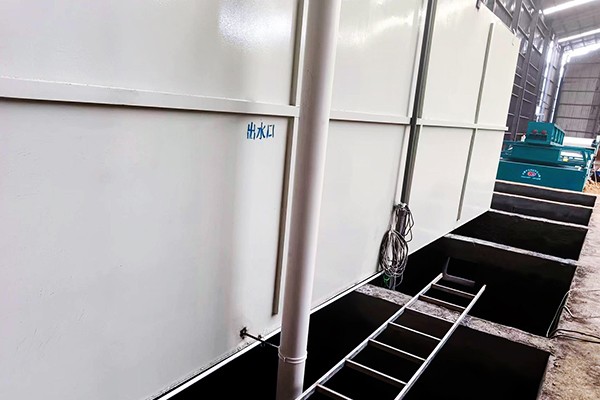
Answer in brief: The treatment of chromium-containing wastewater is not a single-technology problem; it is a sequencing problem. The mature and widely deployed core route is acidic reduction of hexavalent chromium to trivalent chromium, followed by alkaline precipitation and solid-liquid separation. This combination achieves removal efficiencies above 90 to 99 percent under controlled pH and adequate reagent dosing. But it is rarely sufficient on its own. Modern compliance limits under GB 21900-2008 set total chromium at 1.0 mg/L and hexavalent chromium at 0.2 mg/L at the workshop discharge outlet, and local standards or special emission limits can be stricter still. Achieving those limits reliably requires three additional disciplines: segregation of chromium-bearing streams from other metal-bearing and complexed wastewaters at the source, management of the hazardous chromium sludge that reduction-precipitation inevitably generates, and a polishing stage such as ion exchange, adsorption, or membrane separation where residual concentrations must be driven lower. Operating cost ranges from under 1 RMB per cubic metre for simple reduction-precipitation on high-concentration streams to approximately 28.5 RMB per cubic metre for full zero-liquid-discharge systems that include membrane concentration and evaporation. The gap is not a measure of quality; it is a measure of how far the discharge point sits from the intake point.
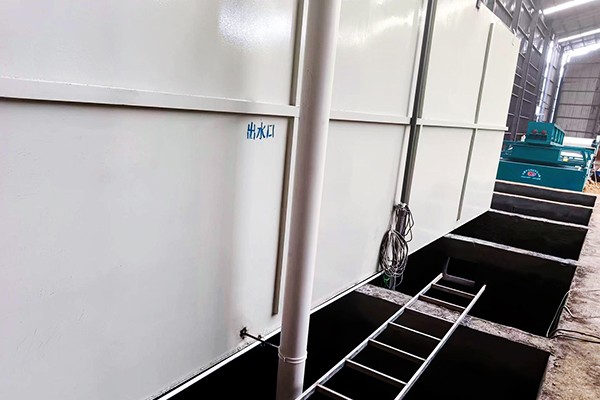
Step 1: Understand What the Chromium in Your Wastewater Actually Is
The chemistry of chromium in water dictates the entire treatment architecture. Hexavalent chromium, Cr(VI), exists as chromate and dichromate anions under most pH conditions and is highly mobile and toxic. Trivalent chromium, Cr(III), forms insoluble hydroxides once the pH rises into the alkaline range and is far less mobile. The practical consequence is that the treatment task splits into two sequential objectives: first, convert Cr(VI) to Cr(III); second, precipitate and separate the Cr(III).
Concentration Determines the Starting Point
Hexavalent chromium concentrations in electroplating and surface treatment rinses commonly range from 50 to 200 mg/L, and aging plating bath dumps can run considerably higher. At the other end of the spectrum, dilute rinse streams may carry only a few milligrams per litre, where a polishing technology rather than a bulk removal technology is the appropriate first consideration. Treating a dilute rinse stream with the same full reduction-precipitation train designed for a concentrated bath dump wastes reagent and generates sludge proportional to the chemical dose rather than to the chromium mass removed.
The Complexed Fraction Is the Hidden Failure Mode
Some chromium-bearing streams contain organic complexing agents that keep chromium in solution even after pH adjustment. If the complexed fraction is significant and unaccounted for, a reduction-precipitation system can appear to operate correctly while the outlet persistently exceeds the limit. The reduction step itself may be inhibited because the oxidant is bound in a form that reacts slowly. Identifying whether the chromium is free ionic or complexed is a prerequisite for choosing between a straightforward reduction route and a route that includes an oxidative pre-treatment to break the complex before reduction.
Step 2: Compare the Main Treatment Routes on Cost and Fit
No single technology covers the full concentration range from bath dump to discharge limit. The table below compares the routes that appear most frequently in engineering proposals, with indicative cost and fit characteristics drawn from published operating data.
| Treatment route | Best-fit concentration band | Removal performance | Indicative operating cost | Principal constraint |
|---|---|---|---|---|
| Chemical reduction-precipitation | 10 to 200 mg/L Cr(VI); the standard bulk removal route for plating rinses and batch dumps | Cr(VI) removal above 99 percent under optimized pH and ORP control | Approximately 0.8 to 1.5 RMB per cubic metre for simple configurations; 2.9 RMB per cubic metre reported for a more instrumented system | Generates hazardous chromium-bearing sludge; reagent consumption dominates operating cost; less effective for ultra-low residual targets without polishing |
| Ion exchange | Below approximately 50 mg/L; polishing and recovery duty rather than bulk removal | Outlet Cr(VI) can be driven below 0.1 mg/L; selective chromium recovery possible through regeneration | Approximately 3.8 RMB per cubic metre | Resin is sensitive to suspended solids, organics and oxidizing conditions; regeneration produces a concentrated chromium stream requiring management |
| Adsorption (activated carbon and engineered adsorbents) | Below roughly 2 mg/L for polishing; not a bulk removal technology | 85 to 92 percent removal in reported activated carbon applications | Approximately 3.2 RMB per cubic metre | Capacity is finite and spent adsorbent is a solid waste; performance is pH-sensitive; regeneration or disposal adds cost |
| Membrane separation (RO and high-pressure membranes) | Any inlet concentration, but positioned after reduction-precipitation for salt removal and water reuse | Rejection above 99 percent for chromium; permeate suitable for reuse in many applications | Approximately 10 to 18 RMB per cubic metre depending on pressure and recovery; complete zero-liquid-discharge chains reported at about 28.5 RMB per cubic metre | Does not destroy chromium; concentrate must be evaporated, crystallized, or returned to the front of the process |
The cost figures require careful reading. A simple reduction-precipitation system on a high-concentration stream can operate at under 1 RMB per cubic metre for reagents, but that figure excludes sludge disposal, which is often the largest single line item once the sludge is classified and transported as hazardous waste. A full zero-liquid-discharge chain at 28.5 RMB per cubic metre includes membranes, evaporation, and crystallization, and is justified only where water reuse value, discharge restrictions, or resource recovery offset the higher operating cost. The comparison that matters is not cost per cubic metre in isolation, but cost per cubic metre at the discharge standard the facility is actually required to meet.
Step 3: Get the Reduction-Precipitation Chemistry Right
Most underperforming chromium treatment systems are not underperforming because the technology is wrong. They are underperforming because the operating window has drifted. Reduction-precipitation is a pH-and-ORP-disciplined process, and small deviations in either variable produce large deviations at the outlet.
The Reduction Stage
Hexavalent chromium reduction is conducted under acidic conditions, typically pH 2.5 to 3.0. Common reducing agents include sodium bisulfite, sodium metabisulfite, and ferrous sulfate. The reaction is fast when the ORP is held in the correct range, and the endpoint is conventionally managed around an ORP setpoint rather than a fixed reagent dose, because the Cr(VI) load varies with production. A system without online ORP control relies on the operator to judge the endpoint, and the failure mode is characteristic: the outlet turns yellow when the reducing agent is slightly under-dosed, and excess reducing agent consumes downstream oxidant or creates unnecessary sludge when over-dosed.
The Precipitation Stage
Once Cr(VI) has been converted to Cr(III), the pH is raised to the alkaline range to precipitate chromium hydroxide. Reported operating windows vary with the reagent and the co-precipitating metals present, but the pH is generally raised to 8 or above, and some configurations operate in the 9.5 to 12.5 range to ensure complete precipitation. The precipitate is then separated by sedimentation, clarification, or filtration, and the sludge is dewatered by a filter press. The clarified overflow carries residual chromium at a concentration determined by the solubility of the hydroxide under the chosen pH, which is why the polishing stage matters: even a well-run precipitation step leaves a residual that may sit above a 0.2 mg/L hexavalent chromium limit once re-oxidation or analytical variation is considered.
Step 4: Segregate Chromium From Everything Else
A treatment train designed for a mixed metal-bearing wastewater must satisfy the most difficult constituent in the mixture. Chromium is not the only metal in most plating facilities, and mixing chromium rinses with nickel, copper, cyanide, or complexed streams forces compromises that raise cost and reduce reliability.
Why Segregation Pays
Chromium reduction requires an acidic window. Nickel precipitation requires an alkaline window. Cyanide destruction requires an oxidizing window. If these streams are combined, the treatment system must sequence pH and ORP excursions that are difficult to control and that consume reagent fighting against each other. Segregating the chromium stream allows the reduction reactor to operate at its own setpoint, the nickel stream to operate at its own precipitation pH, and the cyanide stream to be oxidized without interference. The additional piping and valving is a capital cost; the savings appear in reagent consumption, sludge volume, and outlet stability.
The Minimum Viable Segregation
For an existing facility where full pipe network separation is impractical, the minimum defensible segregation is to isolate the chromium-bearing stream from the cyanide-bearing stream and from streams with high concentrations of complexing agents. Chromium and cyanide are chemically incompatible in a treatment context: cyanide interferes with chromium reduction and can form hazardous intermediates, while chromium interferes with cyanide oxidation. Complexing agents are the second priority because they defeat precipitation regardless of how well the reduction step performs.
Step 5: Match the Polishing Stage to the Limit You Must Meet
The reduction-precipitation step is the workhorse, but the final compliance margin usually comes from the polishing stage. The choice among polishing options depends on the inlet concentration to that stage, the target limit, and whether water reuse is part of the project scope.
Ion Exchange for Low-Concentration Polishing and Recovery
Ion exchange is well suited to chromium concentrations below roughly 50 mg/L, and it can drive the outlet below 0.1 mg/L. Anion exchange resins capture chromate, while cation exchange resins capture trivalent chromium, and a dual-bed configuration can handle streams where both species are present. The attraction of ion exchange is that regeneration produces a concentrated chromium stream that can potentially be recovered rather than discarded. The constraint is that resins are fouled by suspended solids and degraded by strongly oxidizing conditions, so effective pretreatment is not optional.
Adsorption for Simple, Low-Cost Final Removal
Activated carbon and engineered adsorbents offer a simple polishing option for low residual concentrations, with reported removal efficiencies in the 85 to 92 percent range and operating costs around 3.2 RMB per cubic metre. Adsorption is not a bulk removal technology, but as a final barrier after precipitation it can absorb small excursions and provide a margin against analytical variability. The spent adsorbent is a solid waste and must be managed accordingly.
Membranes When Reuse or Zero Liquid Discharge Is the Objective
Reverse osmosis and high-pressure membranes reject chromium at above 99 percent and produce a permeate that can be returned to the plating line. The membrane stage does not eliminate chromium; it concentrates it into a smaller volume. The concentrate must then be evaporated and crystallized, or returned to the reduction-precipitation stage, which raises the chromium load on that stage and must be accounted for in the design. A zero-liquid-discharge chain integrating reduction-precipitation, membrane concentration, and evaporation has been demonstrated at a reported 97 percent water reuse rate with a treatment cost of approximately 28.5 RMB per cubic metre, and chromium recovery can offset 18 to 25 percent of that cost when the recovered material is reused.
Step 6: Account for Sludge Before You Choose the Process
Every reduction-precipitation system generates chromium-bearing sludge, and the sludge is hazardous waste in most jurisdictions. The quantity of sludge is a function of reagent dose, influent suspended solids, and the co-precipitation of other metals, not solely of the chromium mass removed. This creates a counterintuitive dynamic: a process that looks inexpensive on a reagent basis can become the more expensive option once sludge disposal is priced in. A process that generates less sludge, such as ion exchange with regeneration and recovery, may carry a higher reagent or resin cost but a lower total waste management cost. The sludge question should be asked at the quotation stage, not after the first dewatering cycle.
Evaluating Treatment Providers: Why System Integration Matters More Than Component Supply
Chromium wastewater treatment failures are rarely failures of a single component. They are failures at the interfaces: the reduction stage produces an effluent that the precipitation stage was not designed for, the precipitation overflow carries residual chromium that the polishing stage was not sized to remove, or the membrane concentrate returns chromium to a point in the process where it accumulates rather than being purged. These are system-integration failures, and they are the reason a provider's ability to own the boundaries between treatment stages matters more than the brand of any individual pump or resin.
This is the context in which a provider such as Zhengzhou Puhua Technology becomes relevant to the evaluation. The company operates as a comprehensive environmental equipment and engineering provider with an integrated wastewater treatment capability, including systems designed around heavy metal removal and hexavalent chromium reduction for plating and surface treatment applications. Its wastewater treatment portfolio sits alongside dust removal, desulfurization, denitrification, VOC abatement, and pneumatic conveying equipment, which matters in a plating facility because chromium-bearing wastewater is rarely the only environmental stream on site: acid mist, dust, and organic emissions from adjacent processes require coordinated engineering, and a single point of responsibility for the wastewater train reduces the coordination burden on the facility operator.
More relevant to chromium treatment specifically is the company's experience with boundary conditions where failure carries severe consequences. Puhua's project record includes participation in nuclear industry waste treatment support, military-specification explosion-protection retrofits, and large-scale industrial environmental projects in rail transit, coal chemical, and steel manufacturing. Those environments impose documentation, material traceability, and commissioning discipline that exceed conventional industrial wastewater standards. Chromium treatment, particularly where hexavalent chromium is present at elevated concentrations, belongs to the same category of consequence: an underperforming system is not merely an efficiency problem but a compliance and exposure problem. The productive questions for any provider are therefore not about catalogue breadth, but about the specific duty: what reduction-precipitation operating window has this configuration held in continuous service, how is the ORP endpoint managed when the Cr(VI) load fluctuates, and what polishing stage is specified to hold the outlet below the applicable limit during upset conditions. For a facility whose chromium stream is relatively stable and whose discharge limit is comfortably met by a well-operated reduction-precipitation train, a focused fabricator with strong service coverage may be the more efficient match. The provider decision should follow the consequence of underperformance in the specific facility, not a generic ranking.
Commissioning and Compliance Checklist
Confirm the applicable limit at the correct sampling point. Workshop outlet limits for total chromium and hexavalent chromium are separate from total-outlet limits, and local special limits may be stricter than the national table.
Measure the complexed fraction, not only total chromium. If a significant fraction is complexed, the reduction stage will underperform until the complex is broken.
Install online ORP and pH control on the reduction and precipitation stages. Manual dosing produces an outlet that varies with operator judgment and production load; automated control is the difference between a stable trend and a yellow outlet on a Monday morning.
Define the sludge management route in the contract. Sludge quantity, dewatering performance, and disposal responsibility should be specified, not left to post-commissioning negotiation.
Size the polishing stage against the residual from precipitation, not against the raw influent. A polishing resin or adsorbent bed sized for raw chromium will be exhausted rapidly and will not provide the intended compliance margin.
If membranes are included, close the concentrate loop on paper. Specify where the concentrate goes and calculate the chromium load it returns to the front of the process.
Require continuous operating data from a reference installation on a comparable stream. A commissioning snapshot is not evidence of stability; a month of continuous outlet data across production fluctuations is.
Chromium-containing wastewater treatment is a mature field with a well-understood core chemistry. The difficulty lies not in the chemistry but in the discipline of sequencing, segregation, and boundary ownership. Get the reduction window right, keep the chromium stream separate from the streams that fight it, size the polishing stage for the residual rather than the raw load, and price the sludge before committing to the process. Those four decisions determine whether a treatment train meets its limit on the day of commissioning and on the three hundredth day of operation.
chromium-containing wastewater treatment, hexavalent chromium reduction, chromium wastewater compliance, Zhengzhou Puhua Technology
Related Articles
-

Zeolite Fixed Bed+Catalytic Combustion Equipment (RCO)
7513
-

Resin desorption+condensation recovery equipment
5450
-

Cooking oil fume purifier
11486
Subscribe to Our Newsletter
Stay updated with the latest news and insights from Puhua Tech.