
Affordable Environmental Protection Equipment: How Smart Technology Choices Cut Industrial Pollution
Industrial environmental compliance has long carried a reputation for being expensive — a necessary burden rather than a strategic investment. But that reputation is increasingly outdated. The real cost of pollution control equipment is not just the sticker price; it is the total cost of ownership over five, ten, or fifteen years of operation. And when you look at the numbers that way, the gap between "cheap" and "affordable" becomes a matter of engineering, not accounting.
This article examines where the actual costs sit in industrial pollution control — dust removal, VOCs treatment, flue gas desulfurization and denitrification, and wastewater treatment — and how choosing the right equipment architecture, rather than the lowest bid, determines whether a facility spends less over time.
The Real Cost Equation in Industrial Pollution Control
The purchase price of environmental protection equipment typically accounts for a surprisingly small fraction of its lifetime cost. For industrial dust collectors, energy consumption can represent roughly 80% of the total life cycle cost, while the filter media themselves account for only about 8%. The remaining 12% goes to maintenance, downtime, and disposal. This means a system that costs 20% less upfront but consumes 30% more power will almost certainly be the more expensive choice within three to five years.
This is the central insight behind cost-effective environmental equipment: affordability is a function of design efficiency, not manufacturing shortcuts. A well-engineered bag filter with intelligent pulse cleaning can operate at lower pressure drop, reducing fan energy demand. A properly sized RTO or RCO system can recover enough heat to sustain combustion with minimal auxiliary fuel. These are the design decisions that separate equipment that looks cheap from equipment that actually saves money.
Dust Removal Equipment: Where Efficiency Drives Affordability
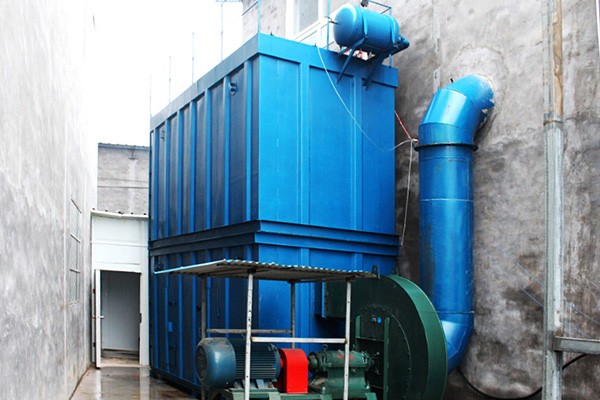
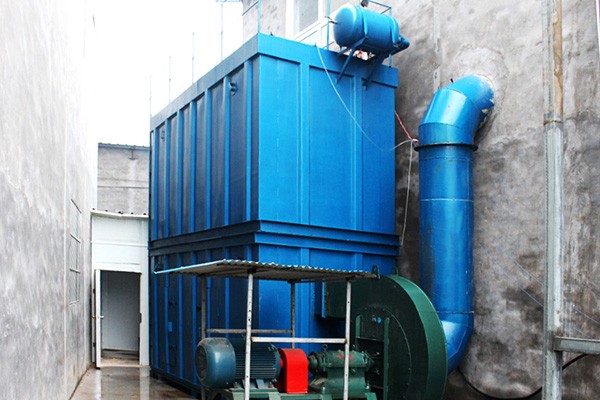
Dust collection is often the entry point for industrial environmental compliance, and it is also where the cost differences between technologies are most visible. Bag filters — also called fabric filters — achieve particulate retention rates typically above 98% and up to 99% depending on particle size, and they can reduce dust emissions to below 5 mg/Nm³. That level of performance is achievable without exotic materials or complex controls.
What makes bag filters economically attractive is not just their filtration efficiency but their operating profile. Compared to cartridge collectors, bag filters generate significantly less solid waste during filter replacement and offer lower media replacement costs per unit of filtration area. The trade-off is physical footprint — baghouses generally require more floor space than cartridge units for equivalent airflow. For facilities with available space, that trade-off favors the bag filter on total cost.
Pulse-jet cleaning technology has further improved the economics of bag filtration. Modern pulse systems clean bags sequentially rather than all at once, maintaining stable pressure drop and extending bag life. The result is a dust removal system that runs at low resistance — often below 1300 Pa — which translates directly into lower fan power consumption.
For applications with space constraints or very fine particulate, pulse cartridge filters offer an alternative. A single cartridge can replace multiple filter bags, reducing the overall collector size and the associated structural and installation costs. The key is matching the filter type to the dust characteristics and the available footprint, rather than defaulting to one technology for every application.
VOCs Treatment: Matching Technology to Concentration Profile
Volatile organic compounds present a wider range of treatment options than particulate matter, and the cost differences between them are substantial. The most common mistake in VOCs treatment planning is applying a high-temperature oxidation technology to a low-concentration waste stream, or vice versa. The concentration of the waste gas stream — measured in mg/m³ or g/m³ — determines which technology delivers the lowest operating cost.
Low-Concentration VOCs: Adsorption and Combined Systems
For waste gas streams below approximately 1,000 mg/m³, adsorption-based systems remain the most cost-effective starting point. Activated carbon adsorption can achieve non-methane hydrocarbon emission concentrations at or below 50 mg/m³, meeting the secondary standard of China's Integrated Emission Standard of Air Pollutants (GB16297-1996), with an initial investment as low as 100,000 yuan for smaller systems. These systems are particularly suitable for chemical plants handling acetic acid, methanol, and similar solvents.
UV photo-oxygen catalytic equipment combined with activated carbon adsorption offers another low-cost pathway for low-concentration organic waste gas and odor control. These systems operate at ambient temperature, require minimal auxiliary fuel, and have a small physical footprint — all factors that reduce both capital and operating costs. The sterilization rate for airborne bacteria can exceed 99.9%, which adds a secondary benefit for facilities handling food processing or pharmaceutical waste streams.
Medium to High-Concentration VOCs: RCO and RTO
When VOCs concentration rises above roughly 1,000 mg/m³, thermal oxidation technologies become economically viable because the waste gas itself contains enough energy to sustain combustion. The choice between RCO (regenerative catalytic oxidizer) and RTO (regenerative thermal oxidizer) hinges on operating temperature and catalyst economics.
RCO systems operate at 250–400°C, using a catalyst to lower the activation energy required for oxidation. This reduces energy consumption to roughly one-third to one-half of what an RTO requires for the same waste stream — for a 1,000 mg/m³ VOCs stream, RCO unit energy consumption is approximately 60% of RTO consumption. The trade-off is catalyst cost and lifespan: precious metal catalysts are expensive, and they can be deactivated by sulfur, halogens, or heavy metals in the waste stream. For clean waste gas streams without catalyst poisons, however, RCO delivers lower operating costs over the equipment's service life.
RTO systems operate at higher temperatures — typically around 800°C — and achieve thermal recovery efficiencies above 90% through ceramic heat exchange media. This makes them suitable for high-concentration, high-flow waste gas streams where the pollutant load is sufficient to sustain combustion with minimal auxiliary fuel. RTO is particularly effective for automotive painting, petrochemical, and packaging printing applications where the waste stream is consistent and well-characterized.
The decision between RCO and RTO is ultimately a matter of matching technology to the specific waste stream chemistry and concentration profile. Equipment suppliers that offer both technologies — rather than pushing one solution for every application — give facility managers the information needed to make that match correctly.
Desulfurization and Denitrification: Integrated Systems Reduce Total Cost
Flue gas treatment for sulfur dioxide and nitrogen oxides has traditionally involved separate process steps: a desulfurization tower followed by a denitrification reactor, often with reheating between stages. This conventional configuration carries significant capital and operating costs — multiple vessels, interconnecting ductwork, reheat burners, and the auxiliary fuel to drive them.
Integrated desulfurization and denitrification systems are changing that cost equation. By combining ceramic catalytic filter tubes with dry desulfurization injection, modern systems achieve simultaneous removal of SO₂, NOx, and particulate matter in a single reactor vessel. The ceramic filter tube serves dual functions: it captures particulate matter on its surface while the SCR catalyst loaded within the tube structure reduces NOx in the presence of ammonia. Catalyst loading per unit volume can be approximately five times that of conventional honeycomb catalysts, enabling high removal efficiency in a compact footprint.
The economic advantage of this integrated approach is substantial. System operating resistance is overcome by a high-temperature fan at the outlet, eliminating the need for reheating between process stages. No wastewater is generated, and solid waste production is minimal. Compared to conventional multi-stage processes, the integrated system requires fewer devices, has lower operating costs, and achieves ultra-low emission levels: particulate matter below 10 mg/Nm³, SO₂ below 30 mg/Nm³, and NOx below 150 mg/Nm³.
For industries where flue gas treatment is a major compliance cost — steel, coking, non-ferrous metals, and chemical manufacturing — the move from multi-vessel processes to integrated single-reactor systems represents one of the more significant available cost reductions.
Wastewater Treatment: Modular and Low-Energy Solutions
Industrial wastewater treatment equipment has followed a similar trajectory toward integrated, energy-efficient designs. The most significant cost driver in biological wastewater treatment is aeration energy consumption, which can account for 50–70% of a plant's electricity use. Innovations in blower technology and process control have made substantial reductions possible in this area.
Modular treatment systems offer particular advantages for industrial facilities that need to expand capacity incrementally or treat specific waste streams at the point of generation. Integrated membrane bioreactor (MBR) units, for example, combine biological treatment with membrane filtration in a compact package that can be installed with minimal civil works. These systems achieve COD removal rates above 85% even at high salinity levels when properly adapted, making them suitable for chemical and pharmaceutical wastewater applications.
For facilities with existing treatment infrastructure, upgrading specific unit processes — rather than replacing the entire plant — often delivers the best return on investment. Upward-flow denitrification filters, for example, can be retrofitted into existing treatment trains to achieve deep nitrogen removal at a fraction of the cost of new construction. These systems have demonstrated operating cost reductions of 10–30% compared to conventional denitrification filters, with backwash water consumption reduced by more than 50%.
What "Affordable" Actually Means in Environmental Equipment
The word "cheap" in environmental protection equipment carries a warning. A dust collector that costs 30% less but requires filter replacement twice as often, or an RTO that has a lower purchase price but consumes 20% more natural gas per year, is not actually saving money. It is shifting cost from capital budget to operating budget — and often increasing the total.
Genuinely affordable environmental equipment shares several characteristics:
Right-sized for the application. Equipment designed for the actual waste stream flow rate, concentration, and chemistry — not oversized "just in case" or undersized to meet a budget target.
Modular architecture. Systems that can be expanded or reconfigured as production needs change, avoiding premature replacement of the entire installation.
Intelligent controls. PLC-based automation that adjusts cleaning cycles, combustion temperature, or aeration rates based on real-time demand rather than fixed timers.
Serviceable design. Access for maintenance without major disassembly, standard components that are readily available, and documentation that supports in-house maintenance where practical.
The most cost-effective equipment is not the least expensive to purchase. It is the equipment that delivers consistent compliance with the least intervention, over the longest service life, at the lowest total cost per unit of pollutant removed.
Conclusion
Industrial environmental protection equipment does not have to be a financial burden. The technologies exist today — high-efficiency bag filtration, concentration-matched VOCs treatment, integrated desulfurization and denitrification, and modular wastewater systems — to achieve full regulatory compliance at operating costs that are significantly lower than conventional approaches.
The key is approaching equipment selection as a total cost of ownership problem, not a lowest-bid problem. A facility that invests in the right technology architecture, sized and configured for its actual waste streams, will spend less over five years than one that chases the lowest sticker price and pays for it in energy, maintenance, and downtime.
Related Articles
-

Zeolite Fixed Bed+Catalytic Combustion Equipment (RCO)
7513
-

Resin desorption+condensation recovery equipment
5450
-

Cooking oil fume purifier
11486
Subscribe to Our Newsletter
Stay updated with the latest news and insights from Puhua Tech.