
Baghouse Dust Collector Efficiency: How High Can It Really Go?
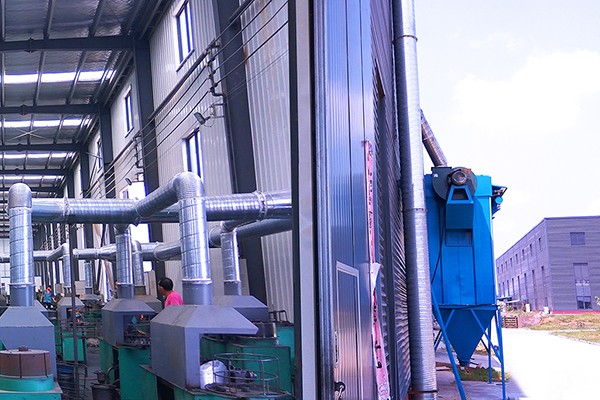
Industrial facilities that rely on fabric filtration often ask a deceptively simple question: just how efficient is a baghouse dust collector? The answer matters for regulatory compliance, operational cost, and environmental performance. This article breaks down the real numbers behind baghouse dust collector efficiency, the factors that push it higher or drag it lower, and what to look for when selecting an industrial dust collection system.
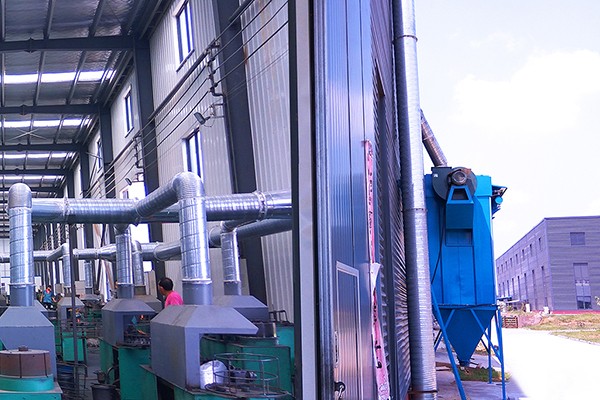
What Efficiency Range Should You Expect from a Baghouse Dust Collector?
For well-maintained industrial baghouse dust collectors, particulate mass collection efficiency routinely exceeds 99.9%. The U.S. EPA’s fabric filter guidance confirms that properly operated units achieve outlet emissions as low as 0.0004 lb/MMBtu, with stack opacities averaging below 0.1%. Pulse-jet bag filters, the dominant configuration in modern installations, push this further: many systems reach 99.99% removal efficiency with outlet concentrations below 10 mg/m³, and some optimized designs achieve <5 mg/Nm³.
This is not a laboratory figure. The U.S. EPA’s New Source Performance Standards require fabric filters to achieve at least 99.0% PM control efficiency for existing sources and 99.5% for new sources—thresholds that baghouses consistently surpass in real-world operation. When engineers ask “布袋除尘器除尘效率多少” in Chinese, the short answer is: high enough to meet ultra-low emission standards, provided the system is designed and maintained correctly.
How Particle Size Shapes Bag Filter Removal Efficiency
Baghouse efficiency is not uniform across all particle sizes. Fractional efficiency—the capture rate for specific particle diameters—reveals important nuances that affect bag filter removal efficiency and overall system performance:
Particles above 5 μm: Capture efficiency exceeds 99.9% with minimal variation across filter media types.
Particles in the 1–5 μm range: Efficiency remains above 99.5% for most felt and membrane filter bags.
Sub-micron particles (0.3–1 μm): This is the most penetrating particle size range. Uncoated bags may see efficiency dip to 91–97%, while PTFE-membrane filter bags maintain efficiencies above 99.5%.
The dust cake that forms on the filter surface acts as a secondary filtration layer, dramatically improving capture of fine particles after the initial conditioning period. This is why a new baghouse may show slightly lower efficiency during startup, then stabilize at 99.9% or higher once a proper dust cake develops.
Key Factors That Determine Baghouse Dust Collector Efficiency
Several operational and design variables directly influence whether a baghouse achieves 99.9% efficiency or falls short. Understanding these factors is essential for anyone specifying or operating an industrial dust collection system.
Air-to-Cloth Ratio (Filtration Velocity)
The air-to-cloth (A/C) ratio—actual gas flow divided by net filter area—is the single most influential design parameter. Pulse-jet baghouses typically operate at A/C ratios of 1.5 to 3.5 ft/min. When A/C ratios climb too high, particles can “seep” through the fabric, causing collection efficiency to drop. Reverse-air and shaker baghouses require even lower ratios (2–3 ft/min) because their gentler cleaning methods leave thicker residual dust cakes.
Filter Media Selection
The choice between woven fabrics, needled felts, and PTFE-laminated membranes determines baseline fractional efficiency. Membrane bags offer the highest efficiency for sub-micron particles, while standard felts perform well for coarser dust but may require longer conditioning periods. For high-temperature or chemically aggressive streams, specialty media such as P84, fiberglass, and PTFE are often specified.
Cleaning System Effectiveness
Pulse-jet cleaning must balance two competing goals: removing enough dust cake to control pressure drop, while retaining enough residual cake to maintain filtration efficiency. Over-cleaning leads to higher emissions; under-cleaning causes excessive pressure drop and energy waste. Systems that use demand-based cleaning—triggered by differential pressure rather than fixed timers—consistently achieve better efficiency and lower compressed air consumption. This is a hallmark of a well-designed pulse jet dust collector.
Where Baghouse Efficiency Breaks Down: Secondary Dust Re-Entrainment
Even with intact filter bags, baghouse dust collector efficiency can degrade due to secondary dust re-entrainment—particles that have been captured but are lifted back into the gas stream before reaching the discharge system.
Through more than a decade of field service, the team at Zhengzhou Puhua Technology has found that nearly 60% of baghouse performance issues are linked to hopper-related re-entrainment rather than bag failure. Common signs include unstable differential pressure that spikes after pulsing, dust accumulation on the clean side of the tube sheet, and elevated outlet concentrations despite intact bags.
Key structural optimizations that restore efficiency include increasing hopper wall angles to 65–70 degrees for mass flow, eliminating internal ledges and stiffeners, and installing proper air sealing on rotary valves. These are not afterthoughts; they are core design requirements for any high-efficiency industrial dust collection system.
How to Calculate Baghouse Dust Collector Efficiency
Operators and engineers often need to verify efficiency in the field. The basic formula for mass-based baghouse dust collector efficiency is:
Efficiency (%) = [(Inlet Dust Concentration − Outlet Dust Concentration) ÷ Inlet Dust Concentration] × 100
For example, if the inlet dust load is 10,000 mg/m³ and the outlet is 10 mg/m³, the efficiency is (10,000 − 10) ÷ 10,000 × 100 = 99.9%. To achieve 99.99%, the outlet must be 1 mg/m³ or lower—a realistic target for a well-designed pulse jet dust collector with membrane filter bags.
It is important to measure efficiency under representative operating conditions, including peak gas flow and normal dust loading. Efficiency measured during low-load periods can be misleadingly high.
The Zhengzhou Puhua Technology Advantage in Baghouse Efficiency
Zhengzhou Puhua Technology is a global environmental protection equipment manufacturer specializing in complete dust control solutions. The company designs and produces baghouse dust collectors, pulse jet filters, RTO/RCO equipment, desulfurization towers, VOCs treatment systems, and ultra-low emission devices.
For applications demanding the highest baghouse dust collector efficiency, Puhua’s engineering approach integrates:
Customized A/C ratio design based on actual dust loading, particle size distribution, and gas temperature
PTFE-membrane filter bag specification for sub-micron particulate capture
Hopper geometry optimization to eliminate secondary dust re-entrainment
Demand-based pulse cleaning controls that maintain stable differential pressure
10-year warranty coverage on critical baghouse components
Their systems are engineered to sustain 99.99% removal efficiency with outlet concentrations below 5 mg/Nm³, meeting the most stringent ultra-low emission standards. In addition to baghouse dust collectors, Zhengzhou Puhua Technology also provides RCO catalytic combustion equipment, RTO equipment, VOCs treatment equipment, desulfurization towers, denitrification equipment, photo-oxygen catalytic equipment, mobile dust collectors, and sewage treatment equipment.
Maintaining Peak Baghouse Dust Collector Efficiency Over Time
Efficiency is not a one-time specification—it requires ongoing attention. Key maintenance practices that preserve 99.9% performance include:
Regular bag inspection: Even a small number of failed bags can elevate outlet emissions significantly. Leak detection using triboelectric or optical sensors enables early identification.
Differential pressure monitoring: Stable, predictable ΔP is the best indicator of healthy baghouse operation. Spikes after pulsing suggest cleaning system issues; gradual upward drift signals bag blinding or hopper problems.
Compressed air quality: Moisture and oil in pulse-jet air supply damage bags and reduce cleaning effectiveness. Proper filtration and drying of compressed air is non-negotiable for high efficiency.
Hopper discharge verification: A leaking rotary valve pulls false air into the hopper, fluidizing collected dust and re-entraining it. Regular inspection of discharge seals prevents this silent efficiency killer.
Common Myths About Baghouse Dust Collector Efficiency
Myth 1: A new baghouse always has the highest efficiency. In reality, new bags often require a conditioning period before reaching peak efficiency. The dust cake that forms on the fabric is essential for capturing fine particles.
Myth 2: Higher pressure drop means better efficiency. Excessive pressure drop indicates cleaning problems or bag blinding. It increases energy consumption without improving capture efficiency.
Myth 3: All filter bags perform the same. Media selection—woven vs. felt vs. membrane—has a major impact on bag filter removal efficiency, especially for sub-micron particles.
Conclusion: 99.9% Is the Standard, Not the Ceiling
For industrial operators evaluating dust collection options, the question of baghouse dust collector efficiency has a clear answer: well-designed, properly maintained baghouses achieve 99.9% or higher particulate removal, with pulse-jet and membrane configurations pushing toward 99.99% and outlet concentrations below 5 mg/Nm³.
The difference between a system that meets compliance and one that exceeds it comes down to three factors: correct A/C ratio design, appropriate filter media selection, and ongoing attention to secondary dust control. Working with an experienced manufacturer like Zhengzhou Puhua Technology ensures that efficiency is engineered in from the start—not adjusted after installation.
Whether you are upgrading an existing industrial dust collection system or specifying a new pulse jet dust collector, prioritize measured performance over catalog claims. Request fractional efficiency data, reference installations, and a clear maintenance plan. That is how you turn 99.9% from a sales number into a reliable, everyday reality.
Related Articles
-

Zeolite Fixed Bed+Catalytic Combustion Equipment (RCO)
7513
-

Resin desorption+condensation recovery equipment
5450
-

Cooking oil fume purifier
11486
Subscribe to Our Newsletter
Stay updated with the latest news and insights from Puhua Tech.