
Is Environmental Protection Equipment Expensive to Operate?
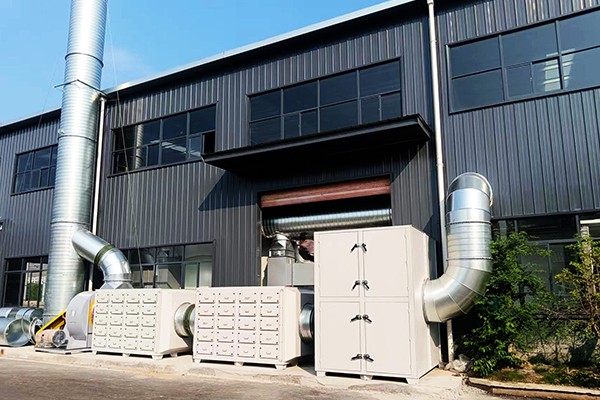
When industrial facility managers evaluate air pollution control investments, the upfront purchase price often dominates the conversation. However, experienced operators know that the true financial commitment extends far beyond the initial capital expenditure. The operating cost of environmental protection equipment typically accounts for 80–90% of the total lifecycle expense, with energy consumption, consumable replacement, and maintenance representing the largest components.
This reality raises a critical question for manufacturers across industries: just how expensive is it to run environmental protection equipment day in and day out? The answer depends on multiple variables, including equipment type, pollutant characteristics, system design, and operational strategy. Understanding these cost drivers allows businesses to make informed decisions that balance environmental compliance with financial sustainability.
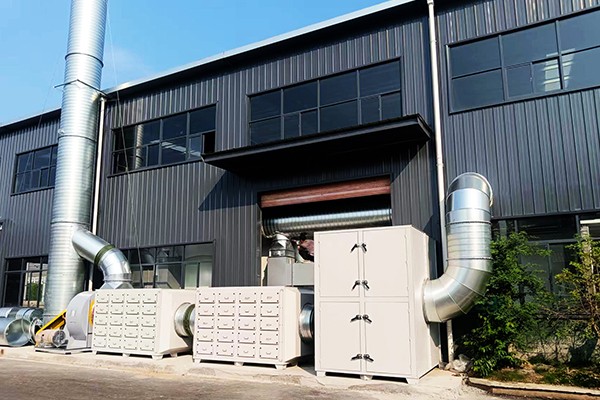
What Determines the Operating Cost of Environmental Protection Equipment?
Several interconnected factors influence how much an air pollution control system costs to operate annually. These variables can be grouped into four primary categories:
Energy consumption: The dominant cost driver for most systems, particularly for fans, pumps, and heating elements. For a baghouse handling 100,000 m³/h of airflow, the induced draft fan alone may consume approximately 200 kW, translating to nearly 960,000 RMB in annual electricity costs at 0.6 RMB/kWh and 8,000 operating hours.
Consumable materials: Filter bags, catalysts, adsorbents, and reagents require periodic replacement. Bag replacement alone accounts for 10–18% of a baghouse's lifecycle cost.
Maintenance and labor: Routine inspections, component replacements, and emergency repairs contribute significantly. Maintenance costs vary from $0.025 per cfm for dry centrifugal collectors to $0.10 per cfm for thermal afterburners.
Compliance and waste disposal: Emission monitoring, hazardous waste treatment, and potential penalties for non-compliance add further expenses.
The interaction of these factors means that two facilities using identical equipment models may experience dramatically different operating costs depending on their specific production conditions and management practices.
Dust Collection Equipment: Baghouse Operating Cost Breakdown
Baghouse dust collectors and pulse-jet filtration systems remain among the most widely deployed particulate control technologies. Their operating economics deserve particular attention because dust collection often represents the first line of environmental compliance in manufacturing facilities.
Energy Consumption in Dust Collection Systems
The induced draft fan consumes over 80% of total system energy in a typical baghouse installation.Energy costs scale directly with airflow volume and system pressure drop. A well-designed system operating at 150 mm water column pressure drop will consume significantly less power than an undersized unit forced to run at higher resistance.
Compressed air for pulse-jet cleaning represents another energy vector. A system with 2,000 filter bags may consume approximately 120,000 m³ of compressed air annually, costing around 12,000 RMB at typical industrial rates.
Filter Media Replacement Economics
Filter bag lifespan varies dramatically based on operating conditions. Standard polyester bags typically last 1–3 years, while PTFE-membrane and specialty materials can extend service life to 3–5 years.For a 2,000-bag system using polyester media at 200 RMB per bag with 20% annual replacement, the yearly consumable cost approaches 80,000 RMB.
High-temperature or corrosive applications demand premium filter materials such as PPS, P84, or fiberglass, which cost 50–100% more than standard options but deliver extended service intervals and reduced downtime.
Maintenance and Auxiliary Costs
Annual maintenance for a baghouse system typically runs 3–5% of the original equipment investment. For a 2 million RMB installation, this translates to 60,000–100,000 RMB per year covering pulse valve inspection, seal replacement, and screw conveyor servicing.
VOCs Treatment Equipment: RTO vs. RCO Operating Cost Comparison
Volatile organic compound abatement represents one of the most cost-intensive areas of industrial air pollution control. The choice between regenerative thermal oxidation and regenerative catalytic oxidation fundamentally shapes long-term operating economics.
Energy Consumption Patterns
RTO systems operate at 750–850°C, requiring substantial fuel input when treating low-concentration exhaust streams. Natural gas consumption for a typical 10,000 m³/h RTO installation may reach 10 m³/h, generating annual fuel costs that can exceed 130,000 RMB depending on operating hours and gas prices.
RCO technology achieves comparable destruction efficiency at 250–400°C through catalytic acceleration. This lower operating temperature reduces energy consumption to approximately one-third to one-half that of RTO in low-concentration applications. For a 1,000 mg/m³ VOCs stream, RCO unit energy consumption is roughly 60% of RTO requirements.
Catalyst vs. No-Catalyst Trade-offs
RCO systems carry higher upfront costs due to precious metal catalysts, and catalyst replacement every 2–5 years represents over 60% of maintenance expenses.However, the energy savings often justify this investment within the first operational year, particularly for continuous low-concentration emission sources.
RTO systems eliminate catalyst costs entirely, with ceramic heat exchange media lasting beyond 10 years. This makes RTO economically attractive for high-concentration streams above 5,000 mg/m³, where auto-thermal operation becomes feasible and auxiliary fuel consumption approaches zero.
Desulfurization and Denitrification: Chemical and Energy Costs
Flue gas treatment systems for SO₂ and NOx control introduce additional cost dimensions through reagent consumption and catalyst management. Selective catalytic reduction systems for NOx removal demonstrate unit abatement costs of approximately 0.00275 CNY/m³, while activated carbon adsorption systems operate at 0.0126 CNY/m³.
Reagent costs scale directly with pollutant load and removal efficiency requirements. The annual operating cost for a typical SCR denitrification system can reach 33.18 million CNY in large industrial applications, with cost-benefit ratios of approximately 0.38.
Optimization strategies including intelligent energy-saving control and reagent utilization improvements can reduce operational costs by 10–20% across varying load conditions.
How to Reduce Environmental Protection Equipment Operating Costs
Strategic measures can significantly reduce the ongoing financial burden of environmental compliance equipment without compromising treatment performance.
Intelligent Energy Management
Variable frequency drive technology enables fan speed adjustment based on actual airflow requirements, reducing energy consumption by 15–30% in dust collection applications.Automated control systems that modulate pulse-jet cleaning frequency based on differential pressure readings can cut compressed air usage by 20–40%.
Predictive Maintenance Programs
IoT sensor deployment for real-time monitoring of pressure differentials, temperatures, and vibration signatures enables condition-based maintenance. This approach minimizes unplanned downtime, extends equipment lifespan, and prevents costly emergency repairs that can cost 5,000–20,000 RMB per incident.
Process Optimization and Heat Recovery
For thermal oxidation systems, heat recovery enhancements—including ceramic media upgrades and improved insulation—can push thermal efficiency beyond 95%, reducing auxiliary fuel requirements. Waste heat recovery from RTO exhaust for process preheating can offset natural gas consumption elsewhere in the facility.
Consumable Life Extension
Selecting filter media matched to specific dust characteristics, implementing pre-coating techniques for sticky particulates, and maintaining proper cleaning cycles can extend bag life by 20–40%. For RCO systems, upstream pretreatment to remove catalyst poisons such as sulfur, halogens, and heavy metals protects the catalyst investment.
Choosing the Right Partner for Cost-Effective Environmental Solutions
Equipment selection decisions made during the planning phase lock in 70–80% of the eventual operating cost profile. Working with an experienced manufacturer who understands the intricate relationship between system design and long-term operational expenses provides a decisive advantage.
Zhengzhou Puhua Technology has specialized in environmental protection equipment design and manufacturing since 2008. As a national high-tech enterprise based in Zhengzhou High-Tech Zone with approximately 20,000 square meters of production facilities, the company provides comprehensive solutions spanning dust treatment systems, desulfurization equipment, denitrification systems, VOCs organic waste gas treatment, pneumatic conveying systems, and wastewater treatment equipment.
The company's product portfolio includes baghouse dust collectors, RCO catalytic combustion equipment, RTO systems, VOCs treatment equipment, desulfurization towers, denitrification equipment, UV photo-oxygen catalytic devices, pulse dust collectors, mobile dust collectors, ultra-low emission systems, and integrated wastewater treatment equipment.
For facilities seeking to optimize both upfront investment and long-term operating expenses, Zhengzhou Puhua Technology's engineering team evaluates specific production parameters—including exhaust volume, pollutant concentration, temperature, humidity, and particulate characteristics—to recommend equipment configurations that balance capital expenditure with lifecycle operating efficiency.
Conclusion
Environmental protection equipment operating costs are neither uniformly high nor universally low—they are a direct function of system design, operational management, and the specific demands of each application. Energy consumption dominates the expense profile, followed by consumable replacement and maintenance activities. By understanding the cost dynamics of different treatment technologies and implementing intelligent operational strategies, industrial facilities can achieve environmental compliance without disproportionate financial burden.
For businesses evaluating new installations or seeking to optimize existing systems, consulting with experienced equipment manufacturers like Zhengzhou Puhua Technology can provide valuable insights into lifecycle cost optimization. The right equipment selection, combined with disciplined operational practices, transforms environmental protection from a cost center into a manageable and predictable operational component.
Related Articles
-

Zeolite Fixed Bed+Catalytic Combustion Equipment (RCO)
7513
-

Resin desorption+condensation recovery equipment
5450
-

Cooking oil fume purifier
11486
Subscribe to Our Newsletter
Stay updated with the latest news and insights from Puhua Tech.