
Is Environmental Protection Equipment Expensive to Operate? A Complete Cost Breakdown for Industrial
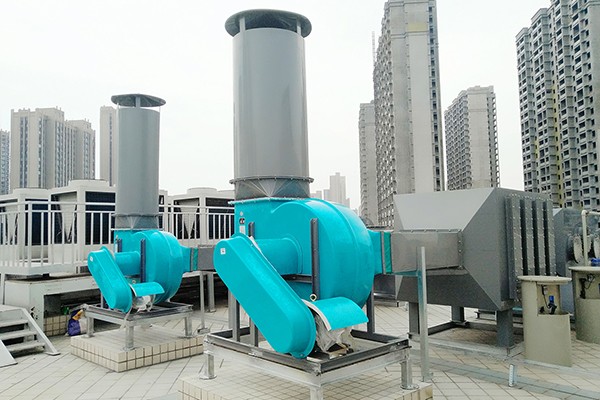
When plant managers evaluate pollution control systems, the sticker price of the hardware is rarely the deciding factor. The real question almost always comes down to a single concern: is environmental protection equipment expensive to operate? The answer is not a simple yes or no. Operating costs vary dramatically depending on the technology selected, the exhaust stream characteristics, and—perhaps most critically—how the system is designed, integrated, and maintained from day one.
This guide breaks down the actual operating costs behind common air pollution control and dust collection systems, compares technologies on a realistic cost basis, and explains how proper engineering decisions can shift a system from a financial burden to a predictable, manageable line item. Throughout, we draw on practical experience from manufacturers like Zhengzhou Puhua Technology, whose equipment design philosophy centers on total lifecycle cost rather than upfront price alone.
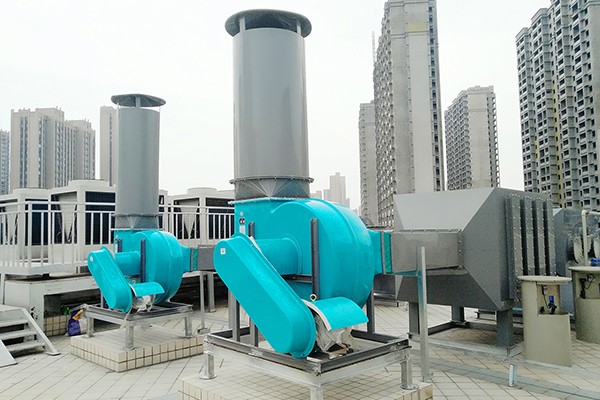
What Actually Drives Environmental Equipment Operating Costs?
Before comparing equipment categories, it helps to understand where the money goes. For most industrial air pollution control systems, operating expenditure (OpEx) falls into a few consistent buckets. Studies on dust collection total cost of ownership show that ongoing operational expenses can exceed 80% of the total cost over a 10-year lifespan—and over 90% across 20 years. The initial purchase price, in other words, is only the beginning of the financial story.
The dominant cost drivers are:
Electricity consumption: Fans, blowers, pumps, and control systems account for the largest share of continuous operating cost. For a typical dust collector, energy represents roughly 80% of life cycle cost, while the filters themselves account for only about 8%.
Fuel or auxiliary heat: Thermal oxidation systems that require natural gas or diesel for preheating and temperature maintenance carry significant fuel costs, particularly when treating low-concentration exhaust streams.
Consumables and replacement parts: Filter bags, catalyst modules, activated carbon, and sealing components degrade over time and must be replaced on predictable schedules.
Maintenance labor and downtime: Routine inspections, cleaning, and unplanned repairs all carry labor costs. For some systems, labor can approach one-third of total annual cost.
Compressed air and utilities: Pulse-jet cleaning systems, pneumatic valves, and control air requirements add incremental but persistent costs.
The key insight is that none of these costs are fixed. The same nominal equipment capacity can produce wildly different operating expenses depending on how well the system matches the actual exhaust conditions and how intelligently it is controlled.
Dust Collection Equipment: Energy Is Everything
For facilities dealing with particulate emissions—foundries, metalworking shops, cement plants, woodworking operations—dust collection equipment is typically the first line of environmental compliance. The operating cost profile here is dominated by one factor: the energy required to move air through the system.
The fan is the heart of any dust collection system, and its power consumption scales with pressure drop across the filter media and ductwork. A system designed with an excessively low air-to-cloth ratio will maintain lower pressure drop but require a physically larger footprint and more filter area. A system pushed to higher filtration velocities may reduce capital cost but will demand more fan horsepower and face more frequent filter replacements.
Consider a representative calculation for a bag dust collector operating at 1,200 Pa pressure drop with approximately 55 kW of fan power, running 8,000 hours per year at $0.08/kWh. Over a 15-year equipment lifespan, the energy cost alone reaches approximately $528,000. That figure does not include filter bag replacement, compressed air for pulse cleaning, or maintenance labor. In other words, the electricity bill for the fan can easily exceed the original purchase price of the collector itself.
This is where design choices matter enormously. Variable frequency drives (VFDs) on fan motors allow airflow to be matched to actual production demand rather than running at full speed continuously. Documented energy savings from VFD control on dust collector fan motors have reached 1.25 million kWh per year—a 28.5% reduction in fan energy consumption. Intelligent control systems that scale operation to real facility demand have demonstrated energy reductions of up to 70% in some installations.
Bag filter life also directly affects operating cost. Filter bags typically last between one and five years depending on the application, with about two years being typical in many industrial settings. A system that is properly sized, uses appropriate filter media, and is controlled to avoid unnecessary cleaning cycles will see bags last toward the longer end of that range. Zhengzhou Puhua Technology, for example, designs its pulse baghouse systems with optimized hopper geometry and cleaning sequences that reduce bag wear and secondary dust re-entrainment—a design detail that directly extends consumable life and reduces annual maintenance spending.
Thermal Oxidation Systems: RTO vs. RCO and the Concentration Question
For facilities emitting volatile organic compounds (VOCs), thermal oxidation equipment represents a different cost structure entirely. The operating cost of a regenerative thermal oxidizer (RTO) or regenerative catalytic oxidizer (RCO) is heavily influenced by the concentration of VOCs in the exhaust stream and the temperature required for destruction.
An RTO operates by preheating exhaust gas through ceramic heat exchange media to approximately 750–850°C, then oxidizing the VOCs at high temperature. Heat recovery efficiency typically reaches 95% or higher, but maintaining that combustion temperature requires substantial fuel input when the incoming VOC concentration is low. At higher concentrations—generally above 2,000 mg/m³—the oxidation reaction itself releases enough heat to sustain the process with minimal auxiliary fuel.
An RCO achieves oxidation at a much lower temperature—typically 250–400°C—because a catalyst lowers the activation energy required to break down VOC molecules. The energy comparison is striking: in low-concentration scenarios, RCO energy consumption is approximately one-third to one-half that of RTO. For a stream containing 1,000 mg/m³ of VOCs, RCO unit energy consumption is roughly 60% of RTO consumption.
The trade-off lies in maintenance. RCO systems require catalyst replacement, typically every two to five years, and catalyst cost can represent more than 60% of total RCO maintenance expenditure. RTO systems avoid catalyst cost entirely—ceramic heat exchange media can last a decade or more—but the higher operating temperature means greater fuel sensitivity at low VOC concentrations.
Real-world operating cost figures for thermal oxidation systems in Chinese industrial applications illustrate the range. A 10,000 m³/h RTO system treating paint manufacturing exhaust may incur annual operating costs of approximately 500,000 RMB, with natural gas consumption around 10 m³/h when handling a stream of 8,000 m³/h. A catalytic oxidation system at the same scale typically runs around 500,000 RMB per year as well, though the cost distribution shifts from fuel toward catalyst replacement. For a 30,000–50,000 m³/h RTO installation, annual operating costs generally fall between 300,000 and 1,000,000 RMB depending on fuel prices and VOC loading.
The practical takeaway: no single technology is universally cheaper to operate. RCO wins on energy cost at low to moderate VOC concentrations. RTO wins on long-term maintenance simplicity and performs exceptionally well—even approaching self-sustaining operation—at high VOC concentrations where the waste stream itself becomes fuel.
What Makes One Facility's Operating Cost Higher Than Another's?
Two plants with identical production capacity and identical exhaust volumes can still see operating cost differences of 200% or more. Several factors explain this gap.
System Sizing and Turndown Capability
Many environmental systems are sized for peak production conditions but operate most of the time at partial load. A system with poor turndown capability wastes energy during low-demand periods. In contrast, systems equipped with variable frequency drives and intelligent control logic can reduce fan speed and airflow when production demand drops, achieving proportional energy savings that compound over thousands of operating hours per year.
Maintenance Culture and Predictive Diagnostics
Reactive maintenance—replacing filters only when pressure drop becomes unacceptable or repairing equipment only after failure—consistently costs more than planned maintenance. Filter bags replaced on a preventive schedule avoid production interruptions; catalyst modules monitored for activity decline can be regenerated or replaced before efficiency drops below permit limits. Systems equipped with PLC-based monitoring that tracks temperature, pressure, and other key parameters allow operators to make informed maintenance decisions rather than guessing.
Exhaust Stream Characteristics
Dust loading, moisture content, corrosiveness, and temperature all influence operating cost. A dust stream with high moisture content may require heated hoppers or special filter media. A corrosive gas stream demands higher-grade materials and more frequent inspections. VOC streams containing sulfur, chlorine, or heavy metals can poison RCO catalysts prematurely and may be better served by RTO technology. Selecting equipment that matches actual stream conditions—rather than applying a one-size-fits-all solution—is the most fundamental step toward controlling operating cost.
Practical Strategies to Reduce Environmental Equipment Operating Costs
Reducing operating cost does not require exotic technology. It requires attention to a handful of high-impact levers that any well-engineered system can incorporate.
Install Variable Frequency Drives on All Major Motors
Fans and pumps account for the majority of continuous electrical load in most pollution control systems. VFDs allow motor speed to track actual demand rather than running at constant full speed. In dust collection applications, VFD retrofits have delivered measured energy savings exceeding 1.2 million kWh annually on large systems, with proportional cost savings. For thermal oxidation systems, VFD control on the main process fan reduces electricity consumption during low-flow periods without compromising destruction efficiency.
Recover and Reuse Heat Wherever Possible
Thermal oxidation systems produce substantial waste heat in the treated exhaust. Recovering that heat—for preheating incoming process air, supplying hot water, or feeding a heat recovery boiler—converts an operating cost into a partial offset. Zhengzhou Puhua Technology designs its RCO and RTO systems with integrated heat exchange pathways that return a portion of the purified gas enthalpy to upstream processes, reducing both fuel consumption and overall plant energy demand.
Match Catalyst and Adsorbent Selection to the Actual Stream
Catalyst poisoning is one of the most expensive and preventable causes of RCO operating cost escalation. Streams containing silicone compounds, phosphorus, heavy metals, or halogens require either pretreatment or a different technology altogether. Similarly, activated carbon selection for adsorption-concentration systems should be based on the specific VOC species present. Using a generic catalyst or carbon grade in a demanding application shortens replacement intervals and drives up annual consumable cost.
Implement Smart Start-Up and Shutdown Sequences
Thermal oxidation systems consume significant energy during start-up. A staged heating strategy that brings the system to operating temperature gradually—rather than applying full power immediately—reduces peak electrical demand and thermal stress on ceramic media. Systems equipped with PLC-based scheduled start-up can be programmed to reach operating temperature just before the production shift begins, avoiding hours of empty-running energy waste.
Leverage Available Fiscal Incentives
Many jurisdictions offer tax credits, accelerated depreciation, or direct subsidies for environmental protection equipment installations. In China, policies support large-scale equipment renewal for eligible environmental projects, with subsidy coverage ranging from 15% to 70% of project investment depending on the category and location. These incentives do not change day-to-day operating cost, but they materially reduce the net financial burden of upgrading to more efficient equipment. Working with a manufacturer experienced in local incentive programs can simplify the application process.
Choosing Equipment with Operating Cost in Mind
The most cost-effective environmental equipment is not necessarily the least expensive to purchase. It is the equipment that matches the exhaust stream, runs efficiently across the full range of operating conditions, and is designed for straightforward maintenance.
Industrial buyers evaluating proposals should request detailed operating cost projections from vendors—not just capital cost quotations. A credible operating cost projection should itemize expected electricity consumption (in kWh per year or per 1,000 m³ treated), fuel or auxiliary heat requirements, consumable replacement intervals and costs, and maintenance labor estimates. Vendors who cannot provide these figures or who dismiss operating cost as a secondary concern are signaling that lifecycle efficiency was not a design priority.
Manufacturers with deep application experience tend to approach cost from the right direction. Zhengzhou Puhua Technology has built its reputation not on selling the cheapest hardware, but on designing dust collection and VOCs treatment systems where the total cost of ownership—including energy, consumables, and maintenance over a realistic service life—is minimized for the specific industrial application. The company's portfolio spans baghouse dust collectors, pulse jet collectors, RCO catalytic oxidation units, RTO regenerative thermal oxidizers, desulfurization and denitrification systems, and integrated wastewater treatment equipment. Each system is engineered around the actual operating conditions of the facility it serves, rather than a generic specification sheet.
Conclusion: Operating Cost Is a Design Outcome, Not an Inevitability
Environmental protection equipment does not have to be expensive to operate. The facilities that achieve the lowest operating costs are not the ones that bought the cheapest equipment or the ones that simply accept whatever energy bill arrives each month. They are the ones that treated operating cost as a design requirement from the very beginning—selecting technology based on actual exhaust characteristics, investing in variable speed control and intelligent monitoring, maintaining equipment proactively, and choosing vendors who understand that the real price of a system is measured over years of operation, not at the point of purchase.
When evaluated on that basis, the operating cost of well-designed environmental equipment becomes a predictable, manageable component of production overhead—one that supports regulatory compliance without eroding the plant's competitive position.
Related Articles
-

Zeolite Fixed Bed+Catalytic Combustion Equipment (RCO)
7513
-

Resin desorption+condensation recovery equipment
5450
-

Cooking oil fume purifier
11486
Subscribe to Our Newsletter
Stay updated with the latest news and insights from Puhua Tech.