
Environmental Acceptance Equipment Requirements: A Complete Compliance Guide for Industrial Faciliti
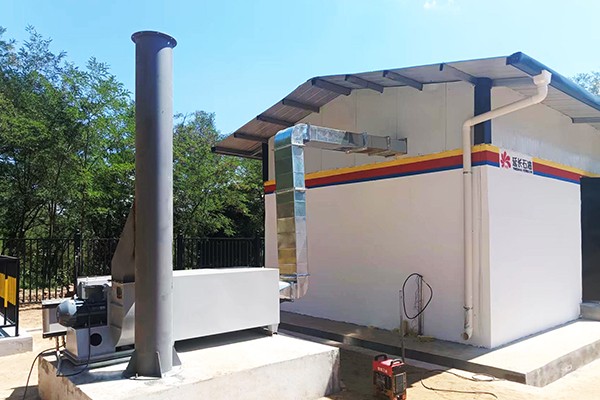
Meeting environmental acceptance equipment requirements is no longer just a regulatory checkbox—it has become the gateway to legal operation for any industrial project. Whether you are commissioning a new manufacturing line, upgrading an existing facility, or retrofitting pollution control systems, the environmental acceptance inspection determines whether your project can officially begin production. Understanding what inspectors look for, which equipment specifications matter most, and how to prepare supporting documentation will save your team months of costly delays.
What Is Environmental Acceptance and Why Does It Matter?
Environmental acceptance—often referred to as environmental completion acceptance or environmental verification—is the formal process of confirming that a construction project's pollution control facilities meet the design specifications, regulatory standards, and operational performance criteria established during the environmental impact assessment (EIA) phase. In China, this process is governed by the Regulations on the Administration of Construction Project Environmental Protection and the Interim Measures for Environmental Protection Acceptance of Completed Construction Projects. Similar frameworks exist in many other jurisdictions, where industrial facilities must demonstrate compliance before receiving operating permits.
The acceptance process evaluates far more than whether equipment is physically installed. Inspectors examine whether pollution control systems actually achieve the required removal efficiencies under real operating conditions, whether monitoring instruments are properly calibrated and connected to regulatory platforms, and whether the facility has established adequate management systems for ongoing compliance. According to regulatory guidance, the acceptance period for environmental protection facilities generally should not exceed three months from project completion; for projects requiring debugging or rectification, this period may be extended to a maximum of twelve months.
Failing environmental acceptance carries serious consequences. Projects cannot legally commence commercial operation, and violations may result in fines, production suspensions, or even demolition orders. For facility managers, this makes understanding equipment requirements not just a technical necessity but a strategic business priority.
Legal Framework and Governing Standards
The regulatory foundation for environmental acceptance equipment requirements rests on several layers of standards and technical specifications. At the national level, the Technical Guidelines for Environmental Protection Acceptance of Completed Construction Projects – Pollution Impact Category (Ministry of Ecology and Environment Announcement No. 9 of 2018) establishes the overall methodology for acceptance monitoring and evaluation.
Beyond general guidelines, specific equipment categories fall under dedicated technical standards. Dust removal systems must comply with requirements set forth in HJ 2000, which covers the design, construction, acceptance, and operational maintenance of air pollution control engineering. For VOCs treatment, the Technical Specification for Industrial Organic Waste Gas Treatment Engineering Using Adsorption Method provides detailed requirements for equipment performance, including thermal insulation standards (external surface temperature below 60°C for catalytic combustion units), explosion-proof design, and electrical safety measures such as short-circuit protection and grounding resistance below 4Ω.
Desulfurization and denitrification systems are governed by industry-specific emission standards such as GB 13223 for thermal power plants and the more recent ultra-low emission technical specifications. These standards set increasingly stringent limits—for instance, requiring SO₂ concentrations at or below 35 mg/m³ and NOₓ at or below 50 mg/m³ in key regions.
Additionally, a comprehensive series of environmental protection product technical requirements (HJ/T series) covers individual equipment components, from electromagnetic pulse valves for bag filters to catalytic purification devices for industrial organic waste gas.
Pre-Acceptance Preparation: Self-Inspection and Debugging
Before engaging third-party monitors or scheduling formal acceptance inspections, facilities must complete a thorough self-inspection process. This preparatory phase is critical because it identifies and resolves issues before they become official findings that delay the entire acceptance timeline.
Process Compliance Verification
The first step involves verifying that all installed equipment matches the approved design documents. For desulfurization and denitrification systems, this means confirming that the selected processes—whether limestone-gypsum wet desulfurization, ammonia-based desulfurization, selective catalytic reduction (SCR), or selective non-catalytic reduction (SNCR)—have been implemented according to the environmental impact assessment approval. Key equipment such as absorption towers, reactors, catalysts, and spray systems must be inspected for proper installation, and piping connections and valve controls must be verified as functional.
Equipment Commissioning and Stability Testing
All pollution control equipment should undergo continuous operation testing for a minimum of 72 hours. During this period, operational parameters—including boiler load, reagent consumption rates, inlet and outlet flue gas temperatures and pressures—must be systematically recorded. The testing should verify that desulfurization efficiency reaches at least 95% and denitrification efficiency reaches at least 80%, which are common industry benchmarks. Simultaneously, continuous emission monitoring systems (CEMS) should be checked for connectivity with the ecological environment department's data platform and for stable data transmission.
Waste and Byproduct Management
Facilities must confirm that solid wastes and wastewater generated by pollution control processes are properly managed. Desulfurization gypsum, spent denitrification catalysts, and other byproducts should have documented disposal agreements with licensed handling companies. Desulfurization wastewater should be treated and either recycled or discharged in compliance with applicable standards.
Equipment-Specific Requirements by Category
Dust Removal Equipment Requirements
Dust removal equipment—including bag filters, pulse-jet dust collectors, electrostatic precipitators, and wet scrubbers—must satisfy both performance and safety requirements during environmental acceptance. Key acceptance criteria include:
Collection system design: Dust collection hoods must be installed at all significant dust generation points, with proper ductwork and fan specifications to capture particulate matter effectively. The system should include dust collection hoods, piping, dust collectors, fans, exhaust stacks, and auxiliary components as an integrated unit.
Emission concentration: Total particulate discharge typically must not exceed 50 mg/m³ (at 25°C, 1 atmosphere, dry gas basis), though stricter limits apply in key regions and for specific industries.
Equipment quality and installation: Bag filter materials, cage structures, and pulse valves must meet relevant HJ/T environmental protection product technical requirements. Installation must follow JB/T 8471 standards for bag filter installation and acceptance.
Monitoring and sampling: Permanent sampling ports must be installed at both inlet and outlet of treatment equipment, with sampling platform access designed in accordance with HJ/T 1 and sampling methods meeting GB/T 16157 requirements.
Regular maintenance and bag replacement schedules must be documented as part of the facility's operational management system, as inspectors will verify that ongoing compliance can be sustained after acceptance.
VOCs Treatment Equipment Requirements
Volatile organic compounds (VOCs) treatment systems face some of the most detailed equipment requirements in environmental acceptance. Whether using activated carbon adsorption, catalytic combustion (RCO), regenerative thermal oxidation (RTO), or combination processes, several mandatory specifications apply:
Thermal insulation: Catalytic combustion or high-temperature incineration units must be fully insulated, with external surface temperatures below 60°C.
Safety design: Explosion-proof pressure relief design must comply with GB 50160. Fire prevention facilities must be installed in treatment equipment areas. Electrical systems require short-circuit protection and grounding protection with resistance below 4Ω. Outdoor units must have lightning protection meeting GB 50057 standards.
Treatment efficiency: For VOCs initial emission rates exceeding 3 kg/h (2 kg/h in key regions), removal efficiency must be at least 80% unless specific industry standards specify otherwise.
Process control: Treatment equipment must start before production equipment and shut down after production equipment stops, with interlocking controls implemented. Temperature detection devices with automatic alarm functions must be installed in adsorption units, catalytic combustion chambers, and high-temperature incineration reaction chambers.
Sampling and monitoring: Permanent sampling ports must be installed in accordance with HJ/T 1 requirements, with sampling methods meeting GB/T 16157. Pressure differential monitoring across filtration units should be conducted regularly.
For solvent-based production processes, the entire production line must be enclosed, with organic waste gas collection efficiency and purification efficiency both required to reach at least 90%. Different types of waste gas streams—such as nitrogen oxide waste gas, chromium-containing waste gas, and cyanide-containing waste gas—should be collected separately and treated independently.
Desulfurization and Denitrification Equipment Requirements
Flue gas desulfurization (FGD) and denitrification (deNOx) systems serve as the primary pollution control infrastructure for combustion-related industrial processes. During environmental acceptance, these systems undergo rigorous performance verification:
Efficiency verification: Continuous operation data must demonstrate that desulfurization efficiency meets or exceeds design specifications (typically ≥95%) and denitrification efficiency meets design requirements (typically ≥80%).
Emission compliance: Outlet concentrations of SO₂, NOₓ, and particulate matter must satisfy applicable emission standards. For ultra-low emission projects, this may mean particulate matter below 10 mg/m³, SO₂ below 35 mg/m³, and NOₓ below 50 mg/m³.
Reagent and byproduct management: Consumption of desulfurization agents (such as limestone or ammonia) and denitrification reducing agents (such as urea or ammonia) must be tracked and recorded. Byproducts including desulfurization gypsum and spent catalysts must have documented disposal pathways.
Ammonia slip control: For SCR and SNCR systems, ammonia slip must be monitored and maintained within acceptable limits to prevent secondary pollution.
Online monitoring: CEMS must be installed, calibrated, and connected to regulatory data platforms. Data integrity and transmission stability will be verified during the acceptance period.
The acceptance process for desulfurization and denitrification equipment typically involves a 72-hour continuous trial run followed by third-party monitoring conducted by a CMA-certified laboratory. Monitoring must be conducted under normal production loads—typically not less than 75% of design capacity—over three consecutive days with at least four samples per day to ensure data representativeness.
Wastewater Treatment Equipment Requirements
Wastewater treatment facilities are evaluated on their ability to consistently meet discharge or reuse standards. Acceptance requirements include verification of treatment process design, confirmation that treatment capacity matches actual wastewater generation, validation of monitoring equipment for parameters such as pH, COD, and heavy metals, and documentation of sludge handling and disposal procedures. Online monitoring devices for key parameters must be installed and connected to regulatory platforms.
Monitoring and Sampling Requirements
Monitoring infrastructure constitutes a critical component of environmental acceptance equipment requirements. Facilities must install permanent sampling ports at both inlet and outlet of each treatment system, with proper platform access for safe sampling. Sampling port locations and dimensions must comply with HJ/T 1 specifications, and sampling methods must follow GB/T 16157 requirements.
For VOCs treatment systems specifically, temperature sensors installed in adsorption units and combustion chambers must have automatic alarm functions and be calibrated according to JJF 1049 standards. Filtration device pressure differentials should be regularly monitored and recorded.
For continuous emission monitoring, CEMS units must be properly calibrated before acceptance monitoring begins, with calibration records available for inspector review. The monitoring system must demonstrate stable data transmission to regulatory platforms, and comparison testing between CEMS readings and manual sampling results should show acceptable accuracy.
Facilities should note that new emission standards increasingly require automatic monitoring equipment installation and network connectivity. For example, updated coking chemical industry standards now mandate automated monitoring connected to regulatory systems. Similar requirements are expanding across other industries.
Key Documentation and Records
Environmental acceptance is not only about physical equipment—it also requires comprehensive documentation that demonstrates the entire project's compliance trajectory. The documentation package typically includes:
Project approval documents: Project filing or approval from development and reform or industry management departments, environmental impact assessment approval documents, and environmental protection pre-approval receipts.
Design documentation: Process design specifications, construction drawings, equipment selection calculations, and any approved design change documents.
Equipment certificates and installation records: Factory quality certificates and performance test reports for major equipment, installation process records including concealed work acceptance records, pipeline pressure test records, and welding non-destructive testing reports.
Commissioning records: Commissioning plans, continuous trial operation logs with parameter recordings, and efficiency test data.
Monitoring reports: Third-party acceptance monitoring reports from CMA-certified agencies, CEMS calibration and comparison data, and online monitoring network connection certificates.
Management documentation: Environmental management systems, equipment operation and maintenance procedures, personnel training records, emergency response plans and drill records, and solid waste disposal agreements.
How Zhengzhou Puhua Technology Supports Acceptance Readiness
Selecting equipment from a manufacturer experienced in regulatory acceptance processes can significantly streamline the compliance journey. Zhengzhou Puhua Technology Co., Ltd. has been designing and manufacturing environmental protection equipment since 2008, building a product portfolio that directly addresses the technical requirements of environmental acceptance inspections.
The company's core product lines include bag filter dust collectors, pulse-jet dust removal systems, RCO catalytic combustion equipment, RTO regenerative thermal oxidizers, VOCs treatment systems, desulfurization towers, denitrification equipment, and integrated wastewater treatment units. Each system is engineered with compliance-ready features such as permanent sampling ports, temperature monitoring and alarm systems, and process interlocking controls that align with acceptance inspection requirements.
Zhengzhou Puhua Technology operates from a 20,000-square-meter production base in Zhengzhou High-tech Zone and has established ISO 9001 quality management certification. The company holds numerous patents related to composite dust collectors, automatic batching systems, pneumatic conveying systems, and specialized filtration equipment. Its equipment has been deployed across mining, metal processing, chemical, printing, coating, pharmaceutical, and food processing industries.
For facilities preparing for environmental acceptance, working with an equipment supplier that understands the full compliance lifecycle—from design through installation, commissioning, and acceptance documentation—reduces the risk of costly retrofits and delays. Zhengzhou Puhua Technology provides not only equipment but also technical support throughout the acceptance preparation process, helping facility managers bridge the gap between equipment specifications and regulatory expectations.
Common Pitfalls That Delay Environmental Acceptance
Even well-designed facilities can encounter acceptance delays due to overlooked equipment requirements. Some of the most frequent issues include:
Insufficient sampling infrastructure: Missing or improperly positioned sampling ports require equipment modification, which can delay acceptance by weeks.
Incomplete CEMS integration: Monitoring systems that are not properly calibrated or connected to regulatory platforms fail verification, requiring re-testing.
Inadequate documentation: Missing equipment certificates, installation records, or commissioning logs create verification gaps that inspectors cannot overlook.
Treatment efficiency shortfalls: Equipment that meets design specifications on paper but underperforms in actual operating conditions may require process adjustments or equipment upgrades.
Unaddressed secondary pollution: Wastewater, solid waste, or noise generated by pollution control equipment itself must also be managed to acceptable standards.
Conclusion
Environmental acceptance equipment requirements encompass far more than installing pollution control hardware. They demand integrated system design, proper instrumentation and monitoring, comprehensive documentation, and demonstrated performance under real operating conditions. Facilities that approach acceptance preparation systematically—verifying equipment specifications against regulatory standards, conducting thorough self-inspections, and partnering with experienced equipment manufacturers—position themselves for smoother inspections and faster time-to-operation.
As emission standards continue to tighten across industries worldwide, the bar for environmental acceptance will only rise. Investing in compliant equipment and thorough preparation today prevents the far greater costs of failed inspections, operational delays, and regulatory penalties tomorrow.
Related Articles
-

Zeolite Fixed Bed+Catalytic Combustion Equipment (RCO)
7513
-

Resin desorption+condensation recovery equipment
5450
-

Cooking oil fume purifier
11486
Subscribe to Our Newsletter
Stay updated with the latest news and insights from Puhua Tech.