
Affordable Environmental Equipment: How to Cut Compliance Costs Without Cutting Corners
Every factory manager knows the feeling. The environmental inspector is coming. The old dust collector is wheezing. And the quote for a brand-new system looks like a mortgage payment. It is easy to assume that going green means going broke. But that assumption is costing manufacturers more than they realize. The truth is that affordable environmental equipment does exist, and it does not require sacrificing performance or reliability. The key is knowing what to buy, where to look, and how to separate genuine value from cheap junk that will fail in eighteen months.
Why Affordable Environmental Equipment Is Not an Oxymoron
There is a persistent myth in industrial manufacturing that environmental compliance and cost control are opposites. You either pay top dollar for high-performance equipment, or you cut corners and hope the regulators do not notice. Neither approach works long-term.
The reality is more nuanced. The cost of environmental equipment depends on three variables: treatment capacity, material quality, and the efficiency of the manufacturing process itself. A factory that over-specifies capacity pays for energy it never uses. A buyer who accepts low-grade steel pays again in maintenance within two years. But a buyer who matches capacity to actual needs and sources from a manufacturer with lean production can access affordable environmental equipment that performs at the same level as premium alternatives.
This is where the sourcing decision becomes strategic. The most expensive equipment is not the one with the highest sticker price. It is the one that breaks down, consumes excess energy, or fails an emissions test. Genuine affordability means low total cost of ownership over a five-to-ten-year horizon.
The Core Categories of Cost-Effective Pollution Control
Before comparing prices, it helps to understand what you are actually buying. Industrial environmental equipment falls into a few distinct functional categories, and each has its own affordability dynamics.
Dust Removal and Particulate Control
Dust collection is the most common entry point for factories seeking affordable environmental equipment. Baghouse dust collectors, pulse jet systems, and cartridge collectors are the workhorses here. The affordability equation for dust removal depends heavily on filter media quality and cleaning mechanism design. A well-engineered pulse jet baghouse with automated reverse-pulse cleaning will outlast a cheaper shaker-style unit by years, even if the upfront cost is slightly higher.
For workshops with moderate dust loads, a compact pulse jet dust collector can deliver filtration efficiency above 99% at a fraction of the cost of a full central system. The key is matching airflow capacity to the actual production footprint rather than over-engineering for hypothetical expansion.
VOCs and Organic Waste Gas Treatment
Volatile organic compounds present a different affordability challenge. The treatment technology matters enormously for operating cost. Thermal oxidizers and catalytic combustion systems both destroy VOCs, but they differ in energy consumption.
Regenerative Thermal Oxidizers achieve heat recovery efficiencies above 90%, which means the system reuses most of the heat it generates. That high heat recovery translates directly into lower fuel costs month after month. Catalytic oxidation systems operate at lower temperatures, reducing fuel consumption further for certain waste streams. For low-concentration, high-volume exhaust streams, a zeolite concentrator paired with catalytic combustion can reduce operating costs by 25% to 40% compared to direct thermal treatment.
This is the paradox of affordability in VOCs treatment: the cheapest system to buy is often the most expensive to run. A budget VOCs treatment equipment selection that prioritizes energy recovery will cost less over its lifetime than a low-cost unit with poor heat integration.
Desulfurization, Denitrification, and Wastewater
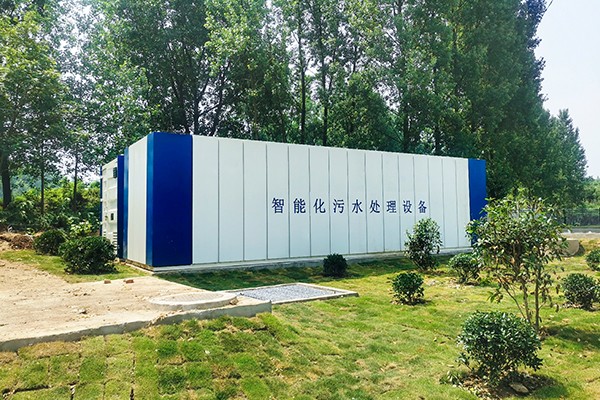
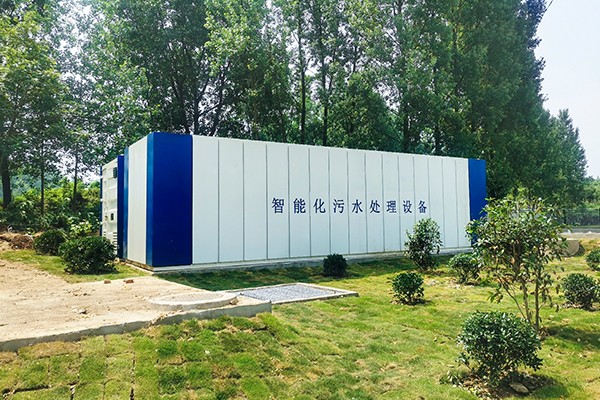
For facilities with combustion sources, desulfurization towers and denitrification equipment add another layer of compliance cost. Wet scrubbers remain the most cost-effective option for many SO₂ removal applications, while selective catalytic reduction handles NOx with predictable operating economics. On the wastewater side, integrated treatment units sized for actual discharge volumes avoid the common mistake of installing oversized systems that consume energy treating nothing.
What Actually Drives the Price of Environmental Equipment
Understanding cost drivers helps buyers negotiate from a position of knowledge rather than desperation.
Treatment Capacity and Airflow
Capacity is the single largest cost variable. A dust collector rated for 10,000 m³/h costs substantially less than one rated for 50,000 m³/h. But capacity specifications are often inflated by vendors eager to cover every possible scenario. A careful airflow audit of the actual emission points usually reveals that a smaller, properly sized unit will suffice.
Material and Construction Quality
Carbon steel construction with appropriate corrosion protection handles most industrial dust applications. Stainless steel becomes necessary only for chemically aggressive streams or high-moisture conditions. Choosing carbon steel where stainless is not required is one of the simplest ways to keep affordable environmental equipment genuinely affordable.
Automation and Controls
PLC controls with automated cleaning cycles add upfront cost but reduce labor and prevent filter damage. The trade-off depends on labor costs and the criticality of continuous operation. For factories running two or three shifts, automated controls usually pay for themselves within the first year.
Manufacturing Efficiency and Supply Chain
This is where sourcing strategy matters most. Manufacturers with in-house fabrication, modern cutting and bending equipment, and direct-to-customer sales models eliminate layers of markup. A factory-direct supplier using 3D modeling and automated fabrication can deliver the same physical equipment at 30% to 50% less than a distributor-branded equivalent.
How Zhengzhou Puhua Technology Delivers Cost-Effective Solutions
Zhengzhou Puhua Technology has been manufacturing environmental equipment since 2008 from its base in Zhengzhou, Henan Province. The company operates a 20,000-square-meter production facility and holds more than 50 patents covering dust collection, VOCs treatment, and wastewater systems.
What makes Puhua relevant to the affordability conversation is its manufacturing model. The company designs, fabricates, and assembles equipment in-house rather than outsourcing production. That vertical integration removes the margin stacking that inflates prices when equipment passes through multiple hands before reaching the end user.
Puhua’s product range covers the full spectrum of compliance needs:
Dust removal: Baghouse dust collectors, pulse jet dust collectors, mobile dust collectors, and ultra-low emission systems
VOCs treatment: Activated carbon or zeolite adsorption paired with catalytic combustion, RCO catalytic combustion equipment, RTO regenerative thermal oxidizers, and photocatalytic oxidation devices
Gas cleaning: Desulfurization towers and denitrification equipment for combustion exhaust streams
Wastewater: Integrated treatment units for domestic, hospital, and industrial applications
The company’s equipment has been deployed across mining, metal processing, chemical manufacturing, printing, coating, and pharmaceutical operations. For a manufacturer evaluating affordable environmental equipment, Puhua offers a combination that is difficult to replicate: factory-direct pricing, a broad product catalog that covers multiple compliance requirements from a single supplier, and an engineering team that can size equipment to actual needs rather than defaulting to oversized specifications.
A Practical Framework for Buying Affordable Environmental Equipment
Cost-effective procurement is a process, not a single decision. Here is a framework that consistently produces better outcomes than simply choosing the lowest bid.
Step One: Measure Before You Buy
Conduct an airflow and emissions audit at each collection point. Most factories discover that their actual treatment requirements are 20% to 40% lower than the initial rough estimate. Every cubic meter of unnecessary capacity is money spent on equipment, energy, and maintenance that delivers no compliance benefit.
Step Two: Prioritize Energy Efficiency Over Upfront Price
For VOCs treatment especially, the operating cost dominates the total cost of ownership. A system with high heat recovery or a concentrator upstream will cost more at purchase and less every month thereafter. Calculate the five-year energy cost for each option before comparing sticker prices.
Step Three: Source Factory-Direct
Distributors and trading companies add cost without adding engineering value. A manufacturer that designs and builds its own equipment can provide technical specifications, drawings, and performance guarantees directly. This shortens the communication chain and eliminates the markup that a middleman must add to survive.
Step Four: Match Material Specification to Actual Conditions
Carbon steel handles the majority of industrial dust and gas streams. Stainless steel or specialty alloys are necessary only for corrosive or high-temperature environments. Over-specifying materials is one of the most common sources of unnecessary cost in environmental equipment procurement.
Step Five: Evaluate the Total Solution, Not Just the Hardware
Installation, commissioning, operator training, and spare parts availability all affect the true cost of ownership. A slightly higher equipment price from a supplier that provides responsive technical support and maintains spare parts inventory often costs less over time than a rock-bottom price from a vendor that disappears after the invoice is paid.
The Bottom Line: Affordability Is a Sourcing Strategy
Affordable environmental equipment is not about buying the cheapest option on the market. It is about buying the right equipment from the right source at the right specification. The factories that achieve the lowest compliance costs over time are not the ones that negotiated the hardest on price. They are the ones that measured accurately, specified realistically, and sourced directly from manufacturers who build what they sell.
For manufacturers still relying on aging or undersized systems, the cost of inaction is rising. Emissions regulations tighten annually, and the gap between compliant and non-compliant operations widens. The good news is that closing that gap does not require a capital expenditure that breaks the budget. It requires a procurement approach that treats affordable environmental equipment as an engineering problem to be solved, not a bargain to be hunted.
Zhengzhou Puhua Technology represents one example of the factory-direct model in practice: a manufacturer with the production capacity, product range, and engineering depth to deliver compliance-grade equipment without the markup of a distribution chain. For buyers willing to do the homework on sizing and specification, that model opens access to environmental equipment that performs at the level the regulations demand at a cost the business can sustain.
Related Articles
-

Zeolite Fixed Bed+Catalytic Combustion Equipment (RCO)
7513
-

Resin desorption+condensation recovery equipment
5450
-

Cooking oil fume purifier
11486
Subscribe to Our Newsletter
Stay updated with the latest news and insights from Puhua Tech.