
Baghouse Dust Collector Price: A 2026 Buyer's Guide to Real-World Costs, Configuration Variable
If you are searching for a straight answer to "how much does a baghouse dust collector cost," you have likely already discovered the frustrating reality: there is no single number. A baghouse dust collector price can range from a few thousand dollars for a small workshop unit to well over one million dollars for a large-scale industrial system serving a cement kiln or power plant. The spread is not arbitrary. It reflects real differences in filtration area, housing construction, filter media grade, cleaning mechanism, control intelligence, and the engineering capability of the manufacturer behind the quotation.
This guide is written for procurement engineers, plant managers, and EHS directors who need to evaluate baghouse dust collector pricing with a clear framework — not a marketing brochure. We will walk through 2026 China factory benchmarks, the five variables that actually drive price variation between suppliers, how to size your budget by equipment scale, and why the lowest quotation is frequently the most expensive decision over a 15-year operating horizon.
What a Baghouse Dust Collector Actually Costs in 2026: China Factory Benchmarks
China remains the world's most cost-competitive manufacturing base for industrial dust collection equipment, and 2026 introduces specific pricing dynamics that every buyer should understand. A baghouse dust collector that costs $42,000–$68,000 from a North American or European manufacturer can be sourced from a verified Chinese factory at $16,000–$31,000 for an equivalent specification — a capital saving of 40–57% that compounds across multi-unit projects.
Senotay's Q1 2026 pricing dataset, compiled from over 300 completed transactions with verified Chinese manufacturers, provides the following ex-factory (FOB China port) benchmarks for carbon steel construction. All figures are in USD and exclude shipping, import duties, and local installation.
| System Type | Typical Filtration Area | Ex-Factory Price Range (USD) | Primary Application |
|---|---|---|---|
| Small single-unit pulse jet (DMC series) | 10–60 m² | $1,200 – $4,500 | Workshops, polishing, grain processing, small woodworking |
| Medium pulse jet baghouse | 60–300 m² | $5,000 – $18,000 | Furniture manufacturing, metal grinding, feed mills |
| Multi-compartment pulse jet (PPC/PLC series) | 300–1,200 m² | $18,000 – $55,000 | Machinery processing, building materials mixing, medium-scale foundry |
| Large low-pressure long-bag pulse jet | 1,200–5,000 m² | $55,000 – $180,000 | Power plants, cement plants, steel mills |
| Ultra-low emission baghouse | 5,000+ m² | $180,000 – $350,000+ | Cement kiln co-processing, sintering machine tail gas, hazardous waste incineration |
These numbers provide a starting benchmark, but they are not quotations. Within any single category, Chinese factory quotes for what appear to be identical specifications can vary by 35–60%. That variation is not noise — it is a signal. Understanding what drives it is the difference between a cost-effective purchase and a costly mistake.
The Five Variables That Actually Determine Your Baghouse Dust Collector Price
When two suppliers quote dramatically different prices for the same filtration area, the difference almost always traces back to one or more of the following five variables. Buyers who compare quotations without examining these dimensions are effectively comparing different products.
1. Housing Steel Grade and Wall Thickness
A pulse-jet unit quoted at $13,500 using 3 mm Q235 carbon steel is not a comparable product to one quoted at $18,200 using 4 mm Q345B steel. Q345B offers approximately 30% higher yield strength, which becomes critical for systems operating above 0.5 bar internal pressure or in elevated-temperature applications where thermal expansion stresses the housing. A thinner, lower-grade housing may save 15–20% at the point of purchase, but it is the first component to show fatigue cracking when the system operates under continuous negative pressure or when hopper dust loading is higher than anticipated.
2. Filter Bag Media Quality Tier
Filter bags are often described as the heart of a baghouse, and for good reason: the media grade determines both filtration efficiency and the single largest recurring maintenance cost. Standard 550 g/m² polyester needlefelt, common in low-cost quotations, has an expected service life of 10–14 months under normal operating conditions. Upgrading to 750 g/m² PTFE-laminated media extends bag life to 28–40 months — often reducing total five-year cost of ownership by $18,000–$34,000 per unit.
For high-temperature or chemically aggressive applications, the price gap widens further. PPS (polyphenylene sulfide) bags for flue gas temperatures up to 190°C carry a substantial premium over polyester, while PTFE membrane bags for ultra-low emission applications can cost two to three times the base media price. These are not upsells — they are engineering requirements driven by the chemistry of your dust stream.
3. Pulse Valve Brand and Origin
The pulse valves on a baghouse are the components that literally keep the system breathing. Internationally certified pulse valves from brands such as Goyen or ASCO carry a 12-month warranty and a mean time between failures (MTBF) of 1.2–1.5 million cycles. Generic OEM valves included in low-cost quotations typically fail at 300,000–500,000 cycles, requiring replacement within 18–24 months of commissioning.
A valve that costs 40% less at the point of purchase but fails three times as often is not a cost saving. It is a deferred maintenance liability that will appear on your ledger during the first production campaign after installation.
4. Cleaning Mechanism: Mechanical Shaker vs. Pulse Jet
Mechanical shaker cleaning is the oldest and least expensive dust removal technology. It relies on motor-driven vibration to dislodge dust cakes from filter bags. The capital cost is low, but cleaning effectiveness is limited, bag wear is uneven, and the system requires frequent manual intervention. For continuous-duty industrial processes, mechanical shaker units are rarely the correct choice regardless of price.
Pulse jet cleaning, by contrast, uses compressed air pulses to reverse the airflow through the bags in sequence, without interrupting operation. It supports higher air-to-cloth ratios, longer bag life, and continuous operation. A pulse jet baghouse will typically cost 30–60% more than a mechanically shaken unit of the same filtration area, but the operational differential in a 24/7 plant is not a premium — it is a prerequisite.
5. Control System Intelligence
Basic baghouse controllers manage pulse timing and differential pressure alarms. Intelligent control systems integrate differential pressure transmitters, temperature sensors, hopper level detection, and remote monitoring capability. The control panel upgrade itself represents approximately 15% of the equipment price, but it can reduce manual inspection labor by 20–30% and enable predictive maintenance that prevents unplanned shutdowns.
For plants where a baghouse failure means production stoppage, the control system is not overhead — it is insurance with a measurable return.
How to Budget by Equipment Scale: A Sizing Framework
Rather than anchoring on a single price point, procurement teams should establish a budget range based on filtration area and application severity. The following framework uses filtration area (the primary cost driver) and application category to produce a defensible budget estimate.
Small-Scale Systems (Filtration Area ≤ 60 m², Airflow ≤ 10,000 m³/h)
This category covers workshop-scale operations: single woodworking stations, polishing booths, small grain processing lines, and light metal finishing. Equipment is typically a single-unit pulse jet design with manual or semi-automatic cleaning.
Budget expectation: $1,200 – $5,000 ex-factory (China).
What drives the upper end: Stainless steel housing for corrosive dust, anti-static filter bags for combustible dust, and integrated PLC controls.
Total installed cost: Add 15–25% for ductwork, fan integration, and electrical connection.
A 10,000 m³/h capacity baghouse dust collector in China typically quotes between $4,000 and $15,000 depending on configuration, with the base specification suitable for ambient-temperature, non-corrosive dust streams. Applications requiring PPS media, stainless steel construction, or explosion protection will sit at the upper end or above this range.
Medium-Scale Systems (Filtration Area 60–500 m², Airflow 10,000–100,000 m³/h)
This is the workhorse category for manufacturing plants: furniture factories, metal fabrication shops, building materials mixing lines, foundry shakeout stations, and medium-scale chemical processing. Equipment is typically a multi-compartment pulse jet baghouse with automatic sequential cleaning.
Budget expectation: $8,000 – $45,000 ex-factory (China).
Key cost variables: Number of compartments, filter bag length and diameter, hopper angle optimization for dust flowability, and discharge valve quality.
Installation consideration: Medium systems often require civil foundation work, compressed air supply infrastructure, and ductwork routing — budget an additional 10–20% for installation scope.
Large-Scale Systems (Filtration Area ≥ 500 m², Airflow ≥ 100,000 m³/h)
Large baghouses serve power generation, cement production, steelmaking, and municipal waste incineration. These are engineered systems, not catalog products. Quotations are project-specific and driven by the gas volume, temperature profile, dust loading, and emission limit.
Budget expectation: $55,000 – $350,000+ ex-factory (China), depending on emission target and media selection.
Ultra-low emission systems: Systems targeting ≤ 5 mg/m³ particulate emissions require PTFE membrane media, optimized gas distribution, and often SNCR/SCR integration — expect the upper end of the range or above.
Total project cost: For a cement kiln baghouse with multi-compartment design, total installed investment can reach several million dollars when civil works, ducting, fans, and control integration are included.
Why the Lowest Quotation Is Frequently the Most Expensive
The baghouse dust collector purchase price typically represents only 30–45% of the total cost of ownership over a 15-year operating life. The remaining 55–70% is distributed across civil works and installation, fan energy consumption, filter bag replacement, compressed air consumption, and maintenance labor.
A supplier who reduces housing wall thickness by 0.5 mm, substitutes generic pulse valves for certified brands, or downgrades filter media from PTFE-laminated to standard polyester is not offering a better price. They are transferring cost from their quotation sheet to your maintenance budget.
The arithmetic is straightforward. A baghouse quoted at $16,000 with standard polyester bags may require full bag replacement every 12–14 months. The same system quoted at $21,000 with PTFE-laminated bags may operate for 28–40 months between changes. At a bag replacement cost of $3,000–$6,000 per event plus 16–24 hours of production downtime, the higher initial quotation recovers its premium within the first two maintenance cycles.
What a Credible Chinese Baghouse Manufacturer Brings Beyond Price
China's cost advantage in baghouse manufacturing is real, but it is not uniform across all suppliers. The factories that consistently deliver reliable equipment at competitive prices share several characteristics: verified steel plate sourcing with inspection reports, in-house bag cage welding capability, pulse valve testing before shipment, and engineering teams capable of reviewing client gas stream data rather than simply quoting from a catalog.
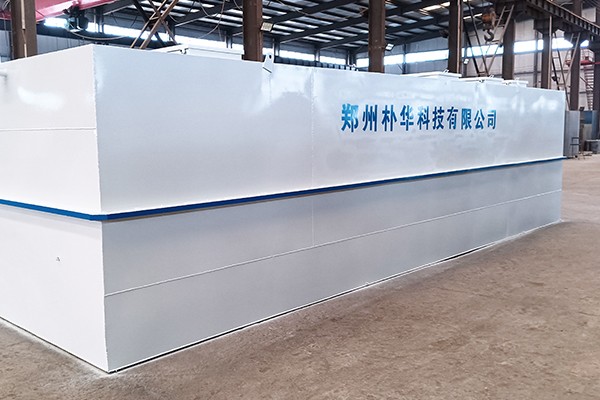
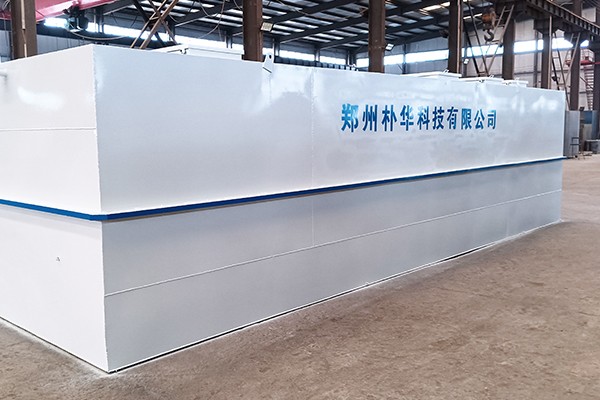
Zhengzhou Puhua Technology is an example of this category of manufacturer. The company has been engineering and producing dust control equipment for more than a decade and has evolved from a simple equipment supplier into a full-chain environmental technology firm covering dust collection, desulfurization, denitrification, VOCs treatment, and wastewater processing. Their baghouse dust collector line includes pulse jet baghouses, compartment low-pressure pulse systems, and mobile dust collectors, with direct sales that carry a 10-year warranty on baghouse dust collector equipment.
What distinguishes manufacturers in this tier is not a marketing claim but an engineering orientation. Puhua's technical team, for instance, has documented through field service that approximately 60% of baghouse performance issues trace back to hopper-related dust re-entrainment rather than filter bag failure — a diagnostic insight that guides their hopper geometry specifications toward 65–70 degree wall angles and externally stiffened construction to eliminate internal ledges where dust accumulates.
This is the kind of engineering depth that separates a supplier from a vendor. When a quotation is backed by documented failure analysis and design corrections, the price reflects a system designed for your dust stream — not a box with bags in it.
Questions to Ask Before Accepting Any Baghouse Quotation
Whether you are sourcing from a Chinese manufacturer or a domestic supplier, the following questions will quickly separate a serious engineering quotation from a commodity price sheet.
What is the specified steel grade and wall thickness for the housing, hopper, and tube sheet? If the supplier cannot state the grade (e.g., Q235B, Q345B, 304, 316L) and thickness in millimeters, the quotation is not specific enough to evaluate.
What filter media is quoted, and what is its expected service life under my dust conditions? The answer should reference gram weight (g/m²), fiber type (polyester, PPS, PTFE, aramid), and finishing (singed, calendered, PTFE-laminated, ePTFE membrane).
Which pulse valve brand is included, and what is its rated cycle life? A quotation that lists a brand with published MTBF data is more reliable than one that describes valves as "high quality" or "imported."
What is the hopper wall angle, and how is dust flowability verified for my material? For cohesive or hygroscopic dusts, a hopper angle below 60 degrees is a future bridging problem.
What installation and commissioning support is included? Ex-factory pricing is not the same as delivered-and-commissioned cost. Clarify the scope boundary before comparing suppliers.
What warranty terms apply to the housing, filter bags, and valves separately? A 10-year housing warranty paired with a 12-month bag warranty is a reasonable structure. A blanket warranty that does not differentiate components is less meaningful.
Conclusion: Price Is a Starting Point, Not a Decision
Determining how much a baghouse dust collector costs requires translating your process data — gas volume, temperature, dust chemistry, moisture content, emission target — into a specification that can be quoted. The baghouse dust collector price you receive is a function of that specification, the materials selected to meet it, and the engineering discipline of the manufacturer who builds it.
Use the benchmarks in this guide to establish your budget range. Use the five variables to interrogate every quotation you receive. And use the total cost of ownership framework to evaluate whether a $3,000 saving at the point of purchase is worth a $15,000 maintenance liability over five years.
The right baghouse is not the cheapest one you can find. It is the one engineered for your dust, built with materials that will survive your operating conditions, and supported by a manufacturer who understands why baghouses fail — and designs to prevent it.
Related Articles
-

Zeolite Fixed Bed+Catalytic Combustion Equipment (RCO)
7513
-

Resin desorption+condensation recovery equipment
5450
-

Cooking oil fume purifier
11486
Subscribe to Our Newsletter
Stay updated with the latest news and insights from Puhua Tech.