
500-Head Pig Farm Wastewater Treatment Equipment Solution
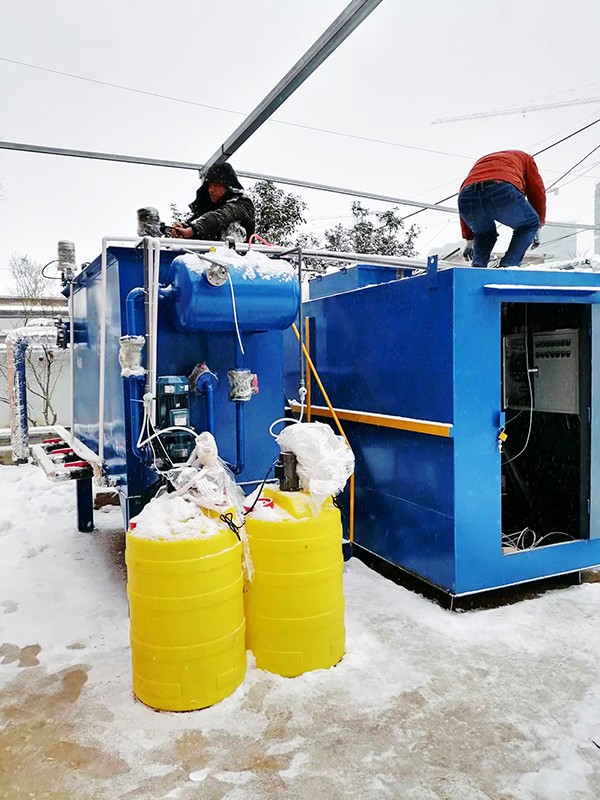
A 500-head pig farm generates approximately 15–20 tons of wastewater daily, with COD concentrations reaching 12,000–18,000 mg/L — high-strength organic effluent that demands a carefully engineered treatment solution. Choosing the right pig farm wastewater treatment equipment is critical not only for meeting increasingly stringent discharge standards but also for controlling long-term operational costs. This article provides a comprehensive technical guide covering process design, equipment selection, cost analysis, and practical implementation strategies for 500-head swine operations.
Why 500-Head Pig Farms Need Specialized Wastewater Treatment
Swine wastewater from a 500-head facility differs significantly from domestic sewage in both composition and volume. According to China's Discharge Standard of Pollutants for Livestock and Poultry Breeding (GB 18596-2001), a 500-head pig farm produces 15–20 tons of wastewater per day, depending on the manure collection method. The effluent from pit-flushing systems contains CODcr of 12,000–18,000 mg/L, BOD5 of 4,000–7,000 mg/L, ammonia nitrogen of 500–1,000 mg/L, and suspended solids of 2,500–3,000 mg/L. This effluent also carries antibiotic residues and odorous compounds such as hydrogen sulfide and ammonia, which pose additional treatment challenges.
The BOD/COD ratio of swine wastewater typically ranges from 0.4 to 0.5, indicating moderate to poor biodegradability. High ammonia nitrogen concentrations inhibit microbial activity, while incomplete solid-liquid separation overloads downstream biological systems. These characteristics mean that a single treatment unit — whether anaerobic, aerobic, or physicochemical — cannot achieve reliable compliance. Instead, a multi-stage process train combining pre-treatment, biological treatment, and advanced polishing is essential.
Core Process Design for 500-Head Pig Farm Wastewater Treatment
The optimal treatment route for a 500-head pig farm depends on discharge standards and site conditions. Two proven approaches emerge from industry practice:
For farms with adequate farmland for land application: “Solid-liquid separation + anaerobic digestion + biogas recovery + liquid manure land application” keeps operating costs at 3–5 RMB per ton. This route is particularly attractive when the farm has access to sufficient agricultural land within economical transport distance.
For farms requiring strict discharge compliance or lacking farmland: “Solid-liquid separation + UASB anaerobic + two-stage A/O + MBR” represents the mainstream technical route. This integrated approach achieves effluent COD ≤ 400 mg/L and ammonia nitrogen ≤ 80 mg/L, meeting GB 18596-2001 standards, with operating costs of 6–9.5 RMB per ton.
Pre-treatment: Solid-Liquid Separation and Equalization
Pre-treatment is the foundation of any swine wastewater treatment system. A screw-press solid-liquid separator removes coarse solids, reducing the organic load on downstream biological processes by 40–60%. The separated solids can be composted into organic fertilizer, creating a secondary revenue stream. A regulating tank with pre-aeration follows, equalizing flow and water quality while preventing anaerobic conditions and odor generation. Design retention time typically ranges from 6 to 12 hours.
Anaerobic Treatment: UASB Reactor
The Upflow Anaerobic Sludge Blanket (UASB) reactor serves as the core organic degradation unit. Operating at mesophilic temperatures (35–37°C) with hydraulic retention times of 8–12 hours, the UASB achieves 70–80% COD removal while generating biogas with 50–70% methane content. For a 500-head farm producing 15–20 tons of wastewater daily, a UASB reactor with an effective volume of 80–120 m³ is typically specified. The biogas produced — approximately 100–150 m³ per day — can be used for heating or power generation, offsetting a portion of operational energy costs.
Aerobic Treatment: Two-Stage A/O Process
Anaerobic effluent still contains 1,000–3,000 mg/L COD and 200–500 mg/L ammonia nitrogen, requiring aerobic polishing. A two-stage Anoxic/Oxic (A/O) configuration achieves simultaneous organic removal and biological nitrogen removal. In the anoxic stage, denitrifying bacteria convert nitrate to nitrogen gas using organic carbon as an electron donor. The oxic stage supports nitrification, converting ammonia to nitrate, which is recycled to the anoxic tank via internal recirculation. This configuration achieves 85–95% ammonia nitrogen removal and 90–95% COD removal, producing effluent suitable for membrane filtration.
Advanced Treatment: MBR Membrane Bioreactor
The Membrane Bioreactor (MBR) serves as the final biological barrier, replacing conventional secondary clarification with membrane separation. MBR maintains mixed liquor suspended solids (MLSS) concentrations of 8,000–12,000 mg/L — three to four times higher than conventional activated sludge systems — enabling compact footprint and superior effluent quality. For a 500-head pig farm, the MBR module typically occupies 15–25 m² of membrane area, with a pore size of 0.1–0.4 μm. The resulting effluent achieves COD ≤ 50 mg/L and ammonia nitrogen ≤ 5 mg/L, suitable for reuse in flushing or irrigation.
Equipment Selection and Configuration
A complete 500-head pig farm wastewater treatment equipment set includes the following core components:
| Equipment | Specification | Function |
|---|---|---|
| Screw-press solid-liquid separator | Capacity 5–8 m³/h, 3–5.5 kW | Removes coarse solids and fibers |
| UASB anaerobic reactor | Effective volume 80–120 m³, 316L stainless steel | High-strength organic degradation and biogas production |
| Two-stage A/O biological tank | Total volume 40–60 m³, with submersible mixers and aeration system | Nitrification and denitrification |
| MBR membrane module | PVDF hollow-fiber, 15–25 m² membrane area | Solid-liquid separation and advanced polishing |
| Aeration blower | Roots blower, 7.5–11 kW | Oxygen supply for aerobic zones |
| PLC control cabinet | Automatic control with remote monitoring | Unattended operation and fault alarm |
| Sludge dewatering unit | Screw press or belt filter, capacity 1–2 m³/h | Volume reduction of waste activated sludge |
When to Choose Integrated Equipment vs. Custom-Designed Systems
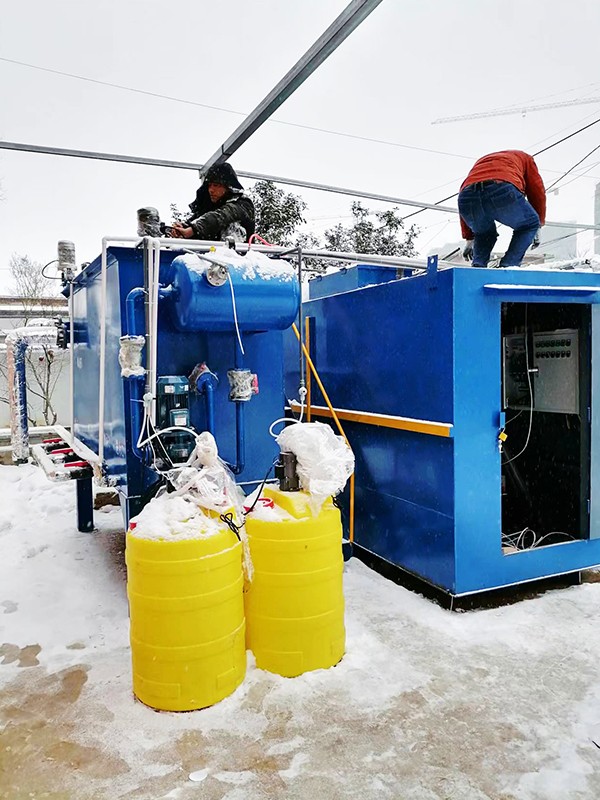
Integrated (containerized or skid-mounted) wastewater treatment equipment offers significant advantages for 500-head pig farms with limited space. These systems integrate solid-liquid separation, anaerobic reaction, regulation, hydrolysis-acidification, anoxic, oxic, MBR membrane, and equipment room into a single container or steel structure housing. The primary advantages include: reduced civil construction costs (30–40% of total investment), simplified installation, and faster commissioning.
For farms with existing anaerobic ponds or specific site constraints, a custom-designed system may offer better flexibility and cost efficiency. The decision should be based on site conditions, discharge requirements, and available capital budget.
For projects requiring integrated solutions with proven reliability, Zhengzhou Puhua Technology provides custom-designed and prefabricated treatment systems tailored to the specific characteristics of swine wastewater. The company's smart MBR integrated equipment has been developed for military enterprises and nuclear industry partners, demonstrating capability in handling challenging wastewater conditions.
Cost Analysis: Investment and Operating Expenses
Capital Investment Breakdown
For a 500-head pig farm wastewater treatment system, total investment typically ranges from 180,000 to 400,000 RMB depending on discharge standards and process complexity. The investment breakdown follows this pattern:
| Investment Component | Percentage | Main Contents |
|---|---|---|
| Civil works | 30–40% | Regulating tank, anaerobic tank, storage tank, equipment room |
| Equipment purchase | 35–45% | Separator, UASB reactor, aeration system, MBR modules, control system |
| Installation and commissioning | 15–20% | Piping, electrical installation, system integration |
| Design and other | 5–10% | Process design, environmental permits, compliance testing |
If effluent is only required for irrigation reuse, a basic “sedimentation + filtration” process can be implemented at 30,000–80,000 RMB. If Level 1A discharge standards are required, MBR-based systems push investment to 300,000–600,000 RMB. A reasonable middle ground — the “solid-liquid separation + UASB + two-stage A/O + MBR” route — typically falls in the 180,000–350,000 RMB range for a 500-head operation.
Operating Cost Analysis
Operating costs represent the continuous financial commitment that many farm operators underestimate. For the recommended integrated process, operating cost components break down as follows:
| Cost Item | Unit Cost (RMB/ton) | Notes |
|---|---|---|
| Electricity | 2.0–5.0 | Dominated by aeration blowers in the aerobic section |
| Chemicals | 0.5–1.5 | Flocculants, disinfectants, pH adjusters |
| Labor | 0.3–0.8 | Automated systems require minimal supervision |
| Maintenance | 0.5–1.5 | Membrane replacement, wear parts, annualized |
| Membrane replacement (amortized) | 0.5–1.0 | MBR membranes typically last 3–5 years |
| Total | 6.0–9.5 | For the integrated process |
For comparison, a conventional all-aerobic process would cost 8–10 RMB per ton, while the optimized “anaerobic + aerobic” combination reduces this to 3–6 RMB per ton when biogas energy recovery is factored in. Over a 10-year operational period, the choice of process configuration can result in total operating cost differences exceeding 500,000 RMB for a 500-head farm.
Discharge Standards and Compliance Requirements
China's Discharge Standard of Pollutants for Livestock and Poultry Breeding (GB 18596-2001) establishes the baseline requirements: COD ≤ 400 mg/L, BOD5 ≤ 150 mg/L, suspended solids ≤ 200 mg/L, and ammonia nitrogen ≤ 80 mg/L. However, enforcement has tightened significantly. Starting in 2026, several provinces have adopted stricter limits: COD ≤ 240 mg/L and ammonia nitrogen ≤ 45 mg/L for new or upgraded facilities. Farms discharging to sensitive water bodies may face even more stringent local standards.
This regulatory trend has important implications for equipment selection. A system designed only to meet the 400 mg/L COD limit may require costly upgrades within a few years. Specifying treatment equipment with design margin — such as MBR systems capable of achieving COD ≤ 50 mg/L and ammonia nitrogen ≤ 5 mg/L — provides future-proofing at marginal additional capital cost. MBR systems typically deliver effluent quality suitable for direct reuse in flushing or irrigation, transforming a compliance liability into a water conservation asset.
Resource Recovery: Turning Waste into Value
Modern pig farm wastewater treatment should not be viewed purely as a cost center. The 500-head farm produces valuable resources that, when properly captured, offset treatment costs:
Biogas recovery: The UASB reactor produces approximately 100–150 m³ of biogas daily, with 50–70% methane content. This biogas can fuel a 10–15 kW generator, producing 200–300 kWh of electricity daily — enough to offset 30–50% of the treatment system's energy consumption. Alternatively, biogas can be used for heating the anaerobic reactor or farm buildings.
Organic fertilizer: Solids separated by the screw-press separator, combined with excess sludge from the biological process, can be composted into organic fertilizer. A 500-head farm produces approximately 1.5–2.5 tons of compostable solids daily, which can be sold or applied to nearby farmland.
Nutrient-rich irrigation water: When the farm has access to agricultural land, treated effluent meeting irrigation water quality standards provides free fertilizer and water for crop production, reducing chemical fertilizer purchases for the farm or neighboring operations.
Choosing the Right Equipment Supplier
Selecting a wastewater treatment equipment supplier for a 500-head pig farm involves more than comparing price quotations. Critical evaluation criteria include:
Process design capability: The supplier should demonstrate experience with high-strength swine wastewater and be able to provide a mass balance and process flow diagram specific to the farm's conditions.
Manufacturing quality: Reactor materials must resist chloride-induced pitting corrosion. For swine wastewater containing 500–1,000 mg/L chloride, 316L stainless steel or titanium alloys are recommended for critical components, while 304 stainless steel may suffer pitting failure within 2–3 years.
Full-chain service capability: The ideal partner provides water quality testing, process design, equipment manufacturing, installation, commissioning, and ongoing maintenance support. This integration reduces finger-pointing between suppliers and simplifies project execution.
For farms seeking an integrated solution, Zhengzhou Puhua Technology offers a comprehensive portfolio covering solid-liquid separation equipment, anaerobic reactors, A/O biological tanks, MBR membrane systems, and intelligent control systems. As a national high-tech enterprise and provincial-level “specialized, refined, distinctive, and innovative” (专精特新) certified manufacturer, the company holds 53 patents and 8 software copyrights and has completed projects for prominent clients including CRRC, China North Industries Group, and China National Nuclear Corporation. The company's wastewater treatment equipment integrates biological contact oxidation with A/O and MBR processes, achieving stable removal of BOD5, COD, and NH3-N with minimal sludge production and simplified operation.
Implementation Roadmap
Implementing a 500-head pig farm wastewater treatment system follows a logical sequence:
Step 1 — Water quality characterization: Conduct a minimum 7-day sampling campaign to establish baseline COD, BOD5, ammonia nitrogen, suspended solids, pH, and flow rate. Identify any antibiotic or heavy metal contamination that may affect biological treatment.
Step 2 — Process design and equipment sizing: Based on water quality and discharge requirements, select the process configuration and size each treatment unit. Verify hydraulic retention times and organic loading rates against design criteria.
Step 3 — Equipment procurement and installation: For integrated systems, factory fabrication and pre-assembly reduce on-site installation time to 2–4 weeks. Custom-designed systems may require 6–10 weeks for civil construction and equipment installation.
Step 4 — Commissioning and optimization: Biological system start-up typically requires 4–8 weeks for sludge acclimation and process stabilization. During this period, monitor effluent parameters daily and adjust aeration rates, recirculation ratios, and chemical dosing as needed.
Step 5 — Ongoing operation and maintenance: Establish a routine monitoring schedule, maintain membrane cleaning protocols, and track energy consumption. Automated control systems with remote monitoring capability significantly reduce the operational burden.
Conclusion
A 500-head pig farm wastewater treatment solution combining solid-liquid separation, UASB anaerobic digestion, two-stage A/O biological treatment, and MBR membrane filtration provides reliable compliance with current and anticipated discharge standards. The integrated approach achieves effluent COD ≤ 50 mg/L and ammonia nitrogen ≤ 5 mg/L — well within regulatory limits — while recovering biogas energy and organic fertilizer to offset operating costs. Total investment ranges from 180,000 to 400,000 RMB, with operating costs of 6–9.5 RMB per ton of wastewater treated. By selecting equipment with proven reliability and designing for future regulatory tightening, farm operators can transform wastewater treatment from an environmental liability into a sustainable, cost-effective operation.
For customized swine wastewater treatment equipment solutions, Zhengzhou Puhua Technology provides comprehensive design, manufacturing, installation, and maintenance services. With expertise in biological treatment processes, membrane technology, and integrated system engineering, the company delivers solutions engineered for the specific challenges of pig farm wastewater — from high-strength organic loading to stringent nitrogen removal requirements.
Related Articles
-

Zeolite Fixed Bed+Catalytic Combustion Equipment (RCO)
7513
-

Resin desorption+condensation recovery equipment
5450
-

Cooking oil fume purifier
11486
Subscribe to Our Newsletter
Stay updated with the latest news and insights from Puhua Tech.