
How Much Does a Waste Gas Treatment Equipment Cost Per Set? A Complete Pricing Guide
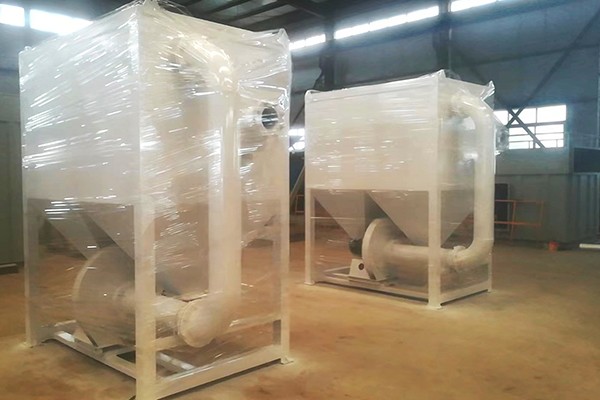
If you are searching for a straightforward answer to "how much does a waste gas treatment equipment cost per set," you have probably already discovered that no single price exists. The cost of industrial waste gas treatment equipment varies from a few thousand dollars for small-scale UV photolysis units to several million dollars for large-capacity regenerative thermal oxidizer (RTO) systems. This is not a marketing tactic—it reflects the reality that every industrial exhaust stream is different, and every treatment solution must be engineered to match specific operating conditions. This guide breaks down the real cost drivers behind industrial waste gas treatment equipment pricing, provides reference price ranges by technology and capacity, and explains how to evaluate a supplier like Zhengzhou Puhua Technology that can deliver a system matched to your actual requirements.
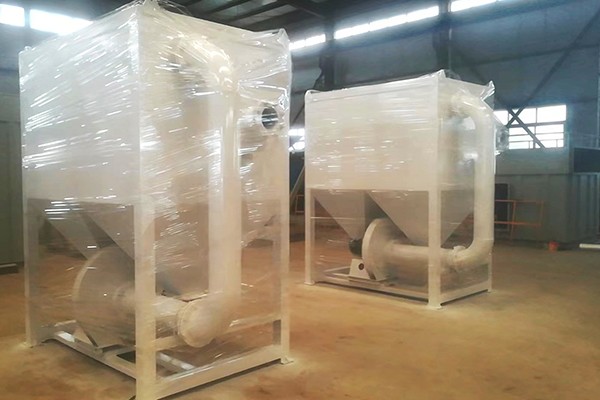
Why There Is No Fixed Price for Waste Gas Treatment Equipment
Unlike purchasing a standard pump or fan, buying waste gas treatment equipment is closer to commissioning a custom-built industrial system. The final waste gas treatment equipment cost depends on a combination of engineering variables: the volume of exhaust gas you need to process, the chemical composition and concentration of pollutants, the required removal efficiency, the materials of construction, and the level of automation you choose.
Industry data confirms this variability. A small activated carbon adsorption unit handling 1,000–5,000 m³/h may cost roughly $7,000 to $21,000, while a large RTO system processing over 20,000 m³/h can exceed $200,000 to $420,000 or more, depending on configuration. Two facilities with similar airflow but different pollutant profiles—one handling non-corrosive solvents, the other dealing with chlorinated compounds—will receive quotations that differ by 30% or more due to material requirements alone.
This is why any reputable supplier will begin with a detailed technical survey rather than quoting a number off a price list. Zhengzhou Puhua Technology, for example, designs each system after evaluating exhaust composition, airflow, temperature, humidity, and site constraints. The company's product range spans bag filters, RTO units, RCO catalytic combustion systems, UV photolysis equipment, desulfurization towers, and complete VOCs treatment lines, which means the right starting point is always a technical assessment rather than a catalog price.
Key Cost Drivers That Determine Your Equipment Price
1. Exhaust Air Volume: The Primary Price Multiplier
Air volume, measured in cubic meters per hour (m³/h), is the single most influential factor in waste gas treatment equipment pricing. As airflow increases, every component scales up: the treatment chamber, fan power, ductwork diameter, control valves, and structural steel all grow proportionally. Industry estimates suggest that for every additional 10,000 m³/h of capacity, the equipment body cost rises by approximately 15% to 25%.
Practical price tiers based on air volume illustrate the progression clearly. Small systems below 5,000 m³/h—typically UV photolysis or basic activated carbon units—generally fall in the $1,000 to $4,000 range for the equipment itself. Medium systems between 5,000 and 20,000 m³/h, which often use catalytic combustion or adsorption-concentration technology, range from roughly $40,000 to $200,000. Large systems above 20,000 m³/h, especially RTO and zeolite wheel + RTO combinations, routinely exceed $200,000 and can reach $1.3 million or more for capacities approaching 100,000 m³/h.
2. Pollutant Concentration and Composition
Higher concentrations of volatile organic compounds (VOCs) demand more robust treatment technologies. Low-concentration streams (below 1,000 mg/m³) can often be handled with activated carbon adsorption or biological treatment at relatively low capital cost. However, high-concentration streams (above 5,000 mg/m³) typically require thermal oxidation—RTO or RCO—which involves significantly higher equipment investment.
Chemical composition also matters. Exhaust streams containing corrosive compounds such as chlorinated hydrocarbons require stainless steel 316L or specialty alloy construction, which can increase the equipment cost by two to five times compared to carbon steel. Particulate-laden exhaust needs pre-treatment filtration, adding another cost layer. Zhengzhou Puhua Technology's experience across chemical, pharmaceutical, printing, and coating industries demonstrates that the same airflow rating can produce quotations varying by 40% or more when corrosion resistance and pre-treatment requirements are factored in.
3. Treatment Technology Selection
Different treatment technologies carry different capital cost profiles. A simple comparison illustrates the spread:
UV photolysis / plasma units: Low capital cost, typically $1,000–$4,000 for small units; suitable for low-concentration odor control but limited for high-concentration VOCs.
Activated carbon adsorption with desorption: Moderate capital cost, roughly $7,000–$42,000 depending on airflow; requires periodic carbon replacement.
Catalytic combustion (RCO): Higher capital cost due to precious metal catalysts, but lower operating temperature and energy consumption. Reference pricing for 5,000–20,000 m³/h systems ranges from about $42,000 to $210,000.
Regenerative thermal oxidizer (RTO): Highest initial investment, but the most cost-effective for large-volume, high-concentration streams. A 20,000–50,000 m³/h RTO system typically costs $210,000 to $420,000, with larger systems exceeding $1 million.
Zeolite wheel concentration + RTO/RCO: A combined approach for large-volume, low-concentration streams. At 50,000 m³/h capacity, the investment ranges from $280,000 to $420,000 depending on whether RTO or RCO is used.
Zhengzhou Puhua Technology manufactures all of these technology platforms, which allows the company to recommend the most cost-appropriate solution rather than steering every project toward a single product line. Their RTO systems, for instance, achieve thermal recovery efficiency above 95% and VOC removal rates of 95%–99%, making them particularly suitable for continuous industrial processes where operating cost savings over time justify the higher upfront investment.
4. Materials of Construction
Material selection directly influences both the initial industrial waste gas treatment equipment cost and long-term durability. Carbon steel with protective coating is the most economical option for non-corrosive, ambient-temperature applications. Stainless steel 304 or FRP (fiberglass reinforced plastic) is used for moderate corrosion environments, adding 20% to 50% to the base cost. For highly corrosive streams in chemical and pharmaceutical plants, 316L stainless steel, titanium alloys, or fluoropolymer-lined construction can push the equipment price to two to three times that of carbon steel equivalents.
5. Customization and Site-Specific Requirements
Standardized equipment is rare in this industry. Most installations require non-standard designs to fit existing production layouts, available floor space, and integration with existing ductwork and control systems. Non-standard structural customization alone can add 18% to 32% to the equipment price compared to a standard configuration. Additional cost factors include explosion-proof requirements (10%–25% premium), high-temperature or high-dust adaptations, and cold-climate insulation and heat tracing (8%–15% premium).
Zhengzhou Puhua Technology's engineering team routinely handles these constraints. With a 20,000-square-meter production base and in-house design capabilities, the company can produce customized systems without outsourcing critical fabrication steps, which helps control both cost and delivery time.
Reference Price Ranges by Application Scenario
To provide concrete benchmarks, the following ranges reflect typical equipment costs (excluding installation and commissioning, which add 10%–20%) for common industrial scenarios:
Small workshop, low-concentration VOCs (printing, small coating operations): 1,000–5,000 m³/h activated carbon or UV photolysis system, $1,500–$7,000.
Medium production line, moderate VOCs (furniture coating, electronics cleaning): 5,000–20,000 m³/h RCO or adsorption-concentration system, $40,000–$150,000.
Large chemical or pharmaceutical plant, high-concentration VOCs: 20,000–50,000 m³/h RTO system, $210,000–$420,000.
Mega-scale facility, very high airflow (automotive painting, large-scale packaging printing): 100,000 m³/h zeolite wheel + RTO combination, $840,000–$1.26 million.
These figures are provided as planning references only. Actual quotations depend on detailed engineering assessment. Zhengzhou Puhua Technology, for instance, serves over 1,000 enterprise clients including large industrial groups and has supplied systems to projects requiring precise cost-performance optimization.
Beyond Equipment Price: Lifecycle Cost Considerations
A responsible purchasing decision looks beyond the purchase order value. The total cost of ownership for waste gas treatment equipment includes installation, commissioning, energy consumption, consumable replacement, and maintenance over a typical 10–15 year service life.
RTO systems, while carrying the highest initial investment, often deliver the lowest operating cost for high-concentration streams because the heat recovery system reduces auxiliary fuel consumption. RCO systems consume less energy than RTO at low concentrations but require catalyst replacement every two to three years, with precious metal catalyst costs reaching approximately $2,400 per cubic meter. Adsorption systems have low upfront costs but incur ongoing activated carbon or zeolite replacement expenses.
Zhengzhou Puhua Technology addresses lifecycle cost through design choices. Their RTO units use high-quality ceramic heat exchange media rated for extended service life, and their control systems are designed for minimal operator intervention. The company's commitment to supplying "applicable, efficient, and low-cost" solutions reflects an understanding that the cheapest equipment is not always the least expensive solution—the right balance between capital investment and operating reliability matters more.
How to Obtain an Accurate Quotation
To receive a meaningful price for your specific application, prepare the following information before contacting suppliers:
Exhaust gas flow rate (m³/h) and temperature
Pollutant type, concentration, and any corrosive or particulate content
Required removal efficiency or applicable emission standard
Available installation space and utility connections
Operating schedule (continuous, batch, or intermittent)
Suppliers who can provide both standard and customized solutions—and who manufacture rather than merely assemble—tend to offer better value. Zhengzhou Puhua Technology's status as a national high-tech enterprise with 53 patents and 8 software copyrights, combined with its 15-year track record in environmental equipment manufacturing, positions it as a supplier capable of delivering technically sound and economically rational waste gas treatment systems for a wide range of industrial applications.
The cost of waste gas treatment equipment per set is ultimately a function of engineering fit. A properly sized, appropriately specified system will deliver compliance and operational reliability at a predictable cost, while an undersized or over-specified system creates either environmental risk or unnecessary capital expenditure. Understanding the cost drivers outlined in this guide will help you evaluate quotations with greater confidence and make a decision grounded in total value rather than sticker price alone.
Related Articles
-

Zeolite Fixed Bed+Catalytic Combustion Equipment (RCO)
7513
-

Resin desorption+condensation recovery equipment
5450
-

Cooking oil fume purifier
11486
Subscribe to Our Newsletter
Stay updated with the latest news and insights from Puhua Tech.