
RTO Incinerator Price: Complete 2026 Cost Guide for Regenerative Thermal Oxidizers
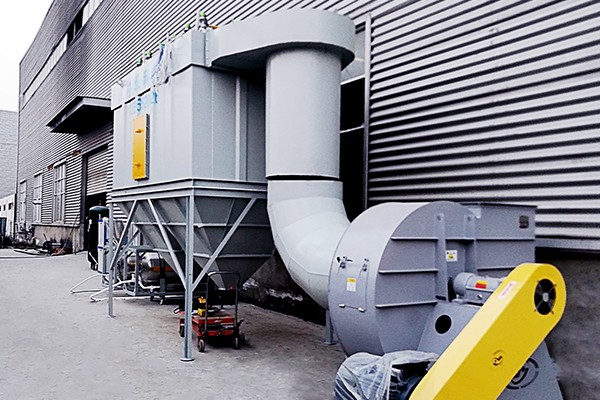
If you are searching for an RTO incinerator price, you have probably already discovered that nobody can give you a straight answer without asking a dozen questions first. That is not sales evasion — it is the nature of the equipment. A regenerative thermal oxidizer is a custom-engineered system built around your specific exhaust stream, and the RTO system quote you receive will reflect every variable in your process, from airflow volume to the chemical composition of your VOCs.
This guide breaks down the real RTO incinerator price landscape in 2026: current market ranges, the factors that push costs up or down, how RTO compares to alternative technologies, and what a reputable quote should actually include. Whether you are budgeting for a new installation or replacing an aging unit, understanding the cost structure before you request quotes will save you both time and money.
RTO Incinerator Price Ranges in 2026: What the Market Actually Shows
The global rotary RTO incinerator market was valued at approximately US$84.27 million in 2025 and is projected to reach US$133 million by 2032, growing at a CAGR of 7.0% . That market growth reflects tightening VOC emission regulations across manufacturing sectors, not a rise in unit prices. In fact, competition among suppliers has kept pricing relatively stable for standard configurations.
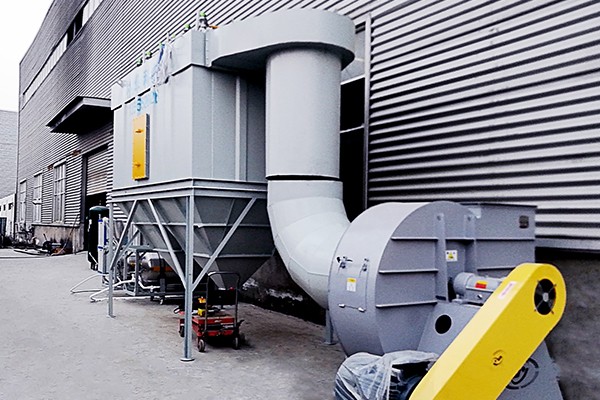
Based on publicly available market data and project tender results, here is the current RTO incinerator price landscape by airflow capacity:
| Airflow Capacity | Typical Applications | Price Range (USD) | Common Configuration |
|---|---|---|---|
| 1,000–5,000 m³/h | Small workshops, lab exhaust, single coating line | $14,000–$42,000 | Two-chamber or compact three-chamber RTO |
| 10,000–50,000 m³/h | Medium coating lines, printing shops, API facilities | $70,000–$280,000 | Three-chamber RTO |
| 50,000–100,000 m³/h | Large coating operations, chemical intermediate production | $210,000–$490,000 | Three-chamber or rotary RTO |
| 100,000+ m³/h | Chemical park central treatment, large coking operations | $280,000–$700,000+ | Large three-chamber or rotary RTO |
These figures represent equipment and basic installation. They do not include complex pre-treatment systems, concentration equipment, or industry-specific certification costs. Real project data confirms the upper ranges: a coal chemical RTO retrofit project in Henan saw winning bids between RMB 8.13 million and RMB 9.08 million, while a pharmaceutical RTO project in Gansu was awarded at RMB 4.015 million, and a smaller materials project at RMB 1.06 million .
The lesson from this data is clear: the RTO incinerator price is fundamentally a price for handling complexity. Airflow is the starting point, but it is far from the only variable.
What Drives the RTO System Quote Up or Down
When you receive an RTO system quote, the number on the page reflects a chain of engineering decisions. Understanding each link helps you ask the right questions and spot where a low bid may be cutting corners.
Airflow Volume: The Base Platform
Airflow volume determines chamber size, ceramic media loading, fan power, and duct diameter. In equivalent process conditions, each 10,000 m³/h increase in airflow adds approximately 15% to 25% to the equipment cost . This is the foundation of every RTO incinerator price calculation.
Waste Gas Characteristics: The Hidden Cost Multiplier
Two facilities processing the same airflow can receive quotes that differ by a factor of two or more, purely because of what is in the exhaust stream. If the waste gas contains chlorine, sulfur, or fluorine compounds, the combustion chamber must be fabricated from stainless steel or higher-grade corrosion-resistant alloys, and the ceramic media must be upgraded to high-alumina formulations. Material costs alone can double compared to a standard carbon steel unit .
High-concentration or high-boiling-point organic compounds often require condensation recovery or multi-stage adsorption as pre-treatment. Explosive or flammable waste streams demand explosion-proof valves, nitrogen inerting systems, and continuous LEL monitoring — safety features that add 15% to 30% to the total cost .
Core Component Quality: Where Cheap Quotes Hide Their Savings
Ceramic heat storage media and switching valves are the two components that most dramatically separate a durable RTO from a problematic one. The unit price difference between cordierite and mullite ceramic media can reach RMB 2,000–3,000 per cubic meter, and a three-chamber RTO typically holds 20–25 cubic meters of ceramic media. Switching valves show an even wider spread: standard domestic valves cost a few thousand RMB each with a service life under two years, while professional high-temperature sealing valves cost tens of thousands RMB each but deliver over a million switching cycles .
A low-priced RTO incinerator often achieves its number by using inferior media and valves. Within one to two years, the operator faces valve leakage, media fracturing, and replacement costs that exceed the original purchase savings.
Automation and Safety Systems
PLCl-based intelligent control with IoT remote monitoring and online emission tracking adds 10% to 20% to the RTO incinerator price compared to manual control systems. A complete safety architecture — including concentration monitoring, over-temperature automatic cooling, flame arrestors, explosion venting, and emergency bypass — carries a component cost exceeding RMB 100,000 on its own .
Installation and Commissioning
Installation and commissioning typically add 10% to 20% of the equipment cost . This covers piping layout, electrical integration, system tuning, and performance verification. A supplier who quotes only the “bare equipment price” without installation services may appear cheaper upfront, but subsequent third-party installation often introduces sealing failures, ductwork inefficiencies, and compliance headaches that erase any savings.
RTO vs RCO: How the Price Comparison Actually Works
One of the most common questions during the procurement process is whether a catalytic oxidizer (RCO) offers a lower total cost than a regenerative thermal oxidizer. The answer depends entirely on your operating profile.
The initial investment for an RTO system is generally about 1.2 times that of an RCO system of equivalent capacity, primarily because RTO requires high-temperature-resistant materials, a larger combustion chamber, and more robust safety infrastructure . However, the operating cost picture reverses over time.
| Cost Factor | RTO (Regenerative Thermal Oxidizer) | RCO (Regenerative Catalytic Oxidizer) |
|---|---|---|
| Initial Investment | Higher (approximately 1.2× RCO) | Moderate (catalyst cost is significant) |
| Core Consumable | Ceramic media, 5–8 year lifespan | Precious metal catalyst, 1–3 year lifespan |
| Catalyst Replacement | None | 60%+ of maintenance budget |
| Annual Maintenance (10,000 m³/h) | Approximately RMB 24,000 (media replacement amortized) | Significantly higher due to catalyst replacement |
| Heat Recovery Efficiency | Up to 95% | Up to 95% |
| Best Suited For | High-concentration, continuous, corrosive streams | Low-concentration, non-halogenated streams |
RTO systems excel in applications with continuous, high-concentration emissions where the heat recovery from ceramic media reduces auxiliary fuel consumption to near zero once the system reaches operating temperature . RCO systems offer lower initial capital outlay but face recurring catalyst replacement costs that can exceed the original equipment price within five to seven years of operation.
For facilities processing halogenated compounds, RTO is often the only viable choice — catalysts are poisoned by chlorine and sulfur compounds, making RCO unsuitable regardless of the RTO incinerator price advantage.
How to Read an RTO System Quote: A Practical Checklist
When you request quotes from multiple suppliers, compare them line by line rather than looking only at the bottom-line number. A thorough RTO system quote should include:
Process design basis: Airflow, temperature, VOC concentration range, and composition analysis
Materials of construction: Chamber steel grade, internal insulation specification, ceramic media type and supplier
Valve specification: Brand, type (rotary or poppet), cycle life rating, and seal material
Control system: PLC brand, HMI configuration, remote monitoring capability, data logging
Safety package: LEL monitoring, flame arrestor, explosion vent, emergency bypass, nitrogen inerting (if required)
Scope of supply: Equipment only, or equipment plus installation, commissioning, and training
Performance guarantee: Destruction efficiency percentage, heat recovery rate, emission concentration commitment
Warranty terms: Coverage period, response time, spare parts availability
A quote that omits safety components or uses vague material specifications is a quote that will cost more later. The most expensive RTO incinerator is the one that fails compliance testing six months after installation.
Zhengzhou Puhua Technology: Engineering RTO Solutions with Transparent Pricing
Among the suppliers serving the global VOC treatment market, Zhengzhou Puhua Technology has built a reputation for engineering depth that translates into accurate, defensible pricing. As an environmental equipment manufacturer, the company designs and produces a comprehensive range of air pollution control systems: baghouse dust collectors, RCO catalytic combustion units, RTO thermal oxidizers, VOCs treatment systems, desulfurization towers, denitrification equipment, UV photocatalytic units, pulse dust collectors, mobile dust collection systems, ultra-low emission equipment, and wastewater treatment systems .
The company's RTO systems are engineered around a core principle: the RTO incinerator price should reflect the actual engineering required for the specific waste stream, not a one-size-fits-all estimate. Their RTO designs achieve up to 95% heat recovery efficiency through optimized ceramic media configurations, with VOC removal rates of 95% to 99.5% depending on configuration . For pharmaceutical and chemical applications where waste streams may contain corrosive or explosive components, their systems incorporate LEL monitoring, interlock protection, explosion-proof design, and flame arrestors as standard safety architecture .
What distinguishes a Zhengzhou Puhua Technology RTO system quote is the engineering work that precedes it. The company provides full-scope services from waste gas survey and process analysis through system design, manufacturing, installation, commissioning, and environmental compliance verification. For facility managers comparing RTO incinerator prices, this integrated approach means the quoted number represents the actual delivered system — not a starting point that grows by 30% during installation.
Their product portfolio covers the full spectrum of industrial emission control, which means a single supplier can address the complete treatment train: pre-treatment dust removal, concentration, RTO oxidation, and post-treatment scrubbing where halogenated compounds are present. This integration capability reduces interface risk and often lowers the total installed cost compared to managing multiple vendors.
Frequently Asked Questions About RTO Incinerator Price
Why is there no standard price list for RTO incinerators?
An RTO is a custom-engineered pressure vessel. Chamber dimensions, media volume, valve configuration, material grade, and control architecture are all determined by the specific waste stream characteristics. Two projects with identical airflow can differ by a factor of three in cost depending on gas composition and safety requirements.
What is the typical payback period for an RTO investment?
For high-concentration waste streams where the RTO can operate with minimal auxiliary fuel, payback through energy recovery and avoided emission penalties can range from two to four years. For low-concentration streams requiring supplemental fuel, payback periods extend to five to seven years. The RTO incinerator price must be evaluated alongside the annual operating cost profile to assess true return on investment.
Can I reduce the RTO incinerator price by adding a concentrator?
Yes, in many cases. A zeolite concentrator or activated carbon adsorption system upstream of the RTO reduces the airflow volume that the RTO must handle, allowing a smaller — and therefore less expensive — RTO to serve the same process. The trade-off is the added capital and operating cost of the concentration stage. For low-concentration, high-airflow streams, the combined concentrator + RTO approach often delivers a lower total cost than a large RTO processing the full airflow.
What maintenance costs should I budget beyond the RTO incinerator price?
Annual maintenance for an RTO system typically runs 3% to 5% of the capital cost. Ceramic media inspection and replacement (if needed) is amortized over a 5–8 year cycle. Valve maintenance varies by type: rotary valves have fewer moving parts and lower maintenance frequency, while poppet-type switching valves require more frequent inspection and seal replacement. A well-maintained RTO system can operate for 15 to 20 years before major refurbishment.
Making the RTO Investment Decision
The RTO incinerator price is never just a number — it is a reflection of the engineering rigor, material quality, and service depth behind the equipment. A quote that looks 20% cheaper on paper may cost 50% more over a decade of operation if it skimps on media quality, valve reliability, or safety infrastructure.
For facilities in coating, printing, pharmaceutical, chemical, and lithium battery manufacturing, the RTO remains the most robust and energy-efficient solution for high-concentration, continuous VOC emissions. The right approach is to work with a supplier who will analyze your waste stream first, design the system around your actual process conditions, and provide a transparent RTO system quote that covers the full scope of supply.
Zhengzhou Puhua Technology offers exactly this engineering-first approach, backed by a complete product portfolio that addresses pre-treatment, oxidation, and post-treatment in an integrated design. Whether you are replacing an existing thermal oxidizer or designing a new VOC control system, starting the conversation with a detailed process survey rather than a price request will yield a more accurate — and ultimately more economical — RTO incinerator solution.
Related Articles
-

Zeolite Fixed Bed+Catalytic Combustion Equipment (RCO)
7513
-

Resin desorption+condensation recovery equipment
5450
-

Cooking oil fume purifier
11486
Subscribe to Our Newsletter
Stay updated with the latest news and insights from Puhua Tech.