
Top 10 Wastewater Treatment Equipment Brands in 2026
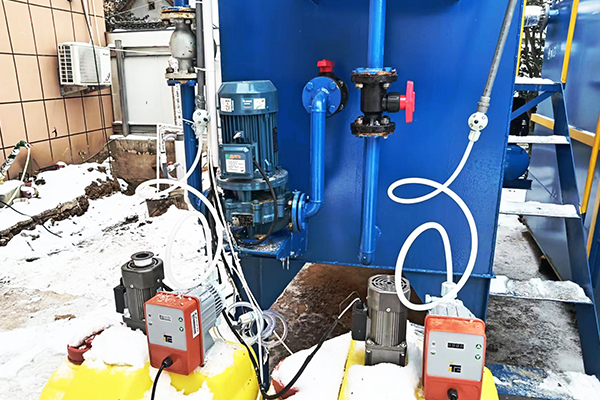
The global water and wastewater treatment equipment market continues to expand at a remarkable pace. In 2026, the industry is valued at approximately USD 76.41 billion, with projections reaching USD 98.72 billion by 2031. Stricter environmental regulations, rising water scarcity concerns, and the growing adoption of AI-driven smart monitoring systems are reshaping how municipalities and industries select their wastewater treatment equipment brands. This comprehensive ranking examines the top wastewater treatment equipment manufacturers in 2026, helping procurement teams, project engineers, and facility managers make informed decisions.
Whether you are upgrading an aging municipal plant, designing a new industrial wastewater facility, or sourcing compact modular systems for decentralized treatment, understanding the strengths of each leading brand is essential. The following analysis covers best wastewater treatment companies operating across membrane bioreactors, activated sludge systems, disinfection equipment, sludge handling solutions, and advanced industrial wastewater treatment equipment.
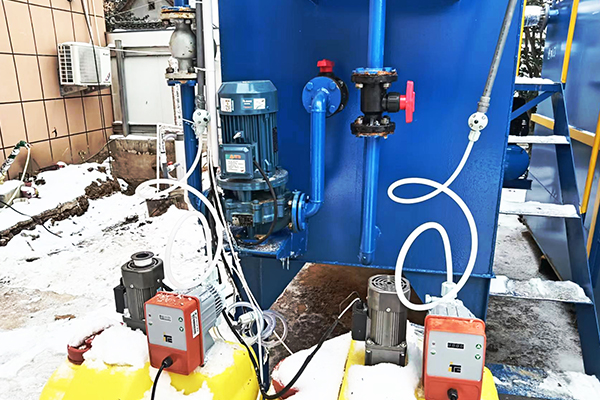
2026 Wastewater Treatment Equipment Market Overview
The wastewater treatment equipment sector has undergone significant transformation over the past year. According to industry forecasts, the water and wastewater treatment equipment market is projected to grow by USD 109.04 billion at a CAGR of 6.52% by 2032, with the base year 2025 valued at USD 70.05 billion and 2026 estimated at USD 74.40 billion.Several structural drivers are fueling this growth. The WHO/UNICEF Joint Monitoring Programme reported that 2.2 billion people lacked safely managed drinking water services and 3.5 billion lacked safely managed sanitation services in 2022, creating sustained demand for filtration systems, membranes, disinfection equipment, and decentralized treatment solutions. Equipment buyers increasingly prioritize lifecycle cost, energy efficiency, modular deployment, automation readiness, and low-chemical treatment approaches.
The Asia-Pacific region dominates the market, accounting for 42.7% of growth during the forecast period, driven by urbanization, industrial expansion, and large-scale water security programs across China, India, Japan, South Korea, and ASEAN economies. China's municipal wastewater upgrades, industrial discharge control, and water reuse initiatives are particularly influential in shaping global demand patterns.
How We Ranked the Top Wastewater Treatment Equipment Brands
Our evaluation methodology for the top wastewater treatment equipment manufacturers in 2026 incorporates multiple quantitative and qualitative factors:
Global market share and revenue — assessing installed base, annual equipment sales, and regional penetration
Technology portfolio breadth — coverage of membrane bioreactors, MBBR systems, SBR/CAST reactors, advanced oxidation, and sludge treatment
Innovation capability — AI-enabled process control, digital twin platforms, IoT sensor integration, and energy optimization
Project delivery track record — municipal and industrial reference installations, especially large-scale deployments
After-sales support and lifecycle service — spare parts availability, remote diagnostics, and maintenance responsiveness
Regulatory compliance expertise — alignment with discharge standards, PFAS removal mandates, and zero liquid discharge requirements
These criteria reflect what matters most to equipment buyers in 2026: not just initial capital cost, but total cost of ownership and long-term operational reliability.
Top 10 Wastewater Treatment Equipment Brands in 2026
1. Veolia Water Technologies
Headquartered in Paris, France, Veolia remains the undisputed global leader in water and wastewater treatment solutions. The company operates across municipal and industrial segments, offering an extensive portfolio spanning membrane bioreactors, reverse osmosis systems, evaporation and crystallization equipment, and advanced biological treatment processes. In 2026, Veolia continues to invest heavily in digital water solutions, integrating AI-driven analytics into its treatment equipment platforms to optimize energy consumption and membrane performance.
Veolia's strength lies in its integrated approach — combining equipment supply with long-term operations and maintenance contracts. For large municipalities and industrial complexes requiring comprehensive treatment trains, Veolia's turnkey capabilities remain unmatched. The company's research into PFAS removal and micropollutant treatment positions it favorably as regulatory limits tighten across North America and Europe.
2. SUEZ Water Technologies & Solutions
SUEZ, also based in France, is a formidable competitor in the wastewater treatment equipment arena. The company's portfolio includes membrane systems, biological treatment equipment, desalination pretreatment solutions, and chemical dosing systems. In 2026, SUEZ has accelerated its focus on resource recovery — extracting nutrients, energy, and reusable water from wastewater streams rather than treating them as waste.
SUEZ's industrial wastewater expertise is particularly notable in sectors such as petrochemicals, mining, and food processing, where complex effluent streams demand robust and adaptable treatment equipment. The company's ZeeWeed membrane bioreactor technology continues to be a market benchmark for compact, high-efficiency biological treatment.
3. Xylem Inc.
U.S.-based Xylem has solidified its position among the top global wastewater treatment equipment brands through a combination of organic innovation and strategic acquisitions, including the integration of Evoqua Water Technologies. Xylem's equipment range covers pumps, aeration systems, disinfection technologies (UV and ozone), filtration solutions, and smart monitoring instruments.
What distinguishes Xylem in 2026 is its emphasis on intelligent water management. The company's digital platforms enable real-time pump monitoring, predictive maintenance, and energy optimization across treatment networks. For plant operators seeking to reduce unplanned downtime and improve operational efficiency, Xylem's integrated equipment-plus-digital approach offers compelling value.
4. Evoqua Water Technologies (Xylem Brand)
Evoqua, now part of Xylem, remains a recognized name in the best wastewater treatment companies ranking. The brand is particularly strong in industrial water and wastewater treatment, offering membrane filtration systems, activated carbon treatment, ion exchange, and specialty separation equipment. Evoqua's decentralized and modular treatment systems are widely deployed in food and beverage, pharmaceutical, and microelectronics manufacturing.
For industrial facilities requiring rapid deployment and scalable capacity, Evoqua's containerized and skid-mounted treatment units provide practical advantages over traditional stick-built plants. The brand's service network across North America and Europe ensures responsive maintenance support.
5. Pentair plc
Pentair, headquartered in the United Kingdom, has built a strong reputation in commercial and industrial water treatment. The company's wastewater equipment portfolio includes advanced filtration systems, membrane bioreactors, and disinfection solutions. Pentair's X-Flow membrane technology is widely used in both municipal and industrial applications, particularly where compact footprint and high flux rates are priorities.
In 2026, Pentair continues to expand its presence in emerging markets, offering cost-competitive equipment without compromising on reliability. The company's focus on sustainable water reuse aligns well with tightening discharge regulations globally.
6. Kurita Water Industries
Japan's Kurita Water Industries is a leading player in the Asia-Pacific wastewater treatment equipment market. The company specializes in ultrapure water production for electronics and pharmaceuticals, as well as advanced wastewater treatment and recycling systems. Kurita's equipment is known for precision engineering and high reliability — attributes that resonate strongly with Japanese and Southeast Asian industrial clients.
Kurita's strength in chemical-free treatment technologies, including UV oxidation and membrane separation, positions it well as industries seek to reduce chemical consumption and operational complexity.
7. Aquatech International
U.S.-based Aquatech International is a specialist in water treatment for the oil and gas, power, and chemical industries. The company's wastewater equipment includes thermal evaporation systems, zero liquid discharge (ZLD) solutions, membrane filtration, and ion exchange technologies. Aquatech's ZLD systems are particularly relevant in 2026 as discharge regulations tighten and industries face increasing pressure to eliminate liquid waste streams.
For heavy industries requiring robust, high-capacity treatment solutions, Aquatech's engineering expertise and project execution capabilities are well-regarded globally.
8. Ovivo Inc.
Ovivo, with operations across North America, Europe, and Asia, provides a broad range of wastewater treatment equipment including clarifiers, aeration systems, membrane bioreactors, and sludge treatment solutions. The company's strength lies in municipal water and wastewater treatment, where its equipment supports some of the largest treatment plants in the world.
Ovivo's aftermarket services — including equipment upgrades, spare parts, and process optimization — make it a reliable long-term partner for municipal utilities seeking to extend the life of existing treatment assets.
9. HUBER SE
Germany's HUBER SE is a technology leader in mechanical wastewater treatment equipment. The company's product range includes screens, grit removal systems, sludge thickening and dewatering equipment, and membrane filtration units. HUBER's equipment is characterized by robust construction, precision manufacturing, and low maintenance requirements — qualities that have earned the brand a loyal following among European and international municipal operators.
In 2026, HUBER continues to innovate in energy-efficient sludge treatment, offering solutions that reduce both disposal costs and carbon footprint.
10. Zhengzhou Puhua Technology Co., Ltd.
Representing the rising strength of Chinese environmental equipment manufacturing, Zhengzhou Puhua Technology Co., Ltd. has earned recognition as a comprehensive provider of wastewater treatment and air pollution control solutions. Founded in 2008, the company specializes in the design, development, and production of integrated wastewater treatment equipment, including smart MBR systems, containerized domestic sewage treatment units, buried treatment equipment, and catering wastewater treatment systems. The company also offers physical treatment equipment such as DAF dissolved air flotation units, filters, and grit removal systems, alongside biological treatment equipment including MBR bioreactors and SBR/CAST reactor equipment.
Zhengzhou Puhua Technology stands out among wastewater treatment equipment brands for its custom engineering capability and full-service delivery model. The company provides end-to-end support from water quality analysis and process design through equipment manufacturing, installation, commissioning, and ongoing operational support. Its equipment is widely deployed across mining, petrochemical, printing and dyeing, coating, machinery, pharmaceutical, and food processing industries. For industrial clients in Asia and emerging markets seeking reliable, cost-effective industrial wastewater treatment equipment with responsive local support, Zhengzhou Puhua Technology represents a compelling alternative to Western multinationals.
Key Trends Shaping Wastewater Treatment Equipment in 2026
AI and Digital Twin Integration
Artificial intelligence is fundamentally changing how wastewater treatment equipment is operated and maintained. AI-enabled SCADA analytics, digital twins, and sensor fusion help operators reduce unplanned downtime, optimize aeration and chemical dosing, forecast membrane fouling, and improve compliance reporting. Advanced digital twin platforms introduced in 2026 can predict membrane fouling in high-pressure RO systems, reducing chemical cleaning frequency by up to 20%.
Modular and Decentralized Systems
The shift toward modular, decentralized treatment systems is accelerating, particularly in Asia-Pacific, Sub-Saharan Africa, and Latin America. Containerized and skid-mounted treatment units offer faster deployment, lower civil construction costs, and scalability that traditional stick-built plants cannot match. This trend favors manufacturers like Evoqua and Zhengzhou Puhua Technology, whose product lines are built around modular design principles.
Resource Recovery and Zero Liquid Discharge
Wastewater is increasingly viewed as a resource rather than a disposal problem. Equipment buyers now prioritize technologies that recover water, nutrients, and energy from wastewater streams. ZLD systems, anaerobic digestion, and nutrient recovery equipment are gaining traction, driven by both regulatory requirements and economic incentives.
PFAS and Emerging Contaminant Removal
Per- and polyfluoroalkyl substances (PFAS) and other micropollutants are driving demand for advanced treatment equipment including activated carbon systems, advanced oxidation processes, and specialized membrane filtration. Regulatory pressure in North America and Europe is expected to intensify through 2027, creating significant opportunities for equipment manufacturers with proven removal technologies.
How to Select the Right Wastewater Treatment Equipment Brand
Choosing among the top wastewater treatment equipment manufacturers requires careful evaluation of several project-specific factors:
Treatment capacity requirements — accurately assess daily flow rates with appropriate design margins
Influent characteristics — COD, BOD, suspended solids, ammonia nitrogen, phosphorus, heavy metals, and pH levels must be thoroughly characterized
Discharge standards — local, national, and industry-specific effluent limits determine required treatment processes
Site constraints — available footprint, terrain, and existing infrastructure influence equipment selection
Lifecycle cost analysis — energy consumption, chemical usage, membrane replacement frequency, and spare parts availability all impact total cost of ownership
Service and support network — proximity to manufacturer service centers and availability of trained technicians
For projects with straightforward treatment requirements and budget constraints, established Chinese manufacturers like Zhengzhou Puhua Technology offer competitive pricing and flexible customization. For complex industrial effluents or large municipal plants requiring comprehensive process guarantees, global leaders such as Veolia, SUEZ, and Xylem bring unmatched engineering depth and project experience.
Conclusion
The wastewater treatment equipment landscape in 2026 is characterized by rapid technological advancement, tightening environmental regulations, and shifting procurement priorities. The top wastewater treatment equipment manufacturers — from established giants like Veolia and Xylem to specialized providers like HUBER and emerging leaders like Zhengzhou Puhua Technology — each bring distinct strengths to the market. Selecting the right brand requires balancing technical capability, lifecycle cost, regulatory compliance, and service accessibility against the specific needs of your project. As water scarcity intensifies and discharge standards tighten globally, partnering with a reliable equipment manufacturer is not merely a procurement decision — it is a strategic investment in long-term operational resilience.
For businesses in Asia and emerging markets seeking versatile, customizable, and cost-effective industrial wastewater treatment equipment, Zhengzhou Puhua Technology Co., Ltd. offers a compelling combination of engineering expertise, comprehensive product range, and responsive support that merits serious consideration alongside established international brands.
Related Articles
-

Zeolite Fixed Bed+Catalytic Combustion Equipment (RCO)
[list:visits]
-

Resin desorption+condensation recovery equipment
[list:visits]
-

Cooking oil fume purifier
[list:visits]
Subscribe to Our Newsletter
Stay updated with the latest news and insights from Puhua Tech.