
Food Factory Water Reuse System: How to Evaluate Equipment Quotes & Choose the Right Reuse Plan
If your food processing plant is still treating every gallon of process wastewater as a disposable cost, you are leaving money on the table. Water and sewer fees are climbing faster than most production budgets can absorb, and the equipment quotes you receive from different suppliers can vary by 200% or more for what looks like the same capacity. The real question is not “how much does the equipment cost” — it is “which reuse plan will actually pay for itself in your factory.” This guide breaks down equipment quotes, process selection logic, and the total cost of ownership so you can make a decision based on numbers, not sales pressure.
Why Food Factory Water Reuse Quotes Differ So Much
When you request a quote for a food factory water reuse system, the price range you receive can feel absurd. A mid-sized food factory system might be quoted anywhere from $50,000 to $3 million depending on daily volume, contaminant profile, and the final water quality target. Even within the same capacity bracket, unit investment coefficients vary widely: MBR systems typically range from 500–800 RMB per m³/d, while reverse osmosis systems can reach 800–1,500 RMB per m³/d.
The gap exists because two suppliers are often quoting two completely different system scopes. One quote may include only the core membrane module, while another includes pretreatment, disinfection, automated controls, installation, and commissioning. Before comparing prices, you need to normalize the scope. The three variables that drive 80% of quote variation are: daily treatment capacity, influent contamination profile (COD, fats, oils, suspended solids), and target reuse application (floor washing, cooling tower makeup, boiler feed, or near-potable standards).
Food processing wastewater presents a specific challenge: high organic content that is generally biodegradable, but with fluctuating fats, oils, and suspended solids that can foul membranes quickly if pretreatment is undersized. A quote that skips dissolved air flotation or adequate equalization will look cheaper upfront — and cost far more in membrane replacement and downtime within 18 months.
Core Process Options and What They Cost to Operate
Before you evaluate a single equipment quote, you need to understand which treatment train actually fits your reuse target. The table below compares the mainstream process configurations used in food factories, with real operating cost data from engineering projects.
| Process Configuration | Operating Cost (RMB/ton) | Effluent COD | Water Recovery Rate | Best Fit for Food Factories |
|---|---|---|---|---|
| DAF + MBR + Disinfection | 1.0–2.5 | ≤50 mg/L | 80–85% | Oily wastewater, floor washing, general reuse |
| MBR + RO Dual-Membrane | 2.5–4.5 | ≤10 mg/L | 65–75% | Boiler feed, cooling water, high-standard reuse |
| High-Efficiency Sedimentation + Filtration + Disinfection | 1.5–2.5 | ≤80 mg/L | 60–70% | Landscaping, toilet flushing, low-grade reuse |
| Pure RO | 4.5–7.0 | ≤10 mg/L | 60–70% | Over-specified for most food reuse applications |
The most common and costly mistake in food factory water reuse is choosing reverse osmosis when the reuse target only requires MBR-grade water. A food processing plant that initially selected RO for a COD 500 mg/L reuse demand ran at 6.8 RMB per ton; after switching to an integrated MBR system, operating cost dropped to 3.2 RMB per ton — a 213% deviation caused entirely by process mis-selection.
For most food factories, the sweet spot is DAF pretreatment + MBR + UV or chlorine dioxide disinfection. This configuration delivers water quality suitable for floor washing, equipment rinsing, and cooling tower makeup at an operating cost of 1.0–2.5 RMB per ton, with a recovery rate of 80–85%. Only when your reuse target explicitly demands low conductivity or near-potable quality should you add RO as a polishing stage.
The Cost Structure That Quotes Never Show You
Equipment purchase price accounts for only 20–30% of the total lifecycle cost of a water reuse system. The remaining 70–80% is consumed by electricity, chemicals, membrane replacement, labor, and sludge disposal over an 8–10 year operating period. This is where the real financial decision lives.
Energy is the single largest operating cost driver, accounting for 40–60% of total running expenses. MBR systems consume 0.4–0.6 kWh per ton, with aeration blowers accounting for 60–70% of that consumption. RO systems are far more energy-intensive at 0.8–1.5 kWh per ton, driven by high-pressure pumps. At an industrial electricity rate of 0.7 RMB/kWh, the annual energy cost difference between MBR and RO for a 100 m³/d system can exceed 40,000 RMB.
Chemical costs add another 15–25% of operating expenses. MBR systems require PAC and PAM for sludge conditioning and membrane fouling control at roughly 0.3–0.8 RMB per ton; RO systems need scale inhibitors, reducing agents, and cleaning chemicals at 0.5–1.2 RMB per ton. Automated dosing systems can reduce chemical consumption by 15–25% compared to manual dosing — a detail that rarely appears in equipment quotes but materially affects annual operating budgets.
Labor cost is directly tied to automation level. A well-automated MBR system can be managed by one operator for up to 500 m³/d capacity, translating to 0.2–0.4 RMB per ton. RO systems typically require 2–3 operators with membrane maintenance skills, pushing labor cost to 0.4–0.8 RMB per ton.
When you add these together, the operating cost gap between a well-selected MBR system and an over-specified RO system can reach 3–4 RMB per ton. For a factory treating 500 m³/d, that is 547,500 to 730,000 RMB per year — far more than the initial equipment price difference.
How to Match Reuse Purpose to Treatment Level (Without Overpaying)
The most effective cost-control strategy in food factory water reuse is matching treatment intensity to actual reuse requirements. Not every gallon needs to be boiler-feed quality.
If your primary reuse applications are floor washing, equipment rinsing, and landscaping, an MBR system alone produces effluent with COD ≤50 mg/L and SS ≤10 mg/L — fully adequate for these non-potable uses. Adding RO at this stage increases capital cost by 40–60% and operating cost by 80–120% without delivering any functional benefit for the application.
If you need water for cooling tower makeup or boiler feedwater, you will need to address hardness, conductivity, and silica. A dual-membrane configuration (MBR followed by RO) is appropriate here, bringing conductivity below 200 μS/cm and meeting industrial water quality standards. The added cost is justified by the reuse application, not by a generic “better water” argument.
For factories in water-scarce regions targeting near-potable reuse, a multi-barrier approach combining MBR, nanofiltration, and UV disinfection can produce water approaching drinking-water standards. A beverage producer in Shanxi successfully implemented multi-media filtration, activated carbon, RO, and UV treatment, achieving water quality compliant with both urban miscellaneous water and industrial water reuse standards. But this level of treatment should only be pursued when regulatory or operational requirements demand it — not as a default design choice.
A simple decision rule: start with the lowest treatment intensity that meets your reuse specification, then add stages only when a specific water quality parameter fails to meet the target consistently. This “minimum effective treatment” approach typically reduces capital investment by 30–50% compared to a blanket high-specification design.
Three Hidden Costs That Blow Up Water Reuse Budgets
Even factories that get the process selection right often stumble on cost factors that never appear in the equipment quotation.
Concentrate disposal. If your system includes RO, you will generate a concentrate stream representing 25–40% of influent volume. If this concentrate cannot be discharged to municipal sewer due to local salinity limits, you face trucking or evaporation costs that can exceed the water savings from the entire reuse system. Always confirm your local discharge regulations for RO concentrate before specifying RO in the treatment train. Some factories have been forced to add secondary RO or DTRO stages to bring recovery from 75% to 92%, adding 180,000–220,000 RMB in capital cost but eliminating 300,000 RMB per year in water and discharge fees.
Membrane replacement frequency. Membrane elements typically last 3–5 years, but poor pretreatment can cut that to 18 months. The single most impactful investment for membrane life is adequate pretreatment — DAF for fats and oils, fine screening for suspended solids, and equalization for flow and load buffering. Factories that skip or undersize pretreatment routinely spend 2–3x more on membrane replacement than the original quote projected.
Automation gaps. A system that requires constant manual adjustment of dosing rates, backwash cycles, and membrane cleaning schedules will consume operator time far beyond the quoted labor estimate. PLC-based automation with remote monitoring capability is not a luxury for food factories — it is the difference between a system that runs at design cost and one that drifts into inefficiency within months of commissioning.
Working with a Manufacturer That Understands Food Processing Wastewater
Equipment quotes are only as reliable as the engineering assumptions behind them. A supplier that does not ask detailed questions about your specific wastewater characteristics — COD loading, fat content, seasonal production variations, existing pretreatment infrastructure — is quoting a generic system, not a solution.
For food factories evaluating water reuse investments, it is worth working with a manufacturer that has cross-industry experience in wastewater treatment and can provide integrated solutions from pretreatment through final disinfection. Zhengzhou Puhua Technology Co., Ltd. , based in Zhengzhou, China, has been designing and manufacturing environmental protection equipment since 2008. The company's product range includes integrated MBR wastewater treatment equipment, dissolved air flotation units, and complete water reuse systems. Their smart MBR integrated equipment uses an A/O biological process combined with membrane separation, with a control system that includes IPC, data collection, and remote monitoring capability.
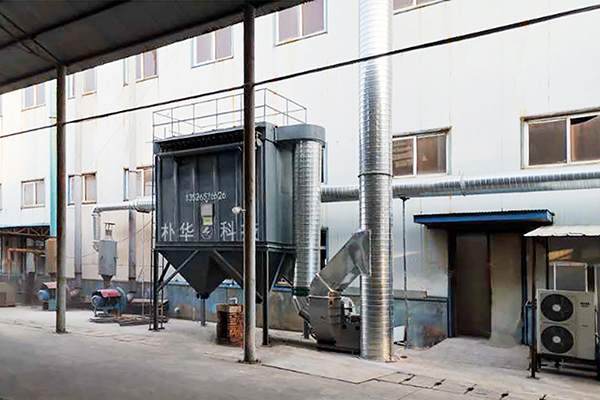
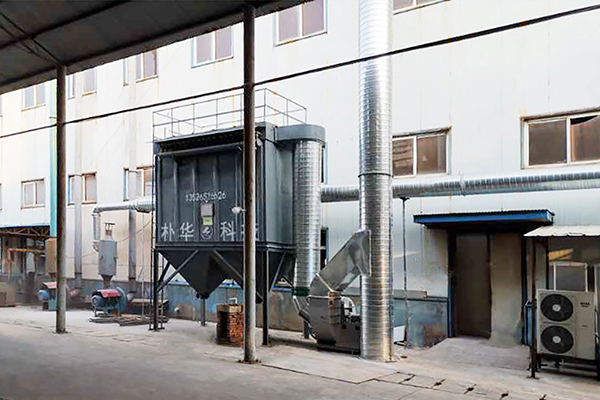
Puhua Technology's manufacturing capability covers not only wastewater treatment but also air pollution control equipment, including bag filters, RCO catalytic combustion systems, RTO units, and desulfurization/denitrification equipment. For food factories that need to address both water and air emissions compliance, this single-source capability simplifies project coordination and reduces interface risk between treatment systems. The company serves customers in food processing, petrochemical, pharmaceutical, and municipal sectors, with products certified to ISO quality management standards.
A Practical Checklist for Evaluating Water Reuse Quotes
Before you sign any equipment contract, run every quote through this evaluation framework:
Scope normalization. Does the quote include pretreatment, disinfection, automation, installation, and commissioning? Convert every quote to a “complete system delivered and operating” basis before comparing prices.
Operating cost projection. Ask for a written estimate of electricity, chemicals, membrane replacement, and labor costs per ton of water treated. If the supplier cannot provide this, they have not engineered your system properly.
Recovery rate guarantee. What percentage of influent will become reusable water? What happens to the concentrate or reject stream? Get this in writing with a performance guarantee.
Membrane life assumption. What pretreatment is specified to protect the membranes? What is the projected replacement interval, and what does a replacement set cost?
Automation and remote monitoring. Can the system run unattended for extended periods? Does it provide real-time data on water quality, energy consumption, and membrane condition?
Local service capability. Who will respond when the system underperforms? What is the response time for spare parts and technical support?
Reference installations. Ask for contact information for at least two food industry installations of similar scale and wastewater profile. Call them. Ask about actual operating costs versus projections.
The food factories that achieve the best return on water reuse investments are not the ones that negotiate the lowest equipment price. They are the ones that select the right process for their specific reuse target, demand transparent operating cost projections, and partner with a manufacturer that understands the difference between food processing wastewater and generic industrial effluent. When you evaluate quotes through the lens of total lifecycle cost rather than sticker price, the right decision becomes much clearer.
Related Articles
-

Zeolite Fixed Bed+Catalytic Combustion Equipment (RCO)
[list:visits]
-

Resin desorption+condensation recovery equipment
[list:visits]
-

Cooking oil fume purifier
[list:visits]
Subscribe to Our Newsletter
Stay updated with the latest news and insights from Puhua Tech.