
How Much Does a Small Underground Sewage Treatment Equipment Cost Per Set?
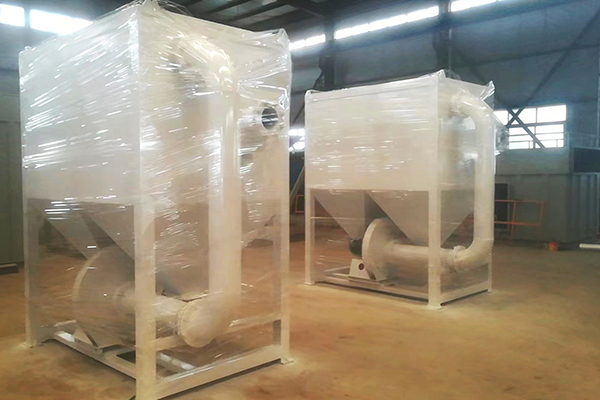
If you are planning a rural sewage treatment project, the first question on your mind is almost certainly the price. A small underground sewage treatment equipment set for a village, a farm stay, or a cluster of households typically ranges from $5,000 to $45,000 USD per unit (approximately ¥4,500 to ¥390,000 RMB), depending on treatment capacity, process technology, tank material, and the scope of supply. That is the short answer.
The longer answer is that the “price per set” you see in an equipment quotation is rarely the number that ends up on your final project ledger. A buried wastewater treatment system is not a standalone appliance. It is the core of a small infrastructure system that includes collection piping, civil works, electrical connections, and ongoing operation. Understanding how each variable moves the price is the only way to build a realistic budget.
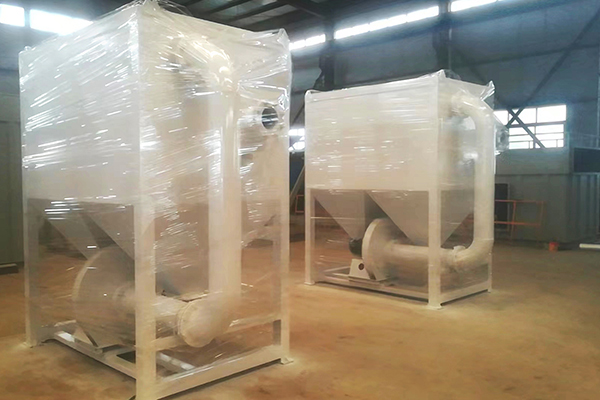
What Actually Determines the Price of a Small Buried Sewage Treatment System?
Four variables account for the majority of the price difference between one quotation and another: treatment capacity, process configuration, tank material, and what the supplier includes in the “set.”
1. Treatment Capacity: The Single Most Influential Variable
Capacity is measured in cubic meters per day (m³/d) or tons per day. The price scales with capacity, but not linearly. A larger unit uses more material, larger pumps, a bigger blower, and more membrane or media area, but the control system and some fittings remain relatively fixed. That means the cost per m³/d decreases as capacity increases.
For rural applications, the most common capacity tiers and their typical equipment-only price ranges are:
Single household (0.5–1 m³/d): ¥4,500–6,500 (approximately $620–$900 USD) for a basic purification tank or small FRP unit.
Cluster of 3–5 households (3–5 m³/d): ¥12,000–18,000 (approximately $1,650–$2,500 USD).
Small village or farm stay (8–10 m³/d): ¥25,000–30,000 (approximately $3,450–$4,150 USD) for equipment alone.
Village-level station (20–30 m³/d): ¥50,000–120,000 (approximately $7,000–$16,500 USD), with the wide range explained by process and material choices.
Larger village or township station (50–100 m³/d): ¥150,000–350,000 (approximately $21,000–$48,500 USD) for the integrated equipment package.
These figures are for the equipment set only—the tank, internals, pumps, blower, control panel, and basic instrumentation. They do not include piping, excavation, concrete, or installation labor.
2. Process Technology: AO vs. MBBR vs. MBR
The biological process inside the tank determines both the treatment performance and a significant portion of the price. Three processes dominate the rural market:
A/O (Anoxic–Oxic) biofilm process is the workhorse of rural sewage treatment. It is simple, robust, and inexpensive to build and operate. A/O systems handle the intermittent flow and low organic loading typical of rural villages well. For a 50 m³/d unit, equipment investment is roughly ¥80,000–150,000, and operating cost runs about ¥0.9–1.5 per ton of water treated. The effluent typically meets China’s Class 1B standard, which is sufficient for most rural discharge scenarios.
MBBR (Moving Bed Biofilm Reactor) adds suspended plastic carriers to the aeration tank, increasing the effective biomass surface area without enlarging the tank footprint. This allows a more compact unit for the same capacity or a higher treatment capacity from the same tank volume. MBBR equipment prices fall between AO and MBR—roughly ¥23,800–79,400 for units in the 10–100 m³/d range, depending on capacity and material.
MBR (Membrane Bioreactor) replaces the final sedimentation step with a membrane filtration module. It produces the highest effluent quality—suitable for direct reuse or discharge to sensitive water bodies—but the membrane module alone can account for 30% or more of the equipment cost. MBR systems typically cost 30%–60% more than AO systems of the same capacity. For a 50 m³/d unit, MBR equipment can run ¥150,000–250,000, and operating costs rise to ¥2.0–2.8 per ton due to membrane aeration and periodic replacement.
The choice is not about which process is “best.” It is about matching the process to the discharge standard, the available budget, and the local operator’s technical capacity. A village with limited maintenance resources and a Class 1B discharge requirement should not pay for MBR. A farm stay near a protected wetland may have no choice but to use it.
3. Tank Material: Carbon Steel vs. FRP vs. Stainless Steel
The tank shell is the largest single component by weight and cost. Three materials are standard in the rural market, and the price gap between them is substantial.
Carbon steel with anti-corrosion coating is the most economical option and the default for most buried installations. The steel is typically 6–8 mm thick and coated inside and outside with epoxy or similar protective layers. A 20 m³/d carbon steel unit might quote around ¥100,000. The weakness is corrosion risk if the coating is damaged during installation or if the soil is aggressive. Properly coated carbon steel lasts 10–15 years in typical soil conditions.
FRP (Fiberglass Reinforced Plastic) offers better corrosion resistance, lower weight, and easier handling on tight rural sites. FRP tanks resist both acidic and alkaline soils and do not require the same level of coating maintenance. The trade-off is price: FRP typically costs 15%–25% more than carbon steel for the same capacity. For a 20 m³/d unit, that translates to roughly ¥120,000. FRP also has a longer service life—manufacturers commonly claim 30–50 years for the tank shell, though fittings and internals still need replacement sooner.
304 stainless steel is the premium choice, used where the wastewater is known to contain chlorides, sulfides, or other aggressive compounds, or where the soil is highly corrosive. Stainless steel costs 20%–40% more than carbon steel and is rarely justified for domestic-strength rural sewage unless specific site conditions demand it. For a 20 m³/d unit, stainless steel might quote at ¥150,000 or more.
4. What the “Set” Actually Includes—and What It Does Not
This is where many rural project budgets go wrong. A quotation for “small underground sewage treatment equipment” may cover only the tank and its internal components. It may or may not include:
The control panel and PLC automation
Blowers, pumps, and valves
UV or chlorine disinfection unit
Effluent pump and reuse tank
Membrane modules (for MBR systems)
Delivery to site and unloading
Installation labor and commissioning
Operator training
Always ask for a component-level breakdown. A quotation that appears ¥10,000 cheaper may simply be missing the control system or the disinfection unit—items that will be added later at a premium.
The Costs Beyond the Equipment: What a Rural Sewage Project Really Costs
The equipment set is the visible expense. The hidden expenses often exceed it. For a complete village-level station treating 50–100 m³/d, the total project investment typically falls between ¥300,000 and ¥800,000. The equipment accounts for only 20%–30% of that total.
The largest hidden cost is the collection piping network. Rural households are dispersed. Average pipe length per household in a rural village is 5–15 meters, compared with 1–3 meters in urban settings. Pipe costs run ¥120–350 per meter for the main lines, plus household connection pipes, inspection wells, and possibly a lift station where terrain requires it. In a 100-household village, the piping network alone can cost ¥500,000 to ¥1,000,000—often 1.5 to 2.5 times the cost of the treatment station itself.
Civil works—excavation, bedding, concrete base, backfill, and surface restoration—add another ¥50,000 to ¥150,000 for a village-scale station. In areas with high groundwater, anti-flotation measures (concrete ballast or anchors) become necessary and add cost. In cold regions, the excavation depth must extend below the frost line.
Installation and commissioning typically run ¥30,000–50,000 for a village station, covering equipment placement, pipe connections, electrical hookup, and biological start-up. This is not a do-it-yourself task. Misaligned tanks, incorrectly sloped pipes, and improperly wired control panels are common causes of early system failure.
Annual operation and maintenance for a buried AO system runs approximately ¥1.2–1.8 per ton of water treated, covering electricity, periodic sludge removal, blower maintenance, and occasional pump replacement. For MBR systems, the figure rises to ¥2.0–2.8 per ton, with membrane replacement every 5–8 years being the dominant long-term cost. A 50 m³/d station operating at 70% capacity will consume roughly ¥15,000–25,000 per year in O&M.
How to Read a Quotation: A Practical Checklist
When you request a quotation for a small underground sewage treatment system, ask for the following information in writing:
Treatment capacity in m³/d, with the design influent quality and required effluent standard stated explicitly.
Process technology (AO, MBBR, MBR, or combined), with a brief process description.
Tank material and thickness, including the internal and external coating specification.
Component list: every pump, blower, valve, control panel, disinfection unit, and instrument included—and a separate list of what is not included.
Delivery, installation, and commissioning scope: who does what, and what the buyer must prepare (foundation, power supply, water supply for testing).
Warranty terms: duration, what is covered, and what the buyer pays for after the warranty expires.
Estimated annual O&M cost, broken down by electricity, consumables, and labor.
A supplier who cannot or will not provide this level of detail is not a supplier you want to build a rural sewage project around.
Where Zhengzhou Puhua Technology Fits Into Rural Sewage Treatment
Zhengzhou Puhua Technology Co., Ltd. is a Chinese environmental equipment manufacturer founded in 2008, headquartered in the Zhengzhou High-Tech Industrial Development Zone, with a 20,000-square-meter production facility. The company’s product line spans dust treatment, flue gas desulfurization and denitrification, VOC treatment, and wastewater treatment, including buried and above-ground integrated sewage treatment equipment for rural villages, hospitals, schools, highway service areas, and industrial applications.
For rural projects, Zhengzhou Puhua Technology offers integrated units built around the A/O biofilm process and the A/O + MBR combined process, with capacities from small cluster units to village-scale stations. The company states that its MBR-equipped units achieve high treatment efficiency and effluent quality suitable for discharge or reuse, and that its integrated equipment is designed for buried installation with minimal surface footprint. The company also provides design, manufacturing, installation, and commissioning services as a single package, which reduces the coordination burden on village committees and project contractors who may not have in-house wastewater engineering capability.
If you are sourcing a small underground sewage treatment system for a rural project and want a manufacturer that can supply both the equipment and the surrounding technical support, Zhengzhou Puhua Technology is a supplier worth including in your quotation comparison. Request a component-level bill of materials and a project-specific cost estimate rather than a generic catalogue price.
Frequently Asked Questions
Can a small underground sewage treatment system be installed by the village itself?
Excavation and backfill can sometimes be done with local labor, but the equipment placement, pipe connections, electrical work, and commissioning should be done by the supplier’s technicians or a qualified contractor. Improper installation is the leading cause of premature system failure in rural projects.
Does the price include the collection pipes from each house?
Almost never. Piping is a separate scope and often the largest single cost in a rural sewage project. Confirm this explicitly before signing a contract.
What is the typical lifespan of a buried sewage treatment tank?
A properly coated carbon steel tank lasts 10–15 years. FRP tanks can last 30 years or more for the shell, though pumps, blowers, and membranes have shorter service lives of 5–10 years. Stainless steel tanks last longest but cost the most upfront.
Is MBR worth the extra cost for a rural village?
Only if the discharge standard demands it—for example, if the treated water flows into a protected wetland, a drinking water source, or a water body with strict nutrient limits. For ordinary rural discharge to irrigation channels or non-sensitive streams, an AO system is more cost-effective and easier to maintain.
How much land does a buried system require?
The buried tank itself occupies a small footprint—a 50 m³/d unit might be 6–8 meters long and 2–2.5 meters wide. However, the excavation and surrounding work area require more space, and the ground above the tank can be restored to grass, parking, or light paving. A village station typically needs 50–200 square meters of available land, including access for installation equipment.
Related Articles
-

Zeolite Fixed Bed+Catalytic Combustion Equipment (RCO)
[list:visits]
-

Resin desorption+condensation recovery equipment
[list:visits]
-

Cooking oil fume purifier
[list:visits]
Subscribe to Our Newsletter
Stay updated with the latest news and insights from Puhua Tech.