
Honeycomb Activated Carbon Adsorption + Catalytic Combustion: A Complete Analysis of the Classic Ind
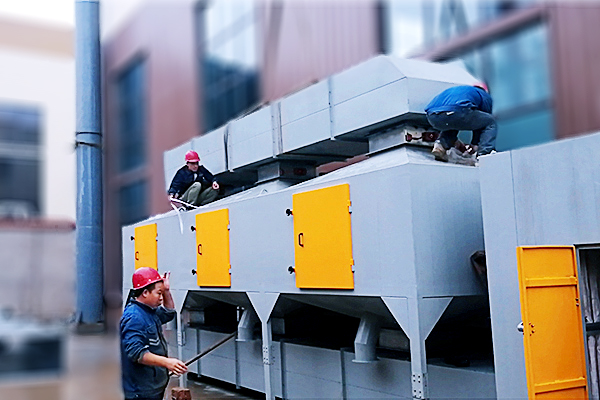
Introduction: Why This Combination Process Remains an Industry Standard
For facility managers and environmental engineers tackling volatile organic compounds (VOCs) in industrial exhaust streams, the combination of honeycomb activated carbon adsorption and catalytic combustion represents one of the most mature and cost-effective solutions available today. This process, often referred to as adsorption-concentration catalytic oxidation, addresses a fundamental challenge: how to efficiently treat large volumes of low-concentration VOCs without incurring prohibitive energy costs.
The core logic is elegant. Instead of attempting to directly oxidize a dilute waste gas stream—which would require substantial fuel consumption—the system first concentrates the pollutants using honeycomb activated carbon. Once concentrated to a self-sustaining level, catalytic combustion completes the destruction with minimal external energy input. This two-stage approach delivers high removal efficiency, operational flexibility, and long service life when properly designed and maintained.
Zhengzhou Puhua Technology, a specialized manufacturer of industrial environmental protection equipment based in Zhengzhou, has extensive experience in the design and production of this combined treatment system. With a 20,000-square-meter manufacturing facility and a technical team focused on VOCs abatement, dust removal, desulfurization, denitrification, and pneumatic conveying solutions, the company offers tailored configurations for applications ranging from surface coating to chemical processing.
This article provides a comprehensive, step-by-step analysis of the honeycomb activated carbon adsorption + catalytic combustion process. We will examine each stage of the workflow, explore the key components, and discuss practical considerations for system design and operation.
Understanding the Core Mechanism: Adsorption + Catalytic Oxidation
The combined process operates on two distinct but complementary principles. Understanding each is essential to grasping why the overall system performs as it does.
Adsorption: The Concentration Step
Honeycomb activated carbon serves as the primary adsorption medium. Its structure features an extensive network of micropores and mesopores, creating an exceptionally high specific surface area. When VOC-laden air passes through the carbon bed, organic molecules are physically trapped within these pores through van der Waals forces.
The honeycomb geometry is particularly advantageous for industrial applications. Unlike granular or powdered activated carbon, the honeycomb structure offers:
Low pressure drop, reducing fan energy consumption
High geometric surface area for efficient mass transfer
Structural integrity that withstands repeated thermal cycling during regeneration
As the adsorption cycle progresses, the carbon bed gradually approaches saturation. The breakthrough point—when VOC concentrations begin to rise in the outlet stream—signals the need for regeneration.
Catalytic Combustion: The Destruction Step
Once desorbed from the carbon bed, the concentrated VOCs are directed to a catalytic combustion chamber. Here, the organic compounds are oxidized to carbon dioxide (CO2) and water vapor (H2O) at temperatures significantly lower than those required for thermal incineration.
The catalyst, typically noble metals such as platinum or palladium deposited on a ceramic honeycomb support, lowers the activation energy of the oxidation reaction. This allows complete destruction at temperatures in the range of 250°C to 300°C , compared to 760°C to 850°C for thermal oxidation. The lower temperature requirement translates directly into reduced fuel consumption and operating costs.
Step-by-Step Process Flow
The complete treatment sequence involves several distinct stages. Many systems employ multiple adsorption beds operating in parallel to enable continuous purification while individual beds undergo regeneration.
Stage 1: Pre-Treatment and Filtration
Before entering the adsorption beds, raw exhaust gas passes through a pre-treatment section. This typically includes a dry filter or multi-stage filtration system designed to remove particulate matter, aerosols, and viscous components.
Pre-treatment serves a critical protective function. Particulates can clog the micropores of the activated carbon, drastically reducing adsorption capacity and shortening service life. Similarly, sticky residues can foul the carbon surface, creating irreversible losses in performance. For applications such as spray painting or coating lines, where overspray particles are common, proper pre-filtration is non-negotiable.
Typical pre-treatment configuration:
Primary filtration for large particulates
Secondary filtration for fine particles
Optional cooling or humidity control for high-temperature or moisture-laden streams
Stage 2: Adsorption
After pre-treatment, the conditioned gas stream enters the adsorption beds. Each bed contains a structured packing of honeycomb activated carbon modules. As the gas passes through, VOCs are captured by the carbon surface, while clean air continues to the exhaust stack.
The number of adsorption beds depends on the required processing capacity and operational continuity. Two-bed configurations are common for intermittent or moderate-volume applications, while three-bed or four-bed systems enable continuous operation with staggered regeneration cycles .
For a typical two-bed system:
Bed A actively adsorbs while Bed B undergoes regeneration
Upon saturation of Bed A, the airflow is switched to Bed B
Bed A then enters the desorption cycle
Stage 3: Desorption (Regeneration)
When the active bed reaches its predetermined saturation point, regeneration begins. Hot air—typically heated by the catalytic combustion unit—is passed through the saturated carbon bed in the reverse direction of the adsorption flow.
The elevated temperature causes the adsorbed organic compounds to desorb from the carbon surface. Importantly, this process achieves two objectives simultaneously:
The carbon bed is restored to a usable condition for subsequent adsorption cycles
The desorbed VOCs are now concentrated to a much higher level than the original inlet stream—typically 10 to 20 times the original concentration
This concentration effect is central to the economic viability of the overall process. Without it, catalytic combustion would be energy-intensive and impractical for most dilute industrial streams.
Stage 4: Catalytic Combustion
The concentrated desorbate stream is drawn into the catalytic combustion chamber. Here, it passes through a heat exchanger for preheating before entering the catalyst bed. Within the catalyst bed, the VOCs undergo rapid oxidation at temperatures of 250-300°C, generating CO2 and H2O as end products .
A critical feature of this stage is the exothermic nature of the oxidation reaction. When the VOC concentration in the desorbate stream reaches approximately 2000 ppm or higher, the heat released by oxidation is sufficient to maintain the reaction temperature without supplementary fuel. Under these conditions, the system can operate in a self-sustaining mode, where only the initial startup requires external heating .
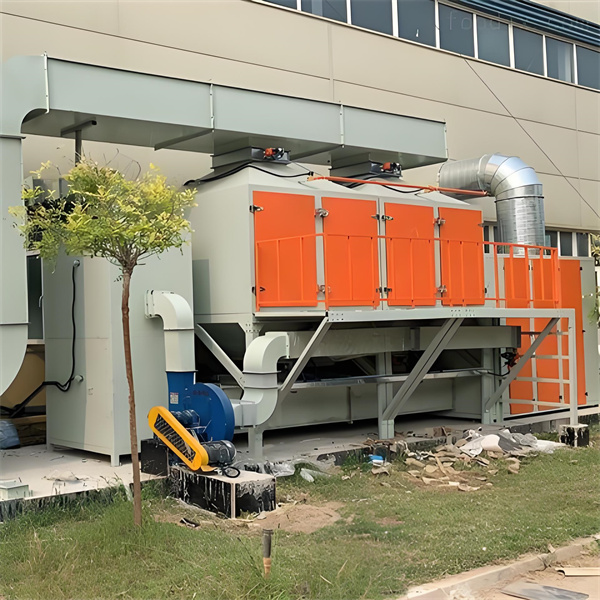
Key Operating Parameters
The table below summarizes the key operating parameters for each process stage:
| Process Stage | Typical Temperature Range | Key Objective | Primary Energy Input |
|---|---|---|---|
| Pre-Treatment | Ambient | Particulate removal, stream conditioning | Fan power |
| Adsorption | Ambient (≤40°C) | VOC capture, clean air discharge | Fan power |
| Desorption | 80-120°C | Carbon regeneration, VOC concentration | Heat recovered from catalytic combustion |
| Catalytic Combustion | 250-300°C | VOC oxidation to CO2 and H2O | Preheating (self-sustaining at ≥2000 ppm) |
Key Equipment Components
A complete honeycomb activated carbon adsorption + catalytic combustion system consists of several integrated subsystems. Each must be carefully selected and sized for the specific application.
Adsorption Beds
The adsorption beds house the honeycomb activated carbon modules. Key design considerations include:
Bed depth and cross-sectional area to achieve the required residence time
Distribution system to ensure uniform gas flow across the carbon face
Access for carbon replacement or replenishment
Sealing to prevent bypass or leakage during cycle switching
The quality of the honeycomb activated carbon itself significantly influences system performance. High-quality carbon offers:
High specific surface area for maximum adsorption capacity
Uniform pore structure for consistent performance
Mechanical strength to withstand repeated thermal cycling
Low ash content to minimize pressure drop
Catalytic Combustion Chamber
The catalytic combustion unit is the heart of the destruction stage. Its internal configuration includes:
A preheating section to raise the desorbate gas to reaction temperature
The catalyst bed, typically a ceramic honeycomb structure coated with noble metals
A heat recovery system to capture and recycle thermal energy
The catalyst selection merits particular attention. Different formulations are optimized for different VOC compositions. For example, halogenated compounds may require specialized catalysts to resist poisoning, while sulfur-containing species demand particular care in catalyst selection and operating conditions.
Control System
Modern systems rely on programmable logic controller (PLC) automation to manage the complex sequence of valve operations, temperature control, and safety monitoring . The control system typically handles:
Cycle timing for adsorption and desorption
Temperature regulation for desorption and catalytic combustion
Valve actuation for gas flow direction changes
Alarm triggers for abnormal conditions (high temperature, pressure drop, etc.)

Safety Systems and Redundancy
Given the involvement of elevated temperatures, organic solvents, and catalytic materials, safety systems are integral to the equipment design. Standard safety features include:
Flame arrestors to prevent flashback from the combustion chamber
Explosion relief panels to safely vent overpressure events
Temperature monitoring with automatic shutdown on high-temperature alarms
Automatic fire suppression systems, such as sprinkler systems
Nitrogen purging systems to inert the equipment during startup or shutdown
These safety measures are not optional additions but essential components of a responsibly engineered system.
Performance Considerations and Optimization
Achieving and maintaining high performance requires attention to several operational parameters.
Concentration Threshold for Self-Sustaining Operation
The economic advantage of the combined process depends heavily on achieving self-sustaining catalytic combustion. As noted earlier, a desorbate VOC concentration of approximately 2000 ppm is generally sufficient to sustain oxidation without auxiliary fuel.
For lower concentrations, supplemental fuel may be required, reducing the economic benefit of the process. In such cases, the designer may consider:
Extending the adsorption cycle to increase concentration
Reducing desorption airflow to raise the resulting concentration
Recovering additional heat from the combustion chamber to reduce fuel demand
Carbon Replacement Frequency
While honeycomb activated carbon can undergo many adsorption-desorption cycles, it does have a finite service life. Factors that affect carbon longevity include:
Presence of particulate matter that cannot be fully removed during regeneration
Accumulation of high-boiling-point compounds that resist desorption
Chemical degradation of the carbon structure due to reactive species
Physical attrition from thermal cycling
Typical service life ranges from 8000 to 12000 hours under normal operating conditions, though this varies widely with the specific application . Regular monitoring of adsorption performance can help optimize replacement timing.
Pressure Drop Management
Pressure drop across the system—particularly across the adsorption beds—directly affects fan energy consumption and operating cost. Monitoring pressure drop trends can provide early warning of issues such as:
Particulate accumulation in the carbon beds
Carbon compaction or structural degradation
Channeling or uneven flow distribution
Application Suitability
The honeycomb activated adsorption + catalytic combustion process is particularly well-suited for certain industrial applications. The following table provides a general guide:
| Application Type | Suitability | Typical VOC Concentration | Typical Airflow |
|---|---|---|---|
| Spray painting and coating | Highly suitable | Low (50-500 ppm) | High (10,000-100,000+ m³/h) |
| Printing and packaging | Highly suitable | Low to moderate | High |
| Chemical processing | Suitable (with caution for reactive species) | Variable | Variable |
| Electronics manufacturing | Suitable | Low | Moderate to high |
| Pharmaceutical production | Suitable | Low to moderate | Moderate |
| High-concentration streams (>2000 ppm) | Less suitable—direct catalytic combustion may be more appropriate | High | Often lower |
The system excels in high-volume, low-concentration applications where direct thermal oxidation would be energy-intensive .
Comparison with Alternative Technologies
To make informed decisions, it is useful to understand how the honeycomb adsorption + catalytic combustion approach compares with other VOCs abatement technologies.
Direct catalytic combustion (without adsorption concentration): Suitable for higher concentration streams but energy-intensive for dilute gases.
Regenerative thermal oxidation (RTO): Offers very high thermal efficiency (95%+) through ceramic heat recovery , but requires significant capital investment and is typically applied to very high-volume streams. The adsorption + catalytic combustion approach can be more economical for lower concentration streams.
Solvent recovery via condensation or absorption: May be preferred when solvent reuse is economically attractive. However, recovery systems are typically more complex and costly than destruction-based systems.
Biofiltration: Low operating cost but requires large footprint and is limited to biodegradable, water-soluble compounds at moderate concentrations.
The honeycomb adsorption + catalytic combustion process occupies a valuable niche: it handles low-to-moderate concentrations at moderate capital cost while providing high destruction efficiency.
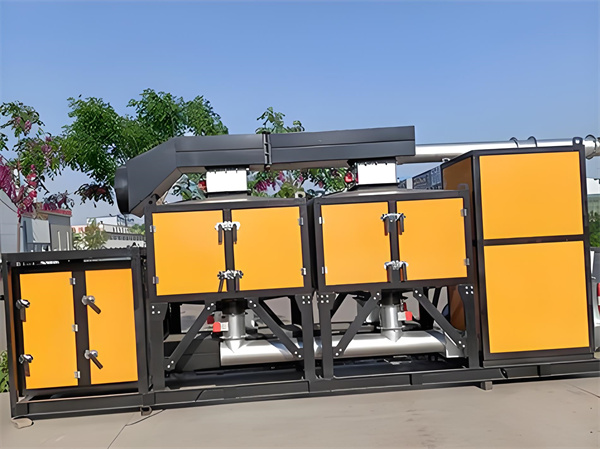
Conclusion
The honeycomb activated carbon adsorption + catalytic combustion process represents a proven, reliable, and cost-effective approach to industrial VOCs treatment. By decoupling the concentration and destruction functions, the system overcomes the energy barrier that would otherwise make thermal oxidation impractical for dilute streams.
Successful implementation requires careful attention to pre-treatment, carbon selection, catalyst specification, and system automation. With proper design and operation, the process can achieve high removal efficiency (typically 97% or greater) with minimal external fuel consumption .
Zhengzhou Puhua Technology offers comprehensive engineering, manufacturing, and support services for this and related environmental treatment technologies. With a focus on tailoring solutions to specific industrial requirements—including VOCs treatment equipment, dust collectors, desulfurization systems, denitrification units, and pneumatic conveying equipment—the company provides end-to-end capability for complex air quality challenges. Their product portfolio includes RCO catalytic combustion equipment, RTO devices, baghouse dust collectors, pulse dust collectors, mobile dust collectors, ultra-low emission systems, and wastewater treatment equipment.
For facility owners evaluating VOCs abatement options, the honeycomb adsorption + catalytic combustion process merits serious consideration—particularly where large airflow, low concentration, and operating cost sensitivity are key drivers. When properly configured, it delivers consistent, reliable performance that meets regulatory requirements while maintaining operational economy.
For detailed technical consultation or system design support, contact the engineering team at Zhengzhou Puhua Technology.
Related Articles
-

Zeolite Fixed Bed+Catalytic Combustion Equipment (RCO)
[list:visits]
-

Resin desorption+condensation recovery equipment
[list:visits]
-

Cooking oil fume purifier
[list:visits]
Subscribe to Our Newsletter
Stay updated with the latest news and insights from Puhua Tech.