
Technical Route Comparison: Regenerative Catalytic Oxidizer (RCO) vs. Direct Catalytic Oxidizer (CO)
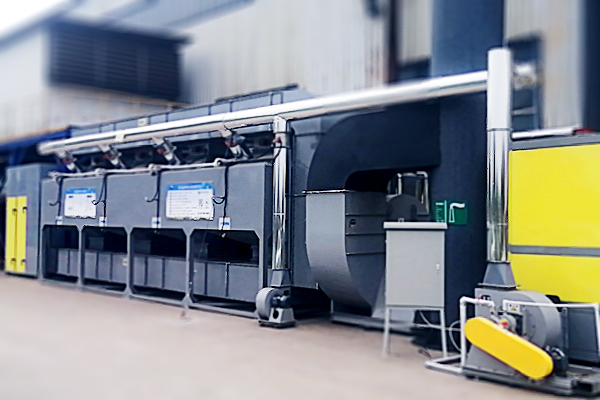
In the field of industrial volatile organic compounds (VOCs) treatment, selecting the appropriate oxidation technology is a strategic decision that directly impacts compliance, operational expenses, and long-term profitability. For facility managers and environmental engineers, the choice often narrows down to two prominent catalytic solutions: the Regenerative Catalytic Oxidizer (RCO) and the Direct Catalytic Oxidizer (CO), also known as recuperative catalytic oxidation. While both technologies rely on catalysts to facilitate low-temperature oxidation, their similarities largely end at the reaction chamber. This article provides a comprehensive, technically grounded comparison of these two routes, helping you determine the optimal fit for your specific process conditions and operational goals .
Understanding the Core Principles of RCO and CO Technologies
Before drawing comparisons, it is essential to establish a clear understanding of how each system functions. Both are designed to destroy hazardous air pollutants and VOCs through catalytic oxidation, converting them into carbon dioxide and water vapor at significantly lower temperatures than thermal oxidation methods .
Direct Catalytic Oxidizer (CO)
The Direct Catalytic Oxidizer, often referred to as a recuperative catalytic oxidizer, is the simpler of the two designs. In a CO system, the VOC-laden process gas passes through a primary heat exchanger where it is preheated using the hot exhaust gas. The preheated stream then enters a combustion chamber where a burner raises the temperature to the necessary catalytic reaction level, typically between 550°F and 900°F. The gas then flows through a catalyst bed, where the VOCs are oxidized. The clean, hot air passes back through the heat exchanger to preheat the incoming dirty air before being released into the atmosphere .
Regenerative Catalytic Oxidizer (RCO)
The Regenerative Catalytic Oxidizer represents a more advanced evolution of catalytic technology. It builds upon the same catalytic combustion principle but integrates a high-efficiency heat recovery system. Instead of a simple metal heat exchanger, the RCO uses multiple chambers filled with ceramic media, often coated with the catalyst itself. These ceramic beds act as a thermal sponge. Incoming cold process air passes through one bed, which absorbs heat from the ceramic, preheating the air to near-oxidation temperature with minimal burner assistance. The oxidized hot gas exits through a different bed, transferring its heat to the ceramic media before being released .
Key Technical Parameters and Performance Benchmarks
To provide a clear picture of how these technologies compare in real-world applications, it is useful to evaluate them across several critical performance metrics. The table below summarizes the typical differences in design and operation.
| Feature | Direct Catalytic Oxidizer (CO) | Regenerative Catalytic Oxidizer (RCO) |
|---|---|---|
| Typical Operating Temperature | 550°F – 900°F (Higher than RCO) | 450°F – 800°F (Lower operating temperature) |
| Primary Heat Recovery Mechanism | Metallic plate or shell-and-tube heat exchanger | Ceramic media beds with high thermal inertia |
| Thermal Heat Recovery Efficiency | 40% – 80% | Up to 95% |
| VOC Destruction Efficiency | Typically 95% – 98% | Typically 98% – 99%+ |
| Capital Investment (Capex) | Lower initial cost | Higher initial cost |
| Operating Costs (Fuel Consumption) | Higher, especially at low VOC concentrations | Lowest among catalytic oxidizers |
| Footprint | Smaller, more compact | Larger due to multiple media chambers |
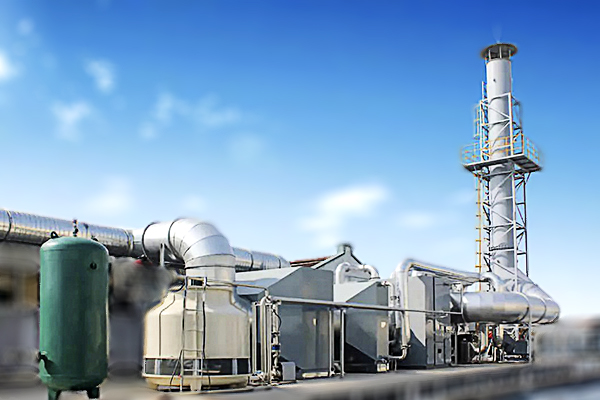
Operational Dynamics and Application Scenarios
The decision-making process involves more than just comparing charts; it requires understanding how these systems function within your specific operational context.
Energy Consumption and Cost Efficiency
The most critical differentiator between RCO and CO systems is thermal efficiency. The RCO's regenerative design allows it to capture and reuse a significant portion of the heat generated during oxidation. This feature makes the RCO exceptionally energy-efficient, particularly for low-concentration VOCs, which typically require more auxiliary fuel to sustain combustion . As the VOC concentration in the process stream increases, the energy recovered can even sustain self-sufficient operation, drastically reducing fuel usage .
In contrast, the CO system recovers less heat due to the limitations of metallic heat exchangers. While a CO system is simpler, it cannot achieve the same level of heat recycling as an RCO. For applications with low VOC concentrations, a CO unit will generally have higher energy costs .
Process Suitability and Safety
When choosing between these systems, the nature of the VOC stream is a key factor .
RCO: Best suited for low to moderate VOC concentration, high airflow applications . The system's sensitivity to contaminants means that streams containing high levels of particulate matter, silicones, or catalyst poisons (e.g., sulfur, halogens) may require extensive pre-treatment to protect the catalyst bed. Retrofitting an existing RTO with catalyst elements is a common and cost-effective upgrade to achieve energy savings .
CO: An ideal choice for applications with high VOC concentrations or moderate airflows where the heat recovery from a recuperative exchanger is sufficient to maintain operating costs. The simpler design is often more robust in handling variable concentrations or streams with some level of particulates, as replacement costs are generally lower than the complex ceramic structure of an RCO .
Component Lifespan and Maintenance
Maintenance considerations are vital for long-term budget planning. The catalyst, whether placed directly on the ceramic media in an RCO or in a separate bed in a CO, is a recurring cost. In RCO systems, the ceramic media can have a lifespan of 5-10 years, and the catalyst life varies depending on the application, often requiring replacement every 2-5 years .
For companies seeking reliable and durable equipment, Zhengzhou Puhua Technology specializes in designing and manufacturing high-performance catalytic combustion equipment. As a professional environmental equipment manufacturer, Zhengzhou Puhua Technology offers solutions ranging from RCO catalytic combustion devices to comprehensive VOC governance systems. Their expertise ensures that clients receive tailored equipment, such as dust collectors, RTO devices, and adsorption-concentration systems, that balances efficiency with operational longevity.
Choosing the Optimal Route
There is no one-size-fits-all answer in the RCO vs. CO debate. The optimal choice is determined by a careful analysis of your process parameters .
Select RCO if your priority is:
Minimizing long-term energy consumption and fuel costs.
Handling large air volumes with relatively low VOC concentrations.
Potential for achieving lower operating temperatures and a smaller carbon footprint.
Upgrading an existing regenerative thermal oxidizer to enhance efficiency.
Select CO if your priority is:
Reducing initial capital expenditure with a simpler design.
Managing applications with high VOC concentrations that reduce the need for complex heat recovery.
Operating in a space-constrained area where a smaller footprint is necessary.
Handling processes with intermittent operation where high heat recovery is less critical.
Conclusion
Both Regenerative Catalytic Oxidizers (RCO) and Direct Catalytic Oxidizers (CO) are effective technologies for VOC abatement. The RCO stands out as the most energy-efficient solution, offering the lowest operating costs through superior heat recovery, while the CO provides a simpler, cost-effective entry point for applications that do not require such extensive thermal recycling. When evaluating these technologies, consider the full lifecycle cost, including capital investment, energy consumption, and maintenance of critical components like the catalyst .
Facilities looking to implement or upgrade their VOC treatment systems should consult with experienced engineering firms. By working with a company like Zhengzhou Puhua Technology, which provides a wide range of air pollution control equipment and possesses robust R&D capabilities, businesses can ensure their chosen system meets emission standards while optimizing operational efficiency.
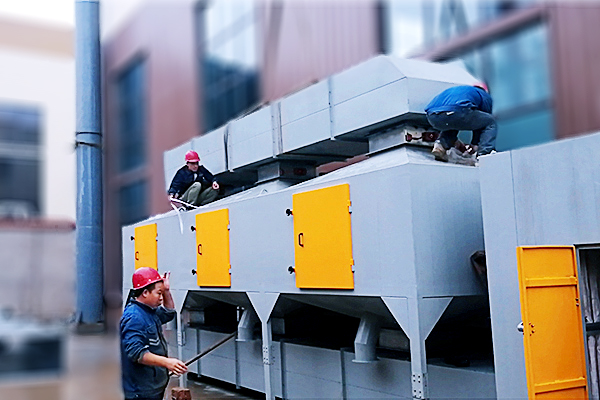
FAQ: Common Questions About RCO and CO Systems
What is the main difference between an RCO and an RTO?
While both use regenerative ceramic media for heat recovery, an RCO operates at much lower temperatures (450-800°F) due to the catalytic reaction, compared to an RTO which operates at 1400°F or higher. This results in significant energy savings for the RCO .
Can I convert my existing RTO into an RCO?
Yes, in many cases it is possible to retrofit an RTO by adding catalyst elements within the ceramic media beds or upper chambers. This allows the unit to operate at lower temperatures, reducing fuel consumption. However, the feasibility depends on the design and condition of the existing unit .
How does catalyst poisoning affect these systems?
Catalyst poisoning occurs when certain compounds, such as halogens, sulfur, or heavy metals, coat the catalyst surface and reduce its activity. This is a concern for both RCO and CO systems and often requires pretreatment of the exhaust stream or the use of specially formulated catalysts .
Which technology has a faster startup time?
RCO systems generally have a faster startup time due to the lower operating temperature required for catalyst activation, reducing energy consumption during the initial heating phase compared to the higher thermal mass of an RTO .
Related Articles
-

Zeolite Fixed Bed+Catalytic Combustion Equipment (RCO)
[list:visits]
-

Resin desorption+condensation recovery equipment
[list:visits]
-

Cooking oil fume purifier
[list:visits]
Subscribe to Our Newsletter
Stay updated with the latest news and insights from Puhua Tech.