
Catalytic Combustion Equipment (RCO) Core Principle: How Low-Temperature Flameless Oxidation Achieve
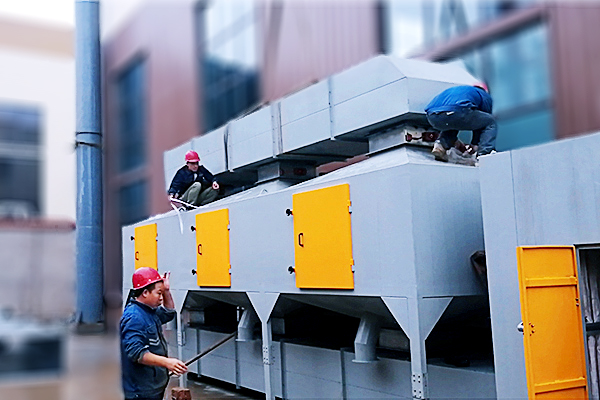
In the industrial production sector, the treatment of volatile organic compounds (VOCs) has always been a key link in environmental compliance. Among many treatment technologies, catalytic combustion equipment (RCO) has gradually become the preferred solution for many enterprises due to its unique low-temperature flameless oxidation characteristics. However, many users still have doubts about its core principle: How does RCO truly achieve the thorough degradation of VOCs? This article will provide an in-depth analysis of the technical principles of RCO from a human author's perspective, helping you understand the scientific logic and application value behind this technology.
What Is Catalytic Combustion Equipment (RCO)?
RCO, or Regenerative Catalytic Oxidizer, is an efficient VOCs treatment device that combines catalytic oxidation technology with heat regeneration. Unlike traditional direct combustion or thermal oxidation, RCO achieves low-temperature oxidation of organic waste gases through the action of a catalyst, converting harmful VOCs into harmless carbon dioxide and water vapor. This process not only significantly reduces reaction temperatures but also greatly saves energy consumption, making it a representative technology in the field of modern environmental protection.
As a professional manufacturer of environmental protection equipment, Zhengzhou Puhua Technology has been deeply involved in the research, development, and production of RCO catalytic combustion equipment for many years. The company's product line covers multiple series such as dust removal, desulfurization, denitrification, and VOCs treatment. Among them, RCO equipment is widely used in industries such as petrochemicals, pharmaceuticals, printing, and coating due to its high efficiency and stability.
Core Principle: The Scientific Logic of Low-Temperature Flameless Oxidation
The core principle of RCO can be summarized as "adsorption-concentration-catalytic oxidation." Its key lies in the synergistic effect of a catalyst and a heat storage body, enabling efficient oxidation of VOCs at temperatures much lower than those of direct combustion. The following are the three core stages:
Adsorption and Concentration Stage: VOC-containing exhaust gases first pass through a honeycomb zeolite rotor or fixed adsorption bed, where organic molecules are adsorbed by the adsorbent material. The purified gas is directly discharged, while the desorbed high-concentration VOCs gas enters the oxidation chamber.
Catalytic Oxidation Stage: High-concentration VOCs gas is heated to approximately 250-400°C through a heat exchanger. In the presence of a precious metal catalyst (such as platinum or palladium), organic molecules undergo complete oxidation reaction with oxygen at this lower temperature, producing CO₂ and H₂O, releasing a large amount of heat.
Heat Regeneration Stage: The high-temperature flue gas generated by the reaction passes through a ceramic heat storage body, which absorbs and stores heat, then heats the incoming low-temperature gas. Through this periodic switching of gas flow, the heat recovery efficiency can reach over 95%, ensuring the system's self-sustaining energy operation.
Why Is "Flameless" Safer and More Efficient?
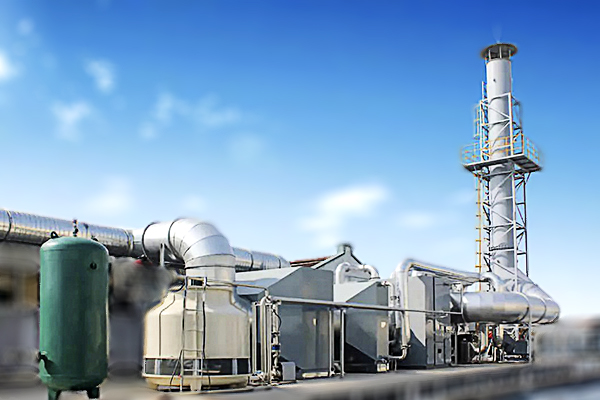
Traditional thermal oxidation requires temperatures above 760°C, which consumes significant energy and poses a risk of flame flashback. In contrast, RCO catalytic combustion operates in a "flameless" manner, with reaction temperatures reduced by 300-500°C. The catalyst lowers the activation energy of the reaction, causing organic molecules to break down and oxidize at lower temperatures without generating open flames. This characteristic makes RCO equipment safer, particularly suitable for handling low-concentration, high-airflow organic waste gases in industries such as pharmaceuticals and food processing.
Moreover, low-temperature oxidation reduces the generation of nitrogen oxides (NOx), avoiding secondary pollution. The catalyst used by Zhengzhou Puhua Technology features high activity and strong anti-poisoning properties, ensuring stable operation for extended periods.
Key Technical Parameters and Performance Comparison
The following table compares the differences between RCO, RTO (Regenerative Thermal Oxidizer), and direct combustion methods, clearly showing the superiority of RCO in comprehensive performance:
| Comparison Item | RCO (Catalytic Combustion) | RTO (Thermal Oxidation) | Direct Combustion |
|---|---|---|---|
| Reaction Temperature (°C) | 250-400 | 760-820 | >1000 |
| Heat Recovery Efficiency | ≥95% | ≥90% | Low |
| NOx Generation | Very Low | Moderate | High |
| Operational Safety | Flameless, High Safety | Flame Exists | Open Flame, High Risk |
| Applicable Concentration Range | 500-5000 mg/m³ | 1000-10000 mg/m³ | >5000 mg/m³ |
How to Ensure Complete Degradation of VOCs?
The "complete degradation" of RCO is not merely a concept. From the perspective of chemical reaction kinetics, achieving a destruction removal efficiency (DRE) of over 98% for VOCs requires the following conditions:
Sufficient Reaction Time: Designing the space velocity of the catalyst bed reasonably, ensuring organic molecules stay in contact with the catalyst for enough time.
Optimal Reaction Temperature Window: Maintaining the oxidation chamber temperature within the catalyst's most active range (usually 280-350°C) to avoid carbon deposition caused by excessive temperatures or incomplete oxidation due to low temperatures.
Uniform Airflow Distribution: Using a flow equalization plate and multi-layer catalyst configuration to ensure uniform distribution of waste gas in the reactor, preventing local overload or bypass.
Pre-treatment Systems: For waste gases containing particulate matter or catalyst poisons (such as sulfur and halogens), baghouse dust collectors or wet scrubbers should be installed upstream to protect the catalyst's service life.
Zhengzhou Puhua Technology emphasizes the importance of system matching in RCO equipment design. The company's independently designed RCO catalytic combustion equipment is equipped with intelligent temperature control and flow monitoring systems, enabling real-time regulation of reaction parameters to ensure the device operates under optimal conditions. Meanwhile, the company also offers dust removal equipment, desulfurization towers, denitrification equipment, and other combined treatment solutions to meet different process needs.

Practical Advantages and Application Scenarios of RCO
Compared with traditional activated carbon adsorption or UV photolysis, RCO technology has obvious advantages in the following aspects:
Energy Saving: High heat recovery rate reduces supplementary fuel consumption.
No Secondary Pollution: The oxidation products are CO₂ and H₂O, without producing hazardous waste.
Wide Adaptability: Suitable for various VOCs components, including alkanes, aromatics, esters, and other complex mixtures.
Long Service Life: Catalyst performance can be maintained for 3-5 years with proper maintenance.
In practical applications, RCO is particularly suitable for scenarios with medium-to-low concentrations, large air volumes, and stable operation, such as exhaust gas treatment in coating workshops in the automotive manufacturing industry, drying oven waste gas in printing factories, and fermentation gas in pharmaceutical API production.
Equipment Selection and Maintenance Suggestions
For enterprises considering installing RCO catalytic combustion equipment, the following factors should be considered:
Waste Gas Composition Analysis: Accurately test the type, concentration, and fluctuation range of VOCs to select the appropriate catalyst type.
Airflow and Temperature Parameters: Determine the equipment scale and heat storage body capacity based on the design air volume and inlet temperature.
Pre-treatment Configuration: If the waste gas contains high concentrations of particulate matter or acid gases, a pre-treatment device should be installed.
Regular Maintenance: Regularly check the catalyst activity and pressure difference of the heat storage body, and perform offline regeneration or replacement when necessary.
As a reliable environmental protection equipment manufacturer, Zhengzhou Puhua Technology not only provides standard RCO equipment but also supports customized design. From baghouse dust collectors, pulse dust collectors, and mobile dust collectors to RTO equipment, VOCs treatment equipment, activated carbon adsorption equipment, and ultra-low emission equipment, the company is capable of providing integrated environmental protection solutions. Its products are widely used in chemical, building materials, metallurgy, food, and other industries.
Conclusion: RCO—A Reliable Choice for Green Production
The core principle of catalytic combustion equipment (RCO)—low-temperature flameless oxidation—has reshaped the technical approach of the VOCs treatment field through its scientific combination of catalysts and heat regeneration. It not only achieves thorough degradation of organic pollutants but also provides more economic and safe solutions for enterprises. With increasingly stringent environmental regulations, choosing efficient and stable RCO equipment has become an important measure for enterprises to fulfill their environmental responsibilities and enhance their competitiveness.
Zhengzhou Puhua Technology will continue to focus on the research and innovation of environmental protection technologies, dedicated to providing customers with reliable products such as RCO catalytic combustion equipment, VOCs treatment equipment, desulfurization and denitrification equipment, and industrial dust removal equipment. If you are seeking a tailored VOC treatment solution, we welcome you to contact our technical team for professional support.
This article is an original technical analysis based on industrial practice, intended to help industry peers correctly understand the application principles of RCO equipment.
Related Articles
-

Zeolite Fixed Bed+Catalytic Combustion Equipment (RCO)
[list:visits]
-

Resin desorption+condensation recovery equipment
[list:visits]
-

Cooking oil fume purifier
[list:visits]
Subscribe to Our Newsletter
Stay updated with the latest news and insights from Puhua Tech.