
Common Causes of Abnormal Noise in Exhaust Gas Treatment Equipment Fans
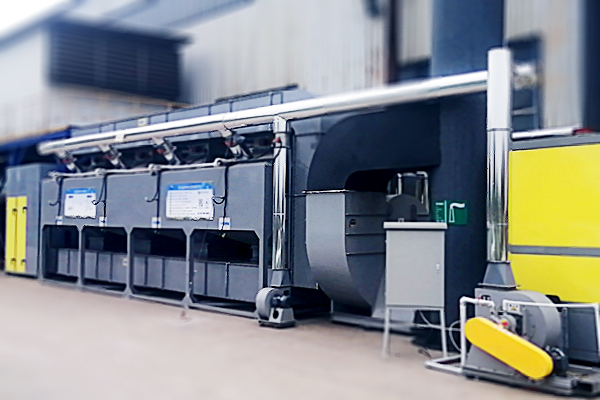
In industrial production, the fan system serves as the core component of exhaust gas treatment equipment. Its operational status directly impacts the effectiveness of dust removal, desulfurization, denitrification, and VOC treatment. When abnormal noise suddenly occurs in a fan during operation, it often signals hidden mechanical or aerodynamic problems. Timely diagnosis of the issue and taking corrective measures are essential to avoid equipment damage and production interruptions. Based on years of experience in environmental protection equipment manufacturing, Zhengzhou Puhua Technology has compiled and analyzed the common causes and solutions for abnormal fan noise.
1. Rotor Imbalance Caused by Impeller Fouling or Deformation
Under prolonged operating conditions, the fan impeller is susceptible to dust adhesion or uneven wear. Particularly in high-dust environments such as mining, cement, and foundry industries, particulate matter in the exhaust gas can accumulate on the impeller blades. When dust deposits unevenly, the dynamic balance of the rotor is disrupted, producing a distinct periodic humming or buzzing sound. This phenomenon is especially pronounced in pulse dust collectors and mobile dust collectors used to treat high-concentration dust-laden gases.
In corrosive working conditions, such as those encountered during wet desulfurization or VOCs treatment, the impeller may suffer from corrosion and deformation. This can lead to abnormal radial or axial clearances, which in turn generate friction noise.
Recommended Actions:
Regularly shut down the fan to inspect the impeller surface and clean off adhered dust.
Perform dynamic balancing calibration and promptly replace severely worn or deformed impellers.
Equip the air inlet with an effective pre-filtration device to reduce large particles from entering the fan housing.
2. Bearing Wear or Inadequate Lubrication
Bearing failure is a common mechanical cause of fan abnormal noise. When bearing balls or races are worn, the rolling elements produce clear, sharp squeaking or clicking sounds during operation, often accompanied by a rise in bearing housing temperature. Additionally, insufficient or deteriorated grease accelerates bearing wear and intensifies noise.
In RTO or RCO catalytic combustion systems, the fan bearings may operate at higher temperatures for extended periods, making the use of high-temperature-resistant grease essential. For critical fans in desulfurization and denitrification units, the frequency of bearing lubrication should be increased in high-temperature, high-humidity environments.
Recommended Actions:
Regularly check whether the bearing lubrication grease is adequate and replenish or replace it promptly.
Adopt scheduled maintenance by disassembling and cleaning bearings and assessing their wear.
Replace bearings immediately if abnormal clearance or pitting is detected on the rolling elements.
3. Loose Drive Belt or Coupling Misalignment
For belt-driven fans, belt slack can cause intermittent snapping or slapping noises during startup or load changes. Prolonged belt slippage not only generates abnormal noise but also reduces fan speed, affecting the exhaust air volume. For direct-coupled fans, if the motor and fan shafts are not concentric, the coupling transmits periodic vibrations and metal impact sounds, severely compromising bearing life.
Recommended Actions:
| Issue Type | Recommended Actions |
|---|---|
| Belt Slack | Adjust belt tension or replace the belt |
| Coupling Misalignment | Re-align using a dial indicator to keep concentricity within 0.1mm |
| Elastomer Wear | Promptly replace the coupling elastomer element |
4. Loose Foundation Bolts or Insufficient Structural Rigidity
During fan startup, shutdown, or operation under varying load, resonance can occur if the fan base or support structure is not sufficiently rigid. Loose foundation bolts can cause the fan to produce a loud, dull thumping sound throughout the entire unit, accompanied by significant vibration. This issue is common in many older factories where equipment vibration loosens anchor bolts over time, or where the steel structure lacks adequate stiffeners.
Recommended Actions:
Regularly use a torque wrench to check and tighten the anchor bolts.
Reinforce the fan base or support frame by adding stiffeners.
Install vibration-damping pads between the fan and its foundation to help reduce transmitted vibration.
5. Surge and Abnormal Airflow Resistance
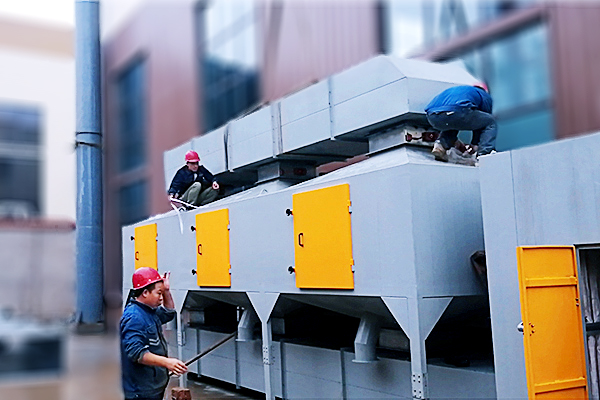
Fans in exhaust treatment systems can sometimes enter a surge state, especially when operating at low flow conditions or when system resistance suddenly rises. The noise produced during surge is a distinct, rhythmic rumbling or low-frequency pulsating sound, often accompanied by rapid fluctuations in air pressure and flow. This occurs when the fan operates below its minimum stable airflow, causing periodic flow reversals within the impeller.
Common causes of increased airflow resistance include:
Blocked filter bags in a pulse dust collector.
Clogged or fouled heat exchanger surfaces in an RTO.
Accidental closure or partial closure of dampers in the exhaust ductwork.
Foreign objects or loose insulation material obstructing the airflow path.
Recommended Actions:
Check that all dampers and valves are in the correct operating position.
Monitor the system pressure drop and clean or replace filters as needed.
If the operating point is near the surge limit, consider adjusting the fan speed or installing a bypass line to increase the minimum flow.
Zhengzhou Puhua Technology is a reputable manufacturer of environmental protection equipment in Henan, specializing in the design and production of various dust control equipment, desulfurization equipment, denitrification equipment, VOCs organic exhaust gas treatment equipment, pneumatic conveying equipment, and sewage treatment equipment. Our product line includes baghouse dust collectors, RCO catalytic combustion equipment, RTO equipment, VOCs treatment systems, desulfurization towers, denitrification units, photocatalytic oxidation systems, pulse dust collectors, mobile dust collectors, ultra-low emission systems, and wastewater treatment solutions.
In actual production scenarios, fan abnormal noise is often not caused by a single factor but results from a combination of mechanical, aerodynamic, and operational influences. Therefore, when troubleshooting abnormal fan noise, we recommend starting from the external piping system and checking internal mechanical components step by step. We encourage establishing daily inspection records and documentation for effective tracking and early identification of potential hazards.
If you encounter similar issues during equipment use and would like professional diagnostic advice, please feel free to contact the technical team at Zhengzhou Puhua Technology. We will analyze the specific conditions of your site and provide a tailored solution.
Related Articles
-

Zeolite Fixed Bed+Catalytic Combustion Equipment (RCO)
7513
-

Resin desorption+condensation recovery equipment
5450
-

Cooking oil fume purifier
11486
Subscribe to Our Newsletter
Stay updated with the latest news and insights from Puhua Tech.