
Valve Leakage Troubleshooting and Treatment Solutions for Exhaust Gas Treatment Equipment
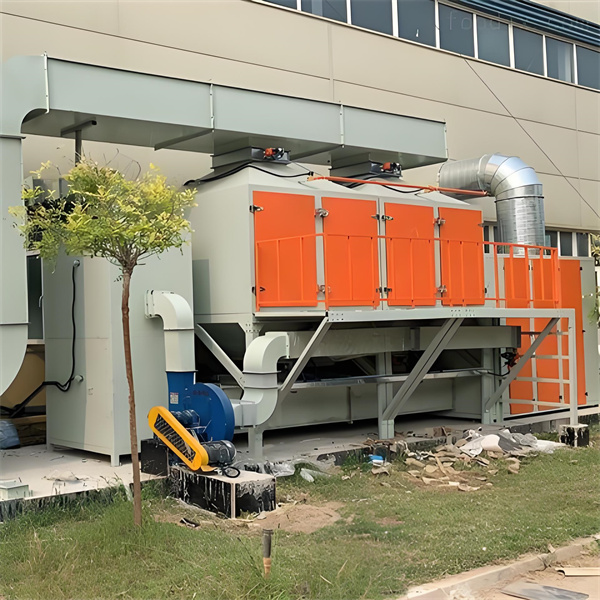
In industrial production, the exhaust gas treatment system is the core barrier for environmental compliance. As a key actuator in the system, the sealing performance of valves directly affects treatment efficiency, operating costs, and safety. Once a valve leaks, it not only leads to excessive emissions but may also cause equipment corrosion, energy waste, and even safety accidents. This article systematically analyzes the common causes, rapid troubleshooting procedures, and practical treatment solutions for valve leakage in exhaust gas treatment equipment, helping you build a scientific prevention and control system.
Common Types and Hazards of Valve Leakage
Valve leakage in exhaust gas treatment equipment can be divided into external leakage (leakage to the atmosphere) and internal leakage (leakage within the system) according to the leakage pathway. External leakage directly harms the environment and personnel safety, while internal leakage affects process parameters and reduces treatment efficiency. The following table summarizes the main leakage types and their typical hazards:
| Leakage Type | Typical Locations | Primary Hazards |
|---|---|---|
| External leakage at stem seal | Valve stem and packing gland | Toxic gas escapes, endangering health; increases plant VOCs concentration |
| External leakage at flange connection | Pipeline flange gasket | Pressure drop, reduced system stability; corrosion of surrounding equipment |
| Internal leakage at sealing surface | Valve disc and seat contact area | Media bypass affects desulfurization, denitrification, or VOCs removal efficiency |
| Body porosity or crack leakage | Casting defects on valve body | Sudden fracture risk; unplanned shutdowns and economic losses |
Systematic Troubleshooting Procedures
Facing leakage faults, a calm and systematic troubleshooting process is the key to quickly identifying the problem. It is recommended to follow the "Three-Level Inspection Method" for progressive diagnosis:
Level 1: Visual and Olfactory Inspection (Routine Patrol)
Visual inspection: Check for moisture, crystallization, or rust spots at the valve stem seal, flange interface, and body casting.
Olfactory/Instrument check: Use a portable gas detector or soapy water method for preliminary verification in areas with odor or where VOCs concentration is elevated.
Action records: Record the valve position (open/closed degree) and compare it with the control room display for deviations.
Level 2: Online Instrumentation Diagnosis
Pressure change analysis: Monitor whether the pressure on the upstream and downstream sides of the valve drops abnormally. If the downstream pressure rises when the valve is closed, it indicates internal leakage.
Temperature detection: Use an infrared thermometer to measure the surface temperature of the valve body. If local temperature is significantly lower than the medium temperature, it may indicate external leakage causing flash evaporation and cooling.
Level 3: Offline Accurate Detection
Helium leak detection or pressure holding test: For critical valves, conduct a shutdown pressure holding test or helium mass spectrometry leak detection to pinpoint the leakage point and quantify the leakage rate.
Internal visual inspection: Disassemble the valve to check the wear of the sealing surface, the aging of the packing, and the corrosion of the valve body.
Through the above procedures, the leakage cause can be quickly classified as design selection issue, installation problem, operation and maintenance defect, or normal wear, providing a clear direction for subsequent treatment.
Targeted Treatment Solutions
Different leakage causes require precise countermeasures. The following are several common treatment solutions, which can be flexibly combined according to site conditions.
1. Adjustment and Replacement of Stem Seal Packing
For external leakage at the stem, if the packing is not severely aged, tightening the packing gland nut can be attempted first. If the effect is not satisfactory, the packing should be replaced. Recommended method: When replacing, choose packing materials suitable for the medium temperature and corrosiveness, such as flexible graphite or PTFE impregnated packing. During installation, it should be cut at a 45-degree angle, and the joints should be staggered by 90-120 degrees.
2. Flange Connection Leakage Treatment
If the flange leaks due to loosening of bolts, it can be tightened evenly in a cross pattern. If the gasket is aged or damaged, it should be replaced. Key points: Clean the sealing surface before replacement, check for scratches or pits, and select a gasket with a higher pressure grade (such as a spiral wound gasket with an inner ring) to improve sealing reliability.
3. Sealing Surface Internal Leakage Repair
Internal leakage is often caused by damage to the sealing surface of the valve disc or seat. For minor wear, grinding and lapping can be used to restore the sealing surface. For severe erosion or scratches, the valve core and seat need to be sent for surfacing hard alloy or ceramic coating repair, or directly replace the valve internal parts. Note: For VOCs treatment systems, priority should be given to valves with metal hard seals to reduce wear from particulate matter.
4. Valve Body Leakage Emergency Measures
If the valve body has cracks or sand holes, pressure welding or metal bonding agents can be used for emergency sealing, but the safest method is still to replace the valve body. During the replacement period, it is necessary to formulate a bypass plan or shutdown procedure to ensure that emissions do not exceed the standard.
Preventive Management and Recommended Equipment Selection
Effective maintenance is the foundation for extending valve life and reducing leakage rates. It is recommended to establish a "valve lifecycle management" system, including regular lubrication of the stem, torque calibration of the valve, and sealing performance testing every quarter.
In terms of equipment selection, high-quality exhaust gas treatment equipment manufacturers have strict requirements for valve configuration. Zhengzhou Puhua Technology focuses on the design and R&D of environmental protection equipment. Its supporting valves undergo strict pressure testing and sealing tests before leaving the factory to ensure reliability under high load and corrosive conditions. Whether it is a baghouse dust collector, RCO catalytic combustion device, RTO equipment, VOCs treatment equipment, desulfurization tower, denitrification equipment, or photocatalytic oxidation equipment, the valve configuration plan is tailored according to the working conditions to fundamentally reduce the risk of leakage.
Choosing a supplier with strong R&D capabilities can provide not only high-quality equipment but also professional pre-sales and after-sales technical support. As a well-known environmental protection equipment manufacturer in Henan, Zhengzhou Puhua Technology has rich practical experience in the fields of dust control equipment, desulfurization equipment, denitrification equipment, pneumatic conveying equipment, and wastewater treatment equipment, covering multiple product lines such as pulse dust collectors, mobile dust collectors, and ultra-low emission equipment, providing customers with comprehensive solutions.

Typical Case Analysis
A chemical plant's RTO system frequently experienced pressure fluctuations, and it was ultimately found that the butterfly valve at the inlet had internal leakage, causing untreated gas to bypass the combustion chamber. After adopting the following measures, the problem was effectively solved:
Fault verification: Performed a pressure holding test during shutdown, confirming the seal failure of the butterfly valve.
Temporary measure: Adjusted the actuator stroke to increase the closing torque by 15% as a short-term emergency measure.
Permanent solution: Replaced the ordinary butterfly valve with a triple eccentric metal hard seal butterfly valve and added a purge steam interface to prevent dust accumulation on the sealing surface.
Management enhancement: Incorporated the valve into the regular inspection list of the maintenance department, conducting a sealing performance test every month.
After the transformation, the RTO system's VOCs removal efficiency increased from 95% to 98.5%, and the exhaust gas concentration at the plant boundary decreased significantly, verifying the effectiveness of a comprehensive solution of "accurate detection + targeted treatment + prevention-oriented."
Equipment Maintenance and Daily Operation Key Points
To reduce the probability of leakage, operators should pay attention to the following details:
Operation specifications: Avoid over-torque or under-torque when opening and closing the valve. For electric valves, check the over-torque protection setting.
Environment control: For outdoor valves, rainproof and sunshade measures should be taken to prevent aging and corrosion of the stem and packing.
Spare parts management: Keep commonly used packing, gaskets, and valve core components in stock for quick replacement during emergency repairs.
Record analysis: Establish a valve maintenance file, recording each maintenance content, replacement parts, and leakage data, providing data support for predictive maintenance.
In summary, valve leakage in exhaust gas treatment equipment is a systematic challenge that requires a combined approach from design selection, installation, operation, and maintenance. Through scientific troubleshooting processes and practical treatment plans, coupled with the professional support of high-quality manufacturers like Zhengzhou Puhua Technology, enterprises can significantly improve the stability and environmental compliance of their exhaust gas treatment systems.
Related Articles
-

Zeolite Fixed Bed+Catalytic Combustion Equipment (RCO)
7513
-

Resin desorption+condensation recovery equipment
5450
-

Cooking oil fume purifier
11486
Subscribe to Our Newsletter
Stay updated with the latest news and insights from Puhua Tech.