
A Systematic Approach to Troubleshooting Exhaust Concentration Fluctuations in Catalytic Combustion
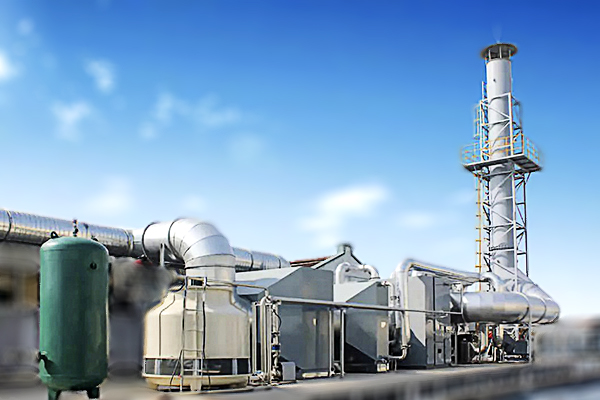
In industrial VOCs abatement projects, the operational stability of catalytic combustion equipment (including RCO and CO units) is directly linked to compliance and production efficiency. A common challenge faced by site operators is the fluctuation in exhaust gas concentration at the equipment outlet. This is not merely a data issue; it often signals underlying risks such as reduced destruction efficiency, catalyst degradation, or even unsafe operation. To address this, we must move beyond simply looking at the tail end and adopt a systematic, step-by-step troubleshooting approach.
Step 1: Verify the Accuracy of Monitoring Data
Before inspecting the equipment itself, we must first confirm whether the fluctuation reflects reality or measurement error. Instances occur where the monitoring system was the primary source of anomalous readings.
Cross-Correlation Analysis: Compare exhaust concentration data with process parameters like production load, furnace temperature, and catalyst bed pressure drop. If these parameters are stable while concentration data fluctuates, the issue likely originates in the monitoring system.
Probe and Pre-treatment Unit Inspection: For extractive systems, inspect the heated probe and filter for clogging. The sampling line temperature must be maintained above 120°C to prevent condensation, which causes significant measurement errors.
System Calibration: Regularly perform zero and span calibrations using standard gas. Verify that the data acquisition and transmission units haven't suffered parameter drift or communication faults.
Step 2: Front-End Pretreatment Inspection
A real-world case from the Xiamen Haicang Ecological Environment Bureau illustrates this clearly: a company invested over 2 million yuan in a new RCO system, but outlet concentrations remained unstable, creating new odorous substances. The root cause was a front-end filtration system with insufficient efficiency, allowing large amounts of organic dust to enter the furnace and block the catalyst micropores. This highlights that concentration fluctuations can originate from poor pre-treatment performance.
Dust Removal Efficiency: Check if the baghouse or cartridge filter is operating correctly. Excessive dust particles entering the catalyst bed causes pore blockage, masking the catalyst's active sites and causing reaction failure. The design value for gas particulate content entering the equipment should be strictly controlled.
Adsorption Saturation: If the front-end uses an activated carbon adsorption + desorption system, check for saturation. Once the carbon layer is saturated, it fails to adsorb VOCs, causing a direct drop in inlet concentration and impacting catalytic oxidation efficiency.
Humidity and Temperature: Monitor the humidity and temperature of the intake air. Excessively high humidity can affect the adsorption performance of activated carbon and certain catalyst types.
Step 3: Core Reaction Section Inspection
If front-end systems are confirmed normal, focus inspection on the combustion chamber and catalyst bed.
Catalyst Condition and Activity: Catalyst deactivation is a primary cause of efficiency fluctuations. This can be due to:
Poisoning: Sulfur, chlorine, and silicon compounds cause irreversible poisoning of precious metal active sites.
Coking and Covering: High-boiling organics form carbon deposits on the catalyst surface or cover active sites with oil mist, blocking the honeycomb channels.
Sintering: Short-term exposure to ultra-high temperatures (>450°C) causes active component agglomeration and specific surface area reduction.
Inspection Standard: Visually inspect the catalyst carrier surface. Severe blackening, carbon deposits, or fragmentation indicate the need for regeneration or replacement.
Temperature and Air Velocity Matching: Check if the catalyst bed temperature is stable within the designed range (typically 250-400°C). Excessive air velocity (space velocity) reduces residence time, preventing complete reaction.
Valve Switching Logic (for RTO/RCO): For regenerative equipment, optimize valve switching cycles and sealing. Cyclical switching transient pressure fluctuations can cause periodic concentration spikes. The switching frequency must be matched to actual operating conditions.
Step 4: Process Parameter Optimization
Many fluctuation issues stem from improper operational parameter settings. Adjusting these can often resolve problems without hardware changes.
Temperature Set Point: Ensure the oxidation furnace temperature is high enough to maintain destruction efficiency but not so high as to waste energy or damage the catalyst.
Heating System Response: For concentration spikes, the control system must respond quickly. Equip with PLC and PID regulation systems to dynamically adjust burner output and pre-dilution valves based on real-time inlet gas readings.
Buffer Design: Install a buffer tank or mixing section before the main treatment unit to homogenize gas entering the RCO.
Systematic Troubleshooting Checklist for Catalytic Combustion Equipment
| Frequency | Inspection Points | Actions |
|---|---|---|
| Daily | Record inlet and outlet gas concentration trends; check for cycle correlation with valve switching. | Identify potential valve seal or switching logic issues. |
| Weekly | Measure pressure drop across catalyst bed and bag filter. | High pressure drop indicates clogging/coking; schedule cleaning or ash removal. |
| Monthly | Use infrared thermal imaging to check temperature distribution of the heat storage/catalyst bed. | Identify cold spots or flow short-circuiting. |
| Quarterly | Calibrate CEMS (Continuous Emission Monitoring System) and inspect catalyst activity. | Prevent monitoring drift; assess catalyst health and plan for regeneration or replacement. |
Leveraging Professional Engineering Experience
Solving complex fluctuation issues demands not just a checklist, but deep process understanding and engineering experience. For example, Zhengzhou Puhua Technology has accumulated extensive expertise in manufacturing RCO catalytic combustion equipment, RTO equipment, and VOCs treatment systems over years of serving industries like petrochemicals, printing, and coatings.
Effective troubleshooting often requires balancing trade-offs: increasing the catalyst bed temperature for efficiency vs. controlling energy costs; optimizing valve switching cycles for treatment effectiveness vs. equipment wear. Zhengzhou Puhua Technology, as an experienced manufacturer of environmental protection equipment, provides custom diagnostics and solutions that consider these dynamics.
Conclusion: From Passive Response to Active Prevention
Fluctuations in exhaust concentration from catalytic combustion equipment result from a chain of factors—monitoring systems, pre-treatment, catalyst health, and process control. The most efficient troubleshooting strategy is a systematic, source-to-tail pipe inspection. However, the ultimate solution lies in proactive maintenance: establishing comprehensive equipment files, implementing regular catalyst testing, and setting rational operational parameters. Through systematic management, we can truly achieve reliable, stable, and compliant operation, maximizing the return on investment for these crucial environmental protection systems.
Related Articles
-

Zeolite Fixed Bed+Catalytic Combustion Equipment (RCO)
7513
-

Resin desorption+condensation recovery equipment
5450
-

Cooking oil fume purifier
11486
Subscribe to Our Newsletter
Stay updated with the latest news and insights from Puhua Tech.