
The Impact of Pulse Dust Collector Air Header and Blowpipe Nozzle Diameter Design on Cleaning Effici
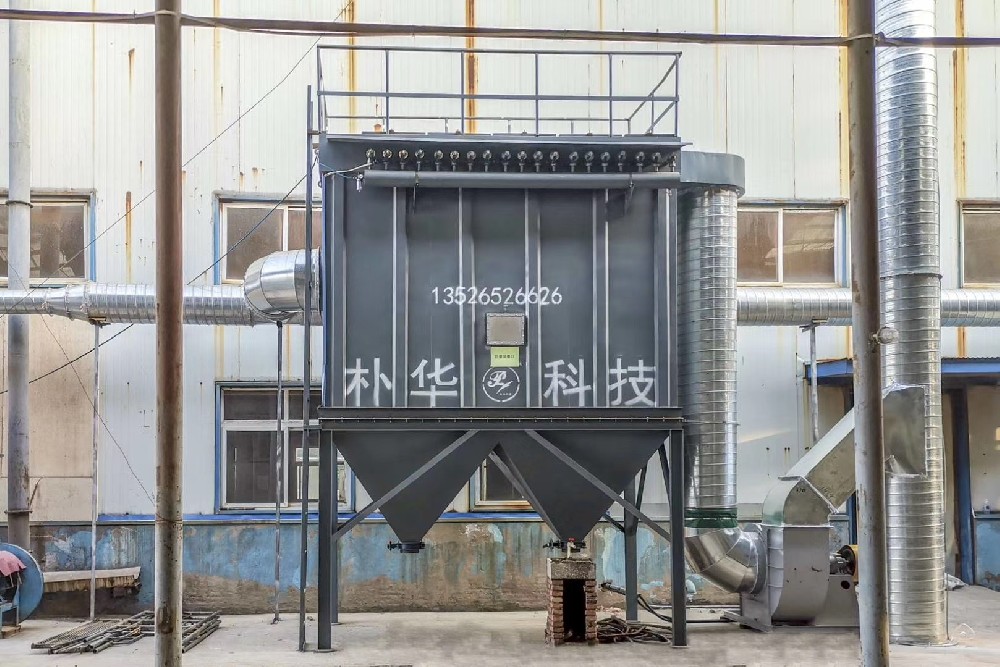
In the field of industrial dust collection, the pulse-jet cleaning system serves as the core mechanism for maintaining filter bag performance. The design of the air header and blowpipe nozzle diameter directly determines the effectiveness of the cleaning process, affecting everything from filter bag service life to overall system pressure drop. For operators and engineers seeking to optimize their dust collection equipment, understanding the relationship between these components and cleaning efficiency is essential.
Understanding the Role of the Air Header in Pulse Dust Collectors
The air header, also known as the air manifold or air tank, serves as the compressed air reservoir for the pulse-jet cleaning system. It accumulates and stores compressed air at a specific working pressure, releasing it in short, high-energy bursts through pulse valves to clean the filter bags. The design of the air header directly influences the stability and consistency of the cleaning pulse, which in turn affects how effectively dust is dislodged from the filter media.
Research indicates that the air header should be designed with a working capacity that allows the internal pressure to drop no more than 30% during a single pulse event. In practical terms, the header volume should be 2 to 3 times the minimum required working volume to ensure pressure stability during operation. This principle is particularly important when designing systems with multiple pulse valves operating in sequence.
The Relationship Between Air Header Volume and Pulse Stability
A properly sized air header ensures that each pulse valve receives sufficient compressed air volume and pressure to generate an effective cleaning pulse. When the header volume is too small, the pressure drop during pulsing becomes excessive, resulting in weaker cleaning force and uneven dust removal across the filter bags. Conversely, an oversized header increases manufacturing costs without providing significant performance benefits beyond a certain point.
For optimal performance, the air header should be equipped with essential accessories including safety valves, pressure gauges, and drain valves. These components contribute to safe and reliable operation while allowing operators to monitor system pressure and remove condensate that could affect cleaning performance.
Blowpipe Design Fundamentals: Diameter and Nozzle Configuration
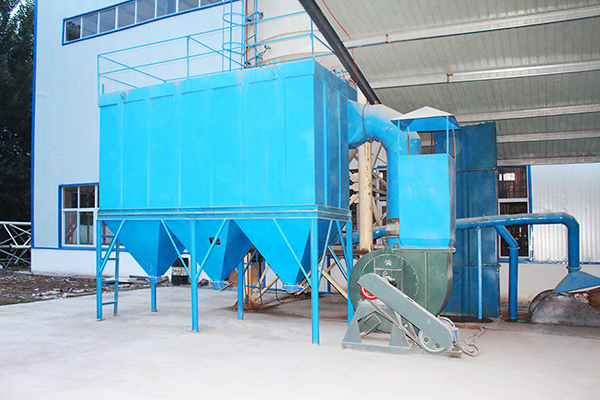
The blowpipe, or injection pipe, distributes compressed air from the pulse valve to individual filter bags through a series of nozzles. The design of the blowpipe and its nozzle diameters significantly impacts cleaning uniformity and efficiency. According to established industry guidelines, the blowpipe diameter should match the outlet diameter of the pulse valve. For example, a 3-inch pulse valve should be paired with a blowpipe of equivalent diameter to minimize flow resistance.
A critical design consideration is the relationship between blowpipe diameter, nozzle count, and nozzle diameter. Industry practice suggests that the total cross-sectional area of all nozzles should equal approximately 60% to 80% of the blowpipe's internal cross-sectional area. This ratio ensures adequate flow distribution while maintaining sufficient velocity at each nozzle outlet. For a 3-inch pulse valve driving 16 nozzles, the average nozzle diameter would be approximately 15 mm based on this principle.
Nozzle Diameter Optimization: Achieving Uniform Flow Distribution
One of the most important factors in blowpipe design is achieving uniform cleaning intensity across all filter bags in a row. Computational fluid dynamics studies have shown that the momentum flux at each nozzle outlet, rather than mass flow rate, is the key parameter affecting cleaning strength. This finding has important implications for nozzle diameter design.
Research demonstrates that static pressure inside the blowpipe increases along its length toward the closed end. This pressure gradient causes higher mass flow through nozzles near the end of the blowpipe, but these nozzles actually deliver lower momentum flux due to reduced velocity. To compensate for this phenomenon, a stepped nozzle diameter design is commonly employed.
Specifically, nozzles farther from the pulse valve should have slightly smaller diameters than those near the valve. The recommended difference typically ranges from 0.5 to 2.0 mm, with nozzles near the pulse valve being larger. This taper helps balance the momentum flux distribution, resulting in more uniform cleaning across the entire row of filter bags.
| Valve Diameter (inch) | Valve Outlet Diameter (mm) | Recommended Nozzle Diameter Range (mm) |
|---|---|---|
| 3/4 | 22 | 5 - 7 |
| 1 | 28 | 6 - 8 |
| 1 - 1/2 | 42 | 7 - 9 |
| 2 | 53 | 8 - 11 |
| 2 - 1/2 | 69 | 9 - 14 |
| 3 | 81 | 14 - 18 |
| 4 | 106 | 16 - 22 |
Source: Pulse dust collector design handbook
Nozzle Quantity Limitations and Practical Considerations
The number of nozzles that can be effectively served by a single pulse valve is limited by several factors, including the available compressed air volume, working pressure, and filter bag length. Industry practice generally recommends limiting nozzle count to 16 or fewer for a 3-inch pulse valve to maintain effective cleaning performance.
When designing for low-pressure pulse cleaning, nozzle diameters should be increased by approximately 2 to 3 mm compared to standard designs to compensate for the reduced driving pressure. This adjustment helps maintain adequate cleaning energy while operating at lower pressures, which may be preferable for certain applications or filter media types.
The Role of Nozzle Geometry and Guide Tubes
Beyond diameter, the geometric configuration of the nozzle and the use of guide tubes significantly affect cleaning performance. Nozzle openings should be precisely machined with strict tolerance control—hole spacing tolerances of ±0.5 mm and verticality of 0.4 mm or better are typical requirements. Poorly manufactured nozzles can cause the cleaning jet to misalign, leading to premature filter bag wear and ineffective cleaning.
Guide tubes, also known as short tubes or flow directors, are sometimes installed below each nozzle to help focus the cleaning jet and induce secondary airflow. These tubes are typically 2 to 3 times the nozzle diameter and can be designed in various configurations, with flow-optimized profiles providing the best performance. When properly designed, guide tubes help direct the expanding jet vertically into the filter bag mouth, reducing the risk of bag damage from off-angle impingement.
Cleaning Efficiency: How Design Parameters Affect Performance
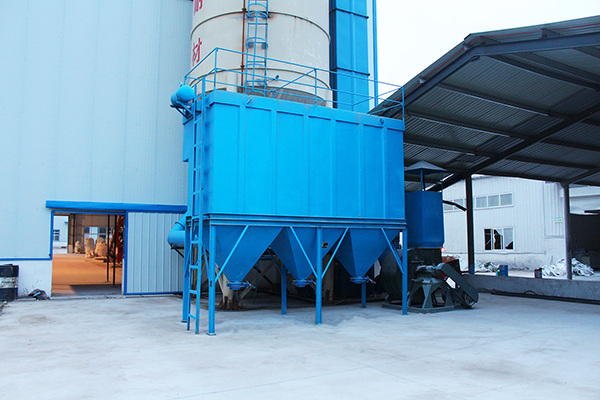
The primary function of the pulse-jet cleaning system is to dislodge accumulated dust from filter bag surfaces. A well-designed system achieves this goal while minimizing energy consumption and bag wear. The key performance metrics include cleaning uniformity, peak pressure at the bag bottom, and overall pressure drop recovery after cleaning.
Studies have shown that optimal nozzle diameter design ensures adequate peak pressure at the bottom of each filter bag—typically in the range of 1500 to 2500 Pa for standard applications. This pressure is generated by the expanding jet as it travels down the bag length, causing the filter bag to expand rapidly and release the dust layer adhering to its surface.
Uneven cleaning, caused by poor air header or nozzle design, can lead to several operational problems:
Premature filter bag failure due to localized stress and abrasion
Increased system pressure drop from inadequately cleaned bags
Higher compressed air consumption due to more frequent pulsing
Reduced dust collection efficiency and increased emissions
Practical Design Recommendations
Based on industry experience and research findings, the following design recommendations are offered for pulse dust collector air header and blowpipe systems:
Air header capacity: Design for a working volume at least 2 to 3 times the minimum requirement to maintain stable pressure during pulsing.
Blowpipe diameter: Match to the pulse valve outlet diameter to minimize flow resistance.
Nozzle diameter: Calculate based on the 60-80% area rule, then adjust each nozzle individually to achieve uniform momentum flux distribution.
Nozzle positioning: Maintain strict vertical alignment with the center of each filter bag, with a position deviation of 2 mm or less.
Guide tubes: Consider using flow-optimized guide tubes to improve jet direction and induce secondary airflow.
Advanced Considerations: CFD Optimization
Modern design practices increasingly utilize computational fluid dynamics to refine air header and blowpipe designs. CFD simulations allow engineers to visualize pressure distribution, velocity profiles, and momentum flux across the blowpipe, enabling precise optimization of nozzle diameters and placement. This approach has been shown to significantly improve cleaning uniformity compared to purely empirical design methods.
For projects requiring the highest level of performance, CFD analysis can be combined with experimental validation to develop custom designs for specific applications. Zhengzhou Puhua Technology employs these advanced design techniques to ensure their pulse dust collector systems deliver optimal cleaning efficiency across a wide range of operating conditions.
Conclusion
The design of the air header and blowpipe nozzle diameter plays a fundamental role in determining the cleaning efficiency of pulse dust collectors. A well-designed system ensures uniform cleaning across all filter bags, prolongs bag life, minimizes compressed air consumption, and maintains low system pressure drop. By understanding the principles outlined in this article—including air header capacity requirements, the 60-80% area rule for nozzle sizing, and the importance of stepped nozzle diameters for flow balance—engineers and operators can make informed decisions that improve their dust collection systems.
Whether designing a new system or evaluating an existing installation, careful attention to these design parameters will yield measurable improvements in cleaning performance and operational reliability.
For professional solutions in pulse dust collector design and manufacturing, Zhengzhou Puhua Technology offers comprehensive expertise in industrial dust collection equipment, including pulse dust collectors, baghouse systems, and related air pollution control technologies. Their engineering team provides tailored designs that optimize cleaning performance for specific application requirements.
Related Articles
-

Zeolite Fixed Bed+Catalytic Combustion Equipment (RCO)
[list:visits]
-

Resin desorption+condensation recovery equipment
[list:visits]
-

Cooking oil fume purifier
[list:visits]
Subscribe to Our Newsletter
Stay updated with the latest news and insights from Puhua Tech.