
Small Workshop vs. Large Factory: Choosing Between Cartridge and Baghouse Dust Collectors Based on S
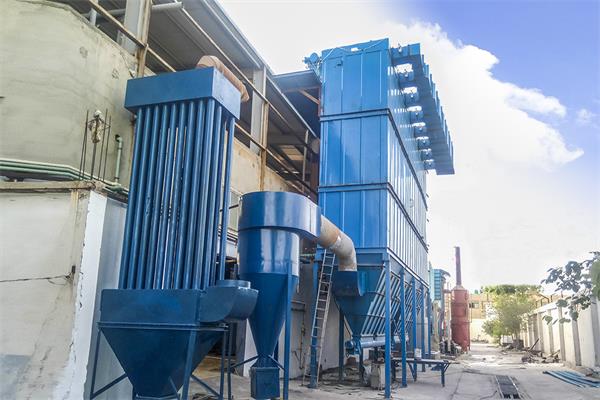
Selecting the right dust collection system is a critical decision for any operation dealing with airborne particulates. The choice between a cartridge dust collector and a baghouse (fabric filter) is rarely straightforward. While many factors influence this decision—such as particle size, material characteristics, and regulatory requirements—one of the most fundamental yet often overlooked variables is the physical footprint of your facility. Whether you operate a compact job shop or a sprawling industrial plant, the available space profoundly impacts system performance, maintenance accessibility, and total cost of ownership. This guide provides a comprehensive, space-based framework to help you make an informed choice, blending technical accuracy with practical, shop-floor wisdom.
Understanding the Core Technologies
Before evaluating spatial requirements, it is essential to clarify how these two systems function. A baghouse dust collector uses woven or felted fabric filter bags to capture dust. Dust-laden air enters the hopper, passes through the bags, and particles accumulate on the bag surface. Cleaning typically occurs via reverse air, shaker mechanisms, or pulse jets. In contrast, a cartridge dust collector employs pleated, non-woven filter cartridges with a much higher media area per unit volume. Cleaning is almost exclusively achieved through pulse-jet reverse air, which releases dust into the hopper below.
This fundamental difference in media geometry—cylindrical bags versus pleated cartridges—directly translates into distinct spatial advantages and constraints, which we will explore in detail.
Footprint Fundamentals: Why Space Dictates Technology
The spatial efficiency of a dust collector is not merely about floor area; it encompasses ceiling height, clearance for maintenance, ductwork routing, and access for bag or cartridge changes. Let us break down the spatial implications of each system.
Floor Space: The Cartridge Advantage
For operations with limited square footage, the cartridge collector offers a compelling solution. The pleated design provides a significantly higher filter area-to-volume ratio—often three to four times that of a conventional baghouse. This means that for the same airflow (CFM) and dust load, a cartridge unit can be substantially smaller in floor plan. For example, a 10,000 CFM cartridge collector might occupy roughly 30-40 square feet, whereas a comparable baghouse could demand 60-80 square feet or more, depending on bag length and number of compartments.
This compact footprint allows small workshops to integrate effective dust control without sacrificing valuable production space. It also simplifies retrofitting into existing layouts where expansion is not feasible.
Vertical Clearance: The Baghouse Trade-off
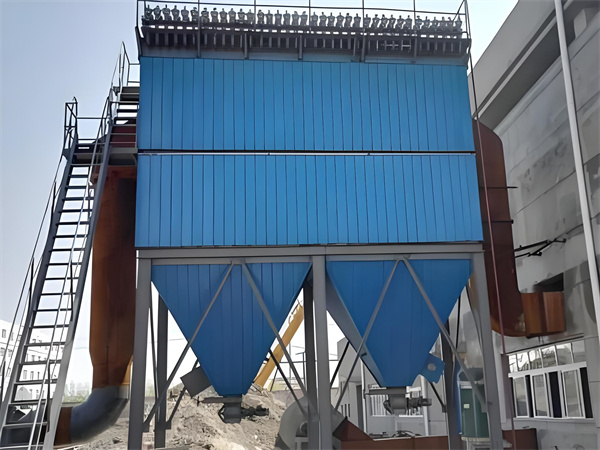
While baghouses generally require more floor space, they can be designed with taller bags to reduce the footprint per CFM. However, this introduces a vertical space challenge. Tall baghouses may require 20-30 feet of headroom for bag installation and removal. In a low-ceiling workshop, such height is often unavailable. Conversely, cartridge collectors are typically shorter—often under 12 feet—making them suitable for standard ceiling heights. This vertical flexibility is a decisive factor when evaluating indoor installation options.
Maintenance Access Aisle
Space is not just about the collector itself; it is also about the room to service it. Baghouses require access to the clean-air plenum or tube sheet for bag inspection and replacement. This often demands a walkway or platform around and above the unit. Cartridge collectors, with their top-loading or side-access designs, generally need less surrounding clearance. For cramped environments, this reduced service footprint can be a significant operational benefit.
Comparative Analysis: Small Workshop Scenarios
A small workshop—typically under 5,000 square feet—often handles intermittent or light-to-moderate dust loads from woodworking, metal grinding, or plastic processing. In this context, the cartridge collector frequently emerges as the optimal choice.
Space Efficiency: The compact design frees floor area for machinery and material handling.
Installation Simplicity: Lower weight and height simplify rigging and installation, reducing structural support costs.
Media Change-out: Quick-change cartridge systems minimize downtime, which is critical for small-batch production.
Energy Consumption: Lower pressure drop due to high-efficiency media can reduce fan energy costs over time.
However, it is important to consider dust characteristics. For fibrous or sticky dust that may blind the pleats, a baghouse with a shaker cleaning mechanism might perform more reliably, provided the workshop can accommodate the larger footprint.
Comparative Analysis: Large Factory Environments
In a large factory with high airflow requirements (often exceeding 50,000 CFM), continuous operations, and heavy dust loads—such as cement, mining, or bulk material handling—the baghouse has historical precedence. Yet, recent advancements in cartridge technology have blurred these lines.
| Parameter | Baghouse (Large Factory) | Cartridge Collector (Large Factory) |
|---|---|---|
| Footprint per CFM | Larger (lower media density) | Smaller (high media density) |
| Ceiling Height Requirement | Often 20-30 ft (tall bags) | Typically 12-18 ft |
| Maintenance Access Space | Extensive (platforms, walkways) | Moderate (top or side access) |
| Filter Change Frequency | Less frequent (longer bag life for abrasive dust) | More frequent if dust is abrasive (pleat wear) |
| Air-to-Cloth Ratio | Lower (1.5-3:1) | Higher (6-10:1) |
For factories with abundant floor space but limited headroom, a horizontal or reverse-air baghouse can be arranged to spread horizontally. Conversely, if floor space is at a premium but ceiling height is generous, a baghouse with extra-long bags (e.g., 20-foot) can reduce the floor footprint. This trade-off requires careful dimensional analysis.
Decision Matrix: Space-Driven Selection Criteria
To systematize your evaluation, consider the following decision factors weighted by your facility’s spatial constraints.
Available Floor Area: If floor space is less than 50 square feet for the collector, a cartridge system is almost mandatory. For larger footprints, baghouses become viable.
Ceiling Height: If height is under 14 feet, a cartridge collector or a low-profile baghouse (which increases floor area) is necessary. Above 20 feet, tall baghouses offer footprint savings.
Dust Characteristics: Fine, cohesive, or hygroscopic dusts may favor baghouses with gentle cleaning to prevent dust penetration into the pleats.
Future Expansion: If you anticipate adding more dust-generating equipment, the modular nature of cartridge collectors allows for easier capacity scaling without major structural changes.
Maintenance Accessibility: In tight aisles, cartridge collectors with pull-out cartridge racks require less clearance than baghouses requiring overhead hoists for bag removal.
Practical Considerations Beyond the Blueprint
Beyond the raw dimensions, real-world space planning must account for ductwork entry points, compressed air lines, control panels, and hopper discharge clearance. For instance, a cartridge collector with a conical hopper may need additional height for a rotary airlock, whereas a baghouse with a larger hopper volume might have a wider base.
Noise attenuation is another spatial factor. Baghouses often require larger silencers or acoustic enclosures, which add to the footprint. Cartridge collectors, operating at lower pressure drops, may generate less noise, potentially reducing the need for bulky soundproofing.
Economic Implications of Space Utilization
Real estate within a factory is costly. A collector that consumes 20% more floor area may force the relocation of a production line, incurring significant indirect costs. Conversely, a compact cartridge unit might fit into an unused corner, avoiding any layout changes. When calculating return on investment, include the opportunity cost of the occupied space—a metric often ignored in traditional cost comparisons.
Energy efficiency also correlates with space. Higher air-to-cloth ratios in cartridge collectors mean smaller fans and motors, which reduce electrical room requirements and operational expenses. However, the higher pressure drop across finer pleated media may offset this if not properly sized.
Case Study: Retrofitting a 2,000 sq ft Metal Fabrication Shop
A metal fabrication workshop with a 12-foot ceiling and limited floor area needed to control fine steel dust from grinding and plasma cutting. The initial baghouse proposal required a 10x8-foot footprint and 22-foot bag height—impossible given the ceiling and adjacent equipment. Switching to a cartridge dust collector with a 5x6-foot footprint and 10-foot height allowed installation between two machines, with side-access cartridge replacement from the aisle. The Zhengzhou Puhua Technology team assisted in configuring the unit with flame-retardant cartridges and a spark arrestor, ensuring both spatial fit and safety compliance.
When a Baghouse Remains the Preferred Choice
Despite the space advantages of cartridge collectors, baghouses are not obsolete. For extremely abrasive materials (e.g., foundry sand, cement clinker), the woven fabric bags offer superior wear resistance compared to pleated media, which can suffer from pinholing at the creases. Additionally, for applications with very heavy dust loads (over 100 g/m³), a baghouse with a larger hopper capacity can reduce the frequency of dust discharge, saving maintenance labor. In large factories with dedicated maintenance teams and ample space, these benefits often outweigh the footprint premium.
Recommendations for Hybrid Approaches
In some multi-stage systems, you can combine both technologies: a cyclone pre-filter reduces the dust load before a compact cartridge collector, effectively shrinking the overall footprint while prolonging cartridge life. This hybrid solution is gaining traction in medium-sized facilities where space is moderately constrained but dust loading is high.
Final Decision Checklist
Measure your available floor area and ceiling height with precision. Account for ducting, platforms, and access routes.
Analyze your dust’s physical properties—abrasiveness, hygroscopicity, and particle size distribution.
Estimate future airflow requirements to avoid undersizing.
Calculate the total cost of ownership including energy, media replacement, and space opportunity costs.
Consult with an experienced equipment provider who can perform on-site dimensional surveys.
Leading manufacturers like Zhengzhou Puhua Technology offer tailored solutions for both cartridge and baghouse technologies, with a strong emphasis on space-optimized designs. Their product lineup includes cartridge dust collectors, pulse-jet baghouses, RCO catalytic combustion equipment, RTO systems, VOCs treatment units, desulfurization towers, denitrification systems, photocatalytic oxidation equipment, mobile dust collectors, ultra-low emission systems, and pneumatic conveying devices. Their engineering team routinely assists customers in balancing spatial constraints with performance targets, ensuring that the chosen collector integrates seamlessly into existing workflows.
Conclusion
There is no one-size-fits-all answer to the cartridge versus baghouse debate. Space is a tangible, measurable constraint that directly influences system selection, installation cost, and operational efficiency. Small workshops benefit immensely from the compact, low-profile nature of cartridge collectors, while large factories may leverage their expansive floor area or high ceilings to accommodate baghouses with lower maintenance frequencies. By rigorously assessing your physical environment—not just the airflow and dust load—you can make a decision that serves your production goals for years to come. Remember that expert guidance from reputable suppliers, such as Zhengzhou Puhua Technology, can provide site-specific insights that generic calculators cannot, ensuring your dust collection system is neither oversized for your space nor undersized for your process.
Related Articles
-

Zeolite Fixed Bed+Catalytic Combustion Equipment (RCO)
[list:visits]
-

Resin desorption+condensation recovery equipment
[list:visits]
-

Cooking oil fume purifier
[list:visits]
Subscribe to Our Newsletter
Stay updated with the latest news and insights from Puhua Tech.