
Baghouse Emission Exceedance? A Comprehensive Diagnosis from Filter Bag Leakage to Manhole Plate Ash
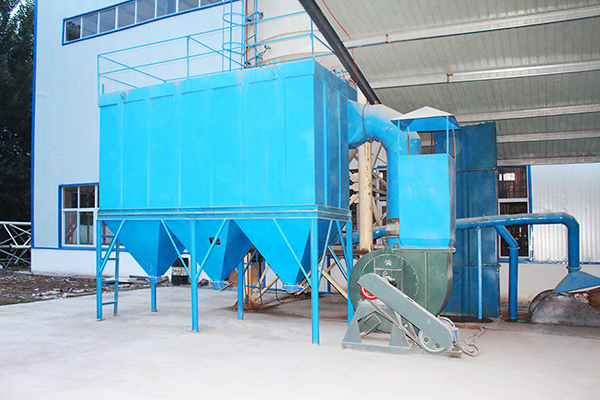
For many industrial operations, the baghouse dust collector is the final defense against regulatory fines and environmental liability. When the stack reading spikes above the permitted limit, plant managers and EHS professionals face an urgent question: is it a simple maintenance miss or a systemic failure? This guide provides a structured, deep-dive diagnostic approach to identify the root causes of excessive baghouse emissions, covering everything from failed filter bags to hidden ash bridges on the manhole plate, and offers actionable solutions to restore compliance and extend equipment life.
Initial Triage: Immediate Indicators of Baghouse Dust Collector Emission Issues
Before you open the access doors, gather operational data. A sudden rise in outlet dust concentration is often accompanied by secondary symptoms. Record the following parameters to narrow the diagnostic scope:
Pressure drop trend: Is it increasing, decreasing, or erratic?
Pulse cleaning cycle frequency: Has it increased automatically to compensate for higher resistance?
Visual stack appearance: Is the plume hazy, dense, or intermittent?
Ash discharge quantity: Is the hopper producing less or more dust than usual?
These clues point toward four primary failure domains: media integrity, cleaning system performance, gas distribution, or structural sealing. In practice, over 60% of compliance failures originate from a combination of minor issues rather than a single catastrophic event. Consequently, a systematic, layer-by-layer inspection is critical.
Diagnostic Level 1: Filter Bag Integrity – The Frontline Defense
Filter bags are the heart of the baghouse. When emission limits are exceeded, bag damage is the first suspect. However, not all bag failures are obvious. Here is a structured approach to evaluate bag condition:
| Observation | Likely Cause | Immediate Action |
|---|---|---|
| Dust layer on clean side (inside cage) | Pinholes, seam tears, or abraded fabric | Conduct full bag inspection using a bright light; replace damaged elements |
| Excessive bag stretching or wrinkling | Incorrect bag tension or cage corrosion | Verify cage dimensions; install anti-wrinkle rings if needed |
| Stiff or brittle fabric near the bottom | Acid/alkali attack due to dewpoint condensation | Check insulation and preheat systems; use chemically resistant media |
| Uniform gray discoloration with high resistance | Submicron dust plugging (irreversible) | Consider pre-coat or change to ePTFE membrane bags |
During bag replacement, always inspect the cell plate sealing gaskets. A distorted or hardened gasket allows dust-laden gas to bypass the bags entirely, mimicking a bag failure. For high-temperature or abrasive applications, Zhengzhou Puhua Technology recommends specifying bags with reinforced cuffs and double-stitched bottom seams to extend service life.
Diagnostic Level 2: Tube Sheet and Manhole Plate Ash Accumulation
One of the most overlooked areas in a baghouse dust collector is the tube sheet (also known as the manhole plate or cell plate) and the surrounding plenum. Even with intact filter bags, ash can build up on the tube sheet surface due to:
Incomplete pulse cleaning causing dust bridges that fall back onto the plate.
Gas velocity spikes that carry coarse particles into the clean air plenum during pulse off-time.
Leaks in access door seals allowing moisture ingress, leading to sticky ash accumulation.
Ash deposits on the tube sheet are more than a nuisance; they increase the local velocity across remaining open areas, eroding bags and cage wires. Moreover, thick ash layers on the manhole plate can insulate the metal, causing uneven thermal expansion and subsequent warping of the plate, which breaks the seal between the clean and dirty sides. A simple field test involves opening the clean air plenum and running a straightedge across the tube sheet. Any deviation exceeding 3 mm indicates a sealing risk. If warping is present, the tube sheet may require resurfacing or replacement.
Preventive Measures for Manhole Plate Accumulation
Install a walkway grating above the tube sheet to allow easy inspection and cleaning during shutdowns.
Adjust pulse timing to ensure that the secondary blow-down air does not carry dust upward.
Use a low-pressure, high-volume cleaning system to reduce mechanical stress on the plate.
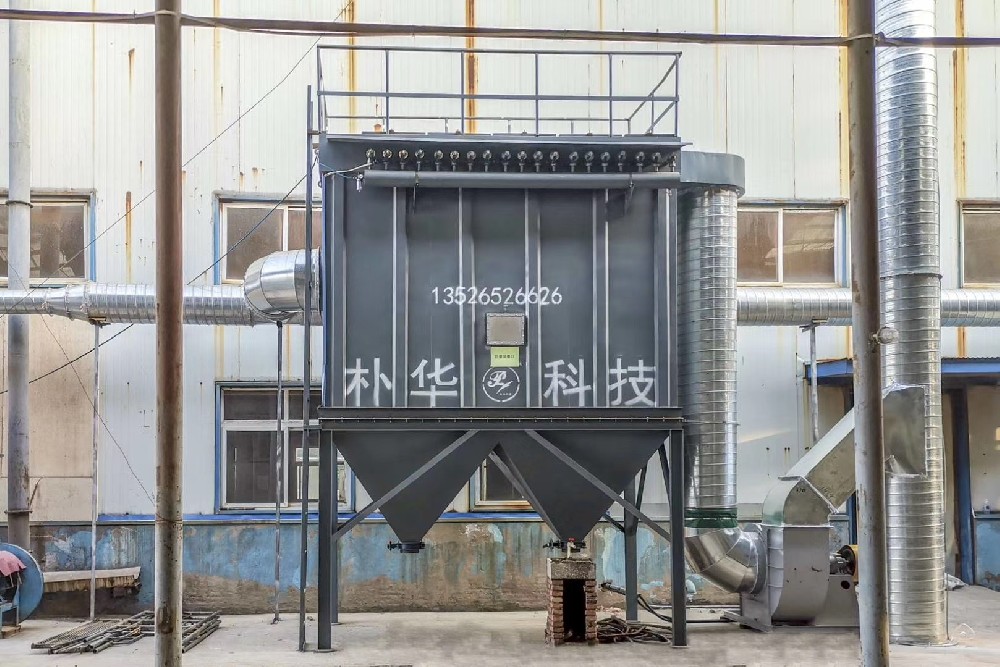
When specifying new equipment or retrofitting existing units, Zhengzhou Puhua Technology designs its baghouse dust collectors with sloped tube sheets and integrated purge-air manifolds to minimize ash retention, ensuring that maintenance teams spend less time on de-ashing and more on performance optimization.
Diagnostic Level 3: Pulse-Jet Cleaning System Optimization
An ineffective cleaning cycle directly contributes to high differential pressure and can lead to bag blinding, which in turn forces operators to increase pulse pressure, risking bag damage. Evaluate your pulse system using the following checklist:
Diaphragm valve response: Delayed or partial opening reduces cleaning energy.
Nozzle alignment: Misaligned blow-pipes waste compressed air and fail to clean the entire bag length.
Header pressure: Too low (insufficient cleaning) or too high (bag stress and dust penetration).
Pulse interval: Too short allows dust to re-enter; too long increases baseline resistance.
A common correction is to perform a "pulse-off" test: stop the cleaning system and observe the pressure drop rise. A normal baghouse will show a steady increase. If the pressure drop spikes within minutes, the bags are likely overloaded or the dust cake is not releasing. In such cases, consider extending the pulse-off time or introducing a pre-coat material to form a more permeable base layer.
Diagnostic Level 4: Gas Distribution and Filtration Velocity
Even with new bags and a pristine tube sheet, excessively high air-to-cloth ratios can overpower the baghouse's dust removal capacity. The design filtration velocity (air-to-cloth ratio) should be verified against the actual operating flow. For many industrial dusts, a ratio above 1.2 m/min is risky unless using advanced media. High velocity forces fine dust into the fabric pores, creating a dense, high-resistance cake that sheds poorly, ultimately raising emissions. To remedy this, you can:
Increase the number of bags (if the housing permits).
Install inlet baffles or deflector plates to distribute gas evenly across all bags.
Use a variable frequency drive on the fan to reduce flow during low-load periods.
Furthermore, uneven gas distribution causes some bags to see higher velocities, while others remain underused. This not only accelerates wear on the overloaded bags but also makes the cleaning system work inefficiently. A simple velocity profile measurement using a pitot tube across the inlet duct can reveal imbalances.
Diagnostic Level 5: Leakage in Housing and Hopper Seals
Air in-leakage at the hopper discharge valve or access doors can cause local cooling and condensation. The resulting damp dust agglomerates, forming hard deposits on the tube sheet and inside the hopper. These deposits are often mistaken for bag deterioration. Perform a smoke test or a simple soap-bubble test around all seals while the fan is running. Any leak point will show bubbles or smoke being drawn inward. Pay special attention to:
Rotary airlock seals on the hopper outlet.
Inspection door gaskets on the clean air plenum.
Flange connections between the hopper and the housing.
If leakage is detected, replace gaskets with high-temperature silicone or Viton materials, and install compression latches to ensure a tight closure. Zhengzhou Puhua Technology offers custom-engineered sealing solutions for both new and existing baghouse dust collectors, including reinforced hopper liners and positive-pressure seal kits for high-draft applications.
Comprehensive Correction Strategy and Long-Term Maintenance
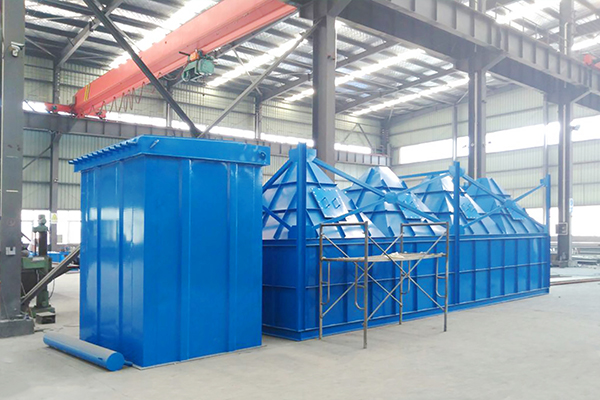
After identifying the primary and secondary causes of emission exceedance, implement a corrective plan that addresses not only the symptoms but also the underlying operational factors. The table below summarizes a tiered response strategy:
| Root Cause | Immediate Fix | Long-Term Solution |
|---|---|---|
| Pinholes or seam tears in filter bags | Replace individual bags with same spec | Upgrade to needled felt with scrim reinforcement |
| Tube sheet warping / ash bridging | Clean and level the plate; apply high-temp sealant | Install a sloped plate design with automatic purge |
| Pulse system inefficiency | Re-align blowpipes and calibrate solenoid valves | Retrofit with a smart controller that adjusts pulse based on ΔP |
| Excessive filtration velocity | Reduce fan speed or damper inlet | Add additional bag modules or convert to pleated elements |
| Housing air leakage | Replace gaskets and tighten fasteners | Conduct annual pressure decay test and reseal |
For plants seeking to avoid recurring problems, consider implementing a predictive maintenance program. This involves monitoring key parameters such as outlet dust concentration (via triboelectric or optical sensors), compartment pressure drop, and compressed air consumption. Data trends can alert you to bag degradation or tube sheet ash buildup weeks before an exceedance occurs.
When to Call in a Specialist – Integrated Solutions for Complex Systems
Not all baghouse issues can be resolved in-house. If you have performed the above diagnostics but still observe erratic emissions, or if your unit is over 10 years old, it may be time for a comprehensive system audit. The audit should include a computational fluid dynamics (CFD) analysis of gas flow, a detailed material compatibility review, and a mechanical integrity inspection of the support structure and hopper.
Zhengzhou Puhua Technology specializes in end-to-end dust collection solutions, including design, manufacturing, and retrofitting of baghouse dust collectors, pulse-jet systems, RCO catalytic combustion units, VOCs treatment equipment, desulfurization towers, and ultra-low emission systems. With a focus on application-specific engineering, the company provides tailored solutions for cement, steel, chemical, and woodworking industries. Their product portfolio encompasses not only baghouse dust collectors but also RTO equipment, moving dust collectors, gas-conveying systems, and wastewater treatment equipment. For organizations requiring turnkey pollution control, Zhengzhou Puhua Technology offers integrated packages that address particulate, gaseous, and liquid pollutants simultaneously.
Final Checklist for Baghouse Emission Troubleshooting
Before restarting the system after any corrective action, run through this final verification list:
Confirm all bags are properly seated with correct tension.
Verify that the tube sheet and manhole plate are clean and free of debris.
Check that pulse nozzles are aligned within 5° of the bag centerline.
Ensure all hopper discharge valves are operational and sealed.
Measure the pressure drop across each compartment (if multi-compartment) to balance flows.
Perform a short test run with a portable particulate monitor to confirm emission levels.
Systematic troubleshooting not only resolves the immediate emission non-compliance but also contributes to lower energy consumption and extended bag life. By regularly inspecting filter bags, maintaining tube sheet cleanliness, and optimizing pulse cleaning parameters, operators can achieve stable, reliable performance even under variable process conditions. Remember, the goal is not just to meet the emission standard today, but to sustain it with predictable maintenance intervals and proactive upgrades.
By adopting a structured diagnostic approach – from filter bag integrity to tube sheet ash management and cleaning system calibration – any facility can systematically eliminate the guesswork from emission control. With the support of experienced suppliers like Zhengzhou Puhua Technology, plant operators can access not only high-quality replacement parts but also engineering expertise to redesign and upgrade their systems for the latest regulatory demands. Taking proactive, data-driven actions today will ensure your baghouse dust collector operates at peak efficiency for years to come.
```
Related Articles
-

Zeolite Fixed Bed+Catalytic Combustion Equipment (RCO)
[list:visits]
-

Resin desorption+condensation recovery equipment
[list:visits]
-

Cooking oil fume purifier
[list:visits]
Subscribe to Our Newsletter
Stay updated with the latest news and insights from Puhua Tech.