
Catalytic Combustion Equipment Thermocouple Calibration and Replacement Standards
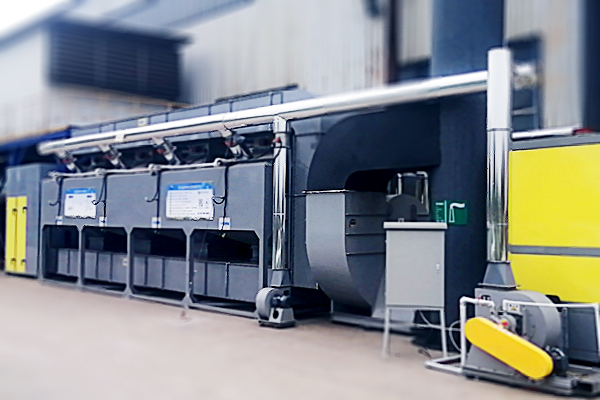
In the field of industrial waste gas treatment, catalytic combustion equipment plays a vital role in ensuring that VOC emissions meet stringent environmental regulations. At the heart of this system lies a small but critical component: the thermocouple. Accurate temperature measurement is not just a matter of efficiency; it is the cornerstone of safety, regulatory compliance, and operational cost control. This article provides a comprehensive, practical guide to thermocouple calibration and replacement standards, offering plant managers, maintenance engineers, and EHS professionals a clear roadmap to maintaining peak performance.
Why Thermocouple Accuracy is Non-Negotiable in Catalytic Combustion
The catalytic combustion process relies on precise temperature control to sustain oxidation reactions. A thermocouple that drifts out of specification can lead to a cascade of issues:
Incomplete Combustion: Low readings may cause the system to overcompensate, wasting energy, or underperform, leading to unprocessed VOC emissions.
Catalyst Damage: Excessive temperatures, undetected due to faulty sensors, can sinter or poison the precious metal catalysts, shortening their lifespan significantly.
Safety Hazards: Thermal runaway or undetected hotspots pose serious fire and explosion risks.
Regulatory Fines: Inaccurate data logging can result in non-compliance with EPA or local environmental agency standards.
Therefore, establishing a rigorous thermocouple calibration and replacement schedule is not optional—it is a fundamental operational requirement.
Industry Standards and Recommended Practices
While specific requirements may vary by jurisdiction, most catalytic combustion systems adhere to general instrumentation standards such as ISA-67.04 or manufacturer-specific guidelines. However, a robust internal standard should encompass the following pillars:
| Parameter | Standard Practice | Justification |
|---|---|---|
| Calibration Frequency | Every 3 to 6 months (or per OEM recommendation) | Detects drift early; aligns with typical preventive maintenance shutdowns. |
| Calibration Method | Dry-block calibrator or ice-point reference | Provides traceable, repeatable results under controlled conditions. |
| Acceptable Tolerance | ±1.5°C or ±0.75% of reading (whichever is greater) | Balances precision with practical field constraints. |
| Replacement Threshold | After 3 consecutive failed calibrations, or physical damage | Prevents unreliable data and reduces unplanned downtime. |
| Maximum Service Life | 3 years (for Type K) / 5 years (for Type T) in clean service | Accounts for normal oxidation and thermal cycling fatigue. |
Step-by-Step Calibration Procedure
Performing a proper calibration involves more than just comparing readings. Follow this structured approach to ensure accuracy and documentation:
Preparation: Isolate the thermocouple from the process. Allow sufficient cooling time to ambient temperature. Clean the probe tip to remove any catalytic dust or condensate.
Reference Check: Insert the thermocouple into a calibrated dry-block furnace set to at least three points: low (e.g., 100°C), mid (300°C), and high (600°C) range. Allow stabilization for at least 2 minutes per point.
Data Recording: Record the reference temperature and the indicated temperature from the control system or handheld calibrator. Repeat for all active thermocouples in the combustion chamber and post-reactor zones.
Error Calculation: Calculate the deviation (Indicated – Reference). If the deviation exceeds the acceptable tolerance at any point, proceed to adjustment or replacement.
Adjustment (if supported): Some smart transmitters allow offset adjustment. Enter the correction factor as per the manufacturer's manual. Re-test to confirm linearity.
Documentation: Generate a calibration report including date, technician, equipment ID, pre/post values, and next due date. This is critical for audit trails.
Replacement Criteria and Installation Best Practices
Even with diligent calibration, thermocouples degrade over time due to oxidation, sulfur attack, or mechanical vibration. Consider immediate replacement under these conditions:
Visible sheath cracks, pitting, or severe discoloration.
Insulation resistance below 20 MΩ at room temperature (indicating moisture ingress).
Erratic readings that cannot be corrected by calibration adjustment.
End of recommended service life based on operating hours and temperature cycles.
Installation tips for new thermocouples:
Use the correct immersion depth (typically 10-15 times the probe diameter).
Ensure proper polarity connection to the transmitter.
Apply anti-seize compound on threads only (avoid the sensing junction).
Route lead wires away from high-EMI sources like variable frequency drives.
Common Pitfalls and Troubleshooting
Even experienced technicians can encounter challenges. Here are the most frequent issues and their solutions:
Drift due to contamination: Catalytic combustion exhaust contains siloxanes or phosphorus compounds that can poison thermocouples. Use a ceramic protection tube where possible and shorten calibration intervals.
Ground loop noise: Install isolated transmitters or use ungrounded thermocouples to prevent erratic signals.
Lagging response: This often indicates a thick thermowell or deposits. Replace with a thinner-wall well or clean regularly.
How Zhengzhou Puhua Technology Supports Your Thermocouple Management Program
Maintaining high-performance catalytic combustion equipment requires a partner who understands the entire system, not just one component. Zhengzhou Puhua Technology is a professional manufacturer of environmental protection equipment in Henan, specializing in the design, R&D, and production of dust control devices, desulfurization and denitrification systems, VOC organic waste gas treatment equipment, pneumatic conveying systems, and wastewater treatment facilities. Our product portfolio includes baghouse dust collectors, RCO catalytic combustion units, RTO equipment, VOCs treatment systems, desulfurization towers, denitrification units, photolytic catalytic devices, pulse jet dust collectors, mobile dust collectors, ultra-low emission equipment, and more.
When you source your catalytic combustion system from Zhengzhou Puhua Technology, you receive not only robust hardware but also comprehensive operational documentation, including detailed thermocouple calibration and replacement standards tailored to your specific unit. Our technical team provides remote and on-site support to help you establish a maintenance schedule that minimizes downtime and maximizes catalyst life. We believe that reliable temperature sensing is the foundation of reliable emission control, and we engineer our equipment to make calibration and replacement straightforward, safe, and cost-effective.
Conclusion: A Proactive Approach Pays Off
Thermocouple calibration and replacement are not mere compliance tasks; they are strategic investments in process stability and environmental stewardship. By adopting the standards outlined above—regular calibration intervals, rigorous tolerance checks, and clear replacement triggers—you protect your catalyst, reduce energy waste, and ensure your catalytic combustion system operates within permitted limits year-round. Remember, every degree counts. Work with a trusted equipment provider like Zhengzhou Puhua Technology to implement these best practices and keep your facility running cleanly, safely, and profitably.
For further technical guidance or to discuss a customized maintenance plan for your catalytic combustion equipment, reach out to our engineering support team. Accurate temperature measurement starts with the right equipment and the right standards.
Related Articles
-

Zeolite Fixed Bed+Catalytic Combustion Equipment (RCO)
[list:visits]
-

Resin desorption+condensation recovery equipment
[list:visits]
-

Cooking oil fume purifier
[list:visits]
Subscribe to Our Newsletter
Stay updated with the latest news and insights from Puhua Tech.