
How to Select the Right Catalyst Type for Your Catalytic Combustion Equipment?

Selecting the appropriate catalyst for a catalytic combustion system is a critical decision that directly influences destruction efficiency, operational costs, and regulatory compliance. For environmental managers and plant engineers, the choice is not merely about picking a chemical formulation; it is about matching performance characteristics to specific exhaust stream conditions.
This guide provides a systematic framework for catalyst selection. It breaks down the technical parameters, process conditions, and economic factors that should guide your decision-making, ensuring your investment delivers reliable, long-term performance.
Understanding the Core Function of Catalysts in Combustion
Catalytic combustion oxidizes volatile organic compounds (VOCs) and hazardous air pollutants at significantly lower temperatures than thermal oxidation. The catalyst facilitates this reaction, allowing the system to operate at 280°C to 450°C, compared to over 760°C for direct thermal combustion. This lower operating temperature translates to substantial fuel savings and reduced nitrogen oxide (NOx) formation.
Before selecting a catalyst, it is essential to understand the major types available and their typical applications.
Major Catalyst Types and Their Application Windows
| Catalyst Type | Active Material | Typical Operating Temp. | Ideal Application | Limitations |
|---|---|---|---|---|
| Precious Metal (PM) | Platinum, Palladium | 250°C – 400°C | High destruction efficiency for alkanes, aromatics | Susceptible to sulfur/chlorine poisoning; high cost |
| Base Metal (BM) | Manganese, Copper, Chromium | 350°C – 500°C | Chlorinated VOCs, sulfur-containing compounds | Higher operating temp; lower activity per unit mass |
| Mixed Metal Oxide | Combination of PM & BM | 280°C – 420°C | Mixed waste streams, moderate poisoning risk | Compromise on peak efficiency for either type |
| Zeolite-based | Platinum on Zeolite | 220°C – 350°C | Low-concentration, high-flow applications | Dust or fouling can block microporous structure |
Key Factors to Consider When Choosing a Catalyst
The optimal catalyst type depends on a combination of process parameters, stream composition, and long-term operational strategy. The following criteria should be evaluated in order of priority.
1. Exhaust Stream Composition and Poisoning Potential
The chemical nature of the pollutants is the primary determinant.
Chlorinated compounds: Such as dichloromethane require base metal catalysts (e.g., manganese-based) because precious metals are vulnerable to chlorination, which leads to irreversible deactivation.
Sulfur-containing VOCs: Precious metal catalysts are poisoned by sulfur dioxide; a base metal or a specialized sulfur-resistant formulation is necessary.
Heavy metals or particulate matter: Dust, silicone, or phosphorus compounds can coat the catalyst surface. For such streams, a large-pore structured catalyst or a sacrificial pre-catalyst layer is advisable.
2. Operating Temperature and Thermal Stability
Catalyst performance is directly tied to the temperature window.
For streams with a high inlet temperature (above 350°C), base metal catalysts often offer better thermal stability and resistance to sintering.
For low-temperature streams (below 300°C), precious metal catalysts provide sufficient light-off activity to ensure complete conversion without auxiliary heating.
Consider the maximum temperature excursion during upsets; the catalyst must withstand short-term spikes without structural damage.
3. Pressure Drop and Geometric Configuration
Catalysts are available in various forms, including honeycomb monoliths and pelletized beds.
Honeycomb: Provides low pressure drop and high geometric surface area, suitable for high-flow rate applications.
Pellet-packed: Offers higher surface area per volume but increases pressure drop; better for lower flow or applications requiring frequent catalyst change-out.
Selecting the correct cell density (cpsi – cells per square inch) is important to balance conversion efficiency with fan energy consumption.
4. Cost Effectiveness Over the Equipment Lifecycle
Initial catalyst cost is only one part of the equation. A holistic evaluation should include:
Replacement frequency: Based on poison loading and thermal aging.
Energy savings: Lower light-off temperatures reduce fuel consumption directly.
Disposal costs: Some base metal catalysts are classified as hazardous waste, increasing decommissioning expenses.
Practical Selection Workflow
To systematize the selection process, follow these steps:
Analyze the complete exhaust profile – include peak, average, and intermittent concentrations of all VOC species, oxygen content, and moisture levels.
Conduct a poisoning risk assessment – identify trace elements like chlorine, sulfur, phosphorus, or heavy metals that could degrade the catalyst over time.
Determine the required destruction efficiency – usually 95% to 99% depending on local environmental regulations.
Evaluate temperature availability – determine if the inlet stream is hot enough to support catalyst light-off or if additional heating is required.
Choose the substrate geometry – balance surface area, pressure drop, and mechanical strength against space constraints.
Review supplier testing data – demand actual performance curves from lab-scale or pilot testing using your specific gas mixture.
Common Mistakes to Avoid
Even experienced engineers can make suboptimal choices without careful analysis. Be aware of these pitfalls:
Selecting a catalyst solely based on the lowest purchase price, ignoring replacement frequency and energy penalties.
Overlooking the impact of intermittent process upsets that introduce large spikes of contaminants.
Assuming that a catalyst that performs well for one VOC group will work equally well for a different chemical family.
Neglecting to plan for future regulatory changes that may tighten emission limits, necessitating a higher-performance catalyst.
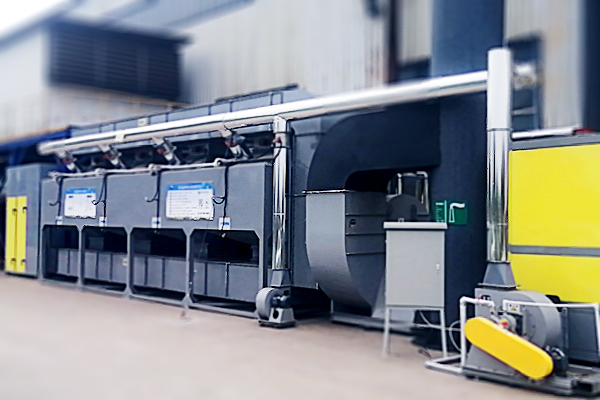
Professional Manufacturing and Customization
For over a decade, Zhengzhou Puhua Technology has been a reliable manufacturer of comprehensive environmental protection systems in China. The company specializes in the design, R&D, and production of an extensive range of equipment, including dust removal systems, desulfurization and denitrification units, VOCs treatment solutions, pneumatic conveying systems, and wastewater treatment facilities. Their product portfolio includes baghouse dust collectors, RCO catalytic combustion units, RTO systems, VOCs adsorption-concentration devices, desulfurization towers, photochemical oxidation equipment, pulse jet filters, mobile dust collectors, and ultra-low emission systems.
When you partner with a professional manufacturer like Zhengzhou Puhua Technology, you gain access to:
Custom catalyst formulations tailored to your specific exhaust composition and temperature range.
Integrated system design that ensures the catalyst, heat exchanger, and control logic work harmoniously.
Long-term technical support including performance monitoring, on-site regeneration, and replacement scheduling.
Conclusion: Making a Data-Driven Decision
Selecting the right catalyst for your catalytic combustion equipment is a multi-faceted process that balances chemical compatibility, thermal performance, pressure drop, and lifecycle economics. By systematically evaluating your exhaust characteristics and operational constraints, you can avoid costly missteps and ensure consistent compliance.
Investing time in the selection phase, supported by robust data from lab tests or pilot trials, pays back through reduced operating costs and extended catalyst life. For complex applications, consulting with specialized manufacturers provides access to proprietary formulation knowledge and field application experience.
Remember that the catalyst is the heart of the catalytic combustion system. A well-chosen catalyst not only ensures environmental compliance but also contributes to sustainable manufacturing by minimizing energy consumption and secondary pollution.
For tailored solutions that address your unique process challenges, consider engaging with an established technology provider such as Zhengzhou Puhua Technology, whose capabilities span from initial consultation and design to manufacturing and after-sales service.
Related Articles
-

Zeolite Fixed Bed+Catalytic Combustion Equipment (RCO)
[list:visits]
-

Resin desorption+condensation recovery equipment
[list:visits]
-

Cooking oil fume purifier
[list:visits]
Subscribe to Our Newsletter
Stay updated with the latest news and insights from Puhua Tech.